Best Tackle for South Dakota Walleye Fishing
It's incredibly frustrating when you're out on the water, whether it's the vast expanse of Lake Oahe or a smaller glacial lake, and the walleye just aren't biting. You've got your boat, your buddies, and your enthusiasm, but if your tackle isn't dialed in for South Dakota's unique walleye challenges, you might as well be casting a bare hook. This comprehensive guide is going to walk you through everything you need to know about selecting the best tackle to consistently put walleye in your boat, from the nuances of rod action to the secrets of bait selection.
Understanding Walleye Behavior and Habitat in South Dakota
Before we even think about what hooks or lures to tie on, it's crucial to understand the fish we're after: the walleye. South Dakota walleye are cunning, adaptable predators, and their behavior shifts dramatically with the seasons and the specific body of water they inhabit. Knowing where they are and what they're likely to be eating is the absolute first step in choosing the right tackle.
Seasonal Movements and Depths
Walleye are constantly on the move, driven by water temperature, available forage, and spawning instincts. In spring, after ice-out, they're often found in shallower areas, moving into tributary arms or along warmer shorelines to spawn. This is a time when they can be incredibly aggressive, and your tackle needs to reflect that. Think about the pre-spawn bite on the Cheyenne River arm of Lake Oahe, where walleye might be concentrated in relatively shallow depths before moving to deeper main lake points as water temperatures rise.
As summer progresses and water temperatures climb, walleye often retreat to deeper, cooler waters. You'll find them holding on structure like submerged points, humps, and channel edges in the mighty Missouri River reservoirs. This mid-summer period demands tackle that can effectively present baits at greater depths, sometimes 20 to 40 feet or more. Fall sees them moving back towards shallower feeding flats as baitfish school up, leading to a fantastic bite that often lasts until the ice forms. Finally, winter brings them under the ice, often congregating in predictable patterns on main lake basins or deep contours. Each of these seasonal shifts dictates a change in your approach and, by extension, your tackle.
Preferred Forage and Water Conditions
Walleye in South Dakota have a diverse diet, but they predominantly key in on baitfish like gizzard shad, emerald shiners, and smelt, especially in the larger reservoirs like Lake Oahe. In the glacial lakes, perch and various minnow species are often the primary food source. Understanding what they're eating helps you "match the hatch" with your lure choices in terms of size, shape, and color. If the walleye are gorging on 3-inch shad, a 5-inch crankbait might get ignored.
Water clarity also plays a significant role. The Missouri River system can range from stained to murky, especially after heavy rains, while some of the glacial lakes or Black Hills impoundments might be crystal clear. In stained or turbid water, walleye rely more on their lateral line and scent, meaning vibrant colors and baits that displace a lot of water or have rattles can be highly effective. Think bright chartreuse, orange, or firetiger patterns. Conversely, in clear water, a more natural presentation with subtle colors like silver, perch, or bluegill patterns, and smaller profiles, often works best to avoid spooking wary fish. This sensitivity to conditions is why a diverse tackle box is not a luxury, but a necessity, for consistent success.
Key Structures Walleye Relate To
Walleye are structure-oriented fish. They love to relate to changes in the bottom contour, submerged cover, and current breaks. In the Missouri River reservoirs, this means points, humps, old river channels, submerged timber, and riprap shorelines are all prime targets. On Lake Sharpe, for instance, you might find them stacked up on a submerged hump near the old river channel. South Dakota Missouri River Fishing Techniques provides an excellent overview of how these structures influence walleye behavior.
In the glacial lakes of eastern South Dakota, walleye often relate to weed lines, rock piles, drop-offs, and even subtle changes in bottom composition from mud to gravel. They use these areas for ambush points, protection, and to conserve energy in current. Your ability to locate these structures, often with the help of modern electronics, and then present your bait effectively to them, is paramount. If you're not putting your bait where the fish live, even the "best" tackle in the world won't do you any good.
Essential Rods and Reels for Walleye Anglers
A solid rod and reel combination is the foundation of effective walleye fishing. You wouldn't use a sledgehammer to drive a finish nail, and the same principle applies to your fishing gear. Having the right rod action, power, and reel type dramatically impacts your ability to cast accurately, detect subtle bites, and effectively fight a feisty walleye.
Rod Action and Power for Different Techniques
When we talk about rod action, we're referring to where the rod bends. "Fast action" rods bend mostly in the tip, offering excellent sensitivity and quick hook sets, which are critical for detecting those light walleye bites. These are fantastic for jigging or snap jigging, where you need to feel every tap. "Moderate action" rods, on the other hand, bend more through the middle section, providing a more parabolic bend that's great for trolling crankbaits or using live bait rigs. The slower action absorbs shock better, preventing hooks from tearing out when a walleye surges.
Rod power relates to how much force it takes to bend the rod. "Light" or "medium-light" power rods are ideal for subtle presentations with small jigs or light live bait rigs, common in clear, calmer waters. "Medium" power rods are incredibly versatile and are the workhorse for most walleye applications, handling everything from heavier jigs to medium crankbaits. For heavier trolling or fishing in strong currents, a "medium-heavy" power rod might be necessary. Think about the current below the Oahe Dam; you'll need a sturdier rod there than when drifting a calm bay on Lake Francis Case. Tailoring your rod to the specific technique you're employing is a game-changer.
Reel Types and Gear Ratios
For most South Dakota walleye fishing, spinning reels are the go-to choice due to their versatility and ease of use, especially for casting lighter lures or live baits. Look for a smooth drag system, which is crucial for fighting larger walleye without breaking your line. Sizes typically range from 2000 to 3000 series. A 2500 series reel is a great all-around choice for many walleye applications.
Baitcasting reels also have their place, particularly for heavier presentations like casting larger crankbaits or deep-water jigging where more line control and cranking power are desired. They excel at precision casting into tight spots and handling heavier lines.
Gear ratio determines how quickly your reel retrieves line. A higher gear ratio (e.g., 7.1:1) means more line retrieval per crank, which is excellent for covering water quickly or snapping jigs. A lower gear ratio (e.g., 5.2:1) provides more cranking power, ideal for slow-rolling crankbaits or battling big fish. Many anglers opt for a medium gear ratio (around 6.1:1) for all-around spinning reel use, or carry a few different reels to match specific needs. You can find a good selection of these at places like Bass Pro Shops or even on Amazon, making it easy to build a versatile arsenal.
Line Selection: Monofilament, Fluorocarbon, and Braid
The type of fishing line you choose has a huge impact on your success.
- Monofilament (Mono): This is a classic for a reason. It's affordable, easy to tie knots, and has a good amount of stretch, which acts as a shock absorber. This stretch can be beneficial for keeping fish buttoned, especially with trolling crankbaits or when using a live bait rig where you want a little give. However, the stretch can also reduce sensitivity, making it harder to detect subtle bites in deep water.
- Fluorocarbon (Fluoro): Often used as a leader material due to its near-invisibility underwater and its excellent abrasion resistance. It has less stretch than mono, offering increased sensitivity. Many anglers will spool up with braided line and then attach a 6-10 foot fluorocarbon leader with a knot like the Albright or FG knot. Using a fluorocarbon leader is especially effective in clear water scenarios, where walleye can be quite line-shy.
- Braided Line (Braid): This line has virtually no stretch, providing incredible sensitivity to feel every bump, tick, and bite, even in deep water or strong currents. It's also incredibly strong for its diameter, allowing for longer casts and more line capacity. The downside is its visibility and lack of abrasion resistance in certain situations (like rubbing against rocks). This is why pairing it with a fluorocarbon leader is such a popular and effective strategy for walleye fishing, offering the best of both worlds. For example, a 10-20 lb test braid mainline with an 8-12 lb fluorocarbon leader is a very common setup for a variety of techniques on South Dakota's lakes.
Live Bait Rigs and Presentations
Live bait is often the king for walleye, especially when the bite is tough. Nothing quite replicates the natural appeal of a wriggling minnow, a juicy nightcrawler, or a lively leech. Mastering live bait presentations is a cornerstone of How to Fish for Walleye in South Dakota.
Slip Bobber Rigs for Shallow Water
When walleye are holding in shallower water, especially around weed lines, submerged timber, or along gradual breaks, a slip bobber rig is incredibly effective. The beauty of a slip bobber is that you can quickly adjust your fishing depth by simply sliding the bobber stop up or down your main line. This allows you to present your bait precisely at the depth where fish are active without having a fixed bobber that limits your casting distance or depth.
Typically, a slip bobber rig consists of a bobber stop (thread or string), a bead, the slip bobber itself, a small weight (like a split shot or an egg sinker above a swivel), and a hook (Aberdeen or Octopus style) tipped with a minnow, leech, or piece of nightcrawler. For instance, on a calm evening on Lake Kampeska, pitching a minnow under a slip bobber near a weed edge can be deadly as walleye move into the shallows to feed. The slow, natural drift of the bait can be irresistible, and the highly visible bobber makes bite detection easy.
Lindy Rigs for Deeper Structure
The Lindy Rig, or variations of it, is arguably one of the most iconic and effective walleye rigs for fishing deeper water and structure. It's designed to present live bait in a natural, subtle way, allowing the bait to move freely near the bottom while the weight keeps it in the strike zone. This rig is devastating when walleye are hugging the bottom on main lake points, humps, or channel edges, which is a common scenario on the Missouri River system.
A classic Lindy Rig involves a walking sinker (often bullet or walking style) that can easily slide up and down your mainline, a small barrel swivel, and a leader (typically 4-8 feet of fluorocarbon) ending in a single hook. The key is the sliding sinker, which allows the walleye to pick up the bait and swim off without feeling the weight, giving you time to let them "eat" it before setting the hook. Minnows, leeches, and nightcrawlers are all excellent choices. When drifting or slowly trolling over potential walleye haunts, this rig lets your bait waft tantalizingly just above the bottom, mimicking a natural food source. It's a perfect technique when you see walleye scattered across a contour on your fish finder.
Spinner Rigs for Trolling and Drifting
When walleye are scattered across flats or cruising along breaks, spinner rigs really shine, particularly when trolling or drifting. These rigs combine the visual appeal and vibration of a spinning blade with the natural attraction of live bait, creating an irresistible package. They are especially effective during the warmer months when walleye are more active and willing to chase.
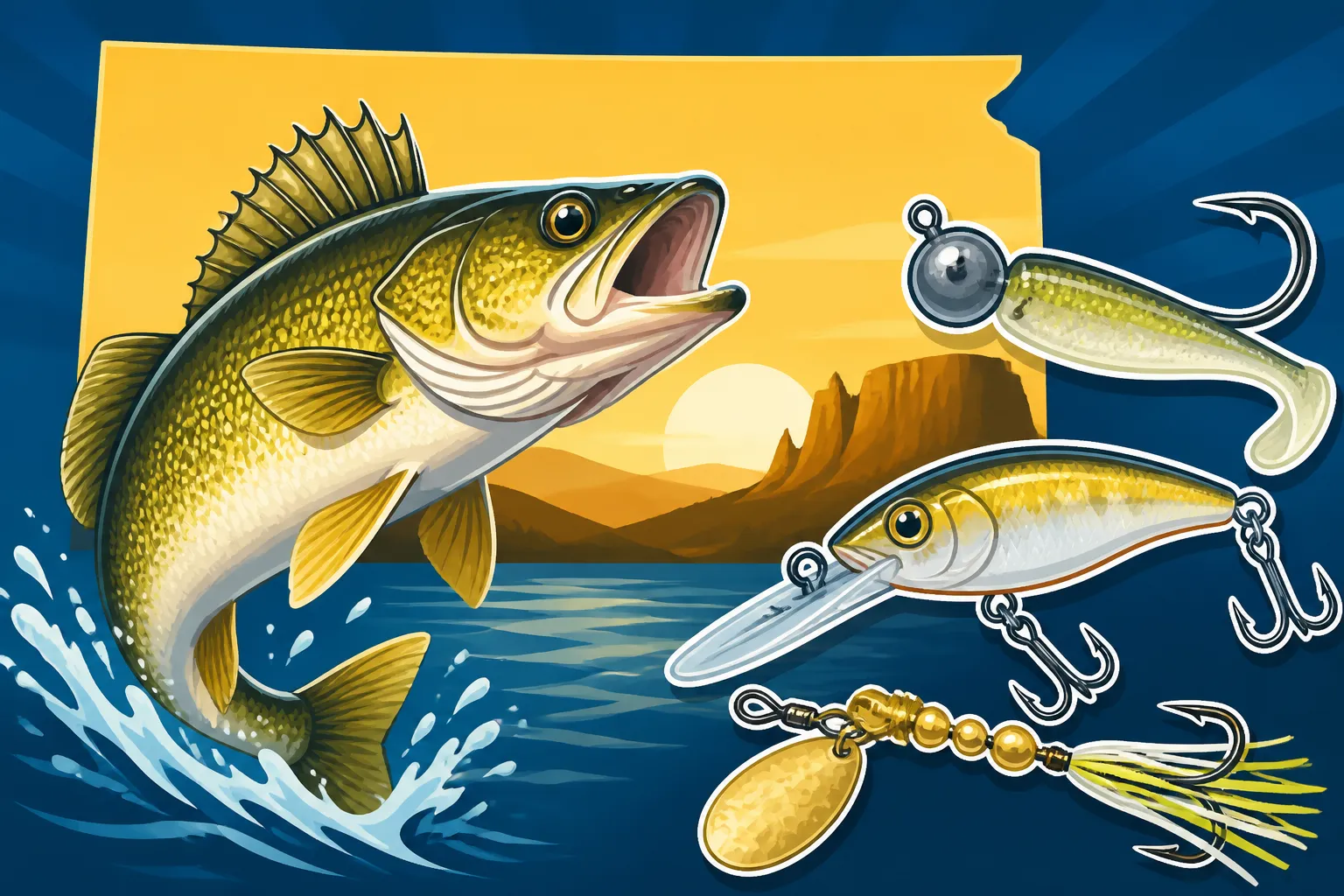
A spinner rig typically consists of a clevis, a blade (Colorado, Indiana, or willowleaf), colored beads, and two snelled hooks (often called a "harness") for holding a nightcrawler. This setup is often used with an in-line bottom bouncer or a heavier sinker to keep the rig near the bottom at a specific depth. The blade creates flash and vibration, while the nightcrawler adds scent and a natural profile. Different blade colors (e.g., chartreuse, orange, silver, gold) and sizes can be experimented with to match water clarity and fish preference. This rig is particularly effective for covering large areas, such as the vast flats of Lake Sharpe or Lake Francis Case, and is a staple for many anglers during South Dakota Summer Walleye Fishing Techniques. It's a fantastic search bait that can trigger aggressive strikes from active fish.
Hard Baits: Crankbaits and Jerkbaits
When walleye are aggressive and chasing baitfish, nothing beats the excitement and effectiveness of hard baits like crankbaits and jerkbaits. These lures mimic minnows and other forage fish, creating flash, vibration, and erratic movements that can trigger powerful strikes.
Diving Depths and Lip Designs
Crankbaits come in an astonishing array of shapes, sizes, and colors, but one of their most critical features is their lip design, which dictates how deep they dive. Shallow-diving crankbaits have a small, almost horizontal lip and are perfect for fishing over shallow flats, along weed edges, or above submerged cover in 2-10 feet of water. Medium-diving crankbaits feature a larger, angled lip and are designed to reach depths of 10-20 feet, making them ideal for targeting mid-depth breaks and humps. Deep-diving crankbaits boast very large, steep-angled lips, allowing them to plunge to depths of 20-30 feet or even more, making them essential for targeting walleye in their summer deep-water haunts.
Understanding these diving capabilities is key. If walleye are suspended 15 feet down over a 30-foot flat, a deep diver might be what you need to get into the strike zone. If they're feeding in 8 feet, a medium diver will be too deep unless you're purposely trying to hit the bottom. Brands like Rapala, Berkley, and Salmo offer excellent crankbait options for South Dakota walleye, available at most sporting goods stores or online retailers like Amazon.
Color Patterns for Water Clarity
As with all lures, color plays a critical role, especially with crankbaits and jerkbaits. Your primary consideration should always be water clarity.
- Clear Water: In clear waters, natural patterns that imitate local forage are highly effective. Think silver and black, chrome and blue, perch patterns, or even transparent baits that let light pass through. These subtle colors don't spook wary walleye and mimic their natural diet.
- Stained/Murky Water: When the water is stained or murky, walleye rely more on scent and vibration, but also on visual cues that stand out. Bright, high-contrast colors like chartreuse, orange, firetiger, or clown patterns are excellent. These colors create a stronger visual profile that walleye can detect in low visibility conditions.
- Overcast/Low Light: On cloudy days or during dawn/dusk, experiment with both natural and bright colors. Sometimes a bit of flash (like chrome or gold) can make a difference, while other times a subtle glow from a firetiger pattern is just enough to catch their eye.
Always carry a variety of colors and patterns, because walleye preferences can change from day to day, or even hour to hour.
Trolling and Casting Techniques
Crankbaits are incredibly versatile and can be used effectively for both trolling and casting.
- Trolling: This is a hugely popular and effective method for walleye, especially on the large reservoirs like Lake Oahe and Lake Sharpe. Trolling allows you to cover vast amounts of water, locate active fish, and present your crankbait at a consistent depth. Experiment with different speeds (typically 1.5-3 mph), colors, and diving depths. Using planer boards can help spread out your lines and cover even more water, targeting fish that might be shy of boat traffic. Trolling for Walleye on Lake Oahe details specific strategies for this technique. The key is to match the crankbait's diving depth to where the fish are holding, often using your fish finder to identify active zones.
- Casting: While less common than trolling for widespread walleye searching, casting crankbaits can be deadly when walleye are concentrated in specific areas, such as around riprap shorelines, submerged rock piles, or along current seams. Cast your crankbait out, let it dive, and retrieve it with a steady retrieve, perhaps adding a few pauses or twitches to mimic an injured baitfish. Jerkbaits, which typically have a slender profile and are designed to be retrieved with a "twitch-twitch-pause" cadence, are particularly effective for casting to active walleye, especially in cooler water when they might be less willing to chase a fast-moving bait. The erratic, darting action of a jerkbait can provoke aggressive reaction strikes.
| Lure Type | Best Conditions | Common Depths | Key Features | Typical Target Species |
|---|---|---|---|---|
| Slip Bobber Rig | Shallow water, weed lines, calm conditions | 2-15 feet | Highly adjustable depth, natural bait action | Walleye, Perch, Crappie |
| Lindy Rig | Deeper structure, clear to stained water | 10-40+ feet | Free-sliding sinker, subtle bait presentation | Walleye, Sauger |
| Spinner Rig | Scattered fish, covering water, warmer temps | 5-30 feet | Flash and vibration, scent from live bait | Walleye, Northern Pike |
| Shallow Crankbait | Shallow flats, riprap, active fish | 2-10 feet | Small lip, erratic wobbling action | Walleye, Smallmouth Bass |
| Deep Crankbait | Deep breaks, humps, suspended fish | 20-30+ feet | Large lip, aggressive dive | Walleye, Salmon, Pike |
| Jerkbait | Clear water, cooler temps, active fish | 2-15 feet | Erratic darting action, suspending | Walleye, Smallmouth Bass |
| Jig + Soft Plastic | Structure, current, varied depths | 5-50+ feet | Versatile, mimics baitfish or crawfish | Walleye, Bass, Panfish |
| Blade Bait | Cold water, vertical jigging, strong current | 10-60+ feet | High vibration, subtle flash, dense | Walleye, Sauger, Perch |
Soft Plastics and Jigs for Versatility
If there's one category of walleye tackle that exemplifies versatility, it's jigs paired with soft plastics. This combination can be fished in nearly any depth, any condition, and any time of year, making it an absolute must-have for any South Dakota walleye angler.
Jig Head Styles and Weights
Jig heads are the foundation of this setup, and their style and weight are crucial for proper presentation.
- Round Head Jigs: The most common and versatile, good for general casting, vertical jigging, and snap jigging. They provide a stable fall and good hook-up ratio.
- Erie/Bullet Head Jigs: Designed with a more streamlined head, these jigs cut through the water faster and are excellent for fishing in current or getting down to deep walleye quickly. They also tend to hang up less in rocky bottom.
- Stand-Up Jigs: These jigs are designed to stand upright on the bottom, presenting your soft plastic or live bait in a natural, tempting vertical position. Great for bottom-hugging walleye, especially when paired with a minnow imitation.
- Football Jigs: Their wide, football-shaped head makes them ideal for dragging over rocky bottoms, as they resist rolling and snags better than round heads. Excellent for presenting soft plastics like grubs or creature baits.
Jig weight is determined by depth, current, and wind. In shallow, calm water, a 1/8 oz or 1/4 oz jig might be perfect. For deeper water or strong currents, like those found below the dams on the Missouri River, you might need 1/2 oz, 3/4 oz, or even 1 oz jigs to maintain bottom contact. Always aim for the lightest jig possible that still allows you to feel the bottom and detect bites. Using an overly heavy jig can make your presentation unnatural.
Plastic Types: Twisters, Swimbaits, and Grubs
The variety of soft plastics available is staggering, but a few types stand out for walleye.
- Twister Tails (Curl-Tail Grubs): These are a classic for a reason. The simple curl-tail design creates a lot of vibration and action with minimal movement, making them effective on a steady retrieve or when jigged vertically. Sizes from 3 to 5 inches are common, and colors range from bright chartreuse and orange for stained water to natural greens and browns for clear conditions.
- Paddle Tail Swimbaits: Mimicking a baitfish, these plastics have a paddle-shaped tail that kicks and vibrates on the retrieve, creating a realistic swimming action. They are incredibly effective for casting and retrieving, or even slow trolling, especially when walleye are keying in on larger baitfish. Sizes from 3 to 6 inches are popular.
- Minnow Imitations: These soft plastics are designed to closely resemble a baitfish, often with a slender profile and a split or fork tail. They are fantastic when rigged on a jig head and worked with subtle twitches, mimicking an injured minnow.
- Grubs/Creature Baits: While not always the first choice for walleye, certain grub-style baits with multiple appendages can be effective when walleye are feeding on crayfish or other bottom-dwelling invertebrates. They offer a bulkier profile and more erratic action.
Don't be afraid to experiment with different brands like Berkley Gulp! or Z-Man, which offer different textures, buoyancy, and scent impregnations that can make a huge difference on tough days.
Vertical Jigging and Snap Jigging
These are two primary ways to fish jigs and soft plastics for walleye, each with its own advantages.
- Vertical Jigging: This technique involves positioning your boat directly over fish or structure and dropping your jig straight down. It's incredibly effective when walleye are concentrated in tight schools or holding tightly to specific bottom features. The idea is to lift the jig a foot or two off the bottom, then let it fall on a controlled slack line, feeling for that tell-tale "thunk" or "tick" as a walleye inhales it. This is a staple for Jigging Techniques for Missouri River Walleye and for ice fishing. Your fish finder is your best friend here, showing you exactly where the fish are in the water column.
- Snap Jigging: This more aggressive presentation involves casting your jig out, letting it sink to the bottom, and then using a sharp "snap" of the rod tip to lift it quickly, followed by letting it fall back down on a semi-slack line. The erratic action often triggers reaction strikes from active walleye. This technique covers more water than vertical jigging and is excellent for searching for fish along breaks or flats. It's particularly effective during the spring and fall when walleye are actively chasing bait. The key is to pay close attention during the fall, as many bites occur as the jig descends.
Terminal Tackle and Accessories
While rods, reels, and lures get most of the glory, your terminal tackle and essential accessories are the unsung heroes of a successful walleye outing. Neglecting these small but critical components can lead to lost fish, frustrating tangles, and overall less enjoyable time on the water.
Hooks, Swivels, and Sinkers
These are the backbone of many walleye rigs and presentations.
- Hooks: For live bait, Aberdeen or Octopus style hooks in sizes #4 to #1/0 are popular. Aberdeen hooks are thin-wired, making them good for impaling minnows and bending out when snagged, saving your rig. Octopus hooks, with their offset point, offer excellent hook-up ratios. Always match the hook size to your bait – too large will inhibit natural movement, too small will lead to missed strikes. For soft plastics, your jig head determines the hook. Look for sharp, strong hooks that can stand up to a walleye's bony mouth.
- Swivels: Barrel swivels prevent line twist, which is especially important when using spinner rigs or trolling. A small, high-quality swivel (size 10-14) between your main line and leader for Lindy rigs or spinner rigs is essential. For more demanding applications, a ball-bearing swivel offers even smoother rotation, though they are usually heavier.
- Sinkers: You'll need a variety for different applications.
- Split Shot: Small, pinch-on weights for adding minimal weight to slip bobber rigs or fine-tuning depth.
- Egg Sinkers: Oval-shaped weights with a hole through the middle, used above a swivel for Lindy rigs. They allow the line to pass freely, preventing fish from feeling resistance.
- Walking Sinkers/No-Roll Sinkers: Designed to be dragged along the bottom without snagging, popular for Lindy rigs or bottom bouncer setups.
- Bottom Bouncers: A wire-frame weight system (often L-shaped) designed to keep your spinner rig or other bait bouncing along the bottom without snagging. They come in various weights (1/2 oz to 3 oz or more) to match depth and current. A selection of bottom bouncers in different weights is crucial for trolling on the Missouri River reservoirs.
Always keep a diverse assortment of these components in your tackle box.
Essential Tools: Pliers, Line Cutters, and Net
Having the right tools at hand makes a world of difference.
- Fishing Pliers: A good pair of multi-purpose fishing pliers is invaluable. They're used for crimping split shot, cutting wire, removing hooks from fish (especially important for deeper-hooked walleye), and performing other small repairs. Look for a pair with a comfortable grip and a corrosion-resistant finish.
- Line Cutters/Scissors: While many pliers include a cutting feature, a dedicated pair of sharp fishing scissors or specialized line cutters (especially for braid) makes clean cuts and knot tying much easier. Dull cutters can fray your line, leading to weak spots.
- Landing Net: A sturdy, fish-friendly landing net is absolutely essential for safely landing walleye, especially trophy-sized ones. Look for a net with rubberized or knotless mesh, which protects the fish's slime coat (important for catch-and-release) and prevents hooks from getting tangled. A long handle is a plus for reaching fish from a boat. Missing a big walleye at the boat because you don't have a good net is a heartbreak no angler wants. You can find good quality nets at stores like Bass Pro Shops.
Storage and Organization
A disorganized tackle box is an inefficient one. Walleye fishing often requires quick changes in lures or rigs, and fumbling through a chaotic mess wastes precious fishing time.
- Tackle Boxes/Bags: Most anglers opt for compartmentalized tackle boxes or soft-sided tackle bags with utility trays. The trays allow you to organize lures by type, size, or color, and keep all your terminal tackle neatly separated. A soft-sided bag is often more portable and can be easily stowed in a boat.
- Lure-Specific Storage: Consider dedicated storage for sensitive lures. Hard baits can get their paint chipped if they're constantly clanking together, and jig heads can dull hooks if piled haphazardly. Foam inserts or separate small trays can protect your investment.
- Labeling: Labeling your utility trays (e.g., "Jigs 1/4 oz," "Crankbaits 10-15 ft") helps you quickly grab what you need without guessing.
- Pre-tied Rigs: Many experienced walleye anglers will pre-tie several Lindy Rigs or spinner rigs on leader material and store them on foam spools or in small plastic bags. This saves valuable time on the water, especially when the bite is hot or conditions are challenging.
A well-organized tackle system ensures you can quickly adapt to changing conditions and maximize your time fishing, not searching. For a broader overview of what to pack, check out South Dakota Fishing Gear Checklist.
Adapting Your Tackle to Specific South Dakota Waters
South Dakota is blessed with an incredible diversity of fishing waters, from massive Missouri River reservoirs to countless glacial lakes and smaller impoundments. What works well on one body of water might be completely ineffective on another. Tailoring your tackle to the specific characteristics of the water you're fishing is crucial for success.
Missouri River Reservoirs: Oahe, Sharpe, Francis Case
These enormous impoundments – Lake Oahe, Lake Sharpe, and Lake Francis Case – are the crown jewels of South Dakota walleye fishing. They are characterized by vast open water, deep channels, submerged structure, and varying current, especially below the dams.
- Trolling Dominance: Trolling with crankbaits and spinner rigs behind bottom bouncers is often the most effective way to cover water and locate walleye on these huge lakes. You'll need a good selection of deep-diving crankbaits (e.g., Rapala Deep Husky Jerks, Berkley Flicker Shads) for depths from 15-30+ feet. Bottom bouncers in weights from 1 to 3 ounces are essential to maintain bottom contact in varying depths and currents. For example, when fishing Lake Oahe Walleye Hotspots Near Mobridge, you might find yourself needing heavier bouncers to counter the greater depths and potential current.
- Jigging in Current: Vertical jigging with heavier jigs (1/2 oz to 1 oz) and soft plastics (like a Moxie or Pulse-R from B-Fish-N Tackle) or minnows is highly effective in the tailwaters below the dams or along channel edges where walleye stack up. A sensitive medium-light to medium power rod with a fast action is key to feeling those subtle bites in current.
- Electronics are Key: Given the vastness and complex underwater terrain, a high-quality fish finder with GPS and mapping capabilities is almost mandatory. This helps you locate those crucial submerged points, humps, and old river channels that walleye relate to. How to Read a Fish Finder for Walleye offers great tips for maximizing your electronics.
Glacial Lakes: Kampeska, Poinsett, Bitter
The glacial lakes of eastern South Dakota, like Lake Kampeska, Lake Poinsett, and Bitter Lake, offer a different walleye fishing experience. They tend to be shallower, often have extensive weed growth, and feature classic structure like rock piles, subtle break lines, and mud flats.
- Slip Bobbers and Plastics in Weeds: Slip bobber rigs with leeches or minnows are incredibly effective for fishing along weed edges or over submerged weed beds where walleye ambush bait. Lighter jigs (1/8 oz to 3/8 oz) tipped with soft plastics or live minnows are also great for casting and working along these edges or over rock piles. Look for jig heads designed to shed weeds.
- Shallow to Medium Cranks: Shallow to medium-diving crankbaits are more appropriate here than the deep divers used on the reservoirs, as walleye often cruise in the 5-15 foot range. Colors that mimic perch, bluegill, or shiners are often highly productive.
- Ice Fishing Heaven: Many of these lakes freeze solid, making them prime destinations for ice fishing. Your tackle needs to reflect this: short, sensitive ice rods, small jigging spoons, tungsten jigs tipped with wax worms or plastics, and a good ice auger.
Smaller Lakes and Ponds
South Dakota also has numerous smaller lakes and stock ponds that can hold surprisingly good numbers of walleye, particularly if they are managed for them. These waters typically have less pressure and simpler structure.
- Bank Fishing and Kayak Friendly: Many smaller lakes offer excellent bank fishing opportunities. Simple jig and minnow combos, slip bobber rigs, or casting small to medium crankbaits can be very effective. These waters are also fantastic for kayak fishing, where you can easily reach areas inaccessible to larger boats.
- Versatile Tackle: A good all-around medium-light spinning rod and reel combo, capable of casting lighter jigs and smaller crankbaits, will serve you well. You won't need specialized deep-water gear here. Focus on natural presentations and local baitfish imitations.
- Observe and Adapt: Since these lakes often have less detailed mapping, pay close attention to visible structure (like fallen trees, points, or sudden depth changes) and adapt your retrieve and bait choice to what the fish are telling you. Sometimes the simplest approach is the best on these less complex waters.
Advanced Walleye Tackle Considerations
Once you've mastered the basics, there are always ways to refine your tackle and techniques to gain an edge. Advanced anglers often leverage technology and specialized gear to become even more efficient on the water.
Electronics: Fish Finders and Mapping
Modern marine electronics are truly revolutionary for walleye fishing. A high-quality fish finder is no longer just a luxury; it's an indispensable tool for serious walleye anglers.
- Side Imaging/Down Imaging: These technologies, found on units from brands like Humminbird and Lowrance, provide incredibly detailed views of the bottom and surrounding structure. Side imaging can scan wide swaths of water, revealing submerged timber, rock piles, and even individual fish outside the boat's cone. Down imaging gives a photographic-like view directly beneath the boat. These features help you efficiently locate walleye hiding spots and bait schools that might otherwise go unnoticed.
- GPS and Lake Mapping: Integrated GPS with detailed lake maps (like those from Lakemaster or Navionics) allows you to precisely navigate to known fishing spots, mark waypoints on productive structure, and follow contour lines with extreme accuracy while trolling. This is invaluable for pinpointing specific depths where walleye are active or returning to a hot spot.
- Live Sonar: Cutting-edge live sonar systems (e.g., Garmin LiveScope, Lowrance ActiveTarget) provide real-time, three-dimensional views of fish and your lure underwater. This allows for incredibly precise jigging presentations, as you can literally see walleye react to your bait and adjust your technique on the fly. While an investment, this technology offers an unprecedented advantage.
Specialized Rigs and Innovations
The world of walleye tackle is always evolving, with new rigs and presentations constantly emerging.
- Blade Baits: These thin, metallic baits (like the Heddon Sonar or Berkley Blade Dancer) vibrate intensely on the lift and flutter on the fall. They are incredibly effective for vertical jigging, especially in cold water or strong currents, triggering reaction strikes from lethargic walleye. Their dense profile allows them to sink quickly to deep fish.
- Hair Jigs: Often overlooked, hair jigs (especially bucktail jigs) can be incredibly effective, particularly in cooler water or clear conditions where a subtle, natural presentation is preferred. They have a lifelike breathing action that soft plastics can't always replicate.
- Float and Fly: This technique, borrowed from bass fishing, involves suspending a small jig or plastic under a specialized float. It's fantastic for targeting suspended walleye or when they are in specific depths over deep water.
- Bottom Dragging: While often associated with live bait rigs, many anglers effectively drag soft plastics (like Ned Rigs or plastic worms) on light jig heads along the bottom. This slow, subtle presentation can entice bites from finicky walleye.
Staying abreast of these innovations, perhaps through online forums or visiting your local tackle shop, can add powerful tools to your arsenal.
Safety and Comfort Gear
No matter how good your tackle is, a fishing trip can quickly turn sour if you're uncomfortable or, worse, unsafe. Don't overlook the gear that protects you.
- Life Jackets (PFDs): Absolutely non-negotiable, especially when boating on large reservoirs. Ensure everyone on board has a properly fitting life jacket. In South Dakota, children of a certain age are legally required to wear them in a boat. Always check current South Dakota Boat Safety Requirements.
- Rain Gear: South Dakota weather can change in an instant. A good set of waterproof and breathable rain gear (jacket and pants) will keep you comfortable and focused on fishing, even during unexpected showers.
- Sun Protection: Sunscreen, a wide-brimmed hat, and polarized sunglasses are essential for long days on the water. Polarized sunglasses not only protect your eyes but also help you spot subtle changes in water color and even fish in shallower water.
- First Aid Kit: A basic first aid kit for cuts, scrapes, and other minor injuries is a must-have on any boat.
- Warm Clothing: Even in summer, early mornings or late evenings on the water can be chilly. Layers are always a good idea. For ice fishing, specialized thermal clothing and boots are critical for staying safe and comfortable in extreme cold. How Cold It Gets Ice Fishing in South Dakota reminds us just how vital proper attire is.
Prioritizing your safety and comfort allows you to fully enjoy your time chasing South Dakota walleye, regardless of the conditions.
Disclaimer
This article is for general informational purposes only and does not constitute professional advice. Laws, prices and regulations vary by location and change over time. Consult a qualified professional for guidance on your specific situation.