What Walleye Eat in Summer
Trying to figure out what walleye are eating in South Dakota during the heat of summer can feel like a real puzzle. One day they're hitting everything you throw at them, and the next, it's like the lake is empty! The truth is, walleye are incredibly adaptable, and their diet shifts with water temperature, light conditions, and the availability of their favorite snacks. This guide will dive deep into the summer menu of South Dakota walleye, helping you understand their dining habits so you can choose the right presentation and put more fish in your boat or on the bank.
Understanding Walleye Summer Behavior and Feeding Shifts
As the long days of summer heat up South Dakota's lakes and reservoirs, walleye undergo a significant change in their behavior. Gone are the shallow water feeding frenzies of spring; now, they're often seeking cooler, more comfortable water, which directly impacts what and when they choose to eat. It's not just about finding fish, it's about understanding why they're where they are and what they're looking for once they get there.
Walleye are cold-blooded, which means their metabolism is highly influenced by water temperature. As temperatures rise, they become more active, needing to consume more calories to sustain themselves, but they also seek out cooler refuges to avoid stress. This often means a shift to deeper water, following their primary food sources that also prefer these conditions. Oxygen levels also play a critical role, as warmer water holds less dissolved oxygen. These factors combine to create a distinct summer pattern in walleye diet and location that anglers need to decipher.
The Thermocline and Walleye Comfort Zones
If you spend any time on the water in summer, especially on bigger, deeper lakes like Lake Oahe or Lake Sharpe, you'll hear talk of the thermocline. But what exactly is it, and why does it matter so much for summer walleye? Simply put, the thermocline is a layer of water where the temperature changes rapidly with depth. Above it, the water is warmer and well-oxygenated. Below it, the water is much colder, but often has lower oxygen levels, especially as summer progresses.
Walleye are masters at finding that sweet spot—the specific depth where the water is cool enough to be comfortable but still has plenty of dissolved oxygen to keep them happy and active. This comfort zone is often right around or just above the thermocline. Imagine a perfect climate-controlled room for fish! This means that if you can locate the thermocline with your electronics, you've found a critical depth range to focus your efforts. And where the walleye are comfortable, you can bet their favorite dinner items are usually close by, either congregating there for the same reasons or being ambushed by hungry walleye moving in and out of this optimal zone.
Daytime vs. Nighttime Feeding Habits
Summer's bright, sunny days and clear waters aren't always ideal for walleye, which are notoriously light-sensitive. Their large eyes are designed to gather light in low-light conditions, giving them a distinct advantage over many baitfish during dawn, dusk, and especially at night. This sensitivity often means that during the brightest parts of a summer day, walleye might move deeper, seek out heavy cover like weed beds or submerged timber, or simply become less active.
However, once the sun begins to set, or on heavily overcast days, that's when their activity levels really ramp up. Walleye frequently move shallower to feed under the cover of darkness or low light, ambushing unsuspecting baitfish that have also migrated into these areas. This shift in activity means their diet choices might remain similar, but the opportunity to feed changes drastically. Night fishing can be incredibly productive for walleye in South Dakota during the summer, as they become bolder and more aggressive when they have the light advantage. Anglers who brave the night often find walleye gorging on minnows and other small fish in water depths they wouldn't touch during midday.
The Primary Summer Walleye Diet in South Dakota
South Dakota's diverse waterways, from the vast Missouri River reservoirs to the shallower glacial lakes, offer a smorgasbord of forage for walleye. While walleye are opportunistic eaters and will rarely turn down an easy meal, their primary diet in summer largely consists of a few key species. Understanding these main food sources is crucial because it helps you select lures and baits that truly "match the hatch." If you know what they're actively hunting, you can make your presentation irresistible.
The diet isn't static; it constantly shifts with the availability of different prey. A strong year-class of shad, for example, can become the dominant food source, while a mayfly hatch might temporarily draw walleye to consume insects. It's a dynamic ecosystem, and the smartest anglers pay attention to these fluctuations.
Minnows and Other Small Baitfish
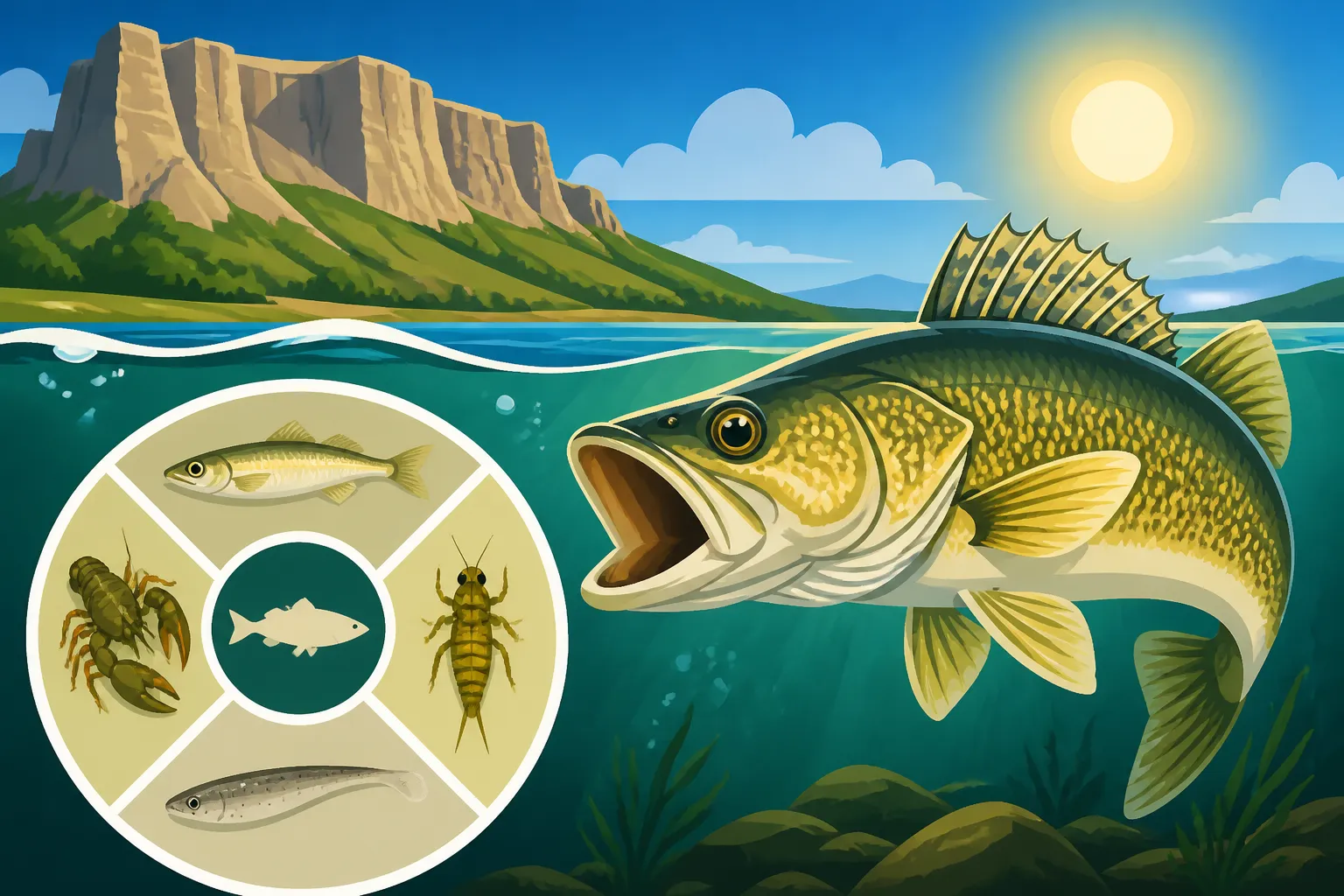
Without a doubt, small baitfish make up the lion's share of a walleye's summer diet in South Dakota. These energetic little swimmers are packed with protein and are often found in large schools, providing an easy target for hungry walleye. The specific types of baitfish vary by water body:
- Shad: Gizzard Shad and Threadfin Shad are king in the Missouri River reservoirs like Lake Sharpe Fishing at West Bend Recreation Area and Lake Francis Case. These prolific baitfish reproduce quickly in warm water, creating massive schools that walleye readily exploit. Walleye will follow these schools throughout the water column, often driving them against underwater structure or up into shallower flats at night.
- Cisco (Lake Herring) & Smelt: In the colder, deeper waters of Lake Oahe, cisco and rainbow smelt are vital forage. These species provide a rich, fatty meal for walleye, allowing them to grow to impressive sizes. Understanding how to fish for these deeper-water walleye often means mimicking the erratic movements of these baitfish.
- Perch & Crappie: Young-of-the-year yellow perch and crappie also fall prey to walleye, especially in the glacial lakes of eastern South Dakota. As these panfish grow, they become too large for walleye to eat, but their fry and juveniles are a common snack.
- Other Minnows: Fathead minnows, shiners, and other small minnow species are staples in nearly all South Dakota waters. These are often targeted by walleye in tributary rivers or shallower bays.
Anglers should pay close attention to the size and color of the baitfish present in the water they are fishing. A school of tiny shad will call for a different lure size than larger adult perch. Observing what's jumping or what's coming up on your sonar can give you critical clues.
Insects and Larvae
While often overlooked by anglers focused on bigger fish, insects and their larval stages can become a surprisingly important part of the walleye diet, especially during specific times of the summer. Picture a massive mayfly hatch on Lake Oahe or even a smaller pond; the sheer abundance of these protein-rich insects is an easy meal that walleye will not pass up.
During a significant hatch, walleye can temporarily shift their feeding focus almost entirely to insects. They might suspend in the water column, gorging themselves on rising nymphs or newly hatched adults. This phenomenon can make traditional baitfish presentations less effective, as the walleye are simply keying in on a different food source. Midge larvae and other aquatic insects also contribute, particularly in lakes with muddy or silty bottoms where these creatures thrive. While not a year-round staple, paying attention to bug activity can unlock short windows of incredible walleye fishing. This is where a subtle jig tipped with a plastic that resembles a grub or larva can outfish a large crankbait.
Crayfish and Other Invertebrates
Crayfish are another often underappreciated component of the summer walleye diet, especially in waters with rocky bottoms, submerged timber, or riprap shorelines. These crustaceans provide a substantial meal, and walleye frequently cruise these types of structures specifically to hunt for them. In fact, many popular walleye lures, particularly jigs and soft plastics, are designed to imitate the look and action of a crayfish.
Walleye will pinch a crayfish with surprising force, often crushing them whole. Their hard shells offer a good source of calcium, and they're relatively slow-moving compared to baitfish, making them an easier target. Beyond crayfish, other invertebrates like leeches can also be consumed, particularly in early summer. While leeches are often associated with spring fishing, a walleye won't ignore a juicy one if it comes across its path. Fishing a jig-and-soft-plastic combination that mimics a crayfish, slowly dragged or hopped along the bottom, can be incredibly effective in these rocky walleye strongholds.
Seasonal Variations and Local Adaptations
The summer walleye diet isn't a static menu. It changes as the season progresses, from the early days of June to the dog days of August, and it also varies significantly depending on which specific South Dakota water body you're fishing. A walleye in the cool, deep waters of Lake Oahe will have different dining options and preferences than one in a shallower, warmer glacial lake. Recognizing these nuances is key to consistent success throughout the season.
Anglers often get frustrated when a tactic that worked perfectly last week suddenly stops producing. Many times, the reason isn't that the fish are gone, but that their diet—and therefore their location and preferred presentation—has shifted subtly. Paying attention to these transitions allows you to stay one step ahead of the walleye.
Early Summer (June) Diet Shifts
As early summer arrives in June, walleye are transitioning from their post-spawn recovery and initial shallow-water feeding. The water is warming up, but hasn't yet reached its peak. At this time, walleye are often still quite opportunistic. They might be found shallower than they will be in July or August, taking advantage of lingering schools of smaller baitfish and perhaps some residual insect activity.
This period can see a varied diet as walleye recover energy and prepare for the deeper summer patterns. They might still key in on minnows, but also start to incorporate more crayfish if they're moving into rocky areas. It's a time when you might find fish scattered across different depths and structures, making multiple presentations worthwhile. Anglers often find success with spinner rigs tipped with nightcrawlers or minnows, along with jigging plastics or crankbaits that mimic the baitfish of the moment. Many walleye are still in a strong feeding mood, making this an exciting time to be on the water.
Mid-Summer (July-August) Peak Heat Diet
When July and August roll around, South Dakota's waters often reach their warmest temperatures. This is the period when walleye truly settle into their deeper, thermocline-oriented patterns. Their diet becomes more focused on the baitfish that also thrive in these cooler, oxygenated depths. For example, on Lake Oahe, this is prime time for walleye to target cisco and smelt, often suspending over deep water to chase these pelagic schools.
In the Missouri River reservoirs, walleye will follow schools of shad into deeper channels, along ledges, and near submerged humps. Their metabolism is high due to the warmer overall water temperatures, so they need to feed regularly. However, their specific locations can be very precise, tied directly to that comfortable thermocline depth or the densest baitfish concentrations. If you're not finding fish where you expect them, remember that even a few feet of depth difference can put you out of their feeding zone. Precision in depth control, often achieved through South Dakota Trolling Techniques for Walleye with crankbaits or lead core, becomes paramount. Understanding What Walleye Eat in Summer is crucial now because they are dialed in on specific forage.
Regional Differences in South Dakota Waters
It's important to remember that South Dakota isn't a monolithic fishing destination; different regions offer different ecosystems and, consequently, different walleye diets. What works on one lake might not be as effective on another.
- Missouri River Reservoirs (Oahe, Sharpe, Francis Case, Lewis & Clark): These massive impoundments are often dominated by shad (especially in the lower reservoirs) and cisco/smelt (in Lake Oahe). Walleye here often grow large due to the abundant forage. Anglers should consider shad-imitating crankbaits or jigs for the lower lakes, and deep-diving lures or vertical jigging for the Oahe fish that are chasing deeper forage. South Dakota Walleye Growth Rates on Lake Oahe are directly tied to the rich forage base.
- Glacial Lakes (e.g., Lake Kampeska, Bitter Lake, Lake Poinsett): These shallower, often stained lakes in eastern South Dakota tend to have diets centered around yellow perch, various minnow species, and significant insect hatches. Walleye here might be found in shallower weed beds or along subtle depth changes. Spinner rigs with crawlers or minnows are often deadly, as are shallow-running crankbaits.
- Black Hills Lakes (e.g., Pactola, Sheridan – for walleye, though primarily trout): While the Black Hills are more famous for trout, some lakes do hold walleye. Their diet often includes smaller minnow species and abundant crayfish, given the rocky, clear water. Jigs and soft plastics that mimic crayfish are excellent choices here.
Understanding these regional variations in forage helps you pack the right tackle for your destination. It's not just about knowing Best Lures for South Dakota Walleye, but knowing which ones will match the specific local food sources.
Mimicking the Walleye Diet for Success
Knowing what walleye eat in summer is one thing; translating that knowledge into successful fishing trips is another. The goal is to present a bait or lure that looks, acts, or smells like the walleye's preferred natural forage. This means selecting the right lure type, color, size, and then presenting it in a way that triggers a strike. It can feel like a game of cat and mouse, but with a solid understanding of their diet, you'll have a significant advantage.
Matching the hatch isn't just a fly-fishing term; it applies just as much to walleye fishing. If walleye are gorging on small, silvery shad, a large, brightly colored crankbait might be ignored. Conversely, if they're picking off slow-moving crayfish from the bottom, a fast-trolled minnow imitation might not get a look.
Choosing the Right Lures and Baits
When it comes to selecting your arsenal, think about the primary forage categories we've discussed: baitfish, insects, and crayfish.
-
For Baitfish Imitations:
- Crankbaits: These are arguably the most versatile for mimicking baitfish. Deep-diving crankbaits are excellent for reaching walleye holding on the thermocline or deep structures. Shallow-running or jointed crankbaits work well for night fishing or when walleye move up into shallower flats. Look for colors that mimic shad (silvers, whites, light blues), perch (greens, yellows, oranges), or smelt (silvers, blacks). You can find an incredible variety of sizes and colors on Amazon to match almost any baitfish profile.
- Jigs with Soft Plastics: Pairing a jig with a paddle tail, grub, or minnow-shaped plastic creates a highly effective baitfish imitation. Pearl white, chartreuse, natural shad, or dark green colors are often productive. Vary the size of the plastic to match the current baitfish size.
- Spinner Rigs: Tipped with a live minnow, these are classic walleye producers, especially when drifting or slow trolling. The flash and vibration of the blade, combined with the real minnow, are hard for walleye to resist.
-
For Insect Imitations:
- Small Jigs: During a heavy mayfly hatch, a small jig (1/16th or 1/8th oz) tipped with a grub-style plastic, or even a small piece of nightcrawler, can be incredibly effective. Focus on natural, muted colors like brown, olive, or black.
- Leech Imitations: Soft plastic baits that resemble leeches, often fished on a plain jig head, can draw strikes, especially in early summer.
-
For Crayfish Imitations:
- Jigs with Soft Plastics: Grubs, creature baits, or tube jigs in browns, greens, or pumpkinseed colors are perfect for imitating crayfish. Fish them slowly along rocky bottoms, making them "hop" and "crawl" like a real crayfish.
- Bottom Bouncers: When paired with a spinner rig and a nightcrawler or plastic grub, a bottom bouncer can effectively present a crayfish or worm imitation along the bottom where walleye might be foraging. This is a very popular technique for South Dakota Summer Walleye Fishing Techniques.
Presenting Baits Effectively
The best lure in the world won't catch fish if it's not presented correctly. Your presentation needs to emulate how the walleye's natural food source behaves in the water.
- Trolling: This is a fantastic way to cover water and present crankbaits or spinner rigs at a consistent depth, perfectly mimicking schooling baitfish. Vary your trolling speed until you find what triggers bites. A good fish finder is invaluable for identifying baitfish schools and walleye at specific depths. For big water, Lake Oahe Fishing Guide details how trolling is often the most effective method.
- Jigging: Whether it's vertical jigging over structure, snap jigging in shallower water, or pitching jigs to points, jigging allows you to precisely work an area. This technique excels at imitating injured baitfish or slowly moving crayfish. Pay attention to how aggressive the walleye are; sometimes a subtle twitch is all it takes, other times a sharp rip is necessary.
- Drifting: Using a bottom bouncer and a spinner rig or live bait while drifting allows you to present your offering naturally with the current or wind. This is particularly effective for walleye that are spread out over flats or along subtle break lines, often mimicking a foraging fish or crawling invertebrate.
No matter the technique, always be mindful of your retrieve speed, pauses, and the depth at which your lure is running. Adjust these variables until you find the perfect match for the walleye's current feeding mood and the behavior of their primary summer food source. A keen understanding of your lure's action and how it relates to the real thing will greatly increase your chances of success.
| Forage Type | South Dakota Water Body Examples | Common Lure/Bait Types to Imitate | Best Presentation Method (Summer) |
|---|---|---|---|
| Shad | Lake Sharpe, Lake Francis Case, Lewis and Clark Lake | Crankbaits (silver, white, blue), Paddle Tail Soft Plastics, Spinner Rigs | Trolling, Casting to Schools, Jigging |
| Cisco/Smelt | Lake Oahe (deeper sections) | Deep-diving Crankbaits, Trolling Spoons, Jigging Spoons, Blade Baits | Deep Trolling, Vertical Jigging |
| Yellow Perch | Glacial Lakes, shallower bays of reservoirs | Perch-colored Crankbaits, Live Minnows (on jigs/rigs), Swimbait Soft Plastics | Drifting, Trolling, Casting to Weed Edges |
| Crayfish | Rocky areas in most lakes/rivers | Jig-N-Plastic (brown, green), Tube Jigs, Ned Rigs, Jigging Spoons | Slow Dragging/Hopping (Bottom), Vertical Jigging |
| Insects (Mayflies) | Various lakes during hatches (seasonal) | Small Jigs (grub/worm plastics), Live Worms | Suspending, Light Jigging |
| Other Minnows | All waters | Live Minnows, Minnow-imitating Soft Plastics, Small Crankbaits | Jigging, Drifting, Casting |
Disclaimer
This article is for general informational purposes only and does not constitute professional advice. Laws, prices and regulations vary by location and change over time. Consult a qualified professional for guidance on your specific situation.