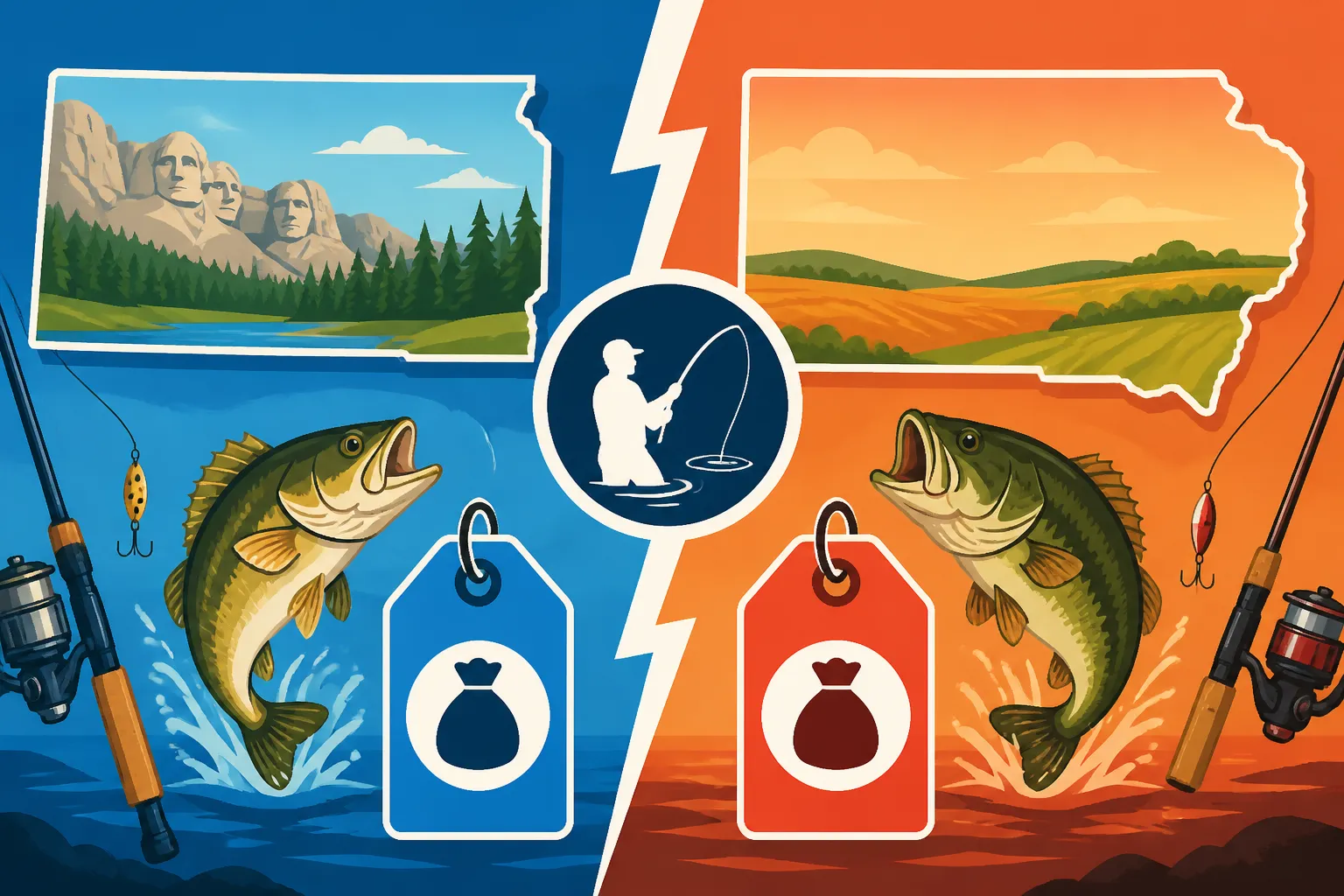
South Dakota vs Nebraska Nonresident Fishing License Cost
Trying to figure out the exact cost of a nonresident fishing license can be a real headache, especially when you’re planning a trip that might cross state lines or just trying to decide which neighboring state offers the better deal for your fishing adventure. It’s not just about the sticker price; there are often hidden fees, different options for various trip lengths, and specific regulations that can make comparing apples to apples feel impossible. This guide is here to untangle all that for you, providing a clear breakdown and direct comparison of nonresident fishing license costs in South Dakota and Nebraska, so you can plan your next outing without any unexpected financial surprises.
Understanding Nonresident Fishing License Costs in South Dakota
South Dakota is a fishing paradise, drawing anglers from all over for its incredible walleye, northern pike, and a variety of other species. But before you can cast a line, you need to make sure your license is in order, especially if you're not a resident. The South Dakota Game, Fish and Parks (GFP) Department offers several options, and understanding them is key to a smooth trip.
South Dakota's Nonresident License Options
South Dakota prides itself on offering flexible options for nonresident anglers, recognizing that not everyone plans an annual pilgrimage. Your choice usually boils down to how long you plan to fish. For those looking for an extended stay or multiple trips throughout the year, the annual license is often the most cost-effective solution. As of the most recent updates, a nonresident annual fishing license in South Dakota typically runs around $75. This allows you to fish from March 1st of the current year through February 28th of the following year, giving you a full year of access to the state's amazing waters. It's a great choice if you anticipate more than one visit or a longer fishing vacation.
However, many anglers only visit for a few days, perhaps hitting the Missouri River reservoirs or the Glacial Lakes region for a long weekend. For these shorter trips, South Dakota offers specific short-term licenses. The most popular among nonresidents is often the 3-day nonresident fishing license. This license usually costs around $35, providing a more budget-friendly option for a quick fishing getaway. It’s perfect for those who know their trip will be confined to just a few days. Deciding between a short-term or an annual license often comes down to your planned trip duration and how frequently you expect to visit throughout the license year. You can find more details on these choices in our guide to South Dakota Nonresident Fishing License Options.
Additional Requirements and Fees in South Dakota
Just buying the basic fishing license isn't always the end of the story in South Dakota. One crucial additional requirement for most nonresident anglers is the Habitat Stamp. This stamp is mandatory for almost all adult fishing licenses, whether you're buying an annual or a short-term option, and it helps fund vital habitat preservation and restoration projects across the state. The nonresident Habitat Stamp typically costs around $25. While it's an extra expense, it's a small price to pay to ensure the future of South Dakota's rich fish and wildlife resources. It's always a good idea to double-check if you need one, especially since there are very few South Dakota Fishing License Exemptions that apply to the habitat stamp for nonresidents.
It's also worth noting that if you're planning on fishing tribal lands, such as those within the Cheyenne River Sioux Tribe or Oglala Sioux Tribe reservations, you might need an additional tribal fishing permit. These permits are separate from the state license and are required to fish waters under tribal jurisdiction. Always research the specific requirements for your chosen fishing destination to avoid any surprises. Understanding these nuances is crucial for a smooth and legal fishing experience in South Dakota. You can learn more about all the rules in our comprehensive South Dakota Fishing License Guide.
Navigating Nonresident Fishing License Costs in Nebraska
Nebraska, often called the "Cornhusker State," might not be the first place that comes to mind for fishing, but it boasts a surprising array of angling opportunities, from impressive channel catfish in its rivers to walleye in its reservoirs. Like South Dakota, Nebraska has its own set of rules and costs for nonresident anglers that you’ll need to understand before you head out.
Nebraska's Nonresident License Options
When it comes to nonresident fishing licenses, Nebraska offers options that are quite similar in structure to its northern neighbor. For those looking to enjoy Nebraska's waters for an extended period or during multiple trips throughout the year, the nonresident annual fishing license is the primary choice. This license generally costs in the range of $60 to $70. It provides fishing privileges for the calendar year, from January 1st to December 31st. If you're planning on fishing the Platte River for sauger or one of the state's many lakes for bass, this annual license gives you the freedom to explore at your leisure throughout the seasons.
For anglers planning a shorter visit, perhaps a weekend trip to Harlan County Reservoir or a quick visit to the Sandhills lakes, Nebraska also provides several short-term options. The 3-day nonresident fishing license is a popular choice, typically costing around $30 to $35. This is an excellent option for a brief foray into Nebraska's fishing scene without committing to a full annual license. There are also usually options for even shorter durations, like a 1-day license, which might cost around $15-20, perfect for a spontaneous stopover. Considering the duration of your trip is paramount when choosing, as opting for a shorter-term license can significantly reduce your upfront costs if you’re only visiting for a limited time.
Additional Nebraska Permitting and Stamps
Just like South Dakota, Nebraska requires more than just a basic fishing license in most cases. The Aquatic Habitat Stamp is a mandatory addition for most adult nonresident fishing licenses in Nebraska. This stamp, typically costing around $10 to $15, directly contributes to the conservation and improvement of aquatic habitats throughout the state. It’s a vital program that supports the health of the very waters you’ll be fishing. For instance, whether you’re casting for South Dakota Walleye Limits or pursuing channel cats in Nebraska, these habitat stamps play a crucial role in maintaining healthy fisheries.
Beyond the Aquatic Habitat Stamp, anglers should also be aware of potential specific permits or regulations for certain areas. While not as common for general fishing, some specific species or unique areas might have additional requirements, though these are less frequent for standard nonresident fishing. For example, if you were to consider bowfishing, there might be specific regulations to consider beyond a typical rod and reel setup. Always consult the Nebraska Game and Parks Commission's official regulations handbook or website before your trip to ensure you have all necessary permits and are aware of any special rules for the waters you intend to fish. It's better to be over-prepared than to find yourself facing a violation.
A Direct Comparison: South Dakota vs. Nebraska Nonresident Costs
When you’re an angler living near state borders, or just someone who enjoys exploring different waters, comparing the cost of nonresident fishing licenses between states like South Dakota and Nebraska is a practical exercise. It's not just about which state has the cheapest headline price, but rather what you get for your money and which option best suits your fishing plans.
Side-by-Side Cost Analysis
Let's lay out the typical costs for the most common nonresident fishing licenses in both states. Keep in mind that these figures are approximate and can change, so always verify the latest prices on the official state Game, Fish and Parks websites before purchasing.
| License Type | South Dakota (Approx. Cost) | Nebraska (Approx. Cost) | Notes |
|---|---|---|---|
| Annual Fishing License | ~$75 | ~$65 | South Dakota's license is valid for a full year from March 1st. Nebraska's is a calendar year (Jan 1st – Dec 31st). |
| Habitat/Aquatic Stamp | ~$25 (Habitat Stamp) | ~$15 (Aquatic Habitat Stamp) | Mandatory for most adult licenses in both states. |
| Total Annual Cost | ~$100 | ~$80 | Includes the base license and the mandatory habitat stamp. |
| 3-Day Fishing License | ~$35 | ~$30-35 | Both offer flexible short-term options, ideal for weekend trips. |
| 3-Day License + Stamp | ~$60 (includes Habitat Stamp) | ~$45-50 (includes Aquatic Habitat Stamp) | Short-term license + required stamp. South Dakota's stamp costs more, making its 3-day total higher. |
| 1-Day Fishing License | Not offered as a standalone option for nonresidents; 3-day is shortest. | ~$15-20 | Nebraska offers a true 1-day option, which South Dakota doesn't for nonresidents. |
Looking at this table, a few things jump out. For annual fishing, Nebraska tends to be slightly more affordable when you factor in both the license and the required habitat stamp. This difference is largely due to the higher cost of South Dakota's Habitat Stamp. However, for shorter trips, the proportional difference remains, with South Dakota's 3-day option plus stamp totaling a bit more than Nebraska's. If you only have one day to fish, Nebraska definitely wins by offering a specific 1-day license, which South Dakota does not for nonresidents. Remember that these are current estimates, and you should always refer to the official South Dakota Fishing License Costs for the most accurate and up-to-date pricing.
Factors Influencing Your Decision
Deciding which state offers the "better" deal isn't always just about the lowest price. Several other factors should play into your decision-making process:
-
Trip Duration and Frequency: If you’re planning a single, short weekend trip, Nebraska’s 1-day or 3-day options might be more appealing, especially with the slightly lower overall cost for the short-term license and stamp. However, if you plan to visit multiple times a year or for an extended vacation, the annual license in either state becomes more attractive. For a full year of fishing, the ~ $20 difference for the annual license might not be significant if your primary target species or preferred fishing locations are predominantly in one state over the other.
-
Target Species and Fishing Experience: Both states offer fantastic fishing, but they excel in different areas. South Dakota is world-renowned for its walleye fishing, particularly on the Missouri River reservoirs like Lake Oahe, Lake Sharpe, and Lake Francis Case. If trophy walleye are your main goal, South Dakota might be your destination, regardless of a slight price difference. Nebraska offers excellent opportunities for various panfish, bass, and especially monster channel catfish in its numerous rivers and lakes. Consider what kind of fish you want to catch and the specific fisheries available. Our guide on Best Fishing Spots in South Dakota could help you weigh your options.
-
Convenience and Travel: How far are you traveling? If you live closer to the South Dakota border, the convenience might outweigh a few dollars in license cost. Also, consider the overall travel expenses, accommodation, and other costs associated with your trip. A slightly cheaper license might not make a huge difference if the travel distance is significantly greater. For those coming from outside the immediate region, looking into guides like South Dakota vs North Dakota Fishing License Cost or other comparisons might be useful to broaden your perspective on regional costs.
Ultimately, the "best" choice is subjective and depends entirely on your personal fishing preferences and trip logistics. Evaluate your priorities, and the decision will become much clearer.
Maximizing Your Fishing Budget in Both States
Fishing is a fantastic pastime, but it doesn't have to break the bank. By making smart choices about your licenses and being savvy about where you acquire your gear, you can make your nonresident fishing trip to South Dakota or Nebraska as enjoyable and affordable as possible.
Planning Your Trip to Optimize Costs
Careful planning is your best friend when it comes to saving money on fishing licenses. First, pinpoint the exact dates you plan to fish. As our comparison table showed, South Dakota doesn't offer a 1-day nonresident license, while Nebraska does. If your trip is truly only for a single day, Nebraska is the clear winner on cost. If you're looking at a 2-day trip in South Dakota, you'd still need to buy the 3-day license, costing the same as if you fished for three full days. So, if you're hitting the South Dakota Fishing Seasons Explained for a quick burst, make sure you align your license duration with your actual time on the water.
For longer trips or if you're contemplating multiple visits within a year, doing the math on the annual license is crucial. For example, if you visit South Dakota twice for three days each, you'd buy two 3-day licenses (totaling around $70) plus two Habitat Stamps (totaling around $50), bringing your total to roughly $120. In this scenario, purchasing an annual license from the start (around $100 total) would have saved you $20. The break-even point often comes quickly, so consider your fishing habits over a 12-month period. Also, be mindful of when the license year starts. South Dakota's license year begins in March, while Nebraska's is a calendar year. If you buy an annual license late in the year, you might not get a full 12 months of use, depending on the state, which could impact its cost-effectiveness.
Where to Purchase Licenses and Gear
Once you've decided on the right license, actually getting your hands on it is usually straightforward. Both the South Dakota Game, Fish and Parks (GFP) and the Nebraska Game and Parks Commission (NGPC) offer convenient online purchasing options through their respective websites. This is often the easiest and fastest way to secure your license, allowing you to print it at home or save it to your mobile device. Many anglers find this particularly useful if they're traveling and want to ensure their paperwork is in order before they even hit state lines. If you're wondering how to do this, our article on How to Buy a South Dakota Fishing License Online provides step-by-step instructions.
Beyond online purchases, both states have a network of authorized license vendors. These often include sporting goods stores, bait shops, some convenience stores, and county treasurer offices. Buying in person can be helpful if you have specific questions or need last-minute advice on local conditions. For instance, many anglers prefer to pick up their South Dakota Annual Fishing License at a local bait shop near their destination, gathering real-time tips from the locals.
When it comes to fishing gear, you have a plethora of options. Local bait and tackle shops are invaluable resources for regional expertise and specific lures that are currently hot on the water. However, for general fishing supplies, specific brands, or to take advantage of sales, online retailers are often a go-to. Many anglers frequently check Amazon for a wide range of products, from new rods and reels to specialty lures or boat accessories. Amazon offers a convenient way to compare prices and read reviews before you commit. You can often find great deals on everything from fishing line to rain gear, and sometimes even get it shipped directly to your destination if you plan ahead. Remember to also check stores like Walmart or Scheels in larger towns, which often have competitive prices on a broad selection of fishing tackle and outdoor essentials. Whether you're stocking up on extra hooks or looking for a new fish finder, using a combination of local knowledge and online shopping, like on Amazon, can help you stay within your budget. Don't forget to pack essential items on your South Dakota Fishing Gear Checklist before you head out!
Disclaimer
Please note that fishing regulations, license costs, and requirements are subject to change by the South Dakota Game, Fish and Parks and the Nebraska Game and Parks Commission. While we strive to provide the most current and accurate information, it is always the angler's responsibility to verify all regulations and costs with the official state agencies before engaging in any fishing activities. This guide is for informational purposes only and should not be considered legal advice.