South Dakota Boat Registration Cost by Boat Length
Figuring out the exact cost to register your boat in South Dakota can feel like navigating a maze, especially when you’re just trying to get your new vessel out on the water. It’s not always a straightforward, one-size-fits-all number, and that can certainly lead to some head-scratching. This guide is here to break down how South Dakota determines boat registration costs, with a specific focus on how your boat's length plays a starring role in the final price tag.
Understanding South Dakota's Boat Registration Fee Structure
When you own a boat in South Dakota, whether it's a trusty fishing rig for Lake Oahe or a pontoon for family fun on Lewis and Clark Lake, it generally needs to be registered with the state. This isn't just a formality; it's how the state keeps track of watercraft, funds conservation efforts, and ensures everyone is operating legally. The frustrating part for many boat owners is that the fee isn't static; it changes based on several factors, with the most significant one being the physical length of your boat.
The state's approach is designed to be equitable, in a way. Larger boats typically require more resources for maintenance of waterways, launch facilities, and enforcement, so their owners contribute a little more. This system means that a small fishing skiff will have a different registration fee than a larger cabin cruiser, which makes perfect sense once you understand the underlying philosophy.
The Core Principle: Length-Based Fees
The backbone of South Dakota's boat registration fee structure is undoubtedly the length of your vessel. This isn't unique to South Dakota; many states use length as a primary determinant. Why? Well, think about it from a practical standpoint. Longer boats often take up more space at public docks, require larger trailers, and can sometimes exert a greater impact on the waterways. It's a fairly straightforward metric for the state to use to categorize and assign fees.
The system is usually set up in tiers, where boats falling within certain length ranges are grouped together, and each tier has its own corresponding registration fee. This means that adding even a foot or two to your boat's length could potentially push you into a higher fee bracket. It's something to consider when you're looking to purchase a new boat, as a slightly longer model could mean a higher annual outlay for registration. This is a common point of frustration for folks who might be on the cusp of a length category, feeling the pinch for just a few extra inches. You can find more comprehensive details about the overall process in our South Dakota Boat Registration Guide.
Beyond Length: What Doesn't Influence the Annual Registration Fee
While length is king for the annual registration fee, it’s important to clarify what doesn't typically influence that specific cost. Things like the horsepower of your motor, whether your boat is new or used, or even the type of boat (fishing, pontoon, ski boat) usually don't alter the base registration fee once the length category is established.
However, these factors do come into play for other associated costs, especially when you first acquire a boat. For instance, the purchase price of your boat, regardless of its length, will be subject to sales tax. A more expensive boat, even if it's shorter than a less expensive one, will incur higher sales tax at the point of sale. But once that initial transaction is done, the recurring annual registration fee circles back to primarily depend on its length. It's a common misconception that a bigger motor automatically means a higher registration, but generally, the engine size is more of a concern for operational costs and certain safety regulations than the annual registration itself. For all the renewal steps, check out our South Dakota Boat Registration Renewal guide.
Diving Deeper into Registration Costs by Boat Length
Let's get into the nitty-gritty of how boat length translates into registration costs in South Dakota. While I can't give you exact dollar figures (those change over time, and you should always check the official South Dakota Game, Fish and Parks website for the most current rates), I can explain the general structure and what to expect. The state typically breaks down boat lengths into several categories, and your boat will fit into one of these.
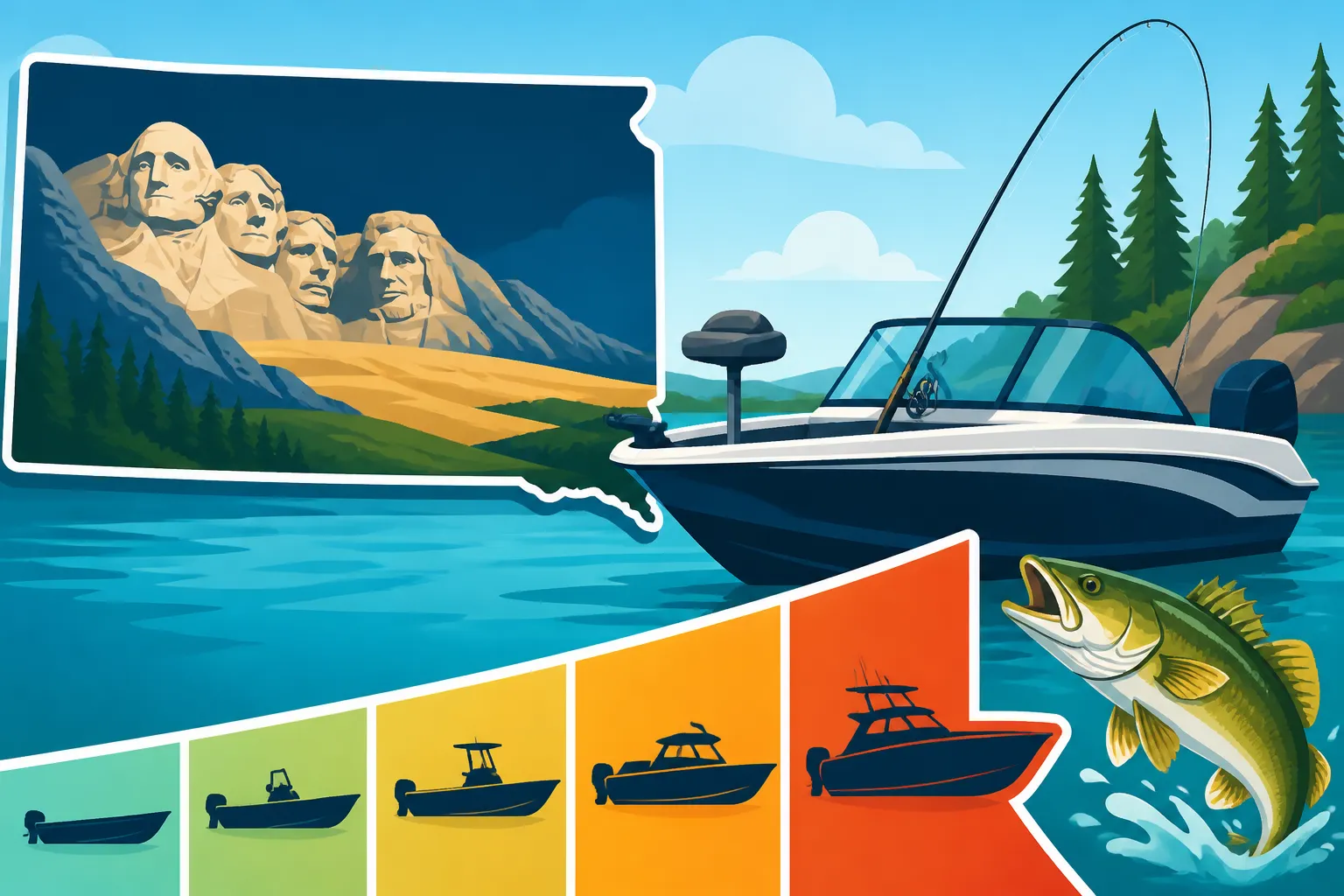
It's helpful to visualize these categories as steps on a ladder. Each step up, meaning an increase in boat length, usually comes with a slightly higher registration fee. This graduated system is designed to fairly distribute the costs of maintaining South Dakota's beautiful waters and access points. It means that the person with a small, easily maneuverable fishing boat pays a different amount than someone with a large cabin cruiser or a spacious pontoon.
Common Length Categories and Their Financial Implications
Generally, you'll find boats grouped into categories like:
- Under a certain length (e.g., under 16 feet): This category often includes smaller fishing boats, aluminum skiffs, kayaks, and canoes (though some non-motorized vessels may have different rules, which you can read about in South Dakota Non-Motorized Boat Registration Rules). These typically have the lowest registration fees.
- Mid-range lengths (e.g., 16 feet to 26 feet): This is a very popular category for many anglers, covering most walleye boats, medium-sized pontoons, and smaller pleasure craft. As you might expect, the fees for boats in this range will be higher than the smaller vessels. There might even be multiple tiers within this range, so a 17-foot boat might cost less than a 22-foot boat, even if they're in the same general "mid-range" classification.
- Longer lengths (e.g., over 26 feet): These are typically larger pontoons, cruisers, or houseboats. These vessels command the highest registration fees, reflecting their size, weight, and the greater demands they might place on infrastructure.
It's really important to measure your boat accurately, from the bow's most forward point to the stern's most rearward point, excluding detachable accessories like swim platforms or bowsprits. That measurement is what the state will use to determine which length category your boat falls into, and thus, your registration cost.
Examples and Scenarios for Different Boat Owners
Let's consider a few scenarios to make this more tangible:
Imagine you've just picked up a brand-new 14-foot aluminum fishing boat, perfect for cruising the calmer stretches of the James River. This boat would likely fall into the lowest length-based fee category. Your annual registration cost would reflect its smaller size. Now, let's say your friend just bought a 20-foot fiberglass walleye boat, a popular choice for tackling the big waters of Lake Sharpe. Because it's longer, it would fall into a higher length category, and thus, its annual registration fee would be more substantial.
What if you ordered a couple of kayaks from Amazon? If they're purely paddle-powered, they generally won't require state registration in South Dakota. However, if you attach even a small trolling motor to one of them, then that kayak becomes a "motorized vessel" and will suddenly need to be registered, falling into the lowest length category. This is a common surprise for many kayakers, so it's a detail worth paying attention to. Our guide Do You Need to Register a Kayak in South Dakota? covers this in more detail.
Another example might be a family looking for a comfortable 24-foot pontoon for weekend outings on Lake Francis Case. This larger vessel would definitely be in one of the higher mid-range or even upper-length categories, and the annual registration fee would reflect that. It’s always a good idea to factor these recurring costs into your overall budget when purchasing a boat, not just the upfront price.
Here’s a general illustrative table showing how boat length categories might correspond to fee levels. Remember, these are not current South Dakota prices, but demonstrate the structure of how costs typically increase with length.
| Boat Length Category (Illustrative) | Annual Registration Fee Level (Illustrative) | Common Boat Types |
|---|---|---|
| Less than 16 feet | Lowest Fee | Small fishing boats, Jon boats, Canoes with motors |
| 16 feet to 20 feet | Low-Mid Fee | Mid-size walleye boats, Bass boats, Small pontoons |
| 20 feet to 26 feet | Mid-High Fee | Larger walleye boats, Deck boats, Mid-size pontoons |
| Over 26 feet | Highest Fee | Large pontoons, Cruisers, Houseboats |
This table clearly shows the stepped increase in fees as boat length increases, which is the core principle of South Dakota's system. Always remember to check the official GFP website for the exact and up-to-date figures when you're ready to register your vessel.
Additional Fees and Considerations Beyond the Basic Registration
While the annual registration fee, primarily driven by boat length, is the most consistent cost you’ll face, there are other fees and considerations that can pop up during the boat ownership journey in South Dakota. These aren't tied to your boat's length in the same way, but they're crucial to understand so you're not caught off guard.
It’s easy to focus solely on that recurring annual fee, but neglecting these other potential charges can lead to unexpected expenses. Think of it like buying a car; there's the annual plate renewal, but also title fees, sales tax, and maybe a parking ticket or two if you're not careful. Boat ownership has its own set of similar financial quirks.
Initial Titling and Sales Tax
When you first purchase a boat in South Dakota, whether it's brand new from a dealer or a used gem you found online, you'll encounter two significant upfront costs: titling and sales tax.
The titling fee is a one-time charge to establish legal ownership of your boat. This fee is typically a flat rate, meaning it doesn't change based on the length or value of your boat. It simply covers the administrative cost of issuing an official title document. This title is your proof of ownership, much like a car title, and is essential for selling or transferring the boat in the future.
Sales tax, on the other hand, is a much larger upfront cost and is directly tied to the purchase price of your boat, not its length. This tax is levied on the total selling price of the vessel. For instance, if you bought a high-end fishing boat from a reputable dealer, or even a smaller craft from a classified ad, you'll need to pay sales tax on that transaction. It’s a substantial amount, so make sure to factor this into your initial budget. This is where the overall value of the boat comes into play, not just its dimensions. This initial outlay can sometimes feel like a punch to the gut, especially when you're excited about your new purchase, but it's a mandatory part of boat ownership. You can learn more about the complete process in South Dakota Boat Title and Registration Process.
Transfer, Late, and Duplicate Fees
Life happens, and sometimes you'll encounter other administrative fees that aren't part of the regular annual registration.
- Transfer Fees: If you buy a used boat from a private seller, you'll need to transfer the title into your name. There's usually a modest fee associated with this transfer. It’s a necessary step to ensure you are the legal owner and can register the boat without issue. Always complete this step promptly after a purchase.
- Late Fees: This is one no one wants to pay! If you forget to renew your boat registration by its expiration date, South Dakota will likely impose a late fee. These fees can escalate, so it’s always best to mark your calendar and renew on time. Missing the deadline by even a day can cost you extra, and it’s a frustrating situation that’s easily avoidable with a little planning.
- Duplicate Fees: Accidentally lose your registration card or, heaven forbid, your validation stickers peel off? You'll need to request duplicates, and there’s usually a small fee for this administrative service. It’s a good idea to keep your registration card in a secure, waterproof place on your boat, perhaps along with your What Safety Gear Is Required on a South Dakota Fishing Boat? checklist.
These seemingly small fees can add up, so being aware of them and managing your boating paperwork diligently can save you a few bucks and a headache down the line. It really pays to stay organized when it comes to boat ownership.
How to Calculate and Prepare for Your Boat Registration Costs
Now that we've broken down the various elements that factor into South Dakota boat registration costs, let's talk about how to get the most accurate information and effectively budget for your boating adventures. It’s all about doing your homework before you hit the water. Don’t wait until the last minute, especially if you're buying a new boat or transferring ownership.
Finding the Most Current Fee Schedule
The absolute best and most reliable source for current South Dakota boat registration fees is the official South Dakota Game, Fish and Parks (GFP) website. They are the regulatory body, and their website will have the most up-to-date fee schedule, including all length categories and associated costs. Remember, these numbers can change periodically due to legislative updates or state budgetary needs, so always consult the direct source.
You might also find information at local county treasurer offices, which often handle the registration process. However, the GFP website is usually the quickest and most comprehensive way to get the exact figures you need. Make it a habit to check their site annually, especially around renewal time, to ensure you’re budgeting correctly. A quick search for "South Dakota boat registration fees" will usually take you right where you need to go. You can also dive into our South Dakota Boat Registration Fees Explained for a broader understanding.
Budgeting for Your Annual Renewal
Once you know the approximate annual cost based on your boat's length, it’s smart to incorporate that into your yearly recreational budget. Many boat owners set a reminder on their phone or calendar for a month or two before the registration expires. This gives you ample time to gather any necessary paperwork and submit your renewal without rushing or incurring late fees.
If you’re new to boat ownership, think about all the associated costs, not just registration. Fuel, maintenance, storage, insurance, and even bait from your local Bass Pro Shops all add up. Knowing your registration fee well in advance helps you build a more realistic overall budget for enjoying South Dakota’s incredible waterways. By planning ahead, you can minimize financial surprises and maximize your time out on the lake or river, enjoying what you love most about fishing in South Dakota.
Disclaimer
This article is for general informational purposes only and does not constitute professional advice. Laws, prices and regulations vary by location and change over time. Consult a qualified professional for guidance on your specific situation.