Is a South Dakota Fishing License Required on the Missouri River?
Oh, the Missouri River! It’s a magnificent beast, isn't it? Full of incredible fishing opportunities, from massive walleye to hard-fighting smallmouth bass. But let's be honest, trying to figure out the exact licensing rules for fishing on such a vast and often border-straddling waterway can feel like you need a law degree just to cast a line. Many anglers get confused about whether a South Dakota fishing license is required on the Missouri River, especially when it runs between states or through different reservoirs. This guide is here to clear up that confusion, ensuring you're fully legal and ready to enjoy your time on the water without any unwelcome surprises from game wardens.
Understanding Missouri River Jurisdiction
The Missouri River isn't just a single stretch of water; it's a dynamic system that transforms as it flows through South Dakota. From its northern reaches entering the state to its southern exit, it forms distinct reservoirs and even acts as a state boundary, each segment potentially having its own subtle rules. It’s no wonder folks find themselves scratching their heads!
The Missouri River as a Border Water
One of the biggest sources of confusion stems from the Missouri River's role as a border between South Dakota and Nebraska. For many miles, the river, particularly the sections that form Lewis and Clark Lake and Lake Francis Case, literally divides the two states. You might be fishing from a boat that drifts across what feels like an invisible line, or you could be casting from the South Dakota shore while seeing Nebraska land on the other side. This scenario leads to a common misconception that a single license might cover both sides or that reciprocity agreements are always straightforward.
The reality is, unless there's a specific, written reciprocity agreement in place for that exact segment of the river, you're generally bound by the laws of the state you're physically in or the waters your boat is navigating. Anglers often assume that if they have a license from one state, they're good to go on the whole river, but this isn't always the case, and getting it wrong can lead to fines. It's a classic "better safe than sorry" situation. For instance, you might be curious about Is a South Dakota Fishing License Valid in North Dakota?, and while that's a different border, the principle of checking specific agreements holds true.
Key Segments of the Missouri River in South Dakota
South Dakota boasts a significant portion of the Missouri River, primarily in the form of four large reservoirs, often referred to as the "Great Lakes of South Dakota":
- Lake Oahe: The northernmost and largest of the reservoirs, extending from just south of Bismarck, North Dakota, deep into South Dakota. This entire stretch is typically considered South Dakota water once it's fully within the state's borders.
- Lake Sharpe: Located downstream from Oahe, near Pierre, this is another vast body of water entirely within South Dakota.
- Lake Francis Case: Further south, near Pickstown, this reservoir begins to form the border with Nebraska towards its lower end.
- Lewis and Clark Lake: The southernmost reservoir, near Yankton, which acts as a primary border water between South Dakota and Nebraska.
Each of these reservoirs presents unique fishing opportunities, and while the general rule for a South Dakota fishing license applies when you're fully within state lines, the border waters of Lake Francis Case and Lewis and Clark Lake require extra attention. Beyond the reservoirs, there are also the challenging tailwater fisheries below the dams. These areas, like the famed stretch below Oahe Dam, are unequivocally South Dakota territory and fall under its specific regulations, which can sometimes be more stringent, particularly regarding bait or special limits. If you're planning a trip, a great starting point is our comprehensive South Dakota Missouri River Fishing Guide to help you navigate these waters.
When a South Dakota Fishing License is Absolutely Required
Let's cut right to it: there are many situations where a South Dakota fishing license isn't just a good idea, it's absolutely mandatory. Understanding these scenarios can save you a headache, and potentially a hefty fine.
Fishing Entirely Within South Dakota Waters
This is the most straightforward scenario. If you're fishing on any part of the Missouri River that lies completely within South Dakota's geographical borders, you must possess a valid South Dakota fishing license. This includes the vast expanse of Lake Oahe and Lake Sharpe, from one bank to the other. It doesn't matter if you're in a boat, wading, or casting from shore – if the water you're fishing is considered South Dakota territory, you need that license.
Think of it like this: if you launch your boat from a South Dakota public access point, like those near Pierre on Lake Sharpe or Mobridge on Lake Oahe, and stay within those waters, you're squarely in South Dakota's jurisdiction. There’s no ambiguity here. This requirement extends to all the creeks and rivers that feed into the Missouri River within South Dakota as well. For a full breakdown of what licenses you might need, check out our South Dakota Fishing License Guide.
Fishing on the South Dakota Side of Border Waters
Now, this is where it gets a little trickier, especially on Lewis and Clark Lake or the lower portions of Lake Francis Case, where the Missouri River forms the boundary between South Dakota and Nebraska. Even in these shared waters, if your boat is anchored, drifting, or you're casting from the physical bank on the South Dakota side, you generally need a South Dakota fishing license.
Imagine you're targeting walleye on Lewis and Clark Lake, having launched from a South Dakota boat ramp near Yankton. You might drift close to the Nebraska shore, but if you're actively fishing the water that is legally designated as South Dakota, you need your license from the Mount Rushmore State. The same goes for shoreline anglers. If your feet are on South Dakota soil, your line is in South Dakota water, and a game warden approaches, your South Dakota license needs to be in hand. This also applies to any islands within these border waters that are recognized as South Dakota territory. When in doubt, a South Dakota license is the safest bet. Many anglers find it useful to keep a digital copy on their phone, alongside their physical license purchased easily online. For those looking to buy, our guide on How to Buy a South Dakota Fishing License Online has all the steps.
Reciprocity Agreements and Their Limits
Reciprocity agreements are designed to make fishing on shared border waters easier, allowing anglers with a license from one state to fish designated parts of the border water regardless of which side they’re on. However, these agreements aren't universal, and they definitely have their limits.
South Dakota and Nebraska Reciprocity
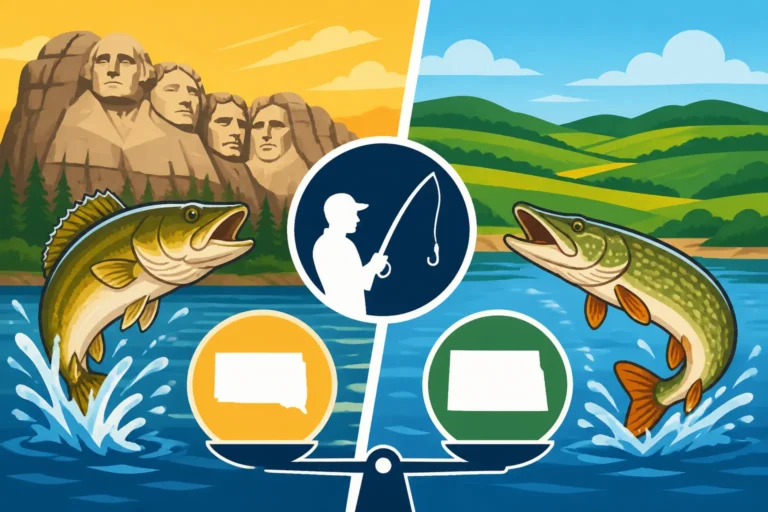
Good news for anglers on the southern stretch of the Missouri River: South Dakota and Nebraska do have a reciprocity agreement in place for certain segments of their shared border waters. This agreement typically covers the Missouri River from the Gavins Point Dam (which creates Lewis and Clark Lake) upstream to the confluence of the Niobrara River. This means that if you possess a valid fishing license from either South Dakota or Nebraska, you can legally fish in this specific border water segment.
However, it's absolutely crucial to remember that this agreement applies only to the main stem of the Missouri River and its impoundments within those specified boundaries. It does not extend to the tributaries or backwaters on the opposite state's side. For example, if you have a South Dakota license and are fishing Lewis and Clark Lake under the reciprocity agreement, you cannot venture into a Nebraska tributary or cove and fish there without a Nebraska license. Always check the current regulations published by the South Dakota Game, Fish and Parks (GFP) or the Nebraska Game and Parks Commission, as these agreements can sometimes be updated or have specific nuances. Understanding the South Dakota Nonresident Fishing License Rules is especially important for out-of-state anglers.
Reciprocity Agreement Summary (Example: Lewis and Clark Lake/Lower Missouri River)
Scenario South Dakota License Needed? Nebraska License Needed? Covered by Reciprocity? Notes A beautiful day out on Lewis and Clark Lake often leads to the same question: Do I need a South Dakota license or a Nebraska one? Both are valid! No No Yes This is the beauty of reciprocity. One license, two states on the main stem.
Fishing a tributary of the Missouri River on the Nebraska side of Lewis and Clark Lake with a South Dakota license. No Yes No No This is where reciprocity ends. Tributaries are under the sole jurisdiction of the state they reside in.
Fishing from the South Dakota shore of Lake Francis Case, near where it borders Nebraska. Yes No No No Your feet are on SD soil, your line is in SD water. No reciprocity needed for the shore angler on their "home" side.
Fishing from a boat on Lake Oahe, entirely within South Dakota. Yes No No No Lake Oahe is fully within South Dakota's jurisdiction.
What Happens Without a Proper License
Ignoring fishing license requirements on the Missouri River, or anywhere else for that matter, is a gamble that simply isn't worth taking. The South Dakota Game, Fish and Parks (GFP) conservation officers are diligent, knowledgeable, and regularly patrol all segments of the Missouri River. They know the regulations inside and out, and they're there to enforce them.
If you're caught fishing without the proper South Dakota license where one is required, you're likely facing a citation. The penalties can vary but typically include a fine, and depending on the severity or if it's a repeat offense, it could even lead to forfeiture of your gear or fishing privileges. Trust me, paying a fine and losing precious fishing time is far more frustrating than the minimal cost and effort of simply buying the correct license beforehand. It's not just about the monetary cost; it's about the embarrassment, the hassle, and potentially having your hard-earned catch confiscated. Our article on South Dakota Fishing Without a License Penalties goes into more detail about the consequences. It’s always best to be squared away before you even think about putting a hook in the water.
Getting Your South Dakota Fishing License
Securing your South Dakota fishing license is fortunately a very straightforward process, designed to get you out on the water with minimal fuss.
Easy Purchase Options
The South Dakota Game, Fish and Parks (GFP) makes it incredibly easy to purchase a fishing license. The most convenient way for most people is to buy it online directly through the GFP website. This allows you to purchase your license 24/7 from anywhere with an internet connection. You can print it out immediately, save a digital copy to your phone, or even have a physical copy mailed to you. This is a great option for planning your trip in advance or even if you're already in South Dakota and realize you forgot to pick one up. Our guide on South Dakota Online Fishing License Purchase provides a step-by-step walkthrough.
If you prefer a more traditional route or just like to chat with a local, you can also purchase a license in person. Authorized license vendors are scattered throughout the state, including many sporting goods stores, bait shops, and even some general merchandise retailers. These vendors can assist you with different license types and answer basic questions. While Amazon doesn't directly sell fishing licenses, it's an excellent resource for getting all your essential gear, from new lures to a convenient tackle box that makes organizing your licenses and permits a breeze. Just imagine finding that perfect new walleye crankbait on Amazon and then easily adding your license online!
Additional Stamps and Permits
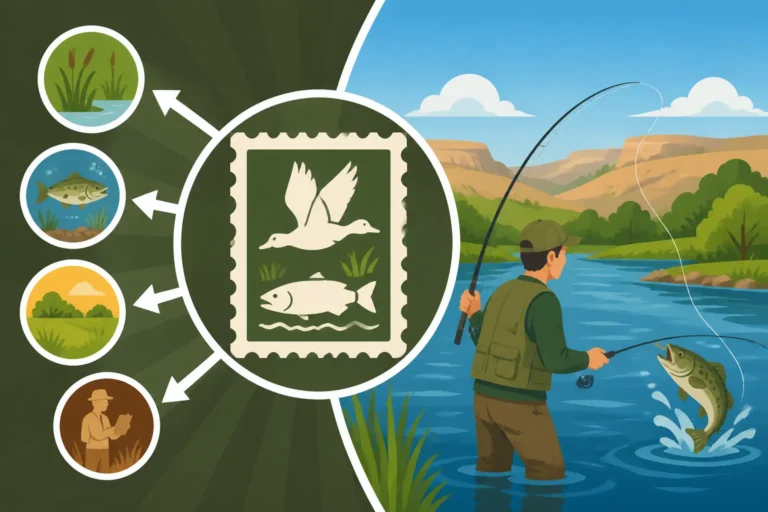
When it comes to fishing the Missouri River in South Dakota, it's not always just about the base fishing license. Depending on your residency and the type of fishing you plan to do, you might need additional stamps or permits. The most common additional requirement is the South Dakota Habitat Stamp.
The Habitat Stamp is required for nearly all resident and non-resident anglers over the age of 18, with some limited South Dakota Fishing License Exemptions. It's a small fee that goes directly towards habitat improvement projects across the state, ensuring that South Dakota's fantastic fishing opportunities remain strong for generations to come. This stamp is typically added on during the license purchase process, whether you're buying online or in person. It’s a crucial component often overlooked by first-time visitors, but it's vital for being fully compliant. Our detailed article on South Dakota Habitat Stamp Requirements explains everything you need to know about this important addition. Always double-check current regulations to see if any other special permits apply to your specific fishing plans, though for general Missouri River fishing, the base license and Habitat Stamp are usually the main considerations.
Disclaimer
Please remember that fishing regulations, license costs, and reciprocity agreements can change. Always consult the most current South Dakota Game, Fish and Parks (GFP) regulations or website before heading out on your fishing trip to ensure you have the most up-to-date and accurate information. This guide is for informational purposes only and should not be considered legal advice.