Is a South Dakota Fishing License Valid in North Dakota?
It's a question that plagues many an angler planning a trip to the Dakotas: "Do I need a separate fishing license for each state if I'm fishing border waters?" The simple answer to whether a South Dakota fishing license is valid in North Dakota is, unfortunately, almost always no. This guide is here to untangle the complexities of fishing regulations across state lines, especially along shared waterways like the mighty Missouri River system, so you can focus on catching fish, not on getting a citation.
The Core Question: South Dakota and North Dakota Fishing License Reciprocity
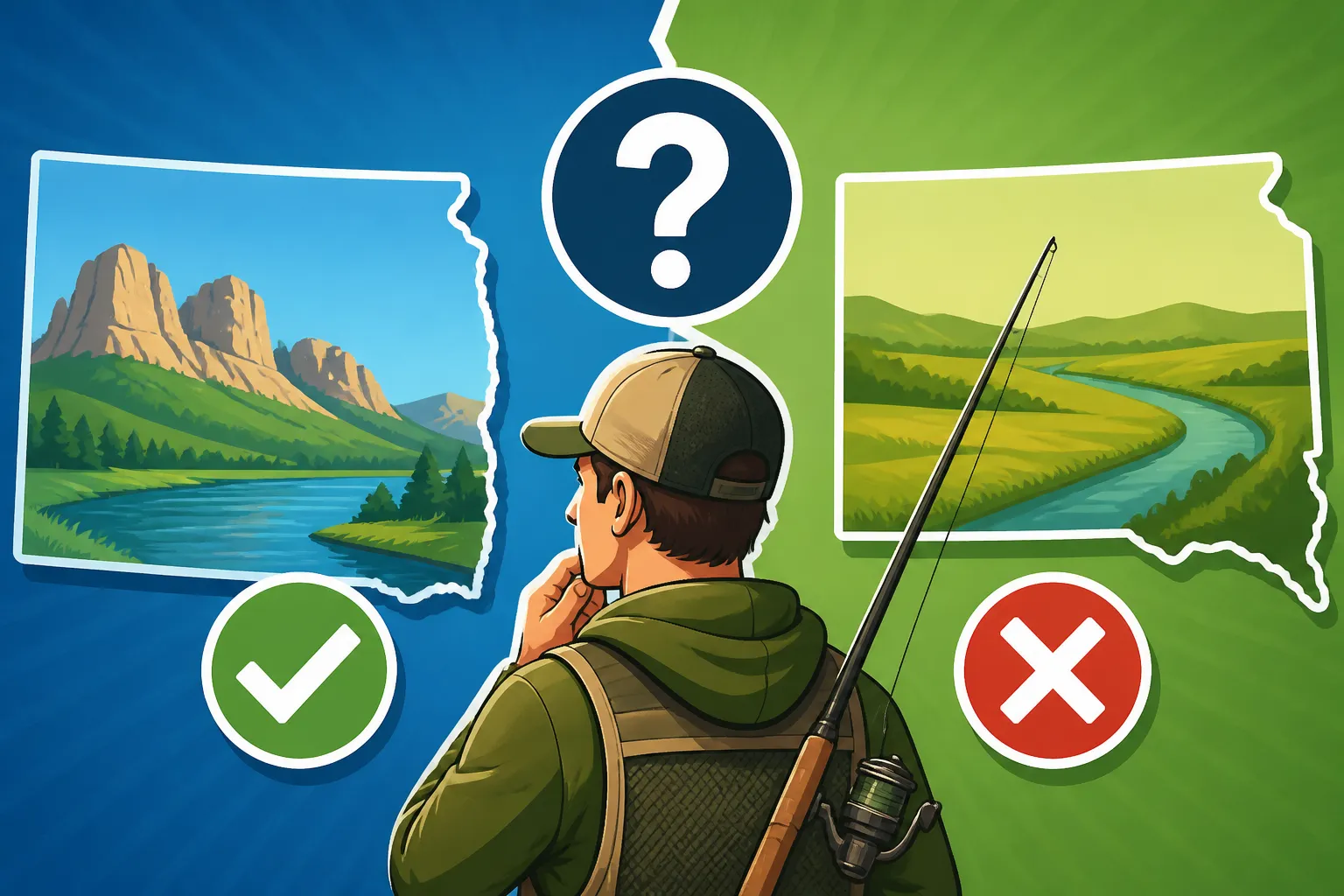
Let's cut right to the chase: generally, a South Dakota fishing license is not valid for fishing in North Dakota waters, and a North Dakota license is not valid in South Dakota waters. This is a common point of confusion for anglers, especially those who plan to explore the vast and productive waters that straddle the state lines. While some states have reciprocal agreements for certain shared bodies of water, South Dakota and North Dakota do not have a broad reciprocal fishing license agreement that allows you to fish both states with a single license.
Understanding State Fishing Jurisdictions
Each state has the sovereign right and responsibility to manage its own natural resources, including its fish populations and the waters they inhabit. This means that the South Dakota Game, Fish and Parks (GFP) department sets the rules and sells the licenses for fishing within South Dakota's borders, and the North Dakota Game and Fish Department does the same for North Dakota. It's a system designed to ensure sustainable management, fund conservation efforts, and allow each state to tailor regulations to its specific ecological needs and angler demographics.
When you purchase a fishing license, you are essentially buying permission to fish within that state's jurisdiction, under its specific rules. This jurisdiction extends to all public waters within the state, whether they are small ponds, large lakes, or sections of interstate rivers. The money from your license goes directly back into that state's conservation programs, habitat restoration, fish stocking, and enforcement efforts. This fundamental principle is why you typically need a separate license for each state you intend to fish.
Specifics for the Missouri River System
The Missouri River, with its expansive reservoirs like Lake Oahe, is a prime example of where state lines become a critical consideration for anglers. Lake Oahe, a reservoir formed by the Oahe Dam near Pierre, South Dakota, stretches for hundreds of miles northward, crossing deep into North Dakota. This means that a single body of water is managed by two distinct state agencies, each with its own licensing requirements.
While it might seem logical to think that if you're on the same lake, one license should suffice, that's simply not the case here. If your boat or your cast crosses into North Dakota waters, you are subject to North Dakota's laws and licensing requirements, regardless of where you launched your boat or where the majority of your fishing takes place. This can be a real headache for anglers, particularly those pursuing migratory species like walleye or Chinook salmon, which might move freely across the invisible state line.
The Importance of Double-Checking Current Regulations
Fishing regulations are not static; they can change from year to year based on population surveys, environmental conditions, and management goals. Relying on old information or hearsay is a recipe for potential legal trouble. Before any fishing trip, especially one near a state border, it's absolutely crucial to consult the most current official fishing handbooks and websites for both states. You can find detailed information by looking up the official South Dakota Fishing Regulations Explained.
The South Dakota GFP website and the North Dakota Game and Fish Department website are your authoritative sources. Don't just skim; read carefully, especially sections pertaining to license requirements, border waters, and any specific nuances that might apply. A few minutes spent verifying information can save you hundreds of dollars in fines or the heartache of having your gear confiscated.
Navigating Border Waters: What You Really Need to Know
Fishing across state lines, especially on a vast body of water like Lake Oahe, requires diligent planning and a clear understanding of where you are at all times. It's not just about having a license; it's about having the correct license for the exact spot you're fishing.
The Missouri River and Lake Oahe: A Closer Look
Lake Oahe is the jewel of the Missouri River system for many anglers, known for its incredible walleye and Chinook salmon fishing. However, its immense size also means it spans a significant portion of the South Dakota-North Dakota border. Anglers often launch their boats in one state and travel long distances, sometimes unknowingly crossing into the other.
If you are fishing in the portion of Lake Oahe that lies within South Dakota, you absolutely must possess a valid South Dakota Fishing License Guide. If you then decide to venture north, past the geographic line into North Dakota, you must have a North Dakota fishing license. This applies whether you're trolling, jigging, or even bank fishing from a shore that happens to be on the "wrong" side of the line. For those considering a trip from out of state, understanding the South Dakota Nonresident Fishing License Rules is vital, as is understanding North Dakota's equivalent. Exploring the entire South Dakota Missouri River Fishing Guide and Lake Oahe Fishing Guide can help you plan your trip, but remember to cross-reference with North Dakota's information if you're going that far north.
To stay compliant, most experienced anglers who fish the full length of the lake will simply purchase both a South Dakota and a North Dakota nonresident fishing license. This eliminates any doubt or stress about accidentally drifting into a different state's jurisdiction. It's a small investment for peace of mind and full access to the entire lake's fishing opportunities.
Common Misconceptions and Why They Lead to Trouble
There are several persistent myths about fishing border waters that can lead anglers into trouble:
- "If I launched my boat in South Dakota, my South Dakota license covers the whole lake." This is unequivocally false. Your license covers you only in the waters of the state that issued it. The point of launch has no bearing on jurisdiction once you're on the water.
- "I'm just a little bit over the line, they won't care." Enforcement officers from both states patrol these waters regularly. They are equipped with GPS technology and are well aware of the state boundaries. "Just a little bit over" is still a violation, and they do care.
- "I'm only trolling through, not actively fishing." If your line is in the water with a lure or bait, you are considered to be fishing, regardless of whether you're actively reeling or just passing through.
The consequences of being caught fishing without the proper license in either state can range from significant fines to the confiscation of your fishing gear, and even your boat in some severe cases. It's a costly mistake that's easily avoided by doing your homework and getting the necessary licenses. For more on this, you might review South Dakota Fishing Without a License Penalties.
Planning Your Cross-State Fishing Adventure
If your fishing plans involve waters that touch or cross the South Dakota/North Dakota border, the safest and easiest approach is to obtain a fishing license for both states. This way, you can move freely and pursue fish wherever they may lead you, without the constant worry of jurisdiction.
You can typically acquire both licenses online, making the process incredibly convenient. For example, to get your South Dakota license, you can follow the steps outlined in South Dakota Online Fishing License Purchase. North Dakota offers a similar online portal. Alternatively, licenses can be purchased in person at various vendors, including bait shops, sporting goods stores, and county offices in both states. When gathering your gear, consider checking out retailers like Amazon for detailed fishing maps that clearly mark state boundaries on shared waterways, which can be immensely helpful. You'll also find the specific South Dakota Nonresident Fishing License Options there.
Beyond Licenses: Other Important Cross-State Considerations
While licenses are paramount, other regulations also differ between South Dakota and North Dakota, and these, too, must be respected regardless of which license you hold.
Reciprocity for Fishing Regulations and Limits
Even if a hypothetical reciprocal license agreement existed (which, again, it doesn't for general fishing between SD and ND), the specific fishing regulations for species like walleye, smallmouth bass, or northern pike can still vary significantly. For instance, South Dakota Walleye Limits might differ from North Dakota's walleye limits in terms of daily creel and possession limits, or even length restrictions.
The same applies to South Dakota Fishing Season Dates and Limits for various species. What's open and legal in one state might be closed or have different rules in the other. It's not uncommon for different sections of the same reservoir to have varying minimum length requirements or slot limits. Always carry the current regulation handbooks for both states and consult them frequently if you're venturing across the border. Ignorance of the law is never an excuse. Always know your South Dakota Fish Limits and Size Restrictions.
Boat Registration and Aquatic Invasive Species (AIS) Rules
Beyond fishing licenses, boat registration is strictly state-specific. Your boat registered in South Dakota is valid within South Dakota and, for a temporary period, in North Dakota (and other states), but it will still be subject to North Dakota's specific boating laws. Conversely, a North Dakota registered boat operates similarly in South Dakota. For information on how to register your watercraft in South Dakota, check out How to Register a Boat in South Dakota.
More critically, both states have stringent Aquatic Invasive Species (AIS) regulations. When moving your boat from one body of water to another, especially across state lines, you are typically required to clean, drain, and dry your boat, trailer, and all fishing equipment. This includes removing all visible plants and animals, draining all water from your boat (livewell, bilge, motor), and allowing everything to dry completely before launching in a new water body. Some areas have mandatory inspection stations. These rules are in place to prevent the spread of devastating invasives like zebra mussels, which can severely harm ecosystems and fishing quality. Always be familiar with South Dakota Boat and Water Access Rules and North Dakota's equivalent.
Essential Tools for Staying Compliant
To truly ensure a worry-free fishing experience when navigating border waters, several tools can be incredibly helpful:
- GPS Devices with Detailed Mapping: Modern fish finders and GPS units from brands like Humminbird, Lowrance, or Garmin often have mapping capabilities that can display state boundaries on large bodies of water. This is an invaluable asset for staying aware of your exact position relative to the state line. You can find a wide selection of these devices and their compatible mapping chips on Amazon.
- Physical and Digital Copies of Regulations: Always carry the current fishing handbooks for both South Dakota and North Dakota. In addition, having digital copies downloaded to your smartphone provides a quick reference. Just make sure your phone is protected in a waterproof case, also easily found on Amazon.
- Fishing Apps: Many state game and fish departments, along with third-party developers, offer fishing apps that can provide real-time access to regulations, maps, and even GPS tracking, helping you stay informed and on the right side of the law.
By being thoroughly prepared and utilizing these resources, you can ensure your fishing trip on border waters is both productive and fully compliant with the laws of both South Dakota and North Dakota.
| Feature / State | South Dakota | North Dakota |
|---|---|---|
| Fishing License Validity | Only for SD waters | Only for ND waters |
| Reciprocal License Agreement (General Fishing) | No | No |
| Missouri River/Lake Oahe | SD license required for SD sections | ND license required for ND sections |
| Boat Registration | SD registration required | ND registration required |
| Aquatic Invasive Species (AIS) Rules | Clean, Drain, Dry protocol required | Clean, Drain, Dry protocol required |
| Regulations (Limits, Seasons, etc.) | Specific to SD GFP rules | Specific to ND Game and Fish rules |
| Best Practice for Border Waters | Purchase both SD & ND licenses | Purchase both SD & ND licenses |
Disclaimer
The information provided in this article is intended for general guidance and informational purposes only. Fishing regulations and laws are subject to change and interpretation by state agencies. Always consult the official South Dakota Game, Fish and Parks (GFP) and North Dakota Game and Fish Department publications and websites for the most current and accurate regulations before engaging in any fishing activities. Compliance with all applicable laws is the sole responsibility of the angler.