Best Bait for Ice Fishing Perch
There’s nothing quite like the crisp air and serene silence of a South Dakota winter morning, but the frustration of drilling hole after hole only to find finicky perch can certainly test your patience. Many anglers find themselves wondering if they’re using the right presentation or, more often, the best bait to tempt these elusive panfish from beneath the ice. This guide is all about cutting through that confusion, diving deep into the most effective baits and strategies to help you fill your bucket with those golden-sided beauties, turning those quiet mornings into rewarding hauls.
Understanding Perch Behavior Under the Ice
Ice fishing for perch isn't just about dropping a line; it's about understanding their world when it's covered in a frozen lid. The water below that ice sheet changes dramatically, and so does the behavior of the fish living within it. If you can tap into their winter mindset, you’re already halfway to success.
Why Perch Bite Differently in Winter
When the water temperatures plunge and ice forms, a perch's metabolism slows down considerably. Think of it like a bear hibernating – they're not quite asleep, but their energy levels are much lower than in the warmer months. This means they're not expending as much energy chasing down fast-moving prey. Instead, they become opportunistic, looking for an easy, high-calorie meal that doesn't require a lot of effort to catch. Their feeding windows might also be shorter and more concentrated, often coinciding with specific times of day or subtle changes in light penetration through the ice.
This metabolic shift also affects their senses. While they still rely heavily on sight and lateral line vibrations, scent can play a more significant role when they’re sluggish. A dying or injured baitfish, or a juicy grub that gives off a strong scent, can often be the trigger that coaxes a lethargic perch to bite. The clarity of the water under the ice, which can vary wildly from lake to lake in South Dakota, also influences their feeding aggression. In clearer waters, perch might be more wary of unnatural presentations, while in stained waters, scent and vibration become even more paramount.
Locating Perch in Winter
Finding perch in winter is often the biggest challenge, but once you find one, you usually find a school. During the hardwater season, perch tend to relate to specific types of structure or forage concentrations. You'll often find them congregating near the edges of weed lines, especially if there are still some green weeds providing oxygen and cover. Submerged timber, brush piles, or old roadbeds can also be perch magnets, offering both structure and ambush points for baitfish.
Another key location for perch is transition zones – areas where soft, muddy bottoms meet harder sand or gravel. These subtle changes on the lake bed can hold invertebrates that perch feed on. On larger bodies of water, like the expansive Lake Oahe Fishing Guide or the smaller but productive Lake Poinsett, perch might also suspend over deeper basins, following schools of baitfish like smelt or shiners. Using your electronics, like a good flasher or sonar, becomes absolutely critical here. Look for subtle humps, inside turns, or points that extend into deeper water. Often, if you see baitfish on your screen, the perch won't be far behind. Don't be afraid to drill plenty of holes and move until you find them; perch are schooling fish, so when you find one, others are almost guaranteed to be nearby.
The Best Live Baits for Ice Fishing Perch in South Dakota
There's something inherently appealing about live bait to a fish, and for ice fishing perch, it's often the undisputed champion. The natural movement, scent, and texture are incredibly hard for a hungry perch to resist, especially when they're not in an aggressive chasing mood.
Minnows
Minnows are, without a doubt, a perennial favorite for many ice anglers targeting perch. Their natural swimming action and distress signals can trigger even the most dormant fish. For perch, you're generally looking for smaller minnows – fatheads, crappie minnows, or even rosy reds are excellent choices. Sizes ranging from 1 to 2 inches are usually perfect, as perch don't have enormous mouths.
When rigging minnows, there are a few effective methods. If you're using a plain hook (like a small #8 or #10 Aberdeen) with a split shot, hooking the minnow lightly just below the dorsal fin allows it to swim naturally and stay lively. This "dead-sticking" technique, where you leave your rod still or in a rod holder, can be deadly for wary perch. For a more active presentation, you can tip a small jig or spoon with a minnow head or tail. The scent and flash combination is incredibly effective. Make sure your minnows are healthy and active; you can often find insulated bait buckets and aerators on Amazon to keep them frisky throughout your trip. Always be mindful of local South Dakota Fishing Regulations Explained regarding the use of live bait, as some waters may have restrictions.
Wax Worms and Spikes (Maggots)
If minnows are the steak of the perch world, then wax worms and spikes (also known as maggots or eurolarvae) are the irresistible candy. These grubs are small, packed with protein, and exude a natural scent that perch absolutely love. They're also incredibly tough and can withstand multiple bites, meaning you can often catch several perch on a single grub.
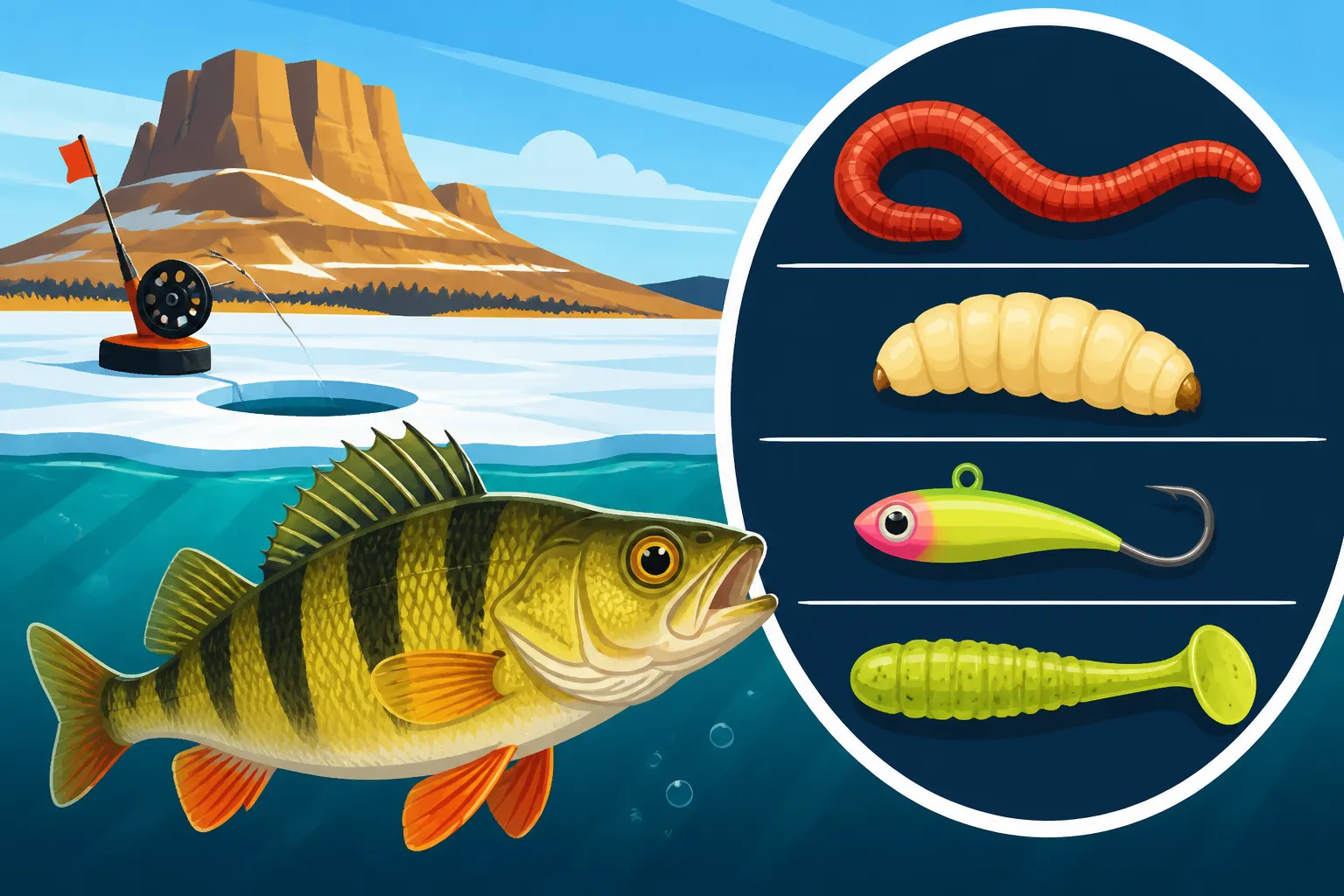
Wax worms are a classic choice. Their plump, juicy bodies are easily seen and smelled by perch. You can thread one or two onto a small ice jig (size 10 to 14 is ideal) or a plain hook. Spikes, the larvae of flies, are typically smaller and more active. Their constant wiggling motion can be a subtle yet powerful attractant. Many anglers will "cocktail" their baits, using a combination of a spike and a wax worm, or two spikes of different colors, to maximize visual appeal and scent. Both are readily available at bait shops, and you can even order larger quantities online through retailers like Amazon if you're planning an extended ice fishing spree. Remember to keep them cool but not frozen, usually in a breathable container with some sawdust or bedding. These baits are fantastic for tempting even the fussiest perch, especially when fishing in shallower waters or around weed edges where perch are actively foraging for invertebrates.
Other Live Bait Options
While minnows, wax worms, and spikes dominate the live bait scene for perch, a few other options can be surprisingly effective depending on the day and the body of water.
- Mealworms: Similar to wax worms but often a bit tougher, mealworms can be a good alternative, particularly if you find a local supplier that has very fresh ones. They offer a good profile and similar scent appeal.
- Crappie Minnows (Tiny Size): Sometimes, even the smallest fathead or crappie minnow is too large. If you can find truly tiny minnows, they can be dynamite for smaller, more finicky perch that are shy of anything larger.
- Gills/Fin Pieces: In a pinch, or if legal in your area (always check regulations!), a small sliver of perch fin or a tiny piece of belly meat can be incredibly effective. The natural oils and scent from a species they might prey on can be an irresistible temptation. Just be sure not to use any part of a game fish like walleye or bass.
Experimentation is key. Sometimes the perch on Lake Kampeska will prefer one over the other, while those on Bitter Lake might have a different preference. Having a variety of live baits on hand allows you to adapt to what the fish are telling you on any given day.
Top Artificial Baits and Lures for Perch Through the Ice
While live bait often holds the crown, artificial lures are indispensable tools for the serious ice angler. They allow for active jigging, cover water more efficiently, and often attract larger, more aggressive perch. Plus, they're always ready to go and don't require keeping alive.
Micro Jigs and Plastics
Micro jigs paired with tiny plastic trailers are an absolute game-changer for ice fishing perch. These setups are designed to mimic small insects, larval forms, or tiny baitfish, which are common forage for perch. The key is "micro" – we're talking about jigs weighing 1/32 oz down to 1/64 oz or even smaller, often tipped with plastics no more than an inch long.
There's a vast array of micro plastics available, from tiny worms and grubs to minnow profiles and even small insect imitations. Colors can be crucial; natural tones like brown, green pumpkin, or pearl often work well in clear water, while brighter colors like chartreuse, orange, or glow-in-the-dark plastics can be excellent in stained water or low light conditions. The beauty of plastics is their subtle action with minimal jigging, and they hold scent sprays well. You can often find a fantastic selection of these specialized micro jigs and plastics on Amazon, allowing you to stock up on different shapes and colors to match the hatch. When fishing these, a light rod with a sensitive tip is a must, as perch bites can be incredibly subtle.
Spoons and Jigging Raps
For a more aggressive presentation, or when targeting larger perch that might be keying in on baitfish, ice fishing spoons and jigging raps (or similar lipless crankbaits) are incredibly effective. These lures are designed to be fished actively, creating flash, vibration, and erratic movements that grab a perch's attention.
- Ice Spoons: Spoons like the classic Lindy Rattl'n Flyer or Acme Kastmaster come in various sizes and colors. For perch, small spoons (1/16 oz to 1/8 oz) in silver, gold, glow, or firetiger patterns are usually best. The key is to jig them with varying lifts and drops, letting them flutter and flash on the fall. Often, a perch will hit the lure as it descends or pauses. Tipping a spoon with a single wax worm or a minnow head can significantly increase its appeal by adding scent and a bit of natural movement.
- Jigging Raps (and other lipless baits): Lures like the Rapala Jigging Rap, Moonshine Shiver Minnow, or Northland Forage Minnow are designed to swim in circles when jigged, imitating a dying baitfish. These are particularly effective for active perch found suspending over deeper water. Again, smaller sizes (size 3 to 5) are usually preferred. Experiment with different jigging strokes – a sharp lift followed by a controlled fall can make the lure dart erratically, while a subtle quiver can entice a reluctant bite. The treble hook on the bottom often seals the deal.
Tungsten vs. Lead
When choosing your ice jigs, you'll inevitably encounter the debate between tungsten and lead. While both materials catch fish, understanding their differences can give you an edge, especially for finicky perch.
- Lead Jigs: Lead jigs are the traditional and often more affordable option. They come in a wide variety of shapes and sizes. However, because lead is less dense, a 1/32 oz lead jig is physically larger than a 1/32 oz tungsten jig. This means they fall slower and have a more subtle profile. For very wary perch, especially in shallow, clear water, the slower fall and smaller hook on a lead jig can sometimes be more appealing. They also have a lighter feel on the line, which some anglers prefer.
- Tungsten Jigs: Tungsten is significantly denser than lead. This means a tungsten jig of the same weight is much smaller than its lead counterpart. This density offers several advantages for ice fishing perch:
- Faster Drop: Tungsten jigs get down to the fish zone quickly, which is crucial when you're on a hot bite and want to get your line back down fast after catching a fish.
- Better Feel: The increased density translates to better feel on your rod. You can detect light bites more easily and maintain better contact with your lure, even in windy conditions or deeper water.
- Smaller Profile: A smaller profile for a given weight can be incredibly effective for finicky perch that are shy of larger baits. It looks like a concentrated bug or larva.
- Drilling Through the Noise: In crowded ice fishing situations or waters with a lot of particulate, the heavier, smaller tungsten jig can cut through the water column more directly.
Many anglers prefer tungsten for its efficiency and sensitivity, especially when fishing for perch in deeper water or when trying to maximize hookups. While they might be a bit more expensive initially, their performance benefits often outweigh the cost, making them a worthwhile investment for serious ice anglers.
Presentation and Technique Tips for Maximizing Perch Bites
Having the right bait is only half the battle. How you present that bait is just as, if not more, important when trying to entice lethargic winter perch. Mastering presentation involves a blend of subtlety, patience, and knowing when to get aggressive.
The Importance of Downsizing
When water temperatures drop, fish metabolism slows, and perch become incredibly finicky. This is why downsizing your presentation is often the secret weapon. A large, aggressive lure that would draw strikes in summer might completely spook a winter perch. Instead, think small, subtle, and natural.
This applies to everything: your lure size, your line size, and even your hook size. For jigs, aim for 1/32 oz to 1/64 oz, or even smaller, often paired with plastics less than an inch long. When using live bait, select the smallest minnows or use single wax worms or spikes. Your fishing line should be incredibly light – 2-4 lb test fluorocarbon or monofilament is ideal. This lighter line allows your tiny lures to have their most natural action and minimizes visibility. Light wire hooks are also important, as they allow smaller live baits to stay lively and don't overpower the lure's action. The smaller the offering, the less intimidating it is, and the more likely a perch is to commit to a bite rather than just inspect it. Consider the perch's natural winter diet, which often consists of tiny invertebrates; your presentation should mirror that.
Active vs. Passive Presentations
Perch behavior can change drastically throughout the day or even hour by hour, so being able to switch between active and passive presentations is crucial.
- Active Jigging: This involves imparting motion to your lure to attract attention. For perch, this usually means a series of small, rhythmic jigs. Try lifting your rod tip an inch or two, then letting it fall back to create a subtle flutter. Vary your retrieve: a few sharp lifts, then a long pause; or a rapid series of small twitches. The idea is to mimic a fleeing or injured baitfish or a struggling insect. Active jigging is often most effective during peak feeding times or when you've located an aggressive school. If perch are showing up on your flasher and not committing, try becoming more aggressive with your jigging.
- Passive Dead-Sticking: This technique involves leaving a baited hook or jig perfectly still, often in a separate hole from your active jigging line, or simply holding it motionless. Many times, the most lethargic perch will shy away from any movement and prefer a motionless, easy meal. A minnow hooked lightly below the dorsal fin, suspended just off the bottom or at the same depth as suspended perch, is a classic dead-sticking setup. Sometimes, the slightest quiver from a dying minnow or a subtle current movement is all it takes. Often, a subtle bend in your rod tip is the only indication of a bite. This strategy is fantastic for wary perch or when the bite is tough. Combining both methods – actively jigging one rod while dead-sticking another – is often the most effective approach to really dial into what the perch want that day.
Reading Your Electronics for Perch
Your flasher or sonar is more than just a fancy depth finder; it's your window into the underwater world and an absolutely vital tool for ice fishing perch. Learning to interpret what your screen is telling you will significantly increase your success.
When you drop your lure, you should see it as a mark on your screen. Adjust your gain so you can clearly see your bait without too much clutter. Look for fish marks (usually solid lines or arcs, depending on your unit) coming up to investigate your bait. Often, perch will appear as smaller, distinct marks, sometimes hugging the bottom or suspended in schools. If you see a fish mark approach your lure, stop jigging or give it the slightest twitch. Watch how the fish reacts. Does it move away? Then your presentation might be too aggressive. Does it stay glued to your bait? Then a subtle lift or a long pause might trigger the strike.
You can also use your electronics to identify the exact depth perch are holding. If you see marks at 15 feet, adjust your bait to that depth. If they're tight to the bottom in 20 feet, fish 6 inches to a foot off the bottom. Your electronics will also show you the bottom composition. For instance, if you're marking fish over a hard bottom with sparse weeds, that's valuable information that might lead you to similar spots. Don't underestimate the power of these tools; they help you find fish, understand their reactions, and present your bait precisely where they are. Mastering your electronics is part of becoming a truly skilled ice angler, and there are many great resources, including videos and guides on Best Fish Finders for Ice Fishing, to help you get started.
Here’s a quick overview of popular perch baits:
| Bait Type | Pros | Cons | Ideal Conditions / Technique |
|---|---|---|---|
| Fathead Minnows | Natural movement, strong scent, large profile for bigger perch | Can be expensive, require careful storage, might be too large for small perch | Active schools, targeting larger fish, dead-sticking, tipping jigs |
| Wax Worms | Highly attractive scent, durable, easy to rig, multi-species | Less active movement than minnows, smaller profile | Finicky perch, light jigging, tipping micro jigs, very versatile |
| Spikes (Maggots) | Extremely lively, excellent subtle movement, strong scent | Small size can be harder to rig for beginners, can be messy | Slow bites, ultra-finesse presentations, tipping micro jigs |
| Micro Plastics | Durable, variety of shapes/colors, no live bait storage | No natural scent unless added, requires active jigging | Active jigging, rapid searching, matching specific forage patterns |
| Ice Spoons | Flash and vibration attract from a distance, good for active fish | Can spook finicky fish, often requires tipping with live bait | Aggressive perch, searching wide areas, deeper water, vertical jigging |
| Jigging Raps | Erratic swimming action, good for baitfish imitation | Can be too aggressive for shy perch, treble hooks can snag weeds | Active perch, suspended fish, targeting predatory behavior |
Disclaimer
Fishing regulations, species limits, and license requirements can change. Always consult the latest South Dakota Game, Fish and Parks (GFP) regulations before heading out. This guide is for informational purposes only and does not replace official state guidelines. Be safe on the ice, always check ice thickness, and fish responsibly.