South Dakota Trolling Techniques for Walleye
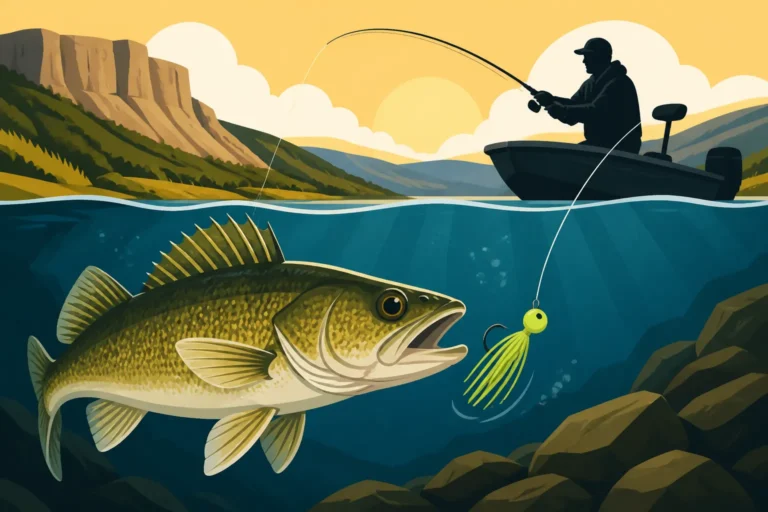
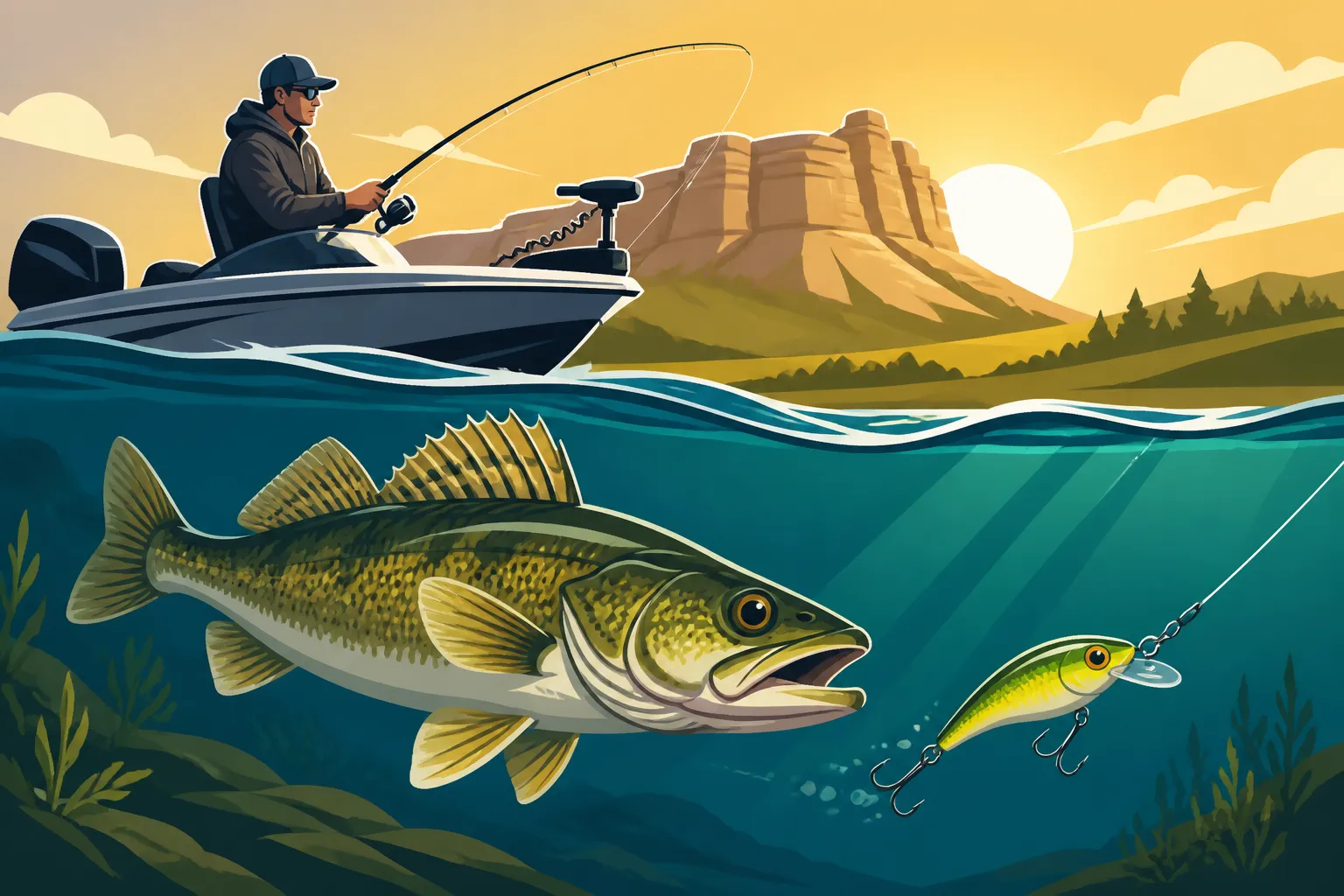
Chasing walleye in South Dakota can be one of the most rewarding angling experiences, but let's be honest, these fish can be incredibly elusive. You spend hours on the water, meticulously covering spots, and sometimes it feels like you're just dragging a lure through empty space. The sheer size of our reservoirs and lakes often leaves anglers wondering how to effectively cover water and find those actively feeding fish. This comprehensive guide is here to unravel the mysteries of South Dakota trolling techniques, helping you pinpoint walleye and bring more of these prized fish to your boat.
Understanding Walleye Behavior for Trolling Success
Before you even think about dropping a line, truly understanding the walleye you're after is paramount. Trolling isn't just about pulling a lure; it's about presenting that lure in the right place, at the right time, and at the right speed, all dictated by the walleye's natural tendencies.
Seasonal Movements and Depths
Walleye are constantly on the move, influenced heavily by water temperature, available forage, and spawning cycles. Knowing where they should be at different times of the year is your first step to successful trolling.
In the spring, right after the ice melts and the water begins to warm, walleye are often found in shallower areas. This is when they move into tributary rivers, creek mouths, and shallow main-lake flats for their spawning rituals. Post-spawn, they'll often linger in these areas, feeding aggressively to recover. As spring progresses into early summer, you'll find them transitioning to slightly deeper flats adjacent to these spawning grounds, or moving into the main river channels and along emerging weed lines as they seek out comfortable temperatures and abundant baitfish. A good strategy during this time is to troll crankbaits or spinner rigs in 8-15 feet of water, often hugging contours or searching for newly greening vegetation.
As the oppressive heat of summer truly sets in, walleye tend to seek refuge in deeper, cooler water. This is when you'll find them congregating around main lake points, submerged humps, deep rock piles, and distinct ledges or drop-offs. They often relate to the thermocline, that invisible layer where water temperature rapidly changes, as this is where baitfish like smelt and ciscoes tend to hold. Trolling tactics shift dramatically, requiring presentations that can reach depths of 20-40 feet, sometimes even deeper on our larger Missouri River reservoirs. Fall is a fantastic time for trolling, as walleye enter a major feeding frenzy in preparation for winter. They'll often move back shallower, particularly during low-light conditions, to chase baitfish into bays and onto flats before returning to deeper holding areas. Trolling can be highly effective near migration routes between these feeding and resting areas.
Even in winter, particularly before the ice forms solid, walleye can be found in deep holes and on gradual slopes leading into main lake basins. While ice fishing becomes the primary method once the lakes freeze over, understanding their deep-water wintering habits helps predict their locations during those last open-water trolling opportunities of the year.
Forage and Preferred Habitat
Walleye are opportunistic predators, and their diet directly influences where you'll find them. In South Dakota, the key forage species vary by water body but generally include a mix of rainbow smelt, ciscoes (also known as lake herring), gizzard shad, emerald shiners, and various perch species. For instance, on Lake Oahe, the abundance of "What Walleye Eat in Summer" like rainbow smelt often dictates where walleye will suspend in the water column.
Their preferred habitat is often dictated by the presence of these baitfish and structure that offers ambush points. Think rocky points that jut out into a main channel, submerged humps that rise from the depths, sharp ledges, or fields of submerged timber. Weed edges, especially those with distinct breaks, are also prime walleye real estate, offering cover and attracting bait. Current breaks, whether natural river bends or created by man-made structures like dams, are critical areas to target on the Missouri River system. Walleye will often position themselves just out of the main current, waiting for an easy meal to drift by. Understanding these dynamics is crucial; for more on how South Dakota's trophy fish grow, you might want to read about "South Dakota Walleye Growth Rates on Lake Oahe".
Essential Trolling Gear for South Dakota Waters
Trolling for walleye effectively isn't just about having a boat; it's about having the right tools to present your bait precisely and consistently. The vastness and depth of South Dakota's premier walleye fisheries demand a thoughtful approach to gear selection.
Rods, Reels, and Line Selection
The backbone of any successful trolling setup starts with your rod, reel, and line. Don't skimp here; the right combination will greatly enhance your success and enjoyment.
For rods, you're generally looking for something in the medium-light to medium-heavy power range, typically between 7 to 9 feet in length. The longer rods help spread out your lines when using multiple rods, especially important when running planer boards. A moderate to fast action is usually preferred; moderate allows the rod to absorb the shock of a strike without pulling the lure out of the fish's mouth, while fast action provides good sensitivity for detecting subtle bites and keeping constant pressure on the fish. Many anglers opt for fiberglass or composite rods for trolling because of their forgiving nature and ability to handle the constant load of pulling lures and weights. These rods are less fatiguing over a long day of trolling compared to ultra-stiff graphite rods.
When it comes to reels, line counter reels are, without exaggeration, crucial for precision trolling. These reels feature a small digital or mechanical counter that tells you exactly how much line you have deployed. This information is invaluable for replicating successful presentations, knowing how deep your lure is running, and communicating with fishing partners. Consistency is key in trolling, and line counters provide that consistency. You can find excellent options for line counter reels on Amazon, often bundled with suitable trolling rods. Look for reels with a smooth drag system and a comfortable retrieve ratio for long hours of fishing.
Line selection depends on your preferred technique and the specific conditions. Monofilament line, with its inherent stretch, acts as a shock absorber, which can be beneficial when a fish strikes aggressively, preventing hooks from tearing out. It's also more forgiving for beginners. Fluorocarbon main lines are gaining popularity due to their low stretch, offering increased sensitivity, and their near invisibility underwater, which can be a huge advantage in clear water conditions. Many anglers use a short fluorocarbon leader even with mono or braid. Braided line offers virtually no stretch, providing maximum sensitivity to feel subtle bites or when your lure is fouled. It also has a much thinner diameter for its strength, which can help lures dive deeper. However, its lack of stretch means you need a more forgiving rod and a well-set drag to prevent hooks from pulling. For an in-depth look at specific setups, check out our guide on "Best Rods and Reels for Walleye" and learn about "Best Line Type for Trolling Crankbaits".
Essential Electronics and Accessories
Modern walleye trolling is heavily reliant on technology. Fish finders, GPS, and electric trolling motors have revolutionized the game, allowing anglers to pinpoint fish and structure with unprecedented accuracy.
A quality fish finder with advanced sonar capabilities is non-negotiable. Look for units that offer side imaging, down imaging, and traditional 2D sonar. Side imaging allows you to scan wide swaths of water to locate structure, baitfish schools, and even individual walleye off to the sides of your boat. Down imaging provides a photo-like view directly beneath your boat, perfect for interpreting structure. 2D sonar is your reliable workhorse for showing fish arches and bottom composition. Integrated GPS functionality is equally important for marking waypoints where you've found fish or key structure. This allows you to return to productive spots with precision. To truly maximize this tool, delve into "How to Read a Fish Finder for Walleye" and explore some of the "Best Fish Finders for South Dakota Lakes".
A bow-mount electric trolling motor with GPS-based spot-lock technology is a game-changer. This feature allows your boat to hold its position automatically, even in wind or current, without having to drop an anchor. While not directly a "trolling" technique in the traditional sense, spot-lock is invaluable for holding on a productive break or hover-trolling small areas once fish are located. For actual trolling, a reliable kicker motor or your main outboard is typically used, but the electric motor can be used for fine-tuning speed or making subtle course corrections.
Planer boards are another essential accessory, particularly when fishing larger bodies of water or targeting scattered fish. These devices attach to your fishing line and "plane" out to the side of your boat, spreading your lures across a wider path. This allows you to cover more water and present multiple lines simultaneously without tangling. You can use inline planer boards, which attach directly to each line, or mast systems, which run a main line out from a mast on your boat, with multiple release clips for individual fishing lines. The choice depends on personal preference and the number of lines you're running. To learn more about these handy tools, check out our piece on "Best Planer Boards for Walleye Trolling". Finally, secure, adjustable rod holders are a must. They keep your rods properly positioned, absorb vibration from the boat, and allow you to precisely angle your rods for optimal lure presentation and line separation.
Diving Deeper with Crankbaits and Spinner Rigs
When it comes to trolling for walleye in South Dakota, crankbaits and spinner rigs are the dynamic duo. Each excels in different situations, and a comprehensive understanding of their nuances can dramatically increase your catch rate.
Crankbait Trolling Strategies
Crankbaits are versatile tools, designed to imitate baitfish and attract aggressive strikes. There's a dizzying array of styles, shapes, and colors, each with its own action and diving characteristics.
You'll encounter various types of crankbaits, from shallow divers that run just a few feet deep, perfect for spring flats, to deep-diving behemoths that can reach 30+ feet on their own. Minnow baits, with their slender profile and tight wiggle, are excellent imitators of many walleye forage species. Lipless crankbaits, while less common for trolling, can be effective in certain shallow situations, especially when fished aggressively. The key is to have a selection that covers various depths and actions. Brands like Rapala, Berkley, and Salmo offer a wide range of proven walleye crankbaits.
Color selection is often debated, but a good rule of thumb is to start with natural colors (perch, smelt, shiner patterns) in clear water and brighter, more aggressive colors (firetiger, chartreuse, clown patterns) in stained or muddy water conditions. Metallic finishes can be excellent on sunny days, reflecting light and mimicking flashing baitfish. However, sometimes walleye surprise you, so don't be afraid to experiment. Keep a varied selection in your tackle box, maybe something you picked up on Amazon after reading a hot review. Dive deeper into "Best Crankbait Colors for Stained Water" for more specific advice.
Speed is paramount when trolling crankbaits. Each crankbait has an optimal speed range where it exhibits its best action. Too slow, and it might just wobble weakly; too fast, and it can blow out or track poorly. Generally, walleye crankbait trolling speeds range from 1.5 to 3.0 mph, but this can vary depending on water temperature, fish activity, and bait profile. The most effective strategy is often to vary your speed throughout the day, using subtle accelerations and decelerations to trigger strikes. Don't be afraid to make an S-turn; this changes the speed of your lures on the inside and outside of the turn, often provoking a bite. Our guide on "How to Troll Crankbaits for Walleye" offers even more detailed insights.
Controlling your lure's depth is critical. The amount of line you let out, your trolling speed, and the diameter of your fishing line all play a role. Thinner lines allow lures to dive deeper. Many crankbait manufacturers provide dive curves, showing how deep their lures run at certain speeds with specific line lengths. Knowing these dive curves is incredibly helpful. You can also use clip-on weights, like Snap Weights, or specialty lines like lead core (which we'll discuss next) to get your crankbaits deeper than their natural diving capabilities.
Mastering Spinner Rigs and Bottom Bouncers
Spinner rigs, often paired with bottom bouncers, offer a completely different presentation, often slower and more subtle than crankbaits, making them incredibly effective in many South Dakota scenarios, especially when fish are less aggressive or holding tight to the bottom.
The beauty of a spinner rig lies in its simplicity and effectiveness. It typically consists of a clevis-mounted blade (Colorado, Indiana, Willowleaf being common shapes), colored beads, and one or two hooks, often baited with live bait like a nightcrawler or leech. The bottom bouncer is simply a lead weight with a wire arm designed to keep your lure off the bottom while preventing snags. Common bottom bouncer weights range from 1/2 oz in shallower, calmer water up to 2-3 oz or more in deeper water or strong currents, like those found on parts of the Missouri River. The length of your leader (the line connecting the bottom bouncer to your spinner rig) is important, usually between 2 and 6 feet, depending on how high you want your bait off the bottom and the activity level of the fish.
Fishing depths with spinner rigs and bottom bouncers are relatively easy to control. The bottom bouncer is designed to "bounce" along the bottom, keeping your bait in the strike zone. You'll want to deploy enough line so that your bottom bouncer occasionally ticks the bottom without constantly snagging. In areas with a lot of debris, you might lift your rod tip to keep it slightly higher. This technique is fantastic for covering flats, contour lines, or river channels where walleye are actively feeding on the bottom.
The optimal speed for spinner rigs is generally slower than crankbaits, usually in the 0.8 to 1.5 mph range. The goal is just enough speed to get the blade spinning and attract attention without making the live bait unnatural. Varying your speed, even subtly, can often trigger strikes from hesitant fish. For detailed advice on setting up and fishing these rigs, take a look at our "How to Fish a Spinner Rig for Walleye" guide, and certainly don't miss "Best Way to Rig a Nightcrawler for Walleye" for tips on presentation.
Precision Trolling with Lead Core and Downriggers
When walleye descend into the depths, as they often do in the vast Missouri River reservoirs during summer, conventional crankbaits and bottom bouncers sometimes aren't enough. That's when specialized deep-water trolling techniques like lead core and downriggers come into play, offering unparalleled depth control and presentation.
Understanding Lead Core Line
Lead core line is a peculiar yet highly effective tool for getting lures down deep without the need for heavy clip-on weights. It's essentially a lead wire encased in a braided Dacron sheath. The key characteristic is that it's color-coded, typically with a new color every 10 yards (or 30 feet). This color change helps anglers estimate how much line they have out and, by extension, how deep their lure is running.
The beauty of lead core lies in its ability to consistently deliver a lure to a specific depth without heavy terminal tackle right at the bait, which can sometimes spook fish. As a general rule of thumb, one "color" (10 yards) of lead core line will get your lure approximately 5 feet deeper at a trolling speed of around 2 mph, when paired with a small crankbait that has minimal diving action. However, this is just a starting point. The actual depth achieved depends heavily on your trolling speed, the type and size of your lure, and the diameter of the leader you use. A faster troll means shallower running, and a slower troll means deeper. It takes some experimentation, but once you figure out a specific lure's dive curve with lead core, you can consistently hit precise depths.
One of the biggest advantages of lead core is its stealth. Since the weight is distributed along the entire line, your lure can be presented with a natural, unencumbered action, far away from any heavy sinkers near the bait. This can be particularly effective in clear waters like parts of Lake Oahe, where fish might be more wary. It's also excellent for covering large areas of suspended fish.
However, lead core does come with its disadvantages. It's much thicker than monofilament or braid, requiring larger reels to hold a sufficient amount of line (often 5-10 colors or more). It's also less sensitive due to its stretch and weight, making subtle bites harder to detect. You'll typically use a short leader of fluorocarbon or monofilament between your lead core and the lure. For specific tactics on our massive reservoirs, be sure to check out "Trolling for Walleye on Lake Oahe".
Utilizing Downriggers for Deep Water Walleye
For the absolute pinnacle of deep-water trolling precision, downriggers are the answer. While more commonly associated with salmon and trout fishing, they are incredibly effective for targeting walleye in the deepest parts of South Dakota's reservoirs during the heat of summer.
A downrigger consists of a heavy cannonball weight (typically 6-12 pounds), a cable or braid that lowers and raises the weight, and a release clip. Your fishing line is clipped into this release clip, allowing you to lower your lure to a specific depth alongside the cannonball. When a fish strikes, the line pops free from the clip, and you fight the fish directly on your rod and reel, without the added weight of the cannonball.
The primary benefit of using downriggers is unparalleled depth control. You can precisely set your lure at exactly the depth you see fish or bait on your fish finder, whether it's 20 feet or 60 feet. This precision is invaluable when walleye are tightly stacked or holding to a specific thermocline layer. Furthermore, because your main fishing line is only connected to the downrigger via a release clip, you can use a lighter, more sensitive line from your rod to your lure. This means a more natural presentation, better bait action, and a much more enjoyable fight once a fish hits.
Setting up downriggers for walleye typically involves a medium-heavy rod with a forgiving tip, a good quality reel spooled with monofilament or braided line, and your preferred deep-diving crankbait or spinner rig. You'll attach your lure to your fishing line, then clip your fishing line into the downrigger release, usually 10-50 feet behind the cannonball. Then, you lower the cannonball to your desired depth. It's essential to monitor your fish finder constantly to adjust depth as needed. Downriggers are particularly useful when targeting "Deep Water Summer Fishing Techniques" as walleye retreat to the cooler depths.
Advanced Trolling Tactics and Considerations
Becoming a truly successful walleye troller in South Dakota goes beyond just knowing your gear. It involves mastering subtle boat maneuvers, keen observation, and the ability to adapt to ever-changing conditions on the water.
Speed Control and S-Turns
While the "right" trolling speed can vary by the minute, understanding how to manipulate your boat's speed and direction is crucial for triggering strikes. Walleye are often attracted by subtle changes in lure action.
Simply maintaining a constant speed can be effective, but often, fish respond better to variations. Instead of a perfectly straight line, try to incorporate subtle accelerations and decelerations. This can be done by briefly pushing the throttle forward or easing off, or even by making gradual turns. When a lure speeds up, it might dart and flash; when it slows down, it might sink slightly or appear vulnerable. These changes often trigger a predatory response from walleye that might be following but not committing.
The "S-turn" is a classic trolling maneuver that capitalizes on these speed variations. By making wide, sweeping S-turns with your boat, the lures on the inside of the turn will slow down and drop slightly, while the lures on the outside of the turn will speed up and rise. This creates a dynamic presentation across all your lines simultaneously. Often, when you make an S-turn and one of your lures changes its speed or depth, that's when a walleye will strike. It's a highly effective way to cover water and present your lures in a constantly changing, enticing manner. For a detailed look at this crucial element, refer to our guide on "Best Trolling Speed for Walleye".
When fishing the Missouri River system, current is another major factor. Trolling with the current will generally require less speed from your motor to achieve the desired lure speed through the water. Trolling against the current will require more motor speed. Trolling across the current can be tricky but is often very effective, as it allows your lures to swing through different current seams. Always pay attention to how the current is affecting your lures' action and adjust your boat speed accordingly.
Reading the Water and Adjusting on the Fly
The biggest difference between an average troller and a great one is the ability to interpret what the water is telling them and make rapid adjustments. South Dakota's waters, especially the large reservoirs, are dynamic environments.
Wind is a constant companion on the plains and directly impacts your boat speed and lure presentation. A strong headwind will naturally slow your boat, while a tailwind will push it faster. Crosswinds can make maintaining a straight course a nightmare. Drift socks or sea anchors are indispensable tools for controlling your boat speed in windy conditions. Deploying one or two drift socks can help slow your boat down and keep it tracking straight, allowing your lures to achieve their optimal action.
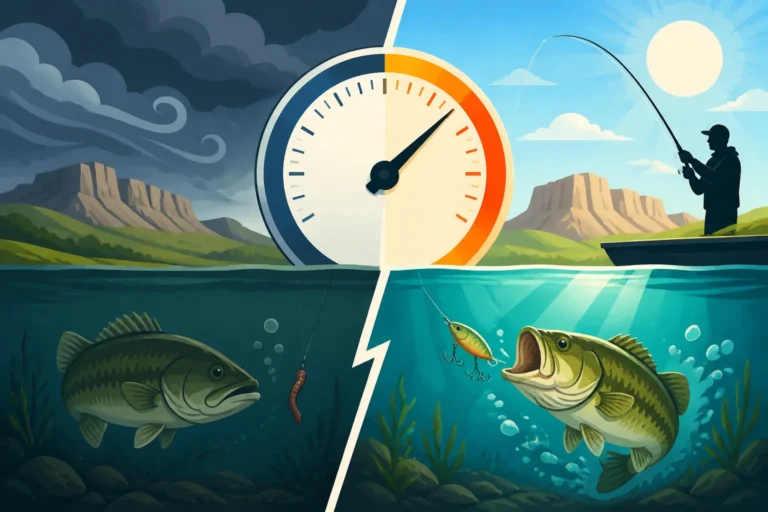
Water temperature is a critical, often overlooked, factor. Walleye are cold-blooded and their metabolism, activity level, and preferred locations are directly tied to water temperature. You'll often find distinct thermal layers, or thermoclines, in deeper lakes during summer, and walleye will often relate to the baitfish that stack up in these layers. Use your fish finder's temperature gauge or a separate thermometer to locate these crucial temperature breaks. For a deeper understanding, dive into "Reading Water Temperature for Walleye".
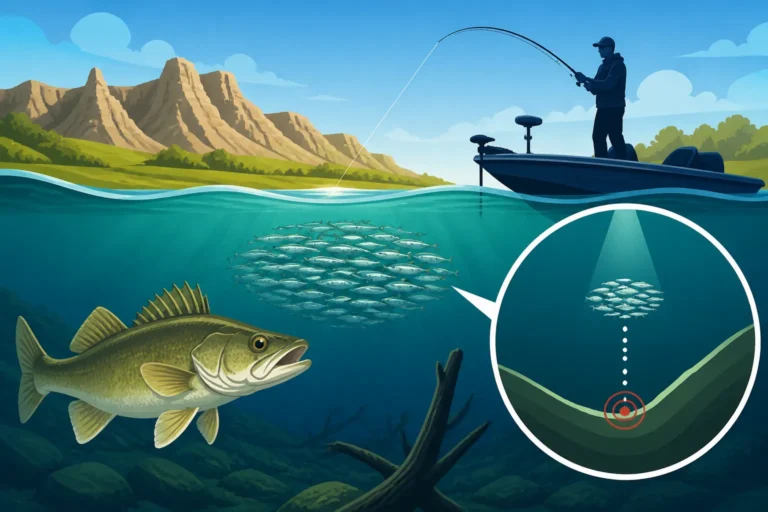
Always be on the lookout for baitfish schools. Whether they appear as large clouds on your sonar or you spot them dimpling the surface, where there's bait, there are usually predators. Walleye will follow these schools religiously. If you mark a massive school of bait, try trolling through or around it, adjusting your lure depth to match the depth of the bait. Similarly, keep an eye out for birds diving, which often indicates baitfish being pushed to the surface by feeding predators.
Finally, always follow the contour lines on your GPS. Walleye are structure-oriented fish, and key features like points, humps, ledges, and channels are often defined by specific depths and contours. Using your GPS to precisely follow a depth contour or the edge of a submerged creek bed will keep your lures in the strike zone longer. This is particularly effective on large, featureless flats where small contour changes can hold significant numbers of fish. Learning "How to Read Contour Lines on a Lake Map" can revolutionize your trolling game. Don't be afraid to experiment with different depths, speeds, and lures until you dial in the pattern. The walleye will tell you what they want.
Top South Dakota Walleye Trolling Destinations
South Dakota boasts some of the finest walleye fishing in the country, and trolling is a hugely productive method across many of its diverse water bodies. From the sprawling Missouri River reservoirs to the fertile glacial lakes, there's a perfect spot for every troller.
Missouri River Reservoirs
The Missouri River reservoirs—Lake Oahe, Lake Sharpe, Lake Francis Case, and Lewis and Clark Lake—are the crown jewels of South Dakota walleye fishing. Their immense size and diverse structure make them prime trolling grounds. Each has its own character and best times for trolling. If you're planning a trip to these legendary waters, a comprehensive "South Dakota Missouri River Fishing Guide" is a must-read.
- Lake Oahe: This massive reservoir, stretching from Bismarck, North Dakota, to Pierre, South Dakota, is famous for its incredible walleye population and trophy potential. Oahe is deep, clear, and boasts a variety of structure including submerged timber, rocky points, humps, and vast flats. Spring and fall often see walleye in shallower bays and along points, making crankbaits and spinner rigs effective. In summer, walleye often suspend in the main lake basin, following schools of rainbow smelt, requiring lead core or downriggers to reach them. Areas near Mobridge, Gettysburg, and Pierre are popular launching points. Our "Lake Oahe Fishing Guide" will provide you with even more localized information.
- Lake Sharpe: Located downstream from Oahe, Lake Sharpe is a shallower, riverine reservoir known for its consistent walleye bite. It's not as deep as Oahe, but its fertile waters hold an abundance of baitfish, leading to fast growth rates for walleye. Trolling with crankbaits and spinner rigs is highly effective throughout the year, particularly along the numerous points, humps, and channel edges. Areas around Pierre and Fort Thompson are hotbeds of activity. For a deeper dive into this fishery, consult the "Lake Sharpe Fishing Guide".
- Lake Francis Case: Further downstream, Lake Francis Case offers excellent walleye fishing with a slightly more varied bottom contour than Sharpe. It's a bit deeper in places and offers classic riverine characteristics mixed with wide-open lake sections. Trolling here, especially in the spring and fall, often involves working the breaks, main channel edges, and submerged humps. It's a very productive lake for both numbers and quality walleye.
- Lewis and Clark Lake: The easternmost of the Missouri River reservoirs, Lewis and Clark Lake near Yankton is generally shallower and has more stained water than its upstream counterparts. While known for its crappie and perch, it also holds a healthy population of walleye. Trolling shallower-running crankbaits and spinner rigs along weed lines, points, and flats is often the most productive method, especially in spring and fall.
Glacial Lakes and Other Hotspots
While the Missouri River reservoirs get much of the attention, eastern South Dakota's glacial lakes offer fantastic walleye trolling opportunities, often in a more intimate setting.
- Lakes Kampeska, Poinsett, and Bitter Lake: These lakes, located in the northeastern part of the state near Watertown, are classic prairie walleye factories. They are generally shallower than the Missouri River reservoirs, with abundant weed growth, mud flats, and subtle contour changes. Trolling shallow to medium-diving crankbaits and spinner rigs along weed edges, subtle breaks, and across mud flats is incredibly productive here. These lakes warm up faster in spring and offer excellent early-season trolling. Our "South Dakota Glacial Lakes Walleye Fishing" guide has detailed information on these productive fisheries.
- Belle Fourche Reservoir: Tucked away in western South Dakota, Belle Fourche Reservoir offers a unique and often overlooked walleye fishery. It's a large, relatively clear reservoir with good structure. Trolling strategies here are similar to the glacial lakes, focusing on points, humps, and main lake contours. Be sure to check local regulations for this lake, as it sometimes has special walleye limits. The "Belle Fourche Reservoir Fishing Guide" provides the specifics you'll need.
| Trolling Technique | Primary Target Depth | Typical Speed (MPH) | Lure Type (Examples) | Pros | Cons |
|---|---|---|---|---|---|
| Crankbaits | Shallow to Deep (5-30 ft+) | 1.5 – 3.0 | Rapala Shad Rap, Berkley Flicker Shad, Salmo Hornet | Covers water fast, triggers aggressive strikes | Depth sensitive to speed/line, can snag in heavy cover |
| Spinner Rigs (w/ Bouncers) | Bottom-oriented (5-40 ft) | 0.8 – 1.5 | Crawler harness with Colorado/Indiana blade | Effective for neutral fish, great with live bait | Slower coverage, can snag if not attentive to bottom |
| Lead Core | Mid-depth to Deep (15-50 ft) | 1.8 – 2.5 | Small crankbaits, spoons, stickbaits | Reaches deep without clip-on weights, stealthy | Bulky line, less sensitive, requires specialized reels |
| Downriggers | Precise Deep (20-100+ ft) | 1.5 – 2.5 | Deep-diving cranks, spoons | Exact depth control, light line to lure, great fight | Requires dedicated equipment, more complex setup |
Disclaimer
The information provided in this guide is for educational and informational purposes only. Fishing regulations, season dates, and limits are subject to change. Always consult the most current South Dakota Game, Fish and Parks (GFP) fishing regulations handbook or their official website before heading out on the water. It is the angler's responsibility to know and abide by all applicable laws and regulations. Fishing inherently carries risks, and safety precautions should always be observed, including wearing appropriate personal flotation devices.