Belle Fourche Reservoir Walleye Minimum Length
There's nothing quite like the excitement of a tug on your line, especially when you're targeting those elusive walleye in South Dakota. But that thrill can quickly turn to anxiety when you're unsure about the exact rules for keeping your catch, particularly in a unique spot like Belle Fourche Reservoir. Navigating the specific regulations, especially those regarding size limits, can feel like trying to solve a complex puzzle. This guide is here to untangle the nuances of walleye length limits on Belle Fourche, ensuring you can fish with confidence and stay on the right side of the law.
Why Belle Fourche Reservoir Has Unique Walleye Regulations
Belle Fourche Reservoir, nestled in the scenic western part of South Dakota, isn't just another body of water; it's a prime fishing destination with a thriving walleye population. However, managing this particular fishery requires a nuanced approach, which is why its walleye regulations often stand apart from statewide rules. The South Dakota Game, Fish and Parks (GFP) implements these specific rules to ensure the long-term health and quality of the walleye population, aiming for a balance between angler harvest and the growth of larger, more mature fish.
The unique characteristics of Belle Fourche, such as its nutrient levels, forage base, and angler pressure, all play a role in shaping these tailored regulations. What works for a massive reservoir on the Missouri River system might not be ideal for Belle Fourche's distinct ecosystem. The goal is often to protect a specific "slot" of breeding-age fish, allowing them to reproduce and contribute to future generations, while still providing opportunities for anglers to harvest smaller, more abundant fish, and occasionally a trophy.
The Specific Walleye Slot Limit on Belle Fourche
Forget a simple "minimum length" rule for walleye on Belle Fourche Reservoir; here, you're dealing with a protected slot limit. This is a crucial distinction that trips up many anglers, so let's break it down precisely. For the most recent fishing season, the regulation for walleye on Belle Fourche Reservoir specifies:
- 15- to 18-inch protected slot limit: This means any walleye you catch that measures between 15 inches and 18 inches inclusive must be immediately and carefully released back into the water. These are typically the prime breeding-size fish that wildlife managers want to protect.
- One over 18 inches allowed in the daily limit: If you catch a walleye that is larger than 18 inches, you are allowed to keep it. However, only one of these larger fish can be part of your total daily limit. This allows for the occasional harvest of a trophy while still emphasizing the protection of the reproductive population.
- Daily Limit: The daily limit for walleye on Belle Fourche Reservoir is typically 4 fish. This means you can keep four walleye total in a single day, provided they meet the size requirements outside the protected slot.
- Possession Limit: The possession limit is usually double the daily limit, meaning 8 walleye per angler. This refers to the total number of fish you can have in your possession at any given time, whether in your livewell, cooler, or at home.
So, to be clear, you can keep walleye that are under 15 inches. These smaller fish are often more numerous and can provide excellent table fare without impacting the vital breeding stock. It’s a dynamic management tool designed to create a healthier, more robust fishery for everyone. Understanding the Belle Fourche Reservoir Special Walleye Rules is key to a successful and legal outing.
How Belle Fourche Differs from Other South Dakota Waters
The protected slot limit on Belle Fourche Reservoir is a prime example of how specific regulations can vary dramatically across South Dakota's diverse waterways. Many other lakes and stretches of the Missouri River reservoirs might have a simple minimum length requirement, or sometimes no length limit at all for walleye, opting instead for a straightforward daily and possession limit.
For instance, on much of Lake Oahe or Lake Sharpe, you might find a general statewide daily limit of 4 walleye with no specific length restrictions, or perhaps just a general statewide length limit that is less restrictive. The Black Hills trout streams, of course, have entirely different rules, often focusing on artificial lures or catch-and-release segments. This makes it absolutely essential for anglers to consult the most current South Dakota Fishing Regulations Explained or the official South Dakota GFP Fishing Handbook Guide before heading out to any specific body of water. Assuming one set of rules applies everywhere in South Dakota is a surefire way to find yourself in a bind. The uniqueness of Belle Fourche’s slot limit highlights the Game, Fish and Parks’ commitment to managing each fishery according to its specific needs and ecological conditions.
Understanding the "Minimum Length" in Practice
When you're out on Belle Fourche Reservoir, the concept of a "minimum length" isn't as simple as checking if your fish hits a certain mark. Because of the protected slot, you need to understand where your fish falls within three distinct categories: below the slot, within the slot, or above the slot. This requires precise measurement and careful decision-making right there on the water.
Measuring Your Catch Accurately
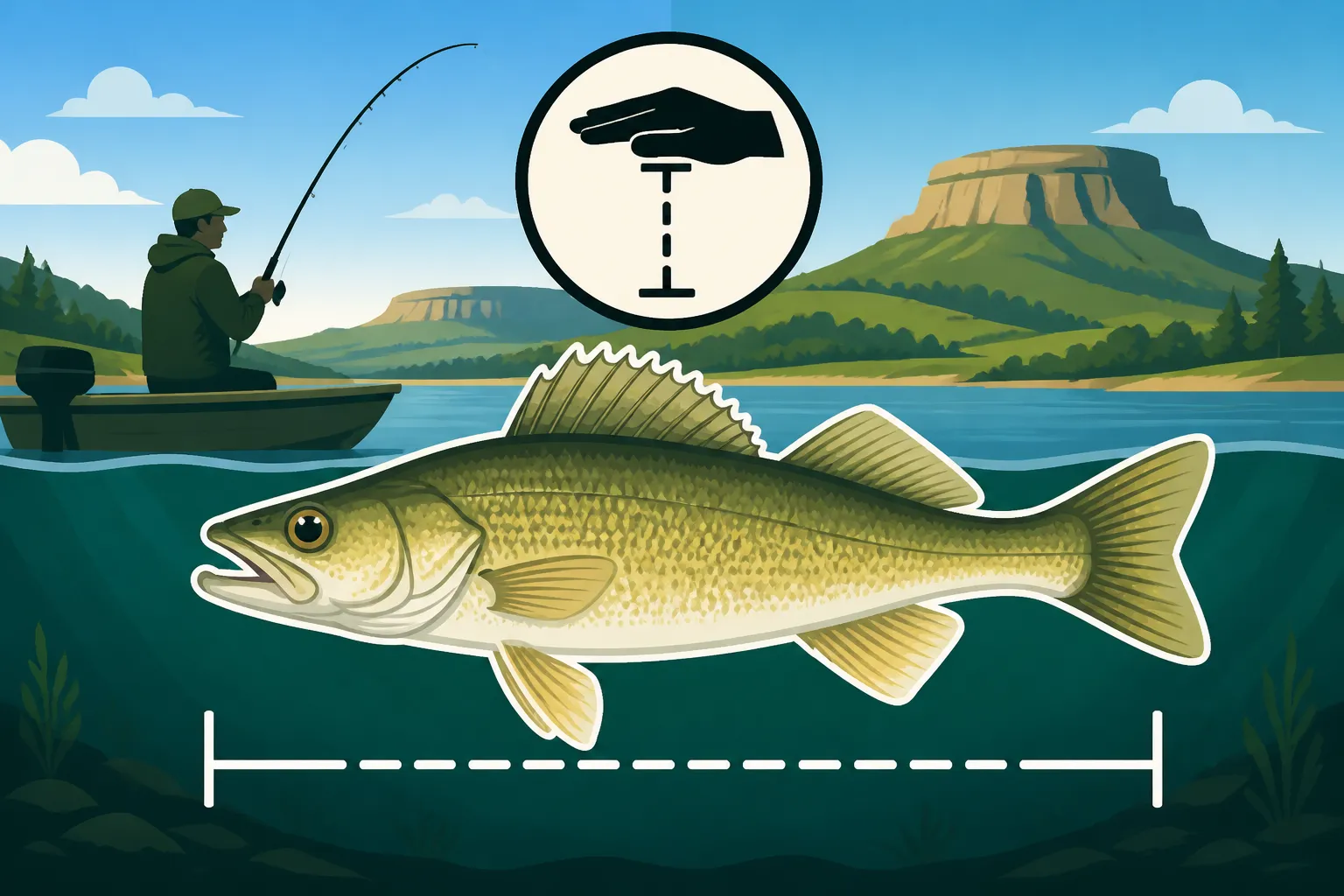
Getting an accurate measurement of your walleye is paramount to staying legal and ensuring the survival of any fish you need to release. The official measurement for any fish in South Dakota is taken from the tip of the snout (mouth closed) to the end of the tail (tail pinched together to achieve the maximum length).
Here’s how to do it properly:
- Prepare Your Measuring Device: Before you even cast your first line, have a reliable measuring board or tape easily accessible in your boat or on shore. Many anglers prefer a dedicated bump board, which provides a solid surface and a clear start point for the snout. You can find excellent, durable measuring boards on Amazon, often with clear markings for various species.
- Handle with Care: Once you've landed a walleye, handle it as little as possible. If you intend to release it, wet your hands thoroughly before touching the fish to protect its slime coat, which is vital for its immune system. Avoid grabbing it by the eye sockets or gill plates. A lip gripper can be helpful for control.
- Place the Fish on the Board: Lay the fish flat on its side, belly down, against the measuring device. Ensure the tip of its snout is pressed firmly against the starting point (the "bumper" on a measuring board).
- Pinch the Tail: Gently squeeze the tail fin together to achieve its maximum length. This is crucial as a relaxed tail might give a shorter, inaccurate reading.
- Read the Measurement: Note where the pinched tail ends on the ruler. This is your official length.
- Quick Decision: Based on the Belle Fourche rules (under 15 inches, 15-18 inches, or over 18 inches), immediately determine if the fish is a keeper or if it must be released.
Common mistakes include not pinching the tail, not pressing the snout against the starting point, or letting the fish flop around, leading to an imprecise measurement. Remember, it's better to be conservative if you're unsure.
What to Do with Undersized Walleye
Catching a walleye that falls within the 15- to 18-inch protected slot, or even one that's under 15 inches but you choose to release, comes with a responsibility: ensuring its best chance of survival. Proper handling is key here.
- Minimize Out-of-Water Time: Fish cannot breathe air. The longer they are out of the water, the more stress they endure, and the less likely they are to survive. Have your camera and measuring device ready before you even bring the fish into the boat.
- Use a Net (Carefully): A rubber-coated net is ideal as it's gentler on the fish's slime coat and fins than traditional nylon nets. Avoid dragging the fish onto rough surfaces like boat carpets.
- Barbless Hooks (Optional, but Recommended): If you're primarily targeting fish for release, switching to barbless hooks (or crimping down the barbs on your existing hooks) can make unhooking much faster and less damaging.
- Unhooking: Use needle-nose pliers or a hook-remover tool to quickly and gently remove the hook. If the fish is deeply hooked (which is less common with walleye), cut the line as close to the hook as possible. Attempting to dig out a deeply embedded hook will often cause more harm than leaving it in.
- Release Technique: Support the fish horizontally in the water. If it seems stunned or disoriented, gently hold it upright, moving it back and forth slightly to allow water to flow over its gills until it regains its strength and swims away on its own. Never just toss it back into the water.
- Avoid "High-Grading": This refers to keeping several legal fish throughout the day, only to release smaller ones later in favor of bigger ones as you approach your limit. This is often illegal and highly unethical as it increases the mortality of released fish. Once a legal fish is put on your stringer or in your livewell, it counts towards your limit and generally cannot be exchanged for another. This is an important consideration, especially with the "one over 18 inches" rule.
Understanding these techniques not only helps conserve the fishery but also ensures you avoid potential penalties. Releasing fish responsibly is a cornerstone of sustainable angling, and it’s a critical part of adhering to the specific rules for South Dakota Walleye Limits and South Dakota Fish Limits and Size Restrictions.
The Impact of Belle Fourche's Walleye Regulations on Anglers
While specific regulations like Belle Fourche's protected slot limit might initially seem like an added layer of complexity, they are ultimately designed to enhance the fishing experience for everyone. These rules directly influence the size structure of the walleye population, leading to a healthier, more robust fishery with a higher potential for larger, quality fish.
For anglers, this means a shift in mindset and potentially technique. Instead of just aiming to fill a stringer, there's a greater emphasis on understanding the fishery and making informed decisions on the water. It promotes conservation and a deeper appreciation for the resource, knowing that the rules are in place to ensure good fishing for years to come.
Adjusting Your Fishing Strategy
The protected slot limit on Belle Fourche absolutely should influence how you approach your fishing trip. Here’s how you might adjust your strategy:
- Targeting Smaller Fish (Under 15 inches): If your goal is primarily to harvest fish for the table, you might focus on areas where smaller walleye are more prevalent. This could mean shallower flats, areas with abundant baitfish schools, or specific contours where juvenile walleye congregate. Lighter tackle and smaller baits or jigs can be effective here.
- Targeting Larger Fish (Over 18 inches): If you're hoping for that "one over 18" trophy, you’ll likely focus on deeper structure, main lake points, humps, or areas where larger walleye are known to hunt. Bigger baits, larger crankbaits, or more aggressive jigging techniques might be employed. These fish often prefer different forage and locations. Using a good fish finder to scout for deeper holding fish is crucial. Understanding How to Read a Fish Finder for Walleye can be a game-changer.
- Minimizing Mortality for Slot Fish: When you're consistently catching fish within the 15-18 inch slot, you need to be extra vigilant about quick and careful release. This might mean using circle hooks, which tend to hook fish in the corner of the mouth, making unhooking easier. It also emphasizes the need for rapid measurement and gentle handling, as discussed earlier.
- Bait and Lure Choices: Your choice of Best Lures for South Dakota Walleye might shift. If you want to avoid the slot, you might try presentations that appeal more to either very small or very large fish. For example, smaller jigs and live bait might tempt the "unders" more, while larger crankbaits and swimbaits could attract the "overs."
- Time of Year and Location: Walleye behavior changes with the seasons. Researching Belle Fourche Reservoir Walleye Fishing Tips for specific times of the year can help you target the size of fish you're allowed to keep or wish to release. Early season might see more smaller, active fish, while late fall could bring out the big ones.
By thoughtfully adapting your tactics, you can maximize your enjoyment and success while respecting the regulations designed to protect the Belle Fourche fishery.
Navigating the Rules with Confidence
Feeling confident in your understanding of the rules means less stress on the water and a more enjoyable fishing experience. Nobody wants to unintentionally violate regulations. The key to confident compliance is proactive education and awareness.
- Always Carry the Regulations: The official South Dakota Game, Fish and Parks (GFP) fishing handbook is your Bible on the water. Whether you have a physical copy, a PDF on your phone, or the GFP MyFishHunt app, ensure you can access the most current regulations for the body of water you're fishing. Licenses and regulations are dynamic and can change year to year.
- Check Signs at Access Points: Many public boat ramps and fishing access points on Belle Fourche Reservoir will have signs posted detailing the specific walleye regulations. Make it a habit to check these, even if you think you know the rules, as they serve as a valuable last-minute reminder.
- Ask Local Experts: Bait shop owners, fishing guides, and experienced local anglers are often a wealth of information regarding current conditions and specific regulation interpretations. Just remember to verify what you hear with the official GFP handbook.
- Understanding Your South Dakota Fishing License Guide: While separate from length limits, your license is the fundamental requirement for fishing. Ensure you have the correct license for your residency and the type of fishing you're doing. It’s all part of being a responsible angler.
- Embrace the "Why": Understanding why a protected slot limit exists on Belle Fourche – to foster a healthier, more productive walleye population – helps you embrace the rules rather than resent them. This perspective encourages responsible angling practices and promotes conservation for future generations.
Staying informed and making responsible choices ultimately leads to a more rewarding fishing experience for you and helps maintain the incredible fishing opportunities that Belle Fourche Reservoir offers.
Common Questions and Misconceptions
The specific nature of Belle Fourche's walleye regulations often leads to questions and sometimes, outright confusion. It's easy to get tangled up between daily limits, possession limits, and the infamous slot limit. Let's clear up some of the most common points of confusion to ensure you're fully prepared.
Clarifying Slot Limits and Possession Limits
The protected slot limit on Belle Fourche Reservoir (15- to 18-inches) works in conjunction with the daily and possession limits, but they regulate different aspects of your catch. It’s not just about one length, but a combination of factors.
- Daily Limit: This is the maximum number of legal walleye an individual angler can harvest and keep in a single day. For Belle Fourche, this is generally 4 walleye. Within those 4, you can keep fish under 15 inches, and one fish over 18 inches. You cannot keep any fish between 15 and 18 inches.
- Example: On a given day, you could keep four walleye all under 15 inches. Or, you could keep three walleye under 15 inches and one over 18 inches. You could NOT keep two fish over 18 inches, even if your total was only two fish. You also could NOT keep a 16-inch walleye.
- Possession Limit: This refers to the total number of legal walleye an individual can have in their possession at any given time, regardless of when they were caught. This includes fish in your livewell, cooler, vehicle, campsite, or home freezer. For Belle Fourche, this is typically 8 walleye. Your possession limit cannot contain more than two fish over 18 inches (since the daily limit is one, and possession is typically two daily limits).
- Example: If you fished for two days, keeping 4 walleye each day (three under 15 inches and one over 18 inches each day), you would have 8 walleye in your possession, with two of them being over 18 inches. This would be legal. If you only had one day of fishing but had 8 walleye, you would be over the daily limit.
- The Slot Limit's Role: The 15-18 inch slot is a restriction on what you can keep. It doesn't count toward your daily or possession limit if you release them (which you must do). It simply dictates which fish are eligible to be part of those limits.
It’s crucial to understand that these limits are cumulative and apply concurrently. You can't just pick one rule to follow; you must adhere to all of them. This holistic approach ensures the sustainable management of the Belle Fourche walleye fishery.
What Happens If You Keep an Illegal Walleye?
Fishing regulations are not merely suggestions; they are laws designed to protect natural resources. Violating them, even unintentionally, can lead to serious consequences. The South Dakota Game, Fish and Parks (GFP) conservation officers are highly trained and diligent in enforcing these rules.
If you are found to be in possession of an illegal walleye from Belle Fourche Reservoir – whether it's an undersized fish, a fish within the protected slot, or too many fish over 18 inches within your daily or possession limit – you could face:
- Fines: Penalties vary depending on the severity of the violation, the number of illegal fish, and any previous offenses. Fines can range from moderate to substantial.
- Confiscation of Fish: Any illegally harvested fish will be confiscated by the conservation officer.
- Loss of Equipment: In more severe cases, or for repeat offenders, your fishing equipment (rods, reels, even your boat) could be seized.
- Suspension or Revocation of Fishing Privileges: This is a particularly impactful consequence, where you could lose your right to fish in South Dakota for a specified period, or even permanently. This can also affect your ability to get licenses in other states due to reciprocity agreements.
- Criminal Charges: In egregious cases, such as commercial poaching or multiple intentional violations, criminal charges could be filed, leading to jail time.
The GFP places a high priority on compliance to protect the state's valuable fisheries. Ignorance of the law is generally not considered a valid excuse. This is why knowing South Dakota Fishing Without a License Penalties and all specific regulations like those for Belle Fourche is so vital. Conservation officers are there to educate and enforce, and they appreciate anglers who take the time to understand and respect the rules. Their primary goal is to ensure the long-term health of the fishery for all to enjoy.
Belle Fourche Walleye Regulations Overview
To help visualize the specific differences, here's a comparison of Belle Fourche Reservoir's walleye regulations versus the typical statewide general regulations. Always remember to check the current year's official South Dakota GFP Fishing Handbook for the most up-to-date information, as regulations can change.
| Regulation Aspect | Belle Fourche Reservoir Walleye | General Statewide Walleye Regulations (Typical) |
|---|---|---|
| Minimum Length | None (can keep fish under 15 inches) | Often none, or a general 14-inch minimum (check specific waters) |
| Protected Slot Limit | 15- to 18-inches (all fish in this range must be immediately released) | Rarely implemented; typically only specific, heavily managed waters |
| "Over" Fish Rule | One walleye over 18 inches allowed in the daily limit | No specific "over" rule; all legal fish count towards the daily limit |
| Daily Limit | 4 walleye (complying with size rules: under 15", and only one over 18") | 4 walleye (no specific size restrictions beyond minimum if applicable) |
| Possession Limit | 8 walleye (complying with size rules: max two over 18") | 8 walleye (no specific size restrictions beyond minimum if applicable) |
| Purpose | Promote trophy growth, protect prime breeding stock, provide harvest opportunities for smaller fish | Manage overall population, ensure sustainable harvest |
This table clearly illustrates why special attention is needed when fishing Belle Fourche. The multi-faceted approach to size limits is distinct and requires anglers to be well-informed before casting their lines.
Disclaimer
Please remember that fishing regulations, bag limits, and slot limits are subject to change. Always consult the most current South Dakota Game, Fish and Parks (GFP) Fishing Handbook or their official website before heading out on your fishing trip. The information provided in this guide is for general informational purposes only and should not be considered legal advice. It is the angler's responsibility to know and comply with all current regulations.