Best Prop Size for a Shallow Water Boat
Oh, the age-old dilemma of getting your boat to perform its best, especially when you love to explore those skinny water nooks and crannies that hold the best fish! It's frustrating to feel your prop "blow out" or grind on the bottom when you're just trying to get to that hidden backwater slough on the James River or navigate a shallow stretch of Lake Sharpe. This guide is all about helping you understand how to choose the best propeller size for your shallow water boat in South Dakota, ensuring you get maximum performance, protect your equipment, and ultimately, catch more fish without the headaches of a mismatched prop.
Understanding Propeller Basics for Shallow Water Success
Before we dive deep into specific recommendations, let's lay down some groundwork about what a propeller actually does and why its design becomes so critical when you're venturing into shallower depths. It's not just a fancy spinning fan at the back of your boat; it's a finely tuned piece of engineering that translates your engine's power into forward thrust. When you're dealing with limited water under the hull, every aspect of that design is magnified.
The Role of Pitch and Diameter
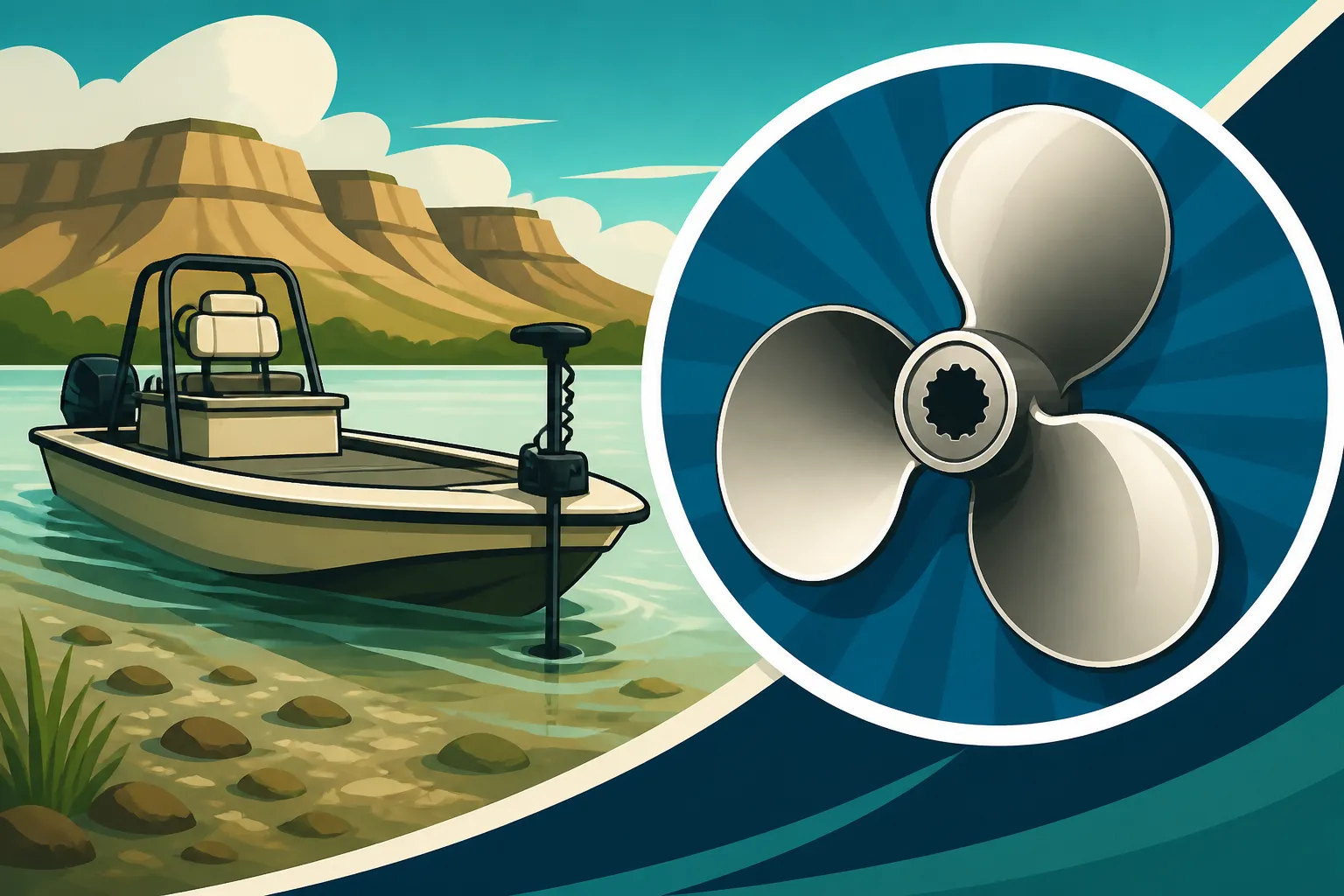
When you look at propeller specifications, the two numbers you'll always see are diameter and pitch. These are the twin pillars of propeller performance, and understanding them is key to making an informed decision, especially for shallow water. The diameter is simply the measurement across the circle made by the blade tips, while pitch refers to the theoretical distance a propeller would move forward in one revolution if it were screwing through a soft solid, like butter. Think of it like this: a higher pitch means more "bite" per revolution, potentially leading to higher top speeds if your engine can handle it, but it requires more effort from the engine. A smaller pitch means less bite, easier turning for the engine, and usually better hole shot (acceleration) but lower top speed.
For shallow water, you're often looking for a balance. A larger diameter can sometimes offer more grip and lift, which can be beneficial, but it also increases the chance of striking the bottom. A smaller diameter might seem safer, but it could lead to excessive slippage or "cavitation" if it can't get a good bite on the water. Pitch, on the other hand, is crucial for efficiency. If your engine is bogging down in shallow water because the pitch is too high, you're not only losing performance but potentially damaging your motor. Conversely, if your pitch is too low, you're revving the engine out without gaining much speed or control. It's a delicate dance, and what works beautifully on Lake Oahe Walleye Hotspots Near Mobridge in deep water might be a disaster in a quiet backwater slough.
Why Standard Props Struggle in Shallow South Dakota Waters
Most boats come factory-equipped with a "standard" all-around propeller designed for average conditions and deeper water. These props are usually chosen to offer a decent compromise between top speed, acceleration, and fuel economy for the typical boater. However, South Dakota's diverse waterways, from the vast Missouri River reservoirs to the shallower glacial lakes and winding feeder creeks, often present anything but "average" conditions. When you take a standard prop into shallow water, you quickly encounter several problems.
First, there's the obvious risk of striking the bottom. A prop with too large a diameter or a deep-set hub can easily hit submerged rocks, stumps, or hard bottom, leading to bent blades, a damaged skeg, or even more severe lower unit damage. Repairs can be costly and can definitely put a damper on your fishing season. Second, even if you avoid direct contact, a standard prop might not "lift" your boat effectively in shallow water. Many props are designed to push water horizontally, not necessarily to create upward lift, which is vital for getting your hull out of the water and reducing draft when you're trying to clear a sandbar. Third, standard props are prone to cavitation or ventilation in shallow conditions. Cavitation happens when pressure differences create vapor bubbles on the prop blades, causing a loss of thrust and excessive RPMs without forward motion. Ventilation occurs when air from the surface or exhaust gases get sucked into the prop, also leading to a loss of thrust and control. Both are incredibly frustrating, sound awful, and are signs that your prop isn't efficiently gripping the water, which is a common occurrence with standard props when you're running in just a few feet of water.
Key Factors Influencing Prop Choice for Skinny Water
Choosing the right propeller isn't a one-size-fits-all situation, especially when your passion involves navigating the kind of shallow waters that hold those elusive fish. There are several critical factors that need to be weighed, far beyond just the numbers printed on the prop itself. Each element of your boat and how you use it plays a significant role in determining what will perform best when the water gets skinny.
Boat Type and Hull Design: It All Starts Here
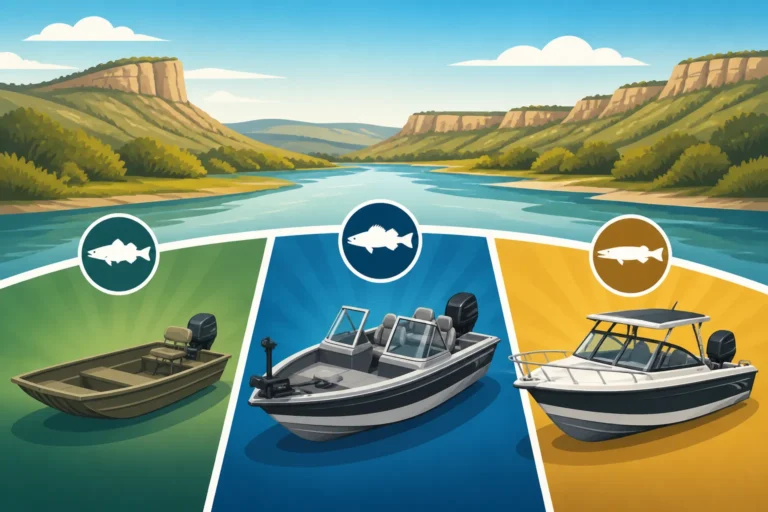
The very foundation of your shallow water prop decision lies in your boat's design. Different hull types interact with the water in distinct ways, and a propeller needs to complement that interaction. For instance, if you're running a flat-bottomed jon boat, like many folks use for chasing catfish in the Missouri River Catfish Fishing Spots or exploring smaller tributaries, your boat is designed to plane quickly and run in minimal water. These boats often benefit from propellers that provide strong lift and good acceleration to get on plane fast, minimizing the time spent plowing water. You might be able to get away with a slightly larger diameter to get more bite, especially if your engine is mounted high.
Conversely, a V-hull bass boat, while still capable of shallow water ventures, has a deeper draft and a hull shape designed for cutting through chop and higher speeds in open water. While you might want to explore shallow coves, the primary design isn't for extreme skinny water. For these boats, the focus shifts to props that can efficiently bite and maintain thrust without cavitating as much, often requiring a prop that's less susceptible to ventilation when the engine is trimmed up slightly. Best Boats for South Dakota Reservoir Fishing can give you a good idea of hull types. You might even consider if your boat is similar to what's described in Is a Jon Boat Good for South Dakota Reservoirs?. The hull's material, whether aluminum or fiberglass, also plays a role in overall weight and how much "lift" the prop needs to provide.
Engine Horsepower and Trim Capabilities
Your outboard engine is the heart of your boat's propulsion, and its horsepower (HP) rating and trim/tilt capabilities are paramount in prop selection for shallow water. A prop needs to allow your engine to reach its optimal Wide Open Throttle (WOT) RPM range. If the pitch is too high, your engine will struggle to reach its maximum RPMs, lugging down and potentially overheating or causing long-term damage. If the pitch is too low, your engine will over-rev, hitting the rev limiter prematurely, which is inefficient and also hard on the motor. Many marine shops, like those found around larger towns with access to the Missouri River, can help you calculate the ideal prop for your specific engine and boat combination.
Crucially, modern outboards often feature power trim and tilt, which are invaluable for shallow water navigation. Being able to trim your engine up allows you to lift the prop closer to the surface, reducing your draft and helping to clear obstacles. A good shallow-water prop needs to perform well even when trimmed up, resisting ventilation. Some engines even feature a "power pole" or hydraulic jack plate, which allows you to raise and lower the engine height on the transom. This fine-tuning of engine height, combined with the right prop, can make a huge difference in accessing those barely-there fishing spots. You'll want a prop that can maintain a good grip on the water even when the engine is raised significantly. Remember to always check South Dakota Boat Motor Horsepower Rules to ensure your setup is compliant.
Your Typical Load and Fishing Habits
Think about how you actually use your boat. Are you usually a solo angler, carrying minimal gear, or do you frequently load up with three buddies, a full cooler, extra fuel, and all the tackle for a long day chasing South Dakota Walleye Fishing Guide? The weight of your boat, its passengers, and your gear significantly impacts performance. A prop that's perfect for a light load might cause your engine to over-rev with a heavy load, or struggle to get on plane.
For shallow water fishing in particular, your habits dictate prop needs. If you're constantly running through narrow, winding creeks or actively sight fishing in extremely shallow flats, you'll prioritize maneuverability, quick response, and protection over pure top-end speed. If you're primarily getting across a somewhat shallow bay to a deeper fishing hole, and speed is still a factor, you'll need a different balance. Consider if you're mostly doing Bank Fishing Techniques for Reservoirs or exploring via kayak, as these might negate the need for a special prop. If you're a serious tournament angler, you might even have multiple props: one for light loads and top speed, and another for heavy loads and shallow water hole shot. This is where a good relationship with your local marine dealer or even reading reviews of props on sites like Bass Pro Shops can really pay off in matching your prop to your unique South Dakota fishing adventures.
Common Propeller Types and Materials for Shallow Water Applications
When you start digging into the world of shallow water propellers, you'll quickly discover that not all props are created equal. Manufacturers have developed specific designs and utilize different materials to enhance performance in challenging conditions. Understanding these variations can significantly guide your choice, ensuring your prop not only performs but also stands up to the rigors of South Dakota's diverse waterways.
High-Rake and Cupped Propellers
These terms describe specific design features that are incredibly beneficial for shallow water fishing. Rake refers to the angle of the propeller blades relative to the hub. A prop with high rake has blades that slope back away from the boat. This design helps the prop "bite" the water more effectively, providing better bow lift and allowing your boat to run higher in the water, which is exactly what you want when navigating shallow areas. It can also help reduce ventilation when your engine is trimmed up. High-rake props essentially act like little wings, helping to lift the stern of your boat, which in turn reduces the overall draft.
Cupping is another critical feature. This refers to a small, curved lip or curl on the trailing edge of the propeller blades. This seemingly minor detail actually makes a huge difference. The cup increases the propeller's effective pitch, providing more thrust and grip. It helps the prop hold water better, especially when operating near the surface or when the engine is trimmed up, significantly reducing ventilation and slippage. Cupped props are excellent for boats that need to run in shallow water, carry heavy loads, or benefit from extra stern lift. If you're often encountering conditions where your prop struggles to maintain a consistent bite, a cupped propeller is likely to offer a noticeable improvement. Many specialized shallow water props, often found at retailers like Bass Pro Shops, will feature both high rake and cupping.
| Propeller Feature | Description | Shallow Water Benefit |
|---|---|---|
| Diameter | Measurement across the circle made by the blade tips. | A smaller diameter may reduce the chance of striking bottom, but too small can lead to slippage. |
| Pitch | Theoretical distance prop moves in one revolution. | Matched to engine RPMs for efficient thrust. Lower pitch aids hole shot for heavy loads/quick planing in shallow. |
| Rake | Angle of blades relative to the hub. | High rake provides bow lift, allowing the boat to run higher in the water, reducing draft. |
| Cupping | Curved lip on the trailing edge of blades. | Increases grip and thrust, reduces ventilation and slippage when trimmed up or in rough water. |
| Blade Count | Number of blades (typically 3 or 4). | 3-blade: good all-around performance. 4-blade: better hole shot, less vibration, can run higher. |
Stainless Steel vs. Aluminum: Durability vs. Replaceability
The material of your propeller is a major consideration, particularly for shallow water use, where impacts are a higher risk. The two main options you'll encounter are aluminum and stainless steel.
-
Aluminum Props: These are typically less expensive and are often the standard prop that comes with many outboards. Their main advantage in shallow water is that they are designed to be sacrificial. If you hit a submerged object, an aluminum prop is more likely to bend or break a blade rather than transfer the full impact force to your lower unit. This can save you from a much more expensive repair. For many South Dakota anglers who occasionally venture into shallow areas, or for those on a tighter budget, a good quality aluminum prop might be the sensible choice. They are easy to find and replace, often available on Amazon or at local marine stores. The downside is that they are less efficient, more prone to flexing, and generally don't offer the same level of performance or durability as stainless steel.
-
Stainless Steel Props: These are significantly stronger and more durable than aluminum props. They are less likely to bend or chip on impact, making them a favorite for serious anglers and those who frequently navigate challenging waters. Stainless steel props are also more rigid, which means they flex less under load, leading to better efficiency, higher top speeds, and a more consistent "bite" on the water. This added rigidity and strength make them ideal for high-performance shallow water props that utilize advanced designs like high rake and cupping effectively. However, their strength comes with a caveat: if you hit something truly solid, a stainless steel prop is more likely to transfer the impact force directly to your lower unit, potentially causing severe damage to the gears or driveshaft. They are also considerably more expensive. For those who frequently fish in tricky, rocky, or stumpy shallow areas and demand peak performance, the investment in a high-quality stainless steel prop might be worthwhile, but it does mean exercising extra caution.
Ultimately, the choice between stainless steel and aluminum for shallow water often boils down to a risk-versus-reward calculation based on your specific fishing locations and how much you're willing to spend on both the prop and potential lower unit repairs.
Fine-Tuning Your Prop for Optimal Shallow Water Performance
Getting the "best" prop isn't just about buying one and bolting it on. It's an ongoing process of testing, observing, and understanding how your boat performs with different setups. Especially for the nuances of shallow water fishing in South Dakota, a little fine-tuning can make all the difference between a frustrating outing and a truly successful one.
The Importance of Testing and RPM Readings
Once you've installed a new prop, particularly one designed for shallow water, the real work begins. You need to test it thoroughly under realistic fishing conditions. Don't just take it out for a quick spin; load your boat up with your typical gear, passengers, and fuel. Head to the kind of water you normally fish – including those shallow flats and channels – and pay close attention to several key performance metrics.
The most critical data point is your Wide Open Throttle (WOT) RPMs. Your engine manufacturer specifies an optimal WOT RPM range for your particular outboard (e.g., 5000-5800 RPMs). When you're running at full throttle, your engine should be operating within this range. If your RPMs are too low, your prop's pitch is likely too high, and your engine is lugging. You'll need to drop down in pitch (e.g., go from a 19-pitch to a 17-pitch). If your RPMs are too high and hitting the rev limiter, your prop's pitch is too low, and your engine is over-revving. You'll need to go up in pitch. This balance is paramount for both performance and the longevity of your engine. Use a reliable tachometer, which most boats have, and if you're not sure, many marine service shops can help you take accurate readings.
Beyond RPMs, observe your boat's hole shot (how quickly it gets on plane), top speed, fuel economy, and how it handles when trimmed up in shallow water. Does it ventilate easily? Does it hold plane at a lower speed, which is great for navigating tricky areas? Sometimes, even a slight adjustment in engine height on the transom can improve performance. This iterative process of testing, adjusting, and re-testing is how you dial in the perfect setup for your South Dakota fishing adventures.
Protecting Your Investment: Shallow Water Driving Tips
No matter how perfectly matched your prop is for shallow water, it's not indestructible. The best prop in the world can still be damaged by careless driving. To truly maximize the life of your prop and protect your lower unit, adopting smart shallow water driving techniques is essential.
Firstly, go slow in unfamiliar or suspected shallow areas. Idling or using your Best Trolling Motors for Walleye Fishing (especially a bow-mount electric motor) to navigate those super shallow spots is always safer than running your main outboard at speed. When you do use your main engine, trim up your outboard as much as possible without causing excessive ventilation. This raises the prop higher in the water column, reducing your draft. Keep an eye on your water pressure gauge if you have one; trimming too high can cause your water intake to suck air, leading to overheating.
Secondly, learn to read the water. Look for ripples, color changes, or disturbances that might indicate submerged hazards like rocks, stumps, or sandbars. polarized sunglasses are an angler's best friend for this. Using a detailed lake map or a fish finder with GPS and contour mapping, like a Best Fish Finders for South Dakota Lakes, can help you identify deeper channels and avoid known shallow areas.
Finally, consider prop guards or skeg protectors. While they aren't a substitute for careful driving, these accessories can offer an extra layer of defense against minor impacts. Skeg protectors, in particular, are relatively inexpensive and can save your engine's skeg from significant damage, which is a common occurrence in shallow water. Regular inspection of your prop for dings, bends, or cracks is also crucial. Even minor damage can cause vibrations that lead to more serious issues down the line. If you notice damage, get it repaired or replaced promptly. Taking these precautions ensures that your investment in the right shallow water prop pays off for many seasons of successful South Dakota fishing.
Disclaimer
This article is for general informational purposes only and does not constitute professional advice. Laws, prices and regulations vary by location and change over time. Consult a qualified professional for guidance on your specific situation.