South Dakota Trout Limits in the Black Hills
Trying to figure out the precise trout limits in South Dakota's beautiful Black Hills can feel like navigating a maze, especially with different rules for various streams and lakes, not to mention different species! It's easy to get confused between daily limits, possession limits, and those sneaky special regulations. This comprehensive guide is here to clear up all that uncertainty, ensuring your next Black Hills trout fishing adventure is not only rewarding but also fully compliant with the South Dakota Game, Fish and Parks (GFP) regulations.
The Unique Allure of Black Hills Trout Fishing
The Black Hills of South Dakota offer an angling experience unlike any other in the state. Far from the vast reservoirs of the Missouri River, this region provides a mountain-like escape with pristine streams and serene lakes, all teeming with various trout species. It’s a true gem for those who love wading small creeks or casting on clear, cool waters.
Why the Black Hills are Special for Trout
What makes the Black Hills so attractive to trout, and by extension, to trout anglers? It's primarily the unique geography and hydrology. Unlike the prairie lakes and rivers, the Black Hills feature a dense network of cold, oxygen-rich streams fed by mountain springs and snowmelt. This environment is perfect for trout, which thrive in cooler water temperatures. The geological formations create diverse habitats, from deep pools and undercut banks to riffles and runs, offering plenty of cover and feeding opportunities for fish. Places like Spearfish Creek, Rapid Creek, and Castle Creek are renowned for their beauty and productive fishing. Many anglers make an annual pilgrimage to these waters, drawn by the challenge and the stunning scenery. You can learn more about these specific locations in our Black Hills Trout Stream Fishing Guide.
Key Trout Species You'll Encounter
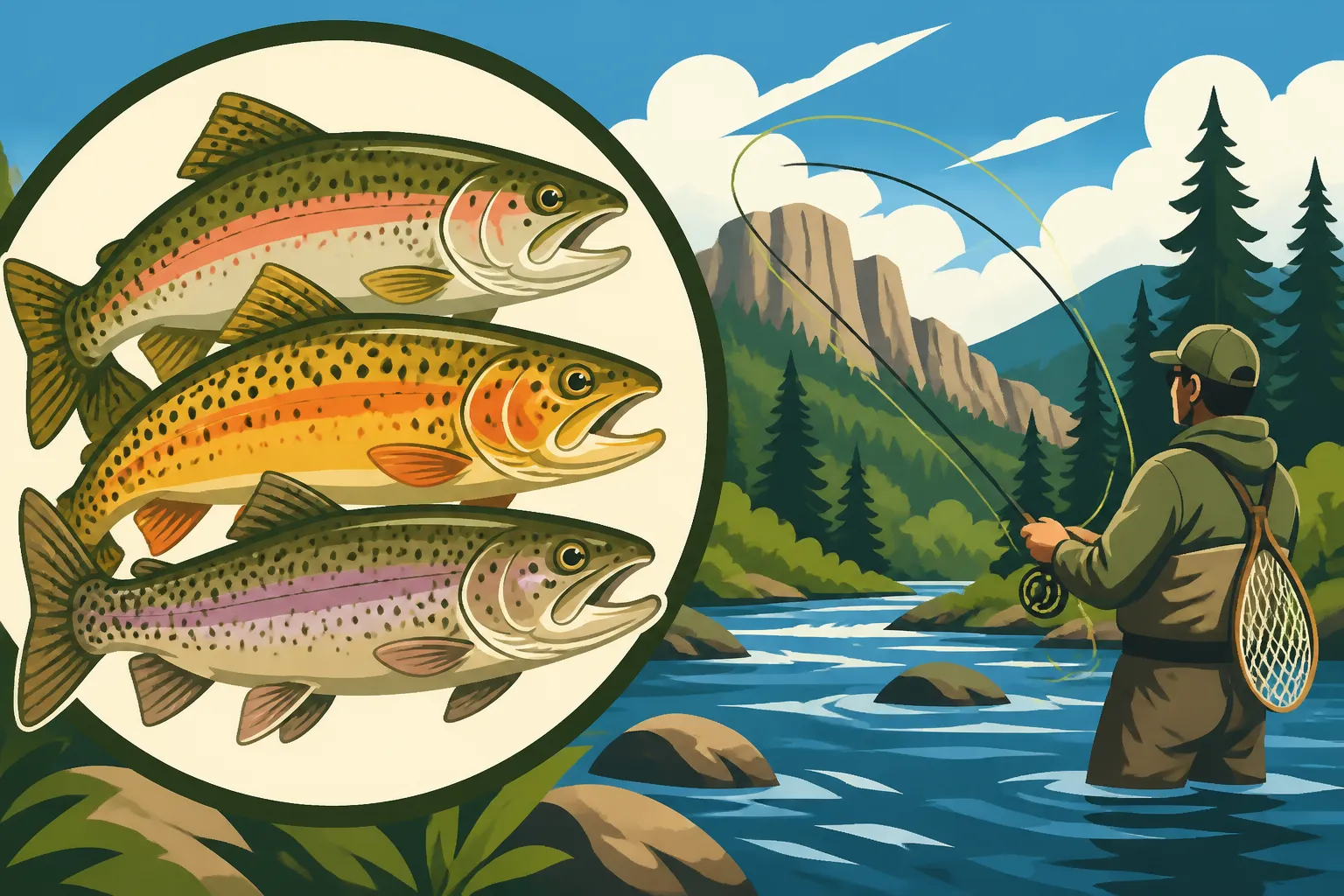
When you’re casting a line in the Black Hills, you’re likely targeting one of three main trout species, though others can certainly pop up.
- Rainbow Trout: Known for their vibrant colors and acrobatic fights, rainbows are a favorite among anglers. They are extensively stocked in many Black Hills waters, making them quite prevalent. You'll find them in streams and many lakes, often eager to bite.
- Brown Trout: More elusive and often larger, brown trout are prized for their wary nature and striking golden-brown hues. They tend to be more prevalent in larger streams and can grow to impressive sizes, offering a significant challenge. Many anglers target these beautiful fish specifically, often with larger flies or lures.
- Brook Trout: These smaller, native or naturalized trout are typically found in the colder, higher-elevation streams. They are easily identified by their worm-like markings (vermiforms) on their backs and vibrant red and blue spots. While not as large, they offer a delightful experience in remote, picturesque settings.
- Lake Trout (Mackinaw): While not as common in the streams of the Black Hills, lake trout are present in larger, deeper impoundments like Pactola Reservoir and Sheridan Lake. These are distinct from the stream trout and often have different regulations. They can grow to considerable sizes, providing a different type of fishing experience for those targeting deeper waters.
Understanding South Dakota's Management Philosophy
South Dakota’s Game, Fish and Parks (GFP) Department employs a nuanced management strategy for its Black Hills trout fisheries. This isn't a one-size-fits-all approach; instead, it's tailored to protect native populations, enhance recreational opportunities, and maintain ecological balance. For instance, some areas are designated "catch-and-release" to foster trophy fisheries, while others allow harvest to provide angling opportunities for food. The GFP regularly conducts surveys and adjusts regulations based on fish populations, habitat health, and angler success rates. This means regulations can, and sometimes do, change. It's crucial for every angler to understand this philosophy because it underpins why certain limits are in place. Always consult the most current official South Dakota GFP Fishing Handbook Guide before heading out.
Detailed Trout Limits by Species
Understanding the specific limits for each trout species is paramount. A mistake can quickly turn a fun day into a frustrating interaction with a game warden. These limits are designed to ensure sustainable fish populations for future generations of anglers.
Rainbow Trout Regulations
Rainbow trout are widely distributed throughout the Black Hills due to extensive stocking efforts by the GFP. Generally, the daily limit for trout, including rainbows, in most Black Hills waters is five fish. The possession limit, which refers to the number of fish you can have on hand after you've left the fishing area (e.g., in your cooler at camp, or at home), is typically twice the daily limit, meaning ten rainbow trout.
However, it's never quite that simple. Specific sections of streams or certain lakes might have different rules. For example, some stretches of Rapid Creek near Rapid City or specific sections of Spearfish Creek might have different slot limits or harvest restrictions to manage the population for quality fishing. Always double-check the "Black Hills Waters" section in the current South Dakota Fishing Regulations for any specific length limits or total harvest numbers for rainbow trout. You might find that while you can keep five fish, only one of them can be over a certain length, or perhaps all fish over a certain length must be released. These nuances are vital to avoid violations.
Brown Trout Regulations
Brown trout often require a bit more specific attention when it comes to limits. While the general daily limit of five and possession limit of ten usually applies, brown trout are frequently subject to stricter regulations in certain areas, particularly those managed for trophy potential. In some special regulation waters, the daily limit for brown trout might be reduced to one or two fish, or there might be an overall length restriction that requires all brown trout caught within a certain size range to be released. This is often seen in areas where brown trout reproduce naturally and are highly valued.
Anglers seeking to target brown trout, especially the larger specimens, should pay close attention to the "Black Hills Streams with Special Regulations" section in the GFP handbook. It's not uncommon to find a limit stating "one brown trout over 15 inches" as part of a total five-trout daily limit, with all other browns needing to be released. This helps ensure that a healthy population of larger, spawning fish remains in the system. Our Best Black Hills Streams for Brown Trout guide offers more insights into where these special regulations might apply.
Brook Trout Regulations
Brook trout, often found in smaller, higher-elevation streams, typically fall under the general daily and possession limits of five and ten fish, respectively. Because brook trout are often smaller and inhabit more remote, sensitive ecosystems, their harvest is generally less regulated with specific size restrictions, but that doesn't mean you can disregard them entirely.
The key with brook trout is often access and location. These fish can be a joy to catch, especially on light tackle in secluded spots. While specific individual brook trout regulations are less common than for rainbows or browns, it is always wise to confirm. The main concern for brook trout is usually environmental protection, ensuring their delicate habitats are not over-fished. Many of the streams holding brook trout are smaller and less resilient to heavy fishing pressure, so practicing ethical angling and good conservation is even more important. Find out more about fishing for these beautiful fish in our Best Black Hills Streams for Brook Trout article.
Splake and Lake Trout Considerations
While the focus for many Black Hills anglers is on stream-dwelling rainbow, brown, and brook trout, it's worth noting the regulations for splake and lake trout if you venture into the larger impoundments.
- Lake Trout (Mackinaw): Lakes like Pactola Reservoir are known to hold lake trout, which can grow to impressive sizes. For these larger, deeper-water fish, regulations are often distinct from the general stream trout limits. A common regulation for lake trout in these reservoirs might be a lower daily limit, sometimes as few as two fish, and often with specific length restrictions. For instance, Pactola Reservoir commonly has a "two lake trout daily, only one over 28 inches" rule. This is a big departure from the stream trout limits and reflects the slower growth rate and trophy potential of lake trout. Always consult the specific regulations for the particular lake you plan to fish for these species. Our Pactola Reservoir Fishing Guide provides additional detail here.
- Splake: Splake are a hybrid cross between brook trout and lake trout, and they are stocked in a few select lakes outside the primary Black Hills stream network. While less common in the core Black Hills trout streams, if you find yourself fishing a lake that is stocked with splake, their regulations would likely mirror those of lake trout or have their own unique rules. Again, checking the specific waterbody's regulations is crucial.
| Trout Species | General Daily Limit (most waters) | General Possession Limit (most waters) | Common Special Regulations (Examples) |
|---|---|---|---|
| Rainbow Trout | 5 (total trout) | 10 (total trout) | Slot limits, "only one over X inches," artificial lures only sections |
| Brown Trout | 5 (total trout) | 10 (total trout) | Reduced daily limit (e.g., 1 or 2), length restrictions (e.g., "only one over 15 inches"), catch-and-release sections |
| Brook Trout | 5 (total trout) | 10 (total trout) | Less frequent specific size limits, focus on overall trout limit. |
| Lake Trout (Pactola, Sheridan) | 2 (specific to Lake Trout) | 4 (specific to Lake Trout) | Often "only one over 28 inches," specific to designated lakes, not included in general "trout" limit for streams. |
Note: This table provides general information and common examples. Always refer to the current South Dakota Game, Fish and Parks official regulations for the most accurate and up-to-date rules for your specific fishing location.
Special Regulation Waters in the Black Hills
The Black Hills are not uniform in their fishing rules. Several areas are designated as "special regulation waters," meaning they have different rules than the general statewide or Black Hills-wide limits. These areas are often managed to create specific angling experiences, such as trophy fishing, or to protect sensitive fish populations. Overlooking these special rules is one of the most common ways anglers run into trouble.
Catch-and-Release Only Streams
Some of the most popular and productive trout streams in the Black Hills have sections designated as "catch-and-release only." This means that all fish caught in these specified stretches, regardless of species or size, must be immediately released back into the water unharmed. These sections are typically marked with signs and are designed to foster strong populations of larger, more experienced trout, offering a challenging and rewarding experience for anglers focused on the sport rather than the harvest.
A prime example is the section of Rapid Creek below Pactola Dam. This stretch is famously a catch-and-release only zone and often requires artificial lures as well. It's a fantastic place to hone your fly-fishing skills or practice your spin-casting, knowing that every fish you catch contributes to the vibrant ecosystem. Make sure you understand the boundaries of these sections, as they can sometimes be quite specific, like from one bridge to another or between two specific landmarks. Our guide to Black Hills Catch-and-Release Trout Streams offers a deeper dive into these waters.
Artificial Lure Only Sections
Hand-in-hand with catch-and-release regulations, many special regulation waters also stipulate "artificial lures only." This means bait, whether live or dead (like worms, minnows, corn, or powerbait), is strictly prohibited. The reasoning behind this rule is multifold: artificial lures are less likely to be swallowed deeply by fish, increasing their survival rate upon release, and they help reduce the introduction of non-native species or diseases that can sometimes be associated with live bait.
When fishing an artificial lure only section, you're expected to use flies, spinners, spoons, or jigs. The specific type of artificial lure is usually left to the angler, but it must not be scented or enhanced with any natural bait. Always check the regulations to confirm this detail. It’s an exciting challenge to entice trout with artificial presentations, and many anglers find it to be a more engaging form of fishing. You can easily find a wide array of approved lures and flies on platforms like Amazon if you need to stock up before your trip.
Specific Lake or Reservoir Regulations
Beyond streams, some Black Hills lakes and reservoirs also have their own set of unique regulations that deviate from the general trout limits. These often pertain to larger bodies of water where different species, such as lake trout or splake, are present, or where the GFP is trying to manage a specific fishery for quality.
For instance, Sheridan Lake Fishing Near Rapid City and Pactola Reservoir are two examples where the general trout limits might not fully apply. As mentioned, Pactola Reservoir has specific lake trout limits, and both lakes might have length limits or even special rules for specific times of the year, particularly during spawning seasons for certain species. These might include reduced daily limits, slot limits, or even restrictions on fishing methods (e.g., no snagging). It's incredibly important to look up the exact rules for the specific lake you plan to visit, as they are often listed separately from the general Black Hills stream regulations in the GFP handbook.
The Nitty-Gritty of Daily and Possession Limits
Understanding the difference between daily and possession limits is fundamental to legal and ethical fishing in South Dakota. This is a common point of confusion for many anglers, leading to accidental violations.
Daily Limit Explained
The "daily limit" refers to the maximum number of fish of a particular species or group of species that an individual angler can legally catch and keep in a single day, or within a 24-hour period (though usually just "per day" from midnight to midnight). Once you have reached your daily limit for a species, you must stop fishing for that species for the remainder of the day.
For example, if the daily limit for trout in a Black Hills stream is five fish, and you catch and keep five rainbows, you cannot continue fishing for trout that day, even if you plan to release subsequent catches. This rule is in place to manage harvest rates and ensure that enough fish remain in the ecosystem. It's not about how many you possess at one time while fishing, but how many you take home or keep during that day. If you release all your fish, your daily limit isn't affected, unless you're in a specific "catch-and-release only" water, in which case you release everything.
Possession Limit Explained
The "possession limit" is the total number of fish of a particular species or group of species that an individual angler can have in their possession at any given time. This includes fish kept at your home, in your cooler, in your vehicle, or at your campsite. It's often, but not always, twice the daily limit. So, if the daily limit for trout is five, the possession limit is usually ten.
The key difference here is that the possession limit accounts for fish over multiple days. If you fish on Monday and keep five trout, and then you want to fish again on Tuesday, you can keep another five trout, bringing your total possession to ten. If you have ten trout in your freezer from previous trips, you cannot keep any more fish until some of those are consumed or gifted (following gifting rules, if applicable). This rule prevents anglers from continuously harvesting fish over a long period and stockpiling them, ensuring that the resource is shared more equitably among all anglers. This is vital for sustaining fish populations.
Avoiding "High-Grading" and Other Violations
One critical concept to grasp when dealing with limits is "high-grading," which is illegal and frowned upon in the angling community. High-grading occurs when an angler catches a fish, adds it to their creel (their daily limit), and then later catches a larger fish of the same species and decides to discard the smaller, already-kept fish to replace it with the bigger one.
This practice is illegal because once a fish is kept and counted towards your daily limit, it must remain part of your limit. Discarding it is considered waste and can lead to penalties. The daily limit is five fish; it doesn't mean you can catch twenty fish and pick the best five. The first five legal fish you keep become your limit. If you're planning to practice catch-and-release, do so from the start, and don't keep any fish until you're absolutely sure you want to take them home and they meet all legal requirements.
Other violations might include:
- Fishing without a valid license: Always ensure you have your current South Dakota Fishing License Guide and any necessary stamps.
- Exceeding line limits: Most South Dakota waters allow two lines, but always confirm.
- Using illegal bait in artificial lure only waters: As discussed, this is a common mistake.
- Fishing during closed seasons or in closed areas: Some specific areas might have seasonal closures for spawning or other management reasons.
Being familiar with the South Dakota Fishing Regulations Explained can prevent these common missteps and ensure a smooth, enjoyable trip.
Essential Gear and Practices for Responsible Angling
Beyond knowing the regulations, being a responsible angler in the Black Hills involves having the right gear and adopting practices that ensure the health of the fishery. This is especially true when you're navigating special regulation waters or practicing catch-and-release.
Measuring Your Catch Accurately
When length limits are in play, accurately measuring your catch is non-negotiable. An extra inch could be the difference between a legal keeper and a violation. Always carry a reliable measuring device, such as a tape measure or a fishing ruler. Many tackle boxes from brands like Plano or Flambeau have integrated rulers, or you can pick up a dedicated ruler on Amazon that’s easy to read and use in wet conditions.
To measure a fish correctly:
- Lay the fish flat: Gently place the fish on a flat surface, such as a measuring board or ruler.
- Close the mouth: Ensure the fish's mouth is closed and touching the zero mark of your ruler.
- Measure to the tip of the tail: Extend the tail fin to its natural position (don't squeeze it together or spread it apart unnaturally) and read the measurement at the furthest tip.
- Wet hands: If you plan to release the fish, always wet your hands before handling to protect its slime coat.
Taking the time to measure precisely ensures you're compliant with the rules and helps preserve the integrity of the resource.
Best Practices for Catch-and-Release
For those beautiful trout you intend to release, especially in catch-and-release only waters, proper handling is crucial for their survival. Even a fish that swims away vigorously might die later from stress or injury if handled improperly.
Here are some best practices:
- Minimize handling: Keep the fish in the water as much as possible. If you must lift it, do so quickly and gently.
- Wet your hands: This protects the fish's delicate slime coat, which is vital for disease prevention.
- Use barbless hooks: Or, crimp down the barbs on your hooks with pliers. Barbless hooks make removal much easier and reduce tissue damage.
- Use a rubber net: Knotless, rubberized landing nets are much gentler on fish scales and fins than traditional nylon nets. You can find excellent options on Amazon.
- Remove hooks quickly: Use forceps or pliers to remove the hook as quickly and gently as possible. If the fish is deeply hooked, especially in the gills or esophagus, it’s often best to cut the line as close to the hook as possible rather than tearing internal organs.
- Revive the fish: If the fish seems stressed, hold it gently in the water, facing upstream into a gentle current, until it regains its strength and can swim away on its own. Don't vigorously pump it back and forth; rather, allow water to flow over its gills naturally.
Gear Recommendations for Black Hills Trout
Having the right gear makes a huge difference, not just for catching fish, but for doing so responsibly.
- Rods and Reels: For Black Hills streams, a lightweight spinning rod (e.g., 5-6 foot ultralight to light action) paired with a small spinning reel (1000-2000 series) is perfect. For fly fishing, a 3-5 weight fly rod is ideal for most stream conditions. Our guide on South Dakota Fly Fishing Guide dives into more detail.
- Line: Opt for light line, 2-6 pound test monofilament or fluorocarbon, to avoid spooking wary trout. Fluorocarbon leaders are excellent for stealth in clear water.
- Lures/Flies: Carry a variety of small spinners (e.g., Mepps, Rooster Tail), spoons, and jigs. For fly fishing, an assortment of nymphs (Pheasant Tail, Hare's Ear), dry flies (Elk Hair Caddis, Adams), and streamers (Woolly Bugger) will cover most conditions.
- Waders and Boots: Wading is often necessary to access prime spots. Breathable waders and sturdy wading boots with felt or rubber soles provide comfort and grip in rocky streams.
- Tools: Forceps or needle-nose pliers for hook removal, line clippers, and a small landing net (preferably rubberized) are indispensable. A small, waterproof tackle box or vest can keep your essentials organized. Many of these items are easily found and compared on Amazon.
- Safety Gear: Always carry a small first-aid kit, especially when venturing into more remote areas. Remember, safety first!
Where to Find the Official Regulations and Updates
The most current and authoritative source for South Dakota fishing regulations is always the South Dakota Game, Fish and Parks (GFP) Department. Relying on outdated information or hearsay can lead to significant problems.
Navigating the South Dakota GFP Handbook
The South Dakota Hunting and Fishing Handbook is your bible for all regulations. You can usually find a physical copy at GFP offices, license vendors, or even many sporting goods stores like those found in larger towns near the Black Hills. Crucially, the handbook is also available as a free download in PDF format on the official South Dakota GFP website. This digital version is often the most up-to-date and easily accessible.
When you open the handbook, look specifically for:
- General Fishing Regulations: These cover statewide rules that apply everywhere unless overridden by special regulations.
- Black Hills Waters: There will be a dedicated section or subsection specifically detailing rules for the Black Hills region.
- Special Waters: This section lists individual lakes and stream segments with unique regulations, such as catch-and-release only sections, artificial lure restrictions, or unique species limits (like for lake trout in Pactola Reservoir).
- Definition of Terms: Understand terms like "daily limit," "possession limit," "artificial lure," and "snagging" as defined by the GFP.
Taking a few minutes to read through the relevant sections before each trip, or at least at the beginning of each fishing season, is time very well spent.
Staying Informed About Regulation Changes
Regulations are not set in stone; they can change from year to year, or sometimes even mid-season if critical circumstances arise (though less common for trout limits). The GFP strives to publish new handbooks annually, usually in March or April, to reflect any updates for the upcoming season.
To stay informed:
- Check the GFP Website Regularly: The official website is the primary channel for announcing regulation changes.
- Sign Up for GFP Newsletters: Many state agencies offer email newsletters or alerts that will notify you of important updates.
- Follow GFP Social Media: Official social media channels can also provide quick announcements.
- Talk to Local Experts: Bait shops, fishing guides, and local sporting goods stores in towns like Rapid City, Spearfish, or Custer are often excellent sources of information on current conditions and regulations. They live and breathe this stuff!
Remember, ignorance of the law is not an excuse. As an angler, it's your responsibility to know and follow the rules. By diligently checking the current Black Hills Stream Trout Regulations and any updates, you ensure a legal, enjoyable, and sustainable fishing experience in South Dakota's magnificent Black Hills.
Disclaimer
Please remember that fishing regulations can change. While every effort has been made to provide accurate and up-to-date information in this guide, it is your responsibility to consult the most current official South Dakota Game, Fish and Parks (GFP) fishing regulations before you go fishing. This content is for informational purposes only and does not constitute legal advice.