South Dakota vs Minnesota Fishing License Reciprocity
That feeling of planning a fishing trip, looking at a map, and seeing that perfect spot right on a state line – it’s exhilarating, isn’t it? But then the questions start bubbling up: "Do I need two licenses?" "Can I really cast into that water with just my South Dakota tag?" It's a common source of confusion and frustration, especially when you're looking to fish the fertile border waters between South Dakota and Minnesota. This guide is here to untangle the bureaucratic knots and give you a clear understanding of fishing license reciprocity, so you can focus on what really matters: catching fish.
Understanding Fishing License Reciprocity Between South Dakota and Minnesota
Fishing across state lines can feel like navigating a legal minefield, but it doesn't have to be. For anglers in the upper Midwest, particularly those eyeing the bountiful waters shared by South Dakota and Minnesota, understanding reciprocity is key to a hassle-free experience. It's designed to make things simpler, but there are always crucial details to grasp.
What Reciprocity Actually Means for Anglers
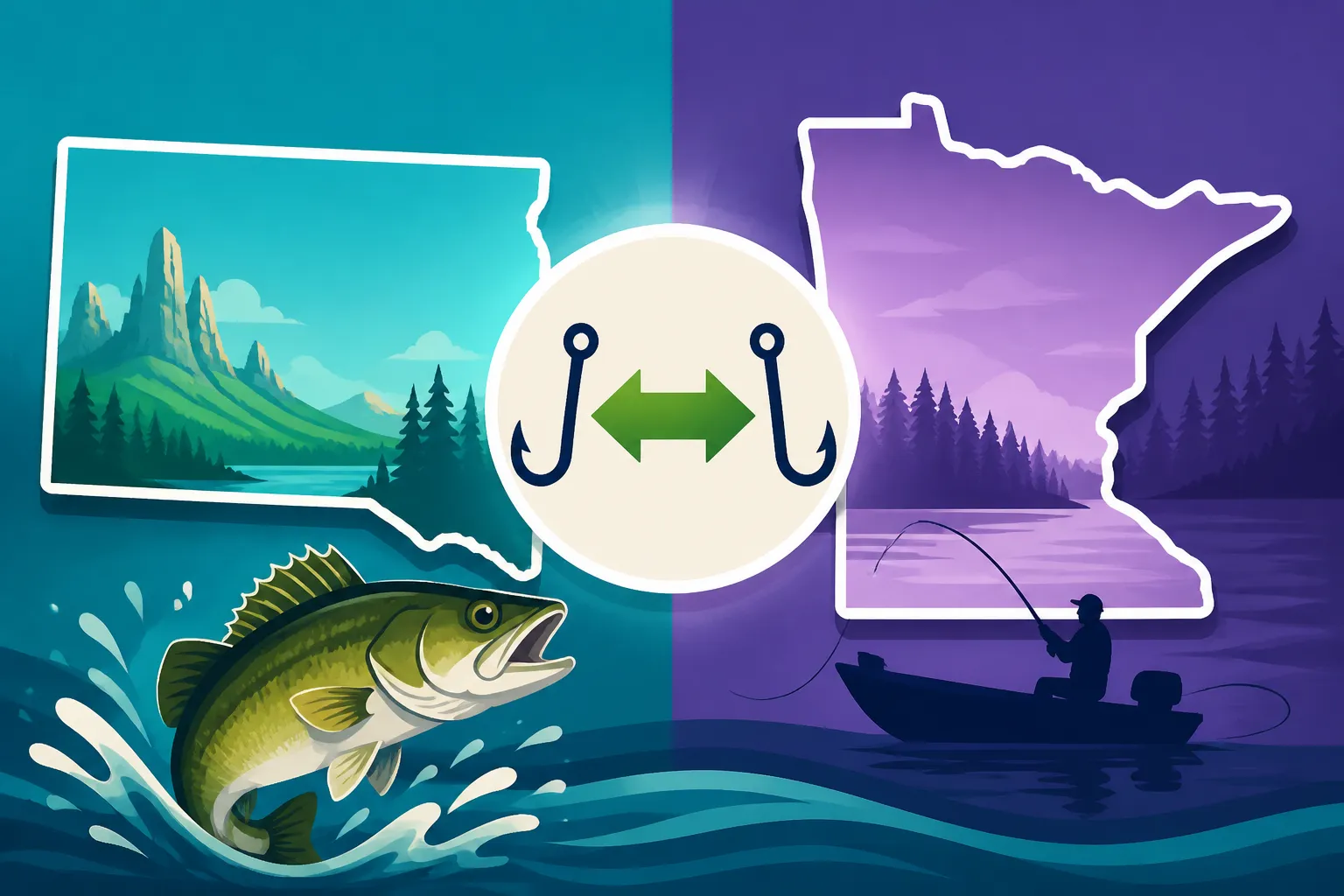
At its heart, a reciprocity agreement means that a valid fishing license from one state is recognized as valid in certain designated border waters by the other state. In simple terms, if you have a current South Dakota fishing license, you can fish specific shared waters without needing a separate Minnesota license, and vice-versa. This is a huge convenience, saving you time, money, and the headache of juggling multiple permits. Imagine not having to worry if your cast lands exactly on one side of an invisible line or the other! It allows for much more freedom of movement on these shared resources.
However, it's absolutely vital to understand that reciprocity is not a blanket permit for all waters in both states. It's a very specific agreement that applies only to clearly defined areas. Thinking you can fish any lake in Minnesota with a South Dakota license, just because they share a border, would lead you into a heap of trouble. It's about respecting state sovereignty while acknowledging shared natural resources.
The Specifics: Border Waters Covered by Agreement
When it comes to South Dakota and Minnesota, the primary waters covered by the reciprocity agreement are the Bois de Sioux River and Big Stone Lake. These are the shining examples of how states can work together to benefit anglers.
- Bois de Sioux River: This river forms a significant portion of the border between the two states. If you’re fishing anywhere along the Bois de Sioux River where it acts as the official boundary, a valid South Dakota or Minnesota fishing license will generally cover you. This means you can launch your boat from a South Dakota access point and fish the entire width of the river, even if you drift into what would technically be Minnesota's side, and vice-versa.
- Big Stone Lake: This large, beautiful lake is another key reciprocal water. Anglers holding a valid license from either South Dakota or Minnesota can fish the entire lake. This is fantastic news for anyone targeting walleye, northern pike, or panfish that are abundant in Big Stone Lake, as it offers a vast expanse of water without the constant worry of accidentally crossing a jurisdictional line.
It's critical to note that while your license is valid on these specific waters, the regulations themselves might have unique stipulations for these border areas. Sometimes, both states agree to a common set of rules for the shared water, and sometimes the more restrictive rule of the two states applies. This is where your homework really pays off, which we'll delve into shortly.
Navigating the Nuances of Border Water Regulations
Just because your license is valid doesn't mean you can ignore all other rules. This is where many anglers get tripped up. While the license itself grants access, the specific fishing regulations—such as daily limits, possession limits, minimum length requirements, and even season dates for certain species—can still vary or be subject to special border water rules.
For instance, on Big Stone Lake, South Dakota and Minnesota often work together to establish unified regulations that apply to the entire lake, simplifying things for anglers. However, it's not always a perfect match, especially if one state has a particular conservation goal in mind. You might find that for a specific species, one state's daily limit is slightly different, or there's a unique slot limit. When such differences exist, the general rule of thumb, unless explicitly stated otherwise, is to follow the most conservative (most restrictive) regulation between the two states to avoid any potential violations. For a general overview, it's always good to check the broader South Dakota Fishing Regulations Explained before you head out.
Additionally, don't forget about other requirements. If you're a South Dakota resident using your South Dakota license, you'll still need a valid South Dakota Habitat Stamp Requirements to legally fish these reciprocal waters, just as you would on any other South Dakota water. Minnesota has its own specific requirements for their residents or non-residents that might differ slightly from South Dakota's. Always check the current year's fishing handbooks from both the South Dakota Game, Fish and Parks (GFP) and the Minnesota Department of Natural Resources (DNR) to be absolutely certain. You can often find digital copies online, or pick up a physical copy at a local vendor.
When Reciprocity Doesn't Apply: Fishing Beyond the Border Waters
Understanding where reciprocity does apply is only half the battle. Just as important, if not more so, is knowing where it doesn't. Many an unsuspecting angler has found themselves in hot water because they assumed their license was valid everywhere.
Fishing Inland Waters of South Dakota or Minnesota
This is a critical point that cannot be stressed enough: fishing license reciprocity between South Dakota and Minnesota applies only to the designated border waters of the Bois de Sioux River and Big Stone Lake. It does not extend to any other lake or river in either state.
Let's imagine you're planning a trip. You've got your South Dakota license, and you're thinking of hitting Big Stone Lake. That's fantastic, you're covered there. But if you then decide, on a whim, to take a detour to Lake Kampeska near Watertown, South Dakota, you're still good to go with your South Dakota license. However, if you decide to venture north into Minnesota's renowned Detroit Lakes region to fish for walleyes, your South Dakota license is suddenly just a piece of plastic. For those Minnesota inland lakes, you would absolutely need a valid Minnesota fishing license. The same applies in reverse; a Minnesota license won't cut it if you decide to fish Lake Oahe in South Dakota.
This distinction is crucial for non-residents especially. If you're an out-of-state angler primarily interested in South Dakota's fantastic fishing opportunities, you'll want to review the South Dakota Nonresident Fishing License Rules. There are various options available, from a South Dakota One-Day Fishing License to an annual permit, depending on the length of your stay.
The Risks of Not Having the Correct License
Falling afoul of licensing regulations is no fun, and the consequences can be more severe than just a slap on the wrist. Enforcement officers take these rules very seriously, and for good reason—they're in place to manage fisheries and fund conservation efforts.
If you're caught fishing without the appropriate license in a non-reciprocal water, or even if you're on a reciprocal water but haven't adhered to the specific border regulations, you could face a range of penalties. These can include significant fines, the confiscation of your fishing gear (rods, reels, tackle, and even your boat!), and even the suspension of your fishing privileges. Imagine losing a prized fishing rod or having your boat impounded for a simple oversight. A story comes to mind of an angler who was fishing a small bay on Big Stone Lake, thinking it was all reciprocal water, but a small finger of land technically made it an inland Minnesota bay. A conservation officer, doing their rounds, quickly pointed out the error, resulting in a hefty fine. For a detailed look at what can happen, check out South Dakota Fishing Without a License Penalties.
To avoid these headaches, always err on the side of caution. Before heading out, especially if you're exploring new waters, double-check the state boundaries and specific regulations. It only takes a few minutes of research, which could save you hundreds of dollars and a whole lot of frustration. Making sure you're properly licensed is just part of being a responsible angler.
Essential Preparation for Cross-State Angling
Being prepared isn't just about having the right bait; it's also about having the right knowledge and documentation. For cross-state angling, this preparation becomes even more critical to ensure a smooth and legal fishing experience.
How to Research and Verify Current Regulations
The best defense against confusion and potential penalties is thorough research. Regulations, while generally stable, can change from year to year based on fish populations, environmental factors, and management decisions.
- Official State Websites: The first and most reliable source for information is always the official state wildlife agencies. For South Dakota, it's the Game, Fish and Parks (GFP) website. For Minnesota, it's the Department of Natural Resources (DNR) website. Both provide detailed, up-to-date information on licensing, regulations, and specific rules for border waters. Look for sections specifically detailing "Border Waters" or "Reciprocity Agreements."
- Fishing Handbooks: Both states publish annual fishing handbooks or regulation booklets. These are invaluable resources, often containing maps of border waters, summaries of rules, and contact information. You can often download digital versions from the state websites, or pick up a physical copy at bait shops, sporting goods stores, or GFP/DNR offices. Having a copy of the South Dakota GFP Fishing Handbook Guide with you on the water is always a smart move.
- Local Bait Shops: Don't underestimate the wisdom of local bait shop owners. They are often incredibly knowledgeable about local regulations, recent changes, and even the subtle nuances of specific sections of border waters. They live and breathe fishing in their area and can be a great last-minute check before you launch your boat.
Remember to verify not just the license requirements but also the specific fish limits and size restrictions for the target species in the waters you plan to fish. You might find different South Dakota Walleye Limits compared to Minnesota's general rules, or even specific rules for Belle Fourche Reservoir Special Walleye Rules that highlight how specific a regulation can get.
Acquiring the Necessary Licenses
Once you've done your research, it's time to make sure you have the right paperwork. The process of acquiring licenses has become much more convenient over the years.
- Online Purchase: Both South Dakota and Minnesota offer online license purchasing portals. This is often the easiest and quickest way to get your license. You simply fill out the form, pay with a credit card, and often receive a printable temporary license immediately. This is particularly convenient for non-residents planning a trip. If you’re wondering How to Buy a South Dakota Fishing License Online, the process is generally straightforward.
- Authorized Vendors: Licenses can also be purchased in person at a wide array of authorized vendors, including many sporting goods stores, bait shops, county treasurer offices, and even some general stores across both states. This can be a good option if you have last-minute questions or prefer a physical license card.
- Non-Resident Options: If you're coming from out of state, be sure to explore the various South Dakota Nonresident Fishing License Options. You can often choose between annual licenses, or shorter-term options like a South Dakota Three-Day Fishing License or a South Dakota One-Day Fishing License. Consider your total trip duration and how often you plan to fish to decide which option makes the most sense economically. Many anglers find the annual option, even for non-residents, can be a better value if they plan multiple trips throughout the year.
While you're getting ready, think about your setup. Having a clear, printed copy of your license is usually required, so make sure your home printer is stocked with ink, or grab some extra printer paper from Amazon before your trip. It’s a small detail, but a crucial one for compliance.
Gear and Bait Considerations for Border Waters
Beyond licenses and regulations, you'll also want to consider your gear and bait. While most standard fishing gear is universal, certain specific rules or recommendations might apply to border waters.
- Line Limits: Be aware of how many lines you're legally allowed to use. Number of Fishing Lines Allowed Per Angler in South Dakota might differ slightly from Minnesota's regulations. On shared waters, you might be required to follow the more restrictive rule or a mutually agreed-upon limit.
- Bait Restrictions: This is a big one. Bait regulations, especially concerning live bait, can vary significantly between states and even between specific bodies of water within a state due to concerns about invasive species or disease transmission. For example, knowing Are Live Minnows Legal Bait in South Dakota? is crucial, but also confirm if there are any specific rules for border waters. Some areas might have restrictions on transporting bait from one body of water to another. Always buy local bait if possible, or ensure your bait meets the regulations of both states.
- Invasive Species Prevention: Both South Dakota and Minnesota are vigilant about preventing the spread of aquatic invasive species (AIS). This means you must be diligent in cleaning, draining, and drying your boat and gear every time you move between different bodies of water, even on reciprocal waters. This isn't just a suggestion; it's often a legal requirement. Having a brush and a bucket in your vehicle, perhaps one you ordered from Amazon, to scrub your boat before leaving the ramp can make all the difference.
Making sure your gear, bait, and practices comply with all rules helps protect the precious fisheries we all love. It’s about being a good steward of the environment, ensuring these fantastic fishing opportunities last for generations to come.
South Dakota vs. Minnesota Border Waters Reciprocity Snapshot
| Aspect | South Dakota Inland Waters | Minnesota Inland Waters | Big Stone Lake & Bois de Sioux River (Border Waters) |
|---|---|---|---|
| Required License | South Dakota License | Minnesota License | Valid South Dakota OR Minnesota License |
| Habitat Stamp (SD) | Required (if resident) | Not Applicable | Required (if using a SD resident license) |
| Primary Regulatory Body | SD Game, Fish and Parks (GFP) | MN Department of Natural Resources (DNR) | Joint regulations, or most restrictive of the two |
| Regulations to Check | SD Fishing Handbook | MN Fishing Handbook | Both SD & MN Handbooks, or specific border water rules |
| Non-Resident Options | South Dakota Nonresident Fishing License Options | MN Non-Resident options | Purchase a non-resident license from either state |
Ultimately, fishing the border waters between South Dakota and Minnesota offers incredible opportunities. With a little bit of planning and an understanding of the reciprocity agreements, you can enjoy these shared natural treasures without any unnecessary stress. Always confirm the latest regulations, get your licenses, and prepare your gear, and you'll be set for a memorable angling adventure. The Best Time of Year to Fish in South Dakota might vary, but knowing the rules always makes for a good day on the water.
Disclaimer
Please note that fishing regulations, license requirements, and reciprocity agreements can change. While this guide provides comprehensive information, it is crucial to always consult the most current official publications from the South Dakota Game, Fish and Parks (GFP) and the Minnesota Department of Natural Resources (DNR) before planning your fishing trip. This content is for informational purposes only and should not be considered legal advice.