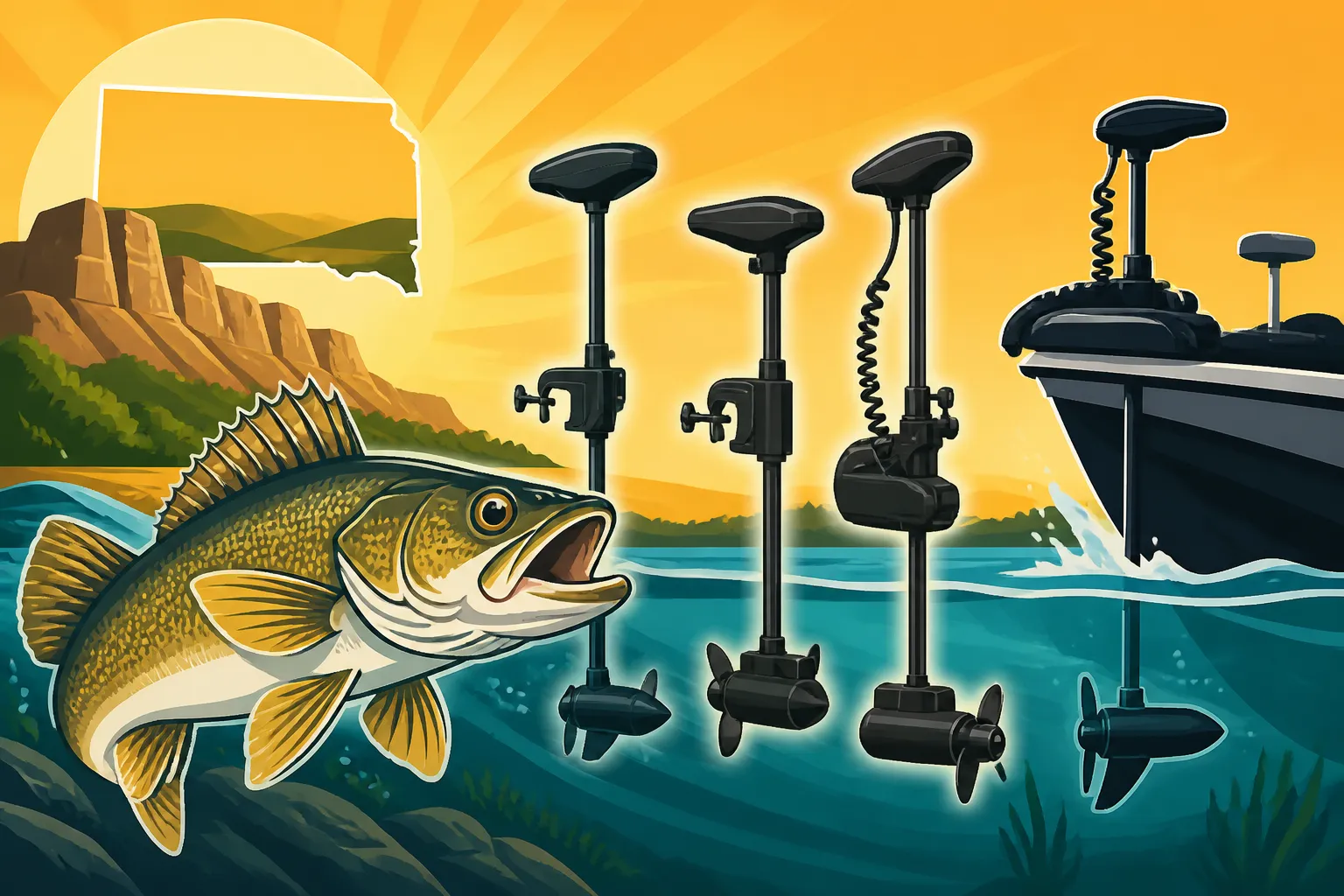
Best Trolling Motors for Walleye Fishing
One of the biggest frustrations for walleye anglers in South Dakota is battling the elements, especially those relentless winds on big water bodies like Lake Oahe or Lake Sharpe. Trying to hold your position over a productive walleye hump or along a subtle break line with just your main engine is a constant struggle, often leaving you drifting off target and missing out on bites. This guide is all about helping you cut through that frustration by exploring the best trolling motors designed specifically for walleye fishing, ensuring you can stay precisely where the fish are, no matter what Mother Nature throws at you.
Understanding Trolling Motors for Walleye Fishing
When you're out chasing walleye in South Dakota, whether it's on a vast reservoir or one of our glacial lakes, your trolling motor isn't just an accessory; it's your primary tool for boat control. It allows you to sneak up on wary fish, hold your boat precisely over structure, and maintain optimal trolling speeds. But with so many options out there, it can feel overwhelming trying to figure out what you actually need. Let's break down the fundamental types and controls so you can start narrowing down your choices.
Bow-Mount vs. Transom-Mount: Which is Right for Walleye?
The first big decision you'll face is where the trolling motor attaches to your boat. For serious walleye anglers, the bow-mount trolling motor is almost universally considered the superior choice, and for very good reasons. A bow-mount motor pulls your boat through the water. Think about trying to push a rope versus pulling it; pulling a rope gives you much finer control over its direction. This "pulling" action means you can steer your boat with incredible precision, effortlessly maneuvering around submerged timber, hugging contour lines, or holding steady in crosswinds. You’re guiding the boat from the front, anticipating its movement, which is crucial when trying to stay on those subtle walleye features.
On the other hand, a transom-mount trolling motor attaches to the back of your boat, pushing it forward. While these are often simpler, less expensive, and easier to install, they offer significantly less control, especially in wind or current. Your boat tends to pivot around the motor, making it harder to hold a straight line or respond quickly to changes in wind direction. They're fine for smaller boats in calm, protected waters or as a secondary propulsion method, but for active walleye fishing where boat control is paramount, a transom-mount will quickly lead to headaches and missed opportunities. The difference in control can be the deciding factor between a limit of fish and a frustrating day of constantly correcting your drift.
Foot Pedal vs. Remote Control: Navigating Walleye Waters
Once you've settled on a bow-mount, you'll need to decide how you want to control it. The two main options are a traditional foot pedal or a wireless remote control (often paired with a smartphone app). Each has its passionate proponents, and the "best" choice really comes down to your fishing style and preferences.
Foot pedal controls are the classic choice for many walleye anglers. They sit on the floor of your boat, allowing you to control steering and speed with your foot, leaving your hands free for fishing. This hands-free operation is a huge advantage when you're actively jigging, casting, or handling a rod. The immediate, tactile feedback of a foot pedal can feel very intuitive, almost like an extension of your body, allowing for quick, subtle adjustments without taking your eyes off your line or the fish finder screen. However, foot pedals can take up valuable deck space, and some anglers find them tiring on long days, especially if you're standing for hours.
Wireless remote controls, often small handheld devices or even smartwatches, offer unparalleled freedom of movement around the boat. You can control your motor from anywhere – the bow, the stern, or even while netting a fish. This is particularly useful if you fish with multiple people or if you like to move around to manage different rods. Many modern remotes come with advanced features like GPS anchoring (Spot-Lock), autopilot, and programmed trolling paths, which can be a game-changer for precise boat positioning. The downside can be a slight delay in response compared to a direct foot pedal, and the need to keep track of another device that might get dropped or lost. Some anglers also feel less "connected" to the boat's movements without the physical feedback of a pedal.
Freshwater vs. Saltwater Motors: Protecting Your Investment
This might seem like a no-brainer for South Dakota fishing, given we're landlocked, but it's important to understand the distinction. You'll almost certainly be buying a freshwater trolling motor. These motors are designed for the conditions found in lakes and rivers – primarily, they're built with materials and coatings that resist rust and corrosion from freshwater exposure. The components, from the shaft to the electronics, are chosen for optimal performance and longevity in typical freshwater environments.
Saltwater trolling motors, on the other hand, are constructed with far more robust corrosion-resistant materials, including specialized paints, stainless steel hardware, and sealed electronics, to withstand the extremely harsh corrosive effects of saltwater. Using a freshwater motor in saltwater would lead to rapid deterioration and failure. While you won't be taking your boat into the ocean in South Dakota, understanding this difference emphasizes that these are specialized pieces of equipment. Always ensure you're looking at freshwater models, as they are perfectly suited for our lakes and rivers and are generally more cost-effective for their intended use. You want your motor to last through countless seasons of chasing walleye, and choosing the right environmental rating is key to that longevity.
Key Features to Look For in a Walleye Trolling Motor
Choosing the right trolling motor isn't just about picking a brand; it's about understanding the features that will make your time on the water more productive and less frustrating. When you're battling the wind and current on a big South Dakota lake, these specific features become absolutely critical to your success. Don't just grab the first one you see at Bass Pro Shops or on Amazon; think about how it will perform in real-world scenarios.
Thrust and Voltage: Powering Through South Dakota Winds
Thrust is arguably the most important specification for a trolling motor, as it dictates how much power the motor can generate to move your boat. It's measured in pounds of thrust. A common rule of thumb is to have at least 2 pounds of thrust for every 100 pounds of your boat's fully loaded weight (this includes the boat, engine, gear, fuel, and passengers). However, for walleye fishing in South Dakota, especially on large, windy bodies of water like Lake Oahe, Lake Sharpe, or even the gusty glacial lakes, you'll want to err on the side of more thrust. Overpowering your boat slightly ensures you can effectively hold position, fight strong currents, and maintain trolling speed even on the choppiest days. A 17-foot aluminum bass boat might get away with 55 lbs of thrust on calm days, but on a typical windy South Dakota afternoon, you'll be wishing you had 80 lbs or more to truly maintain control and keep your fishing rhythm going.
Voltage directly relates to the power and efficiency of your trolling motor system. Trolling motors typically come in 12V, 24V, or 36V configurations.
- 12V motors are generally suitable for smaller boats (under 16 feet) or kayaks. They require one 12V deep-cycle battery.
- 24V motors are the most common choice for medium-sized walleye boats (17-20 feet). They provide significantly more thrust and longer run times than 12V motors, requiring two 12V deep-cycle batteries wired in series.
- 36V motors are for larger boats (20+ feet), heavy loads, or anglers who demand maximum power and endurance, often found on big fiberglass walleye rigs. These require three 12V deep-cycle batteries.
More voltage generally means more sustained power and efficiency, allowing you to run your motor harder for longer without draining your batteries as quickly. For most serious walleye anglers in South Dakota, a 24V or 36V system will be essential to handle the conditions and extended time on the water. Best Trolling Motor Thrust for a Fishing Boat can give you even more detail on this critical decision.
Shaft Length: Matching Your Boat and Water Depth
The shaft length of your trolling motor is another critical, yet often overlooked, factor. If the shaft is too short, your propeller can come out of the water in waves or when turning, leading to cavitation, lost thrust, and damage. If it's too long, it can be awkward to deploy and retrieve, and the motor might drag on the bottom in shallow areas.
To determine the ideal shaft length, measure the distance from the top of your bow (where the motor will be mounted) to the waterline. Then, add 20 inches for bow-mount motors. This typically ensures that the propeller remains submerged even in rough water. For boats with a high bow, or if you frequently fish big waves on Lake Oahe, you might even add a bit more. Most manufacturers provide guidelines, but a general range for walleye boats might look like this:
| Boat Length (Approx.) | Bow-to-Waterline (Approx.) | Recommended Shaft Length (Inches) |
|---|---|---|
| 16-17 feet | 12-16 inches | 45-52 inches |
| 18-20 feet | 16-20 inches | 52-60 inches |
| 20+ feet | 20-24+ inches | 60-72+ inches |
Remember, rough water conditions demand a longer shaft to keep that prop in the water. Nothing is more frustrating than having your propeller cavitate when you're trying to hold steady on a hot walleye bite, especially when the wind is whipping. Don't skimp on shaft length; it's a foundational element for effective boat control.
GPS Integration and Spot-Lock: Staying on the Structure
Modern trolling motors have revolutionized boat control with advanced GPS technology, and for walleye fishing, features like GPS integration and "Spot-Lock" (Minn Kota's proprietary term, other brands have similar functions) are absolute game-changers. This is where the technology truly empowers you to fish more effectively.
GPS integration means the trolling motor uses satellite signals to understand its precise location and heading. This allows for features like:
- Spot-Lock (or Anchor Mode): This phenomenal feature allows you to electronically "anchor" your boat with the push of a button. The motor uses GPS to hold your boat within a few feet of a chosen spot, constantly adjusting for wind and current. Imagine finding a small rock pile or a subtle break that's holding walleye; with Spot-Lock, you can sit right on top of it, casting repeatedly without drifting off. This eliminates the need for a physical anchor, saves time, and keeps your lines from tangling. It's especially valuable in deep water or areas with snaggy bottoms where traditional anchoring is difficult or impossible.
- Autopilot/Heading Lock: This feature allows the motor to maintain a set heading, compensating for external forces. You point the boat in the direction you want to go, engage autopilot, and the motor will keep you on that course, allowing you to focus on fishing.
- Route Tracking: Many systems allow you to record and retrace paths, perfect for repeating a productive trolling pass along a contour line or through a weed edge. Some can even follow pre-set routes from your depth finder's mapping.
For walleye anglers, Spot-Lock alone can transform your fishing experience, making it easier to thoroughly work a piece of structure or stay with a moving school of fish without constantly manipulating a foot pedal or remote. It's particularly effective when jigging vertically or casting to specific targets. When you’re staring at that fish finder screen, seeing a school of walleye right under your boat, the last thing you want is to drift away because of a momentary lapse in steering. These GPS features truly keep you locked in on the action.
Leading Trolling Motor Brands and Their Walleye Offerings
When it comes to high-performance trolling motors for walleye fishing, two names consistently rise to the top: Minn Kota and MotorGuide. Both brands have built a reputation for reliability, innovation, and features specifically tailored to anglers who demand precise boat control. While they are the dominant players, it's worth noting there are other brands stepping up their game too. You'll find these brands widely available through major retailers like Bass Pro Shops, or with competitive pricing and selection on Amazon.
Minn Kota: A Walleye Angler's Favorite
Minn Kota is often considered the benchmark in the trolling motor industry, and for good reason. They are renowned for their innovation, robust construction, and angler-centric features. For walleye fishermen, their Terrova, Ulterra, and Ultrex lines are particularly popular.
The Minn Kota Terrova is a workhorse, known for its reliability and user-friendly design. It features their famous i-Pilot or i-Pilot Link GPS system, which includes the legendary Spot-Lock. Spot-Lock on a Terrova holds your boat incredibly steady, even in stiff winds, making it invaluable for working break lines, humps, or pitching jigs to isolated cover. The Terrova is controlled by a wireless foot pedal or remote, giving you options. Many anglers appreciate its straightforward deploy and stow mechanism. It's a fantastic all-around choice for a wide range of walleye boats.
The Minn Kota Ulterra takes convenience to the next level with automatic deploy and stow, as well as power trim. Imagine reaching your spot, pressing a button, and the motor automatically lowers itself into the water to the perfect depth. When you're done, another button press retracts and stows it. This is a huge benefit for those with back issues, or simply when you want to maximize fishing time without manual effort. The Ulterra also integrates the i-Pilot/i-Pilot Link system, so you get all the precise GPS features walleye anglers crave. This model truly prioritizes ease of use alongside its powerful performance.
The Minn Kota Ultrex is often seen as the ultimate blend for serious tournament walleye anglers who want the best of both worlds. It combines the precise, tactile feel of a cable-steer foot pedal (like traditional bass boat motors) with the advanced GPS capabilities of i-Pilot/i-Pilot Link, including Spot-Lock. This means you get instantaneous steering response and control with your foot, similar to a traditional cable steer, but you can still hit Spot-Lock when you want to anchor or engage autopilot for hands-free trolling. For anglers who demand that lightning-fast steering control while still leveraging GPS technology, the Ultrex is often the top pick, especially when fishing tight contours or heavy cover where quick adjustments are paramount.
MotorGuide: Precision and Performance
MotorGuide is another powerhouse in the trolling motor market, offering strong competition to Minn Kota with its own set of innovative features and loyal following. Their Xi5 and Xi3 series are particularly relevant for walleye anglers.
The MotorGuide Xi5 is a direct competitor to Minn Kota's Terrova, offering excellent performance and a robust build. Its standout feature is its Pinpoint GPS system, which offers similar capabilities to Spot-Lock, including precise anchor mode, jog function (to move 5 feet in any direction), heading lock, and route recording. The Xi5 is known for its smooth, quiet operation and powerful thrust options. It typically comes with a wireless foot pedal, which offers responsive control, and a handheld remote. Many anglers find the Xi5's stowing mechanism to be very smooth and easy to operate. It’s a solid choice for those seeking a reliable, feature-rich trolling motor that performs exceptionally well in diverse walleye fishing conditions.
The MotorGuide Xi3 is a more compact and often more budget-friendly option compared to the Xi5, making it a great choice for smaller boats or anglers who might not need all the advanced features of its bigger sibling but still want GPS anchoring. While it retains the core Pinpoint GPS capabilities, it might have slightly less thrust or fewer advanced options in certain configurations. It's still a very capable motor for freshwater walleye fishing, especially on lakes where you might not always face extreme winds or currents, or if you're looking for a good entry point into GPS-enabled trolling motors. Both the Xi5 and Xi3 offer a good balance of power, features, and reliability.
Other Notable Brands: Expanding Your Options
While Minn Kota and MotorGuide dominate the high-end walleye trolling motor market, there are other brands that offer competitive options, especially if you're looking for specific features or a different price point. These might not have the same widespread adoption or feature sets as the big two, but they can still be very capable for certain applications.
One example is Garmin, which has entered the trolling motor market with their Force Trolling Motor. Garmin, a leader in GPS and marine electronics, leveraged their expertise to create a motor with impressive features. The Force boasts an incredibly quiet brushless motor, integrated CHIRP traditional and Ultra High-Definition ClearVü and SideVü scanning sonars (if paired with a compatible Garmin fish finder), and a highly responsive wireless foot pedal that feels like a cable-steer. Its GPS anchoring capabilities are also top-notch, leveraging Garmin's strong satellite navigation. For anglers already invested in the Garmin ecosystem, the Force offers seamless integration and a powerful, quiet package. The price point is generally premium, but the features and performance justify it for many.
Other brands like Lowrance and Rhino also offer trolling motors. Lowrance, another major player in marine electronics, has its Ghost Trolling Motor, which, like Garmin's, features a brushless motor for quiet operation and powerful thrust. It's designed to seamlessly integrate with Lowrance's own MFDs (Multi-Function Displays) and offers excellent GPS anchoring. These newer entrants from marine electronics giants tend to be very strong in terms of integration with their existing sonar and mapping technologies, offering a unified user experience that can be highly appealing. While perhaps not as ubiquitous as Minn Kota or MotorGuide, these brands are certainly worth exploring, especially if you're looking for specific integrations with your existing electronics setup.
Selecting the Right Trolling Motor for Your South Dakota Boat
Choosing the "best" trolling motor isn't about finding the most expensive or feature-packed model; it's about finding the right fit for your boat, your fishing style, and the typical conditions you face on South Dakota waters. There's nothing worse than investing a significant amount of money only to find your motor is underpowered, the shaft is too short, or the controls don't suit you. Let's break down how to make an informed decision.
Boat Size and Weight Considerations
The size and weight of your boat are paramount in determining the necessary thrust and voltage of your trolling motor. Trying to push a heavy, fully loaded walleye boat with an underpowered motor is a recipe for frustration. You'll struggle to hold position, fight current, and maintain a consistent trolling speed, especially on large, windy reservoirs like Lake Oahe or Lake Francis Case.
A good starting point is the 2 pounds of thrust per 100 pounds of boat weight rule, but always round up, especially for walleye. Consider not just the dry weight of your boat, but also:
- Main engine: Modern four-stroke outboards can add significant weight.
- Fuel: A full tank of gas adds a lot of pounds.
- Batteries: Multiple deep-cycle batteries for the trolling motor and electronics are heavy.
- Gear: Rods, tackle boxes, coolers, anchors, safety equipment – it all adds up.
- Passengers: The weight of everyone who will typically be in the boat.
For example, a fully rigged 18-foot fiberglass walleye boat, with a 150 HP outboard, three batteries, and two anglers, could easily weigh between 2,500 and 3,000 pounds. Using the 2 lbs/100 lbs rule, you'd need 50-60 lbs of thrust. However, for adequate control in South Dakota winds, you'd be far happier with an 80 lb (24V) or even 112 lb (36V) thrust motor. Going with a higher voltage system (24V or 36V) provides not only more power but also better efficiency and longer run times, which are crucial for full days of walleye fishing. Don't underestimate the impact of boat weight on trolling motor performance.
Fishing Conditions and Waterways
South Dakota offers a diverse range of fishing environments, and the conditions you typically encounter should heavily influence your trolling motor choice. Are you primarily fishing sheltered glacial lakes, the vast open waters of the Missouri River reservoirs, or small, calm ponds?
- Missouri River Reservoirs (Lake Oahe, Lake Sharpe, Lake Francis Case, Lewis and Clark Lake): These are big, open bodies of water prone to significant wind and current. For these environments, maximum thrust (80-112+ lbs) and GPS anchoring (Spot-Lock) are almost essential. A long shaft (60+ inches) is also critical to keep the prop submerged in waves. The ability to hold a precise position against strong forces will directly impact your success, whether you're jigging for South Dakota Walleye Limits or targeting South Dakota Chinook Salmon Regulations.
- Glacial Lakes (e.g., Lake Kampeska, Lake Poinsett, Bitter Lake): While generally smaller than the reservoirs, these lakes can still get very windy, especially in the spring and fall. A 24V (70-80 lb thrust) motor with GPS will be highly beneficial for maintaining boat control while pursuing walleye or perch. Shaft length will still be important, but perhaps a 52-60 inch shaft might suffice for many boats.
- Black Hills Lakes and Ponds (e.g., Sheridan Lake, Pactola Reservoir): These waters are generally smaller and more protected. While GPS anchoring is always a plus, you might get by with a lower thrust motor (55-70 lbs) and a shorter shaft, especially if you're not battling big waves. However, if you plan to move to bigger waters, it’s often wise to buy up.
Think about how often you encounter strong winds, how much current you typically deal with, and how long your fishing days tend to be. If you're consistently battling the elements, invest in power and advanced features. If you primarily fish calm, sheltered waters, you might be able to save a bit by choosing a slightly less powerful or feature-rich model.
Budgeting for Your Trolling Motor and Accessories
Trolling motors represent a significant investment, ranging from a few hundred dollars for basic models to several thousand for top-of-the-line units with advanced GPS features. It's crucial to establish a realistic budget, but also understand what you're getting for your money. Don't forget to factor in necessary accessories.
Trolling Motor Cost Breakdown:
- Entry-Level (55-70 lbs thrust, basic controls, no GPS): These are typically transom-mounts or very basic bow-mounts. Good for small boats in calm water, but not ideal for serious walleye fishing in South Dakota. You might find these for a few hundred dollars.
- Mid-Range (70-80 lbs thrust, bow-mount, basic GPS anchoring): This is where most serious walleye anglers start looking. Motors like the Minn Kota Terrova or MotorGuide Xi5 with basic i-Pilot/Pinpoint GPS are in this category. Expect to pay a fair price for these workhorse motors. You can often find good deals on models like these on Amazon.
- High-End (100+ lbs thrust, advanced GPS, auto deploy/stow, hybrid control): Motors like the Minn Kota Ulterra, Ultrex, or Garmin Force fall into this premium category. These offer maximum power, all the bells and whistles, and superior performance in challenging conditions. You’ll be looking at a significant investment for these.
Essential Accessories to Budget For:
- Deep Cycle Batteries: Trolling motors require dedicated deep-cycle batteries, not starting batteries. A 24V system needs two, and a 36V system needs three. These aren't cheap and need to be replaced every few years. Consider marine-grade AGM or even lithium batteries for superior performance and longevity, though they come at a higher initial cost. Best Battery Size for a Trolling Motor can help guide your choice.
- Battery Charger: You'll need a good quality, multi-bank marine charger that can charge all your trolling motor batteries simultaneously and efficiently.
- Quick-Release Mount: Highly recommended for bow-mount motors. This allows you to easily remove the motor for security, storage, or maintenance.
- Circuit Breaker: Essential for protecting your motor and electrical system from overcurrent.
- Mounting Hardware/Installation: If you're not doing a DIY installation, factor in professional installation costs.
- Trolling Motor Propeller: It's always a good idea to have a spare propeller, especially if you fish in areas with rocks or stumps.
When you add up the motor, batteries, charger, and other essential bits, the total investment can be substantial. However, considering the direct impact a quality trolling motor has on your fishing success and enjoyment, it's an investment many walleye anglers deem absolutely worthwhile.
Installation, Maintenance, and Troubleshooting Common Issues
So, you've done your research, picked out the perfect trolling motor with all the right features, and it's arrived from Bass Pro Shops or Amazon. Now what? Getting it set up correctly and keeping it in top shape is just as important as choosing the right one in the first place. A poorly installed or neglected motor can lead to frustration on the water and costly repairs down the line.
DIY Installation Tips and Professional Help
Installing a bow-mount trolling motor might seem intimidating, but for many handy anglers, it's a manageable DIY project. Here are some tips if you decide to tackle it yourself:
- Read the Manual (Seriously!): Every motor is different. The manufacturer's installation guide is your bible. It will detail specific mounting patterns, wiring diagrams, and torque specifications.
- Mounting Location: Position the motor on the bow where it won't interfere with your main engine's steering, anchor, or casting. Ensure the shaft length is adequate and the prop will clear the transom if it's deployed. Make sure the bow is flat and strong enough to support the motor's weight and torque. You'll likely need to drill holes, so measure twice, drill once!
- Wiring: This is often the trickiest part. You'll need appropriate gauge wiring (usually 6- or 8-gauge for 24V/36V systems) running from your batteries to the motor's receptacle at the bow. Always use marine-grade crimp connectors, heat shrink tubing, and a trolling motor circuit breaker (often 50A or 60A) inline near the batteries to protect the system. Ensure all connections are clean, tight, and corrosion-free. Correctly wiring multiple batteries in series for 24V or 36V is crucial; incorrect wiring can damage the motor or cause a fire.
- Testing: Once installed, test all functions – steering, speed, deploy/stow, and any GPS features – before you hit the water. Make sure there are no loose wires and everything feels secure.
If you're not comfortable with electrical work, drilling into your boat, or lifting a heavy motor, don't hesitate to seek professional help. Many marine dealerships or specialty fishing shops offer installation services. It might cost a bit more upfront, but peace of mind and a correctly installed motor are worth it.
Battery Care and Charging for Optimal Performance
Your trolling motor is only as good as its power source – your deep-cycle batteries. Proper battery care is paramount for getting maximum run time and extending battery life. Neglecting your batteries is a sure way to cut short a great day of South Dakota Walleye Fishing Guide.
- Deep-Cycle Batteries Only: Never use starting batteries for your trolling motor; they are designed for short bursts of high current, not sustained discharge. Deep-cycle batteries are built to be discharged and recharged many times.
- Charge After Every Use: Even if you only used your motor for an hour, charge your batteries as soon as you get home. Letting them sit in a discharged state can cause sulfation and dramatically reduce their lifespan.
- Quality Charger: Invest in a good multi-bank marine charger that matches your battery voltage and chemistry (lead-acid, AGM, lithium). A smart charger will automatically monitor charge levels, prevent overcharging, and even desulfate batteries to an extent.
- Check Water Levels (for traditional lead-acid): If you have traditional flooded lead-acid batteries, regularly check the electrolyte levels and top them off with distilled water (never tap water!). AGM and lithium batteries are sealed and require no maintenance.
- Clean Terminals: Keep battery terminals clean and corrosion-free. A wire brush and battery terminal protector spray can help.
- Winter Storage: If you live in an area with freezing winters (which you certainly do in South Dakota!), disconnect your batteries and store them in a cool, dry place. Charge them periodically throughout the off-season to keep them topped off. How to Store Fishing Gear Over Winter and Best Marine Battery Charger for Winter Storage are good resources.
By properly caring for your batteries, you'll ensure your trolling motor has consistent, reliable power for all your walleye adventures.
Common Trolling Motor Problems and Quick Fixes
Even the best trolling motors can occasionally experience issues. Knowing how to diagnose and address common problems can save your fishing trip.
-
Motor Not Responding:
- Check Batteries: Are they charged? Are the terminals clean and tight?
- Circuit Breaker: Has the circuit breaker tripped? Reset it. If it keeps tripping, you have an electrical short or the motor is drawing too much current, indicating a deeper issue.
- Fuses: Check any inline fuses on the motor's power cable or within the control head (consult your manual).
- Remote/Foot Pedal: Is the remote paired? Are its batteries dead? Is the foot pedal connection secure?
-
Loss of Power/Weak Thrust:
- Low Battery Charge: This is the most common culprit. Your batteries might be charged, but not fully.
- Corroded Connections: Check all battery terminals and wiring connections for corrosion or looseness. Poor connections create resistance and reduce power.
- Damaged Propeller: A bent or chipped prop can significantly reduce thrust and cause vibration. Check for fishing line wrapped around the prop shaft, which can damage seals.
- Weeds/Debris: A fouled prop will lose thrust. Clear any weeds or debris.
-
Steering Issues:
- Foot Pedal/Remote Problem: If using a remote, re-pair it. If using a foot pedal, check its connection.
- Obstruction: Is something physically blocking the motor from turning?
- Internal Component Failure: If none of the above, it could be an internal steering motor or control board issue, requiring professional service.
-
Noisy Operation/Vibration:
- Damaged Propeller: Again, a bent or chipped prop is a primary cause.
- Loose Mounting Bolts: Ensure the motor is securely fastened to the boat.
- Bent Shaft: A bent shaft from hitting an object will cause vibration and often indicates significant damage.
Always carry basic tools (wrenches, screwdrivers), a spare prop, and a multitester (to check battery voltage and continuity) in your boat. Familiarizing yourself with your motor's basic components and troubleshooting steps will empower you to handle minor hiccups and get back to chasing those South Dakota walleye.
Disclaimer
This article is for general informational purposes only and does not constitute professional advice. Laws, prices and regulations vary by location and change over time. Consult a qualified professional for guidance on your specific situation.