South Dakota Boat Safety Equipment Requirements
There's nothing quite like the feeling of being out on the vast, beautiful waters of South Dakota, whether you're chasing walleye on Lake Oahe or enjoying a quiet paddle on a glacial lake. But as much as we love the freedom of the open water, it comes with a serious responsibility: knowing and adhering to boat safety regulations. Far too many folks get caught off guard by specific equipment requirements or simply overlook critical safety measures, putting themselves, their passengers, and even other boaters at risk. This guide is here to cut through the confusion and walk you through every essential piece of safety equipment you need to have on your South Dakota vessel, ensuring your time on the water is both enjoyable and absolutely safe.
Understanding the Basics: Why Safety Matters on South Dakota Waters
Before we dive into the nuts and bolts of what equipment you need, let's take a moment to understand why these rules exist. It's not just about ticking boxes for the game wardens; it's about protecting lives, preventing accidents, and ensuring everyone can enjoy South Dakota's incredible waterways responsibly.
The Legal Imperative: Staying Compliant
When you launch your boat, kayak, or even paddleboard onto South Dakota's public waters, you're agreeing to abide by a set of rules and regulations designed to maintain order and safety. These aren't arbitrary guidelines; they're the result of careful consideration and often, tragic lessons learned. Failing to have the proper safety equipment can result in hefty fines, disruption to your day on the water, and even the termination of your trip by law enforcement. It’s important to remember that these officers are there to help ensure everyone’s safety, and compliance makes their job, and your outing, much smoother.
Think about it: a quick safety check before you leave the dock can save you a lot of hassle. Imagine getting stopped on Lake Sharpe for a routine inspection, only to realize you forgot a crucial item. Not only does it spoil the mood, but it can also hit your wallet. South Dakota takes its boating safety seriously, and officers are well-versed in the specific requirements for all vessel types. Knowing what's expected of you helps you avoid unnecessary stress and keeps you in good standing with the law, allowing you to focus on the joy of fishing or cruising.
Beyond the Law: Prioritizing Personal Safety
While fines are a deterrent, the most compelling reason to carry proper safety equipment goes far beyond legal compliance. It's about protecting yourself, your family, and your friends. Accidents on the water can happen in an instant: a sudden storm, an unexpected wave, an engine malfunction, or a collision with another vessel. In these critical moments, having the right gear can be the difference between a minor incident and a life-threatening emergency.
Consider a scenario where your boat loses power on Lake Francis Case, and the wind starts picking up. If you have the required visual distress signals and a sound-producing device, you can alert nearby boats or search-and-rescue teams to your situation. If a passenger accidentally falls overboard, a readily accessible and properly fitting personal flotation device (PFD) can be a lifesaver. These tools aren't just for show; they're your first line of defense when things go wrong, providing precious time and increasing the chances of a positive outcome. Taking that extra five minutes to double-check everything before heading out is truly an investment in safety.
Common Boating Hazards in South Dakota
South Dakota's waters, while stunning, present their own unique set of challenges. The vastness of the Missouri River reservoirs like Lake Oahe means that weather can change rapidly, and help might not always be just around the corner. Strong winds can quickly whip up dangerous waves, especially on large, open stretches of water. Shallow areas and submerged obstacles, often unmarked, can pose navigation risks. Plus, the sheer number of boaters, especially during peak fishing seasons or holidays, increases the potential for collisions if everyone isn't practicing safe boating.
For those venturing into the Black Hills, swift currents in streams or sudden cold snaps can create other hazards. Even quiet glacial lakes can be deceptive, with cold water posing a hypothermia risk year-round. Understanding these localized dangers underscores the importance of being fully equipped and prepared for anything. From unexpected engine troubles to rapid weather shifts, having your safety gear ready means you're not just hoping for the best, but actively preparing for the worst, ensuring you can react effectively to protect everyone on board.
Essential Safety Equipment for Every Boat
No matter if you're piloting a large fishing boat, a nimble kayak, or a stand-up paddleboard, certain safety items are universally required or highly recommended. The specific list can vary slightly depending on the size and type of your vessel, but the core principle remains the same: preparedness is key.
General Requirements for All Vessels
Let's start with the absolute non-negotiables that apply to nearly every vessel operating in South Dakota. These are the items that are foundational to safe boating and are often the first things checked during a routine stop. First and foremost, you need a sufficient number of U.S. Coast Guard-approved personal flotation devices (PFDs), commonly known as life jackets. The rule is simple: one PFD for every person on board, and they must be readily accessible and in good, serviceable condition. Children under the age of seven are required to wear a PFD at all times when on board any vessel that is underway, a crucial rule for preventing tragedies. You can find comprehensive details in our guide on South Dakota Life Jacket Requirements.
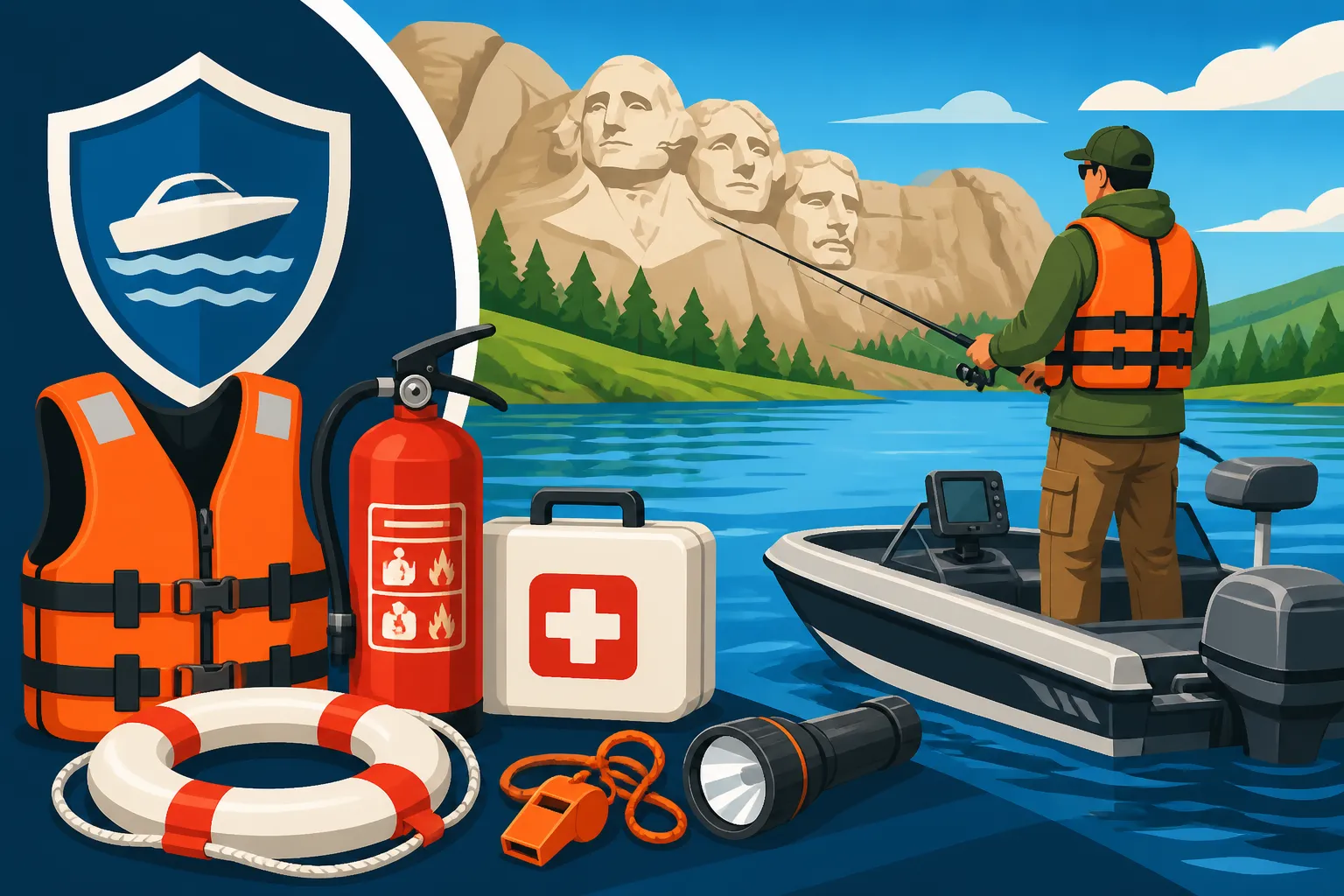
Beyond PFDs, every vessel needs a sound-producing device. This could be a whistle, a horn, or a bell, capable of producing an efficient sound signal to alert others in situations of reduced visibility or to signal distress. A bailing device or bilge pump is also essential for removing water from your vessel, especially for smaller boats or kayaks that might take on water from waves or rain. Lastly, for vessels with internal combustion engines, a fire extinguisher is typically required. Even smaller boats without enclosed compartments are strongly encouraged to carry one. It’s also wise to have a basic first-aid kit on board for minor injuries. You can often stock up on these essentials at outdoor retailers like Bass Pro Shops or conveniently order them online through Amazon.
Equipment Specific to Motorized Vessels
When you add an engine to the mix, the safety requirements naturally become a bit more complex. Motorized vessels, due to their speed and potential for fuel-related hazards, have additional items they must carry. A well-maintained fire extinguisher, as mentioned, is usually mandatory for these boats, particularly if they have enclosed compartments where fuel vapors could accumulate. The type and size of the extinguisher often depend on the boat's length and whether it has a fixed system. For detailed information, you might find our article Is a Fire Extinguisher Required on Small Fishing Boats? helpful.
Beyond fire safety, proper ventilation systems are critical for gasoline-powered vessels to prevent the build-up of explosive fumes. This includes blowers for enclosed engine compartments and proper baffling for fuel tanks. Navigation lights are also a must for any motorized vessel operating between sunset and sunrise, or during periods of restricted visibility. These lights ensure your boat is visible to others and indicates your direction of travel, preventing collisions. Furthermore, if your motorized vessel is 16 feet or longer, you'll need a throwable PFD (Type IV) in addition to the wearable PFDs for everyone on board. This device is designed to be quickly thrown to someone who has fallen into the water. For new boat owners, understanding all these additions can feel overwhelming, but they are vital for safe operation.
Non-Motorized and Smaller Craft Considerations
While they might seem less complex, non-motorized vessels like canoes, kayaks, and stand-up paddleboards also have specific safety requirements, which are sometimes overlooked. The fundamental rule of one U.S. Coast Guard-approved PFD per person still applies, and they must be readily accessible. For youth under seven, wearing the PFD is mandatory when underway. Many kayakers and paddleboarders choose to wear their PFDs at all times, which is always the safest option, even if not explicitly required by law for adults. Our specific guide on South Dakota Kayak and Canoe Registration Rules can provide more detail on these smaller crafts.
A sound-producing device, such as a whistle attached to your PFD, is also crucial for these smaller vessels, especially if you venture out onto larger lakes or rivers where you might need to signal to other boats. A bailing device (like a small bucket or sponge) or a manual bilge pump is also highly recommended to manage any water ingress. While not always legally required for registration purposes for some non-motorized craft, having navigation lights (a white all-around light is common) is a smart choice if there's any chance you'll be out during low-light conditions or after dark, making you visible to larger boats. Even if your kayak or paddleboard doesn't require formal registration, adhering to these safety guidelines ensures a much safer experience.
Personal Flotation Devices (PFDs): What You Need to Know
When it comes to boating safety, Personal Flotation Devices (PFDs), universally known as life jackets, are often the very first thing people think of, and for good reason. They are arguably the most critical piece of safety equipment you can have on board, literally designed to keep you afloat.
Types of PFDs and Their Uses
Not all PFDs are created equal, and understanding the different types can help you choose the right ones for your specific boating activity and the conditions you expect to encounter. The U.S. Coast Guard categorizes PFDs by type, each with varying levels of buoyancy and design features.
- Type I (Off-Shore Life Jackets): These are designed for extended survival in rough, open water where rescue may be delayed. They offer the most buoyancy and are typically bulky, designed to turn an unconscious person face-up in the water. While highly effective, they're often too cumbersome for general recreational boating in South Dakota's inland waters.
- Type II (Near-Shore Buoyant Vests): These are common and suitable for most recreational boating activities where rescue is likely to be quicker. They offer enough buoyancy to turn some unconscious wearers face-up, but not all. They are less bulky than Type I, making them more comfortable for all-day wear.
- Type III (Flotation Aids): These are the most common type for general recreational use, including fishing, waterskiing, and kayaking. They are designed for constant wear, offering maximum comfort and freedom of movement. They are not designed to turn an unconscious person face-up, so the wearer must be able to help themselves. These are popular choices for anglers on Lake Sharpe or those enjoying Lake Francis Case Fishing Guide.
- Type IV (Throwable Devices): These are not designed to be worn but are intended to be thrown to a person in the water. Examples include ring buoys and boat cushions. They are required on most vessels 16 feet or longer, in addition to wearable PFDs.
- Type V (Special Use Devices): These are designed for specific activities, like kayaking, waterskiing, or sailboarding, and include things like work vests or deck suits. They are only approved for use when worn for the activity specified on their label. Many inflatable PFDs fall into this category, but they require regular inspection and must be worn to be effective, often requiring manual or automatic inflation.
Choosing the right type depends on your activity. For active fishing or paddling, a comfortable Type III might be best, readily available at retailers like Bass Pro Shops.
Quantity and Condition Requirements
South Dakota regulations are quite clear: you must have at least one U.S. Coast Guard-approved PFD of an appropriate type, in good serviceable condition, and readily accessible for each person on board your vessel. This isn't a suggestion; it's a legal requirement. "Good serviceable condition" means no rips, tears, broken buckles, or straps, and that the PFD still retains its buoyancy. A waterlogged or damaged PFD is not considered serviceable and will not count towards your requirements.
For vessels 16 feet or longer (excluding canoes and kayaks), you also need one Type IV throwable device. This throwable PFD must also be in good condition and immediately available for use, not stored in a locked compartment or under a pile of gear. Imagine a sudden swell knocking someone overboard on Lake Oahe; fumbling around for a PFD could waste precious seconds. That's why accessibility is key. Remember, checking your PFDs should be part of your routine pre-launch checklist, much like checking your fuel and weather forecast. Our guide on How Many Life Jackets You Need on a Fishing Boat in South Dakota goes into more specific numbers for different scenarios.
When and How to Wear a PFD
While having the correct PFDs on board is mandatory, wearing them is often the safest choice, even when not legally required. In South Dakota, children under seven years of age must wear a PFD at all times when on board any vessel that is underway. This is a non-negotiable rule designed to protect our youngest boaters. Beyond this, adults are strongly encouraged to wear their PFDs, especially in certain situations.
Consider rough weather, cold water temperatures (common in South Dakota for much of the year), or when operating alone. Even strong swimmers can be quickly overcome by cold water shock or disoriented after falling in. An unexpected jolt or a sudden wake can send anyone overboard without warning. Wearing a PFD eliminates the scramble to find and put one on in an emergency, giving you instant buoyancy and increasing your survival chances dramatically. For instance, if you're Ice Fishing Gear Basics for Beginners, wearing a specialized PFD or flotation suit is paramount. The small inconvenience of wearing a PFD is a tiny price to pay for the peace of mind and safety it provides. Many modern PFDs are lightweight and comfortable enough that you'll barely notice you're wearing them after a short while.
Visual and Audible Distress Signals Requirements
Being able to signal for help or alert other boaters to your presence is a critical aspect of boating safety, especially on large, busy waters or during times of reduced visibility. South Dakota regulations, in line with federal guidelines, specify requirements for both visual and audible distress signals.
Sound-Producing Devices: Horns and Whistles
Every vessel operating on South Dakota waters, regardless of its size or type, must be equipped with a sound-producing device capable of emitting an efficient sound signal. For smaller boats, kayaks, and paddleboards, a simple U.S. Coast Guard-approved whistle is sufficient. These are inexpensive, easy to carry (often attached to a PFD), and effective for short-range signaling. Many multi-tool kits available on Amazon or at Bass Pro Shops include a marine whistle.
For boats 12 meters (39.4 feet) or more in length, a mechanical whistle and a bell are required. For vessels between 12 and 20 meters (65.6 feet), a bell is often required in addition to a whistle. The purpose of these devices is to signal your presence in fog or other restricted visibility conditions, or to communicate distress. A series of short blasts can signal danger, while a prolonged blast can indicate a passing intention. Knowing your vessel's length and the specific requirements helps you pick the right device. It's not just about having one, but about knowing how to use it effectively in an emergency.
Visual Distress Signals: Flares and Flags
Visual distress signals (VDS) are primarily for use in times of emergency to attract attention and signal for help, especially when operating on the Great Lakes, coastal waters, or any waters where you can have greater than two miles of visibility to land. While South Dakota is an inland state, some of its larger lakes and reservoirs, particularly the Missouri River system (Lake Oahe, Lake Sharpe, Lake Francis Case, and Lewis and Clark Lake), are considered "federally controlled waters" for some purposes, and having VDS is generally a wise, if not always explicitly required for all vessels, practice.
For vessels under 16 feet, visual distress signals are not typically required during the daytime, but are highly recommended if you venture onto large bodies of water. For vessels 16 feet and over, you should generally carry U.S. Coast Guard-approved visual distress signals for both day and night use. Common types include:
- Pyrotechnic Devices: These include red flares (handheld or aerial), orange smoke signals (handheld or floating), and self-igniting lights. These are very effective but have expiration dates and must be stored carefully.
- Non-Pyrotechnic Devices: These include orange distress flags (day use) and electric distress lights (night use). An orange distress flag is a simple, effective signal for daylight emergencies, visible from a distance. An electric distress light, which flashes an S.O.S. signal, is a great alternative to pyrotechnic flares for night use, with no expiration date.
It's crucial to understand the expiration dates on pyrotechnic flares and replace them regularly. Always store VDS in a readily accessible, dry location. Never use them unless you are in a genuine distress situation, as false alarms can divert critical rescue resources.
Navigating Limited Visibility Safely
Reduced visibility due to fog, heavy rain, or even nightfall presents significant challenges and increases the risk of collisions. This is where your sound signals and navigation lights become absolutely paramount. Operating a boat without proper navigation lights after sunset is not only illegal but extremely dangerous. You simply won't be seen by other vessels, leading to potential catastrophic accidents.
For motorized vessels, a masthead light (white, showing 225 degrees forward), sidelights (red for port, green for starboard, showing 112.5 degrees), and a stern light (white, showing 135 degrees aft) are standard. The arrangement and visibility of these lights depend on the vessel's length and type. Always test your navigation lights before heading out, especially if you plan to be on the water around dawn, dusk, or after dark. If you encounter fog or heavy rain, slow down, use your sound signals, and keep a sharp lookout. Remember, even with lights, visibility can still be severely impaired, and caution is your best defense. This is also why having a compass or GPS on board can be incredibly helpful for maintaining your bearing when landmarks disappear from view.
Fire Safety and Ventilation Onboard
Fire is one of the most terrifying emergencies that can occur on a boat, especially given the presence of fuel and electrical systems. South Dakota, in alignment with federal boating laws, has specific requirements to mitigate this risk, particularly for motorized vessels.
Fire Extinguisher Requirements
The presence and proper maintenance of fire extinguishers are critical for preventing small incidents from escalating into major disasters. For any motorized vessel with an enclosed engine compartment, permanent fuel tank, or spaces where flammable materials might be stored, a U.S. Coast Guard-approved marine fire extinguisher is generally required. The type and number of extinguishers depend on the vessel's length and whether it has a fixed fire extinguishing system.
| Boat Length | No Fixed System (Minimum USCG-Approved Extinguishers) | With Fixed System (Minimum USCG-Approved Extinguishers) |
|---|---|---|
| Under 26 feet | One B-I type | Zero (Fixed system counts) |
| 26 feet to under 40 feet | Two B-I type OR one B-II type | One B-I type |
| 40 feet to under 65 feet | Three B-I type OR one B-II type and one B-I type | Two B-I type OR one B-II type |
Note: B-I and B-II refer to extinguisher sizes based on the amount of extinguishing agent. Always check the label for "Marine Type USCG Approved" and the B-I or B-II designation.
These extinguishers must be readily accessible, fully charged, and in good operating condition. It's a good habit to check the pressure gauge on your extinguisher regularly and ensure it's within the "green" zone. Many anglers overlook checking their extinguishers, but an expired or uncharged one is useless in an emergency. You can purchase marine-specific fire extinguishers at marine supply stores or online through retailers like Amazon, ensuring they meet the required USCG standards. This is a point where you really don't want to cut corners.
Fuel System and Ventilation Standards
Gasoline vapors are heavier than air and can settle in the lowest parts of a boat, creating an invisible, highly explosive hazard. This is why proper fuel system and ventilation standards are paramount for motorized vessels, especially those with enclosed engine compartments or fuel tanks. All gasoline engines installed in an enclosed space must have a backfire flame arrestor on the carburetor or fuel injection system. This device prevents flames from escaping the engine in the event of a backfire and igniting fuel vapors.
Additionally, vessels carrying gasoline as fuel, where the fuel tank is not open to the atmosphere, or where fuel vapors can accumulate, require specific ventilation systems. This typically involves at least two ventilation ducts: one that extends from the lower part of the bilge to the open atmosphere, and another from the upper part of the bilge to the open atmosphere. These natural ventilation systems, often supplemented by powered blowers for pre-start ventilation, ensure that any dangerous vapors are exhausted from the boat's interior. Always run your bilge blower for a few minutes before starting your engine, and ensure there are no fuel leaks or unusual odors before you turn the key. Our guide on South Dakota Boat Motor Horsepower Rules might also touch on some engine-related safety checks.
Preventing Onboard Fires
While carrying the right equipment is crucial, proactive fire prevention is even better. Many boat fires are preventable with proper maintenance and vigilance. Regularly inspect your fuel lines, connections, and fuel tanks for any signs of leaks or deterioration. Ensure your electrical wiring is in good condition, free from fraying or corrosion, and properly secured. Avoid overloading electrical circuits, and if you're installing new electronics, ensure they're marine-grade and installed by a qualified professional.
Keep your engine compartment clean and free of oily rags or debris, which can be highly flammable. When refueling, always shut off your engine, turn off all electrical equipment, and close all ports and hatches to prevent fumes from entering the boat's interior. Never smoke while refueling. After fueling, ventilate your boat thoroughly by running the blower and opening hatches before starting the engine. These simple habits can dramatically reduce your risk of a fire incident, allowing you to enjoy your fishing trip on Lake Oahe Fishing Guide or any other beautiful South Dakota waterway without worry.
Navigation Lights and Other Specific Equipment
As boating conditions change, so do the specific requirements for your vessel. Operating safely at night or in limited visibility demands a different set of precautions and specialized equipment, as do certain activities like towing.
Rules for Operating at Night or in Low Light
Operating any vessel between sunset and sunrise, or during periods of restricted visibility (like fog, heavy rain, or even an impending storm), requires specific navigation lights to be displayed. These lights aren't just for you to see; they're primarily for other vessels to see you and understand your movement.
- Power-driven vessels (motorized): Must display a masthead light (white, showing forward), sidelights (red on port, green on starboard), and a stern light (white, showing aft). The masthead and stern lights can sometimes be combined into an all-around white light for vessels under 39.4 feet (12 meters), but this depends on specific configurations.
- Sailing vessels: Must display sidelights and a stern light. They may also carry a tricolor light at the top of the mast.
- Manually propelled vessels (canoes, kayaks, paddleboards): While not required to display fixed navigation lights, they must have a readily available white light (like a flashlight or lantern) to show in time to prevent a collision. This means you need to be able to shine it in any direction to make your presence known to approaching boats.
Always check that your navigation lights are clean, functioning properly, and unobstructed before you head out, especially if you anticipate being on the water after dark. Having spare bulbs or an alternative white light source for smaller craft is a smart move. Being well-lit is your best defense against collisions when visibility drops.
Backfire Flame Arrestors and Ventilation Systems
We touched on these briefly under fire safety, but their importance for safe operation cannot be overstated. For gasoline engines installed in an enclosed engine compartment, a U.S. Coast Guard-approved backfire flame arrestor is a legal requirement. This device is designed to prevent igniting flammable vapors in the engine space in the event of a backfire, which can happen with gasoline engines. Regular inspection to ensure it's clean and in good condition is essential.
Similarly, proper ventilation for fuel tanks and engine compartments is crucial. Boats with gasoline engines must have specific ventilation systems to prevent the accumulation of explosive fuel vapors. This includes natural ventilation, consisting of intake and exhaust ducts, and often, powered blowers. Always use your power blower for at least four minutes before starting your engine, and be vigilant for any gasoline odors. If you smell gas, do not start the engine; investigate the source of the odor immediately. These systems work together to minimize the risk of fire and explosion, giving you peace of mind on the water.
Special Considerations for Towing and Anchoring
Beyond the standard safety gear, certain boating activities in South Dakota have their own unique equipment or procedural requirements.
- Towing: If you're towing a person on skis, a wakeboard, or an inflatable tube, you must have an observer on board in addition to the boat operator. This observer's sole responsibility is to watch the person being towed and relay signals to the operator. This ensures constant vigilance and quick response in case of a fall or other incident. The vessel itself must also be capable of towing, with sufficient horsepower.
- Anchoring: While not strictly a safety equipment requirement in the same vein as PFDs, having an anchor of appropriate size and sufficient anchor line is a vital safety tool. An anchor can help you hold position in a strong current, prevent drifting into dangerous areas if your engine fails, or simply allow you to enjoy a meal without floating away. The length of your anchor line should be at least 7-10 times the maximum depth of the water you expect to anchor in, to provide adequate scope. For fishing on the Missouri River, where currents can be strong, a reliable anchor setup is non-negotiable.
Understanding these specific rules and equipping your boat accordingly helps ensure everyone's safety, whether you're leisurely cruising, actively fishing, or enjoying watersports. Remember to always consult the current South Dakota GFP Fishing Handbook Guide or the South Dakota Game, Fish and Parks website for the most up-to-date regulations.
Maintenance and Readiness: Beyond the Purchase
Buying the right safety equipment is only half the battle. To be truly safe on the water, your gear needs to be properly maintained, readily accessible, and everyone on board should know how to use it. This often gets overlooked, but a piece of equipment that fails when you need it most is no better than not having it at all.
Regular Checks and Inspections
Just like you perform routine maintenance on your boat's engine, your safety equipment also needs regular attention. PFDs should be inspected before each season and periodically throughout the year for tears, mildew, or signs of deterioration. Check the straps and buckles to ensure they are secure and functioning correctly. Fire extinguishers need their pressure gauges checked regularly, and you should be aware of their expiration dates, replacing them as necessary. Flares also have expiration dates and must be replaced; many marine stores offer safe disposal programs for expired pyrotechnics.
Your sound-producing devices, like horns, should be tested periodically to ensure they work. Navigation lights should be switched on before every nighttime outing to confirm all bulbs are operational. Even seemingly minor issues can become critical problems in an emergency. A dedicated checklist can make this process simple and efficient, ensuring nothing is missed. This preventative approach is far more effective than discovering a faulty piece of equipment when it's already too late.
Proper Storage and Accessibility
The best safety equipment in the world is useless if you can't get to it when you need it. "Readily accessible" is a key term in boating regulations, and it means exactly that: you should be able to retrieve the item quickly, without having to dig through gear, unlock compartments, or move obstacles. PFDs should be stored in an open area, not stuffed under seats or in inaccessible lockers. A throwable PFD should be on deck or in an open cockpit, within easy reach.
Fire extinguishers should be mounted in a visible, easily reachable location, away from direct sunlight but where they can be grabbed instantly. Visual distress signals should also be in an accessible, waterproof container. Imagine your boat taking on water rapidly; you won't have time to search for a bailing device. Every second counts in an emergency. Planning out where each piece of safety gear will be stored and ensuring it’s always in its designated spot will pay dividends in a crisis. Many people use mesh bags or clearly marked compartments for their safety gear, making it obvious where everything is.
Educating Your Crew and Passengers
Even if you're an experienced boater, your passengers might not be. It's your responsibility as the vessel operator to ensure everyone on board knows where the safety equipment is located and how to use it. Before you depart the dock, take a few minutes to give a quick safety briefing:
- Point out where the PFDs are stored, and demonstrate how to put them on correctly. Emphasize that children under seven must wear theirs.
- Show where the fire extinguisher is located and briefly explain its operation (Pull, Aim, Squeeze, Sweep).
- Demonstrate the use of the sound-producing device.
- Explain what to do in case of someone falling overboard, including how to use a throwable PFD and how to point to the person in the water.
- Briefly cover emergency procedures, like who to contact (e.g., calling 911 or using a VHF radio if available) and what to do if the boat breaks down.
This quick overview not only prepares your passengers for potential emergencies but also helps them feel more comfortable and confident on the water. It’s a small investment of time that can make a huge difference, particularly if you're bringing out new anglers or young families for a day of fishing on the Best Fishing Spots in South Dakota.
Boat Registration and Licensing: The Administrative Side of Safety
While not strictly "safety equipment," proper boat registration and, for some operators, a boating education certificate, are foundational aspects of safe and legal boating in South Dakota. They ensure accountability and provide a baseline level of knowledge for operators.
South Dakota Boat Registration and Titling Process
Every motorized boat operating on South Dakota waters must be registered and titled with the South Dakota Game, Fish and Parks (GFP). This includes everything from large fishing vessels to small boats with electric trolling motors. Non-motorized vessels over 12 feet in length, such as canoes and kayaks, also require registration. This process ensures your vessel is accounted for and helps fund vital boating safety and infrastructure programs in the state. Our comprehensive South Dakota Boat Registration Guide outlines all the steps, forms, and fees involved.
When you register your boat, you'll receive a registration card, decals, and a registration number that must be displayed prominently on the bow of your vessel. These numbers and decals allow law enforcement to identify your boat quickly. Titling establishes legal ownership, which is important for buying, selling, or insuring your vessel. Ignoring these administrative steps can lead to fines and a lot of unnecessary hassle, detracting from your enjoyment of the water. Make sure to understand How Long You Have to Register a New Boat in South Dakota to avoid penalties.
Boat Safety Education and Boating Licenses
In South Dakota, there isn't a universal "boating license" required for all operators over a certain age, unlike some other states. However, boaters under the age of 12 are generally prohibited from operating a motorboat with an engine of more than 6 horsepower, unless accompanied by an adult (18 years or older) or have successfully completed an approved boating safety course.
While not mandated for all adult operators, completing a boating safety course is highly recommended for everyone, especially new boaters. These courses cover essential topics like navigation rules, emergency procedures, responsible operation, and detailed information on safety equipment. Many courses are available online or in person through organizations like the U.S. Coast Guard Auxiliary or the U.S. Power Squadrons. Earning a boating safety certificate not only equips you with valuable knowledge but can also lead to discounts on boat insurance. This education empowers you to make informed decisions and react effectively in various situations, significantly enhancing safety for everyone on the water. If you're wondering about general fishing requirements, check out Do You Need a Boating License to Fish in South Dakota?.
The Importance of a Float Plan
While not a piece of equipment, a float plan is a vital safety tool, especially when venturing out onto large, remote waters like Lake Oahe or for extended trips. A float plan is simply a document you leave with a trusted friend, family member, or marina operator, detailing your boating intentions.
It should include:
- Your vessel's description: Type, name, registration number, color.
- Number of people on board: With names and contact information.
- Your destination and planned route.
- Your estimated time of departure and return.
- Any specific equipment you have: VHF radio, EPIRB, satellite phone.
- Contact information for emergencies.
If you fail to return by your estimated time, the person holding your float plan knows when and who to contact to initiate a search. This simple step can dramatically reduce search and rescue times if you encounter an unexpected emergency. For anyone planning a serious multi-day fishing adventure or heading into less populated areas, creating a detailed float plan is a cornerstone of responsible boating safety. It’s about ensuring that someone knows where you are and when to worry if you don't check in.
Conclusion
Navigating the beautiful waters of South Dakota is an incredible experience, offering world-class fishing and breathtaking scenery. But enjoying it safely means understanding and adhering to the necessary boat safety equipment requirements. From having the right number of properly fitting PFDs for every passenger to ensuring your fire extinguishers are charged and your navigation lights are operational, every piece of gear plays a vital role in preventing accidents and saving lives. Regular checks, proper storage, and educating your crew are just as important as the initial purchase of the equipment itself.
By taking the time to prepare your boat and yourself, you're not just complying with the law; you're investing in the safety and enjoyment of everyone on board. So, before you cast off for your next adventure on Lake Sharpe Fishing Guide or head into the Black Hills Trout Stream Fishing Guide, take a moment to double-check your safety gear. Smooth sailing and tight lines, my friends!
Disclaimer
This article is for general informational purposes only and does not constitute professional advice. Laws, prices and regulations vary by location and change over time. Consult a qualified professional for guidance on your specific situation.