How to Tell a Walleye From a Sauger
There's nothing quite like the thrill of feeling a strong tug on your line in South Dakota waters, but sometimes, the excitement comes with a moment of confusion. Many anglers, even seasoned ones, find themselves pausing when they pull in a fish that looks just like a walleye, but maybe not quite a walleye. This moment of doubt usually centers around differentiating between a walleye and its close cousin, the sauger. It's a common struggle, and misunderstanding which fish you've caught can lead to accidental regulation violations or simply not knowing the best way to fish for that specific species again. This comprehensive guide is here to clear up that confusion, giving you all the practical tips you need to confidently identify walleye and sauger every time you hit the water.
Why Distinguishing Walleye and Sauger Matters
You might be thinking, "What's the big deal? They're both great eating fish!" And you're absolutely right, they are! But when it comes to fishing in South Dakota, knowing the difference between a walleye and a sauger isn't just about showing off your fish identification skills. It has real-world implications that can affect your fishing trip and even your legal standing.
Legal Implications of Misidentification
South Dakota has specific regulations for different fish species, and walleye and sauger often have distinct rules regarding daily limits, possession limits, and even slot limits in certain waters. For instance, the daily limit for walleye might be different from that of sauger. You might encounter a slot limit that protects walleye of a certain size, meaning you have to release them, while sauger of that same size might be perfectly legal to keep. Imagine having a fantastic day on the Missouri River, catching what you think are all legal walleye, only to find out later that a few of them were actually sauger, and you've unknowingly exceeded their separate limit or kept one from a protected slot. That's a frustrating and potentially costly mistake nobody wants to make. Always consult the South Dakota GFP Fishing Handbook Guide or the latest South Dakota Fishing Regulations Explained before heading out.
When regulations vary, misidentification can quickly turn a successful fishing trip into a stressful encounter with a conservation officer. These regulations are in place to help manage fish populations and ensure healthy fisheries for everyone, so adhering to them is crucial. Being able to correctly identify your catch on the spot means you can make informed decisions about what to keep and what to release, keeping you compliant and preserving the resource for future generations.
Habitat and Behavior Differences
Beyond the legalities, understanding the difference between walleye and sauger can make you a more effective angler. While they are closely related and often share similar habitats, they do have some distinct preferences and behaviors that can inform your fishing strategy. Knowing these nuances can help you target one species over the other, or at least understand why you're catching what you're catching in a particular spot.
For example, sauger tend to prefer cloudier, more turbid waters and stronger currents than walleye. If you're fishing a stretch of the Missouri River with a good current and somewhat stained water, and you're consistently pulling in fish that seem a bit "off" from a typical walleye, it might just be sauger. Adjusting your presentation or even moving to slightly deeper, faster water could put you right on a sauger hotspot. Conversely, if you're targeting walleye in a clearer, calmer bay on Lake Oahe, and you're still catching those "walleye look-alikes," you might want to re-evaluate your identification skills and techniques. Understanding their preferences helps you refine your approach, whether it's bait choice, lure color, or even the depth you're fishing.
Key Physical Characteristics to Look For
The most reliable way to tell a walleye from a sauger is to carefully examine their physical features. Don't just glance; take a moment to look at a few key areas on the fish. This is where the subtle differences become clear.
Dorsal Fin Markings
This is often the first and easiest telltale sign for many anglers. Both species have two dorsal fins: a spiny one towards the head and a softer, rayed one behind it.
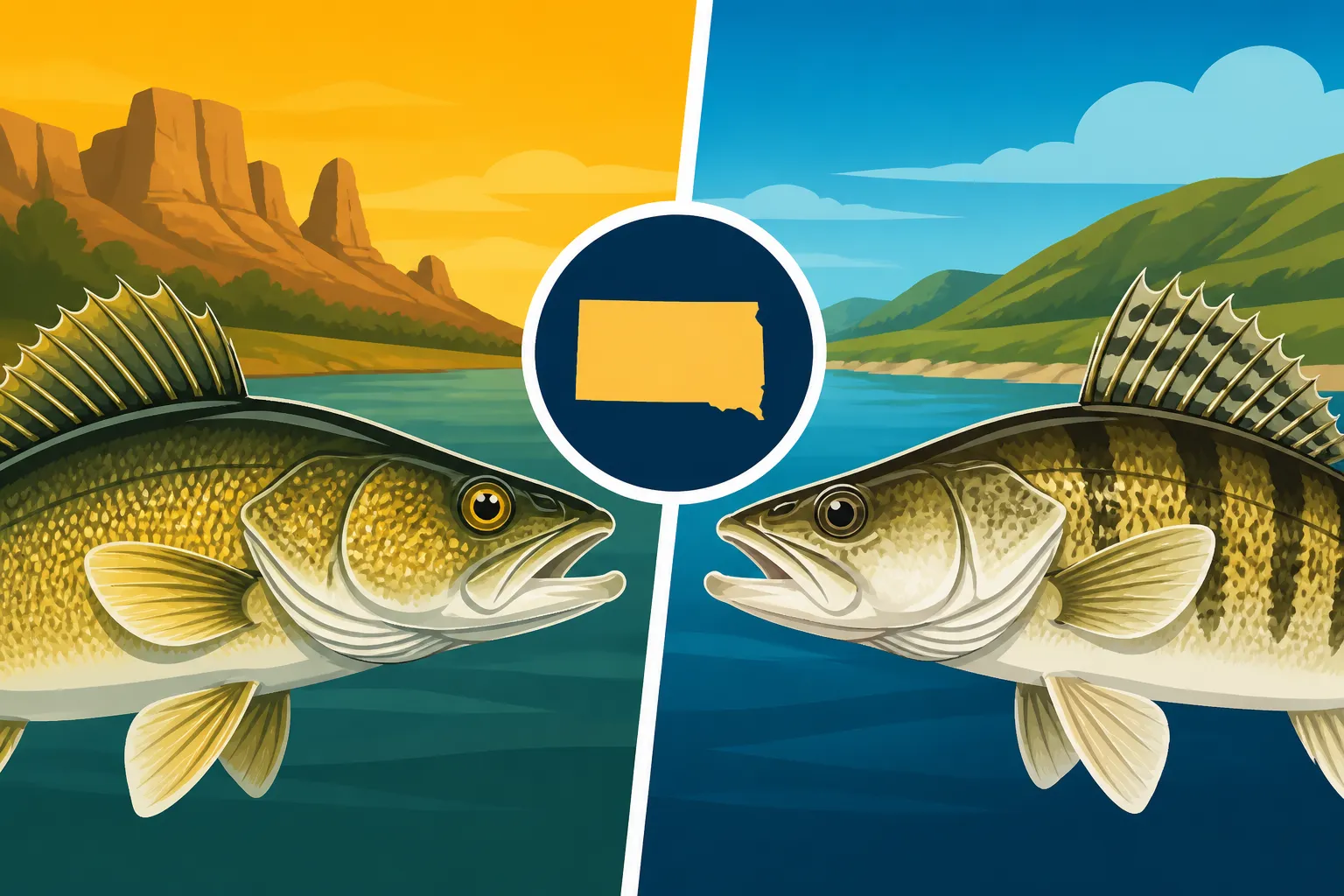
- Walleye: Look at the first (spiny) dorsal fin. A walleye almost always has a prominent, dark blotch at the very rear base of this fin, on the membrane between the last few spines. It's often described as a "walleye thumbprint" or a "black spot." It’s quite distinct and a strong indicator.
- Sauger: Sauger, on the other hand, lack this distinct dark blotch. Instead, their spiny dorsal fin will be noticeably covered with distinct, dark spots that are more spread out across the entire fin. It's a much more mottled, spotted appearance compared to the walleye's single, concentrated spot. Think of it like a dalmatian's coat versus a dog with one big black spot on its rump.
This dorsal fin difference is usually the quickest way to make a confident identification. If you see that clear black spot on the spiny dorsal, it's almost certainly a walleye. If it's covered in smaller spots, you've likely got a sauger.
Body Shape and Coloration
While both fish are generally torpedo-shaped, there are subtle differences in their overall body form and coloring that can help confirm your identification.
- Walleye: Walleye tend to have a more uniform, olive-green to golden-brown coloration on their backs, fading to a lighter belly. Their flanks often show indistinct, darker vertical bars or mottling, but these are typically faint. Their bodies can appear a bit more robust and deeper-bodied, especially larger specimens caught in nutrient-rich waters like parts of Lake Oahe.
- Sauger: Sauger typically have a more brassy or brownish-green coloration with distinct, dark, saddle-like blotches or spots across their sides and back. These markings are much more pronounced and irregular than those on a walleye, almost resembling tiger stripes or camouflage. Their bodies tend to be more slender and cylindrical than a walleye of comparable length, often giving them a slightly more "snaky" appearance. This distinctive patterning is a good secondary indicator once you've checked the dorsal fin.
Pay attention to the richness and pattern of the colors. Walleye often look "cleaner" or more uniformly colored, while sauger embrace their mottled, patterned look.
Spiny Dorsal Fin Membrane
Here’s another subtle but important difference that often gets overlooked. Run your finger (carefully!) along the spiny dorsal fin of the fish.
- Walleye: The membrane of a walleye's spiny dorsal fin typically feels smooth to the touch, or at least relatively so. It's not usually heavily scaled or rough.
- Sauger: The spiny dorsal fin membrane of a sauger feels distinctly rougher. This is because it often has small, prickly scales embedded in the membrane itself. It's a tactile difference you can feel, adding another piece to your identification puzzle.
While you don't want to hurt the fish, a gentle swipe of a finger can confirm this characteristic. It's a great "tie-breaker" if you're still on the fence after looking at the spots.
Tail Fin Markings
The caudal (tail) fin also offers a clue, though it's not as definitive as the dorsal fin.
- Walleye: Many walleye, particularly younger ones, will exhibit a distinct white tip on the lower lobe of their tail fin. It’s a clean, white edge that stands out.
- Sauger: Sauger generally lack this prominent white tip. Their tail fin tends to be more uniformly colored, often with some dark mottling or spots, but without that bright white lower edge.
Keep in mind that some older walleye might have a less pronounced white tip due to wear or injury, so don't rely solely on this feature, but it's a helpful addition to your visual checklist.
Mouth and Teeth
Both species are predatory and have impressive teeth, but there isn't a significant distinguishing characteristic here for identification purposes. Both have sharp canines that can deliver a painful poke, so always handle them with care, especially if you're planning a quick release. Focus on the other external features for more reliable identification.
Habitat and Behavior Clues
Beyond what you can see and feel on the fish itself, understanding where you caught it and the conditions you were fishing in can also provide strong hints about whether you've landed a walleye or a sauger.
Preferred Water Conditions
Walleye and sauger both belong to the perch family and share a love for cool, oxygen-rich waters, but their specific preferences can diverge.
- Walleye: Walleye tend to prefer slightly clearer water, though they are perfectly at home in moderately stained conditions. They often seek out structure like submerged humps, rock piles, drop-offs, and weed lines in lakes and reservoirs. While they inhabit rivers, they often prefer areas with less aggressive current, such as eddies, slack water behind islands, or deeper pools. They are also known for their light-sensitive eyes, which is why they are often most active at dawn, dusk, or on overcast days, or found in deeper water during bright daylight hours. When fishing for walleye, many anglers find success with electronics, such as those discussed in How to Read a Fish Finder for Walleye, to locate these structures.
- Sauger: Sauger are generally more tolerant of turbid (cloudier) water and stronger currents. They thrive in river systems like the Missouri River, often congregating in deep channels, scour holes, and areas downstream from dams where current is present. Their eyes are also adapted for low light, but they seem to handle muddier conditions even better than walleye. If you're consistently pulling fish out of a swift, stained river channel, especially if it's quite deep, there's a good chance you're encountering sauger. These areas are prime spots to try Jigging Techniques for Missouri River Walleye, which are also effective for sauger.
Knowing these preferences helps paint a picture of what you might expect to catch in certain parts of South Dakota's vast waterways.
Typical Locations in South Dakota
South Dakota offers an incredible variety of fishing environments, and certain locations are more renowned for one species over the other, though both can often be found in the same system.
- Missouri River System: This massive waterway, including lakes Oahe, Sharpe, Francis Case, and Lewis and Clark, is home to both walleye and sauger. However, the sauger population tends to be stronger in the main channel of the river, particularly below dams where current is more pronounced, such as the tailwaters below Oahe Dam or Big Bend Dam. Walleye are abundant throughout the system, often dominating the larger, more open water areas and the numerous bays and points of the reservoirs. For an in-depth look, check out our South Dakota Missouri River Fishing Guide.
- Glacial Lakes: The glacial lakes of eastern South Dakota, like Lake Thompson or Lake Poinsett, are primarily walleye country. While a sauger might occasionally turn up, it's far less common than in the Missouri River system. These lakes offer fantastic walleye opportunities, especially during the spring and fall.
- Black Hills: The Black Hills region is primarily known for its trout streams, but a few reservoirs might hold walleye. Sauger are generally not found in these cooler, clearer mountain waters.
By considering the body of water and the specific conditions you're fishing, you can often narrow down the possibilities before you even see the fish. For example, if you're casting on a relatively calm bay of Lake Sharpe, your chances of catching a walleye are higher. But if you're jigging in the swift current below Fort Randall Dam, be prepared to differentiate between walleye and sauger!
Practical Tips for On-the-Water Identification
When you're out on the boat or shore fishing, you want a quick and easy way to identify your catch without causing undue stress to the fish. Here are some actionable tips to make identification second nature.
Best Practices for Handling Fish for Identification
Responsible angling includes proper fish handling, especially when you need to identify a fish quickly for release or to determine if it's a legal keeper.
- Minimize Out-of-Water Time: Fish cannot breathe air, so every second they are out of the water is stressful. Have your camera, ruler, and identification guide ready before you even lift the fish from the net.
- Use a Net: A net with rubberized mesh is ideal as it's gentle on the fish's slime coat and fins, making it easier to control the fish while you quickly examine it.
- Wet Your Hands: If you need to handle the fish directly, wet your hands thoroughly before touching it. This protects the fish's protective slime layer, which acts as its immune system against disease.
- Support the Fish Horizontally: Never hold a fish vertically by its jaw alone, especially larger fish. This can damage internal organs and the jaw itself. Support the belly with your other hand, keeping the fish as horizontal as possible.
- Quick Visual Scan: Once the fish is safely in your hands or in the net, perform a quick visual scan:
- Check the spiny dorsal fin for the prominent dark spot (walleye) or scattered smaller spots (sauger).
- Observe the body coloration and markings – distinct saddles/blotches (sauger) or faint bars/uniform (walleye).
- Look for a white tip on the lower tail fin (walleye, usually).
- If still unsure, a quick, gentle touch of the spiny dorsal fin membrane (rough for sauger, smooth for walleye) can be the deciding factor.
If it's a questionable catch close to a slot limit or uncertain identification, it's always best to err on the side of caution and release the fish. You can find more general information about catch and release practices in most South Dakota Fishing License Guide resources.
Using a Fish Identification Guide
Having a reliable fish identification guide handy is invaluable. While this article gives you the key differences, a visual aid can cement your understanding.
- Printed Field Guide: Many anglers carry a small, waterproof field guide specifically for South Dakota fish species. These often have clear illustrations or photos highlighting the distinguishing features. You can often find excellent options on platforms like Amazon.
- Digital Apps: There are numerous fishing apps available for smartphones that include fish identification features. While convenient, remember that service might be spotty in some remote fishing locations. Download the necessary guides beforehand if you plan to rely on a digital app.
- South Dakota GFP Resources: The South Dakota Game, Fish and Parks (GFP) website and their annual fishing handbooks are excellent resources. They often provide detailed illustrations and descriptions of common fish species, including how to tell walleye and sauger apart. It's always a good idea to have a copy of the current regulations and species guide available.
No matter which method you choose, regularly reviewing the key identification points will help you become more proficient. The more you practice identifying fish, the faster and more confident you'll become, allowing you to quickly get your catch back in the water or into your cooler, depending on your decision.
Walleye vs. Sauger: A Quick Comparison
To help solidify the differences, here's a table summarizing the key characteristics:
| Feature | Walleye | Sauger |
|---|---|---|
| Spiny Dorsal Fin | One distinct, dark blotch on the rear base. | Entire fin covered in distinct, small dark spots. |
| Body Coloration | Olive-green to golden-brown, faint bars. | Brassy or brownish-green with prominent, dark saddle-like blotches. |
| Body Shape | Often more robust, deeper-bodied. | More slender, cylindrical. |
| Tail Fin | Often has a white tip on the lower lobe. | Lacks a prominent white tip; often mottled. |
| Dorsal Fin Membrane | Smooth to the touch. | Rough/prickly with small embedded scales. |
| Habitat Preference | Clearer to moderately stained water, less current, structure. | More tolerant of turbid water, stronger current, river channels. |
| Typical Location | Lakes, reservoirs, calmer river sections. | Main river channels, below dams. |
This table provides a concise overview, but remember, fish can vary based on age, sex, and specific environment. Use these points together for the most accurate identification.
Conclusion
Distinguishing between a walleye and a sauger doesn't have to be a guessing game that leaves you second-guessing your catch or your compliance with South Dakota Fish Limits and Size Restrictions. With a bit of practice and attention to these key physical and habitat differences, you'll soon be able to confidently tell one from the other. Remember that prominent dark spot on the walleye's spiny dorsal fin and the sauger's overall spotted and mottled appearance. Factor in whether you're pulling them from a calm lake or a swift, muddy river. Keeping a simple identification guide handy, perhaps from Amazon, or relying on the excellent resources from South Dakota GFP, will serve you well. Happy fishing, and may your lines be tight with whatever species you're targeting!
Disclaimer
This article is for general informational purposes only and does not constitute professional advice. Laws, prices and regulations vary by location and change over time. Consult a qualified professional for guidance on your specific situation.