Missouri River Tailwater Fishing Below Big Bend Dam
It’s a common scenario for any angler heading to a new spot, or even a familiar one with changing conditions: you’re standing there, rod in hand, staring at a vast expanse of water and wondering, "Where do I even begin?" Fishing the tailwaters below South Dakota’s Big Bend Dam on the Missouri River can feel exactly like that. The current, the depth, the endless possibilities – it’s exhilarating but can also be overwhelming. This guide is here to cut through the confusion and equip you with the knowledge to confidently tackle these incredibly productive waters, maximizing your chances of a successful and memorable fishing trip.
Understanding the Big Bend Dam Tailwaters Fishery
The Big Bend Dam creates a fascinating and dynamic aquatic environment. When you talk about "tailwater fishing," you're talking about the section of river immediately downstream from a dam, where the water discharged from the dam significantly influences the ecosystem. This isn't just a regular river stretch; it's a zone of concentrated opportunity, but it also demands a unique approach.
The Unique Environment and Its Appeal
Imagine a natural river flow being dramatically altered. The Big Bend Dam holds back the massive Lake Sharpe, and when water is released through the dam's turbines or spillways, it creates a turbulent, oxygen-rich environment that fish absolutely love. This constant flow brings with it a buffet of nutrients and baitfish, sweeping them from the calmer reservoir waters into the waiting mouths of hungry predators. The current acts like a conveyor belt, delivering food right to where the game fish are waiting. This is why tailwaters are often considered biological hotspots and why so many anglers flock to them.
Furthermore, the water temperature in the tailwaters tends to be more consistent than in shallower, unregulated river sections, especially during temperature extremes. In summer, the deeper water released from Lake Sharpe can be cooler, offering a refuge for species like walleye and smallmouth bass from scorching surface temps. Conversely, in winter, the deeper water might stay a bit warmer, preventing the entire area from freezing solid and keeping fish active. This stability helps to concentrate fish, making them more predictable and, consequently, more catchable if you know where to look. The varied bottom structure created by the powerful currents, including scour holes, rock piles, and sandbars, also provides excellent ambush points and holding areas for various species, adding another layer of complexity and opportunity to the fishing experience.
Key Fish Species to Target
While the Missouri River in South Dakota boasts a diverse fish population, the Big Bend Dam tailwaters are particularly renowned for a few star species that truly thrive in this unique environment. Knowing what to target and understanding their habits here is half the battle.
Undoubtedly, the Walleye reigns supreme in these waters. They are drawn to the strong currents and the abundant forage, particularly gizzard shad and various minnows that get flushed through the dam. These walleye are often robust, well-fed, and can provide incredible fights. Anglers specifically target them because of their delicious table fare and the challenge they present. You'll find them hunkering down behind current breaks, along seams, and in deeper scour holes, waiting for an easy meal to drift by. Mastering specific techniques for them here is key, as simply casting and retrieving often won't cut it. For a comprehensive look at the state's favorite fish, check out our guide on how to fish for walleye in South Dakota.
Smallmouth Bass are another incredibly popular sportfish in the Big Bend tailwaters. They love the rocky bottoms, riprap shorelines, and turbulent water that define much of this area. These "bronze backs" are feisty fighters, often found ambushing prey around structure. Unlike walleye, which often prefer to stay close to the bottom, smallmouth bass might suspend higher in the water column or patrol rockier sections more actively. Their aggressive strikes make them a thrill to catch, especially on lighter tackle. You’ll frequently find them near the dam itself, but also further downstream where rocky banks persist. If you're wondering about specific limits, our guide on South Dakota Smallmouth Bass Daily Limits has all the details.
The mighty Catfish, particularly Channel Catfish and Flatheads, also call these tailwaters home. The strong current, coupled with plentiful forage and deep holes, provides an ideal habitat for these bottom-dwelling giants. They are opportunists, feasting on anything from baitfish to mussels, and their powerful runs can really test your gear. Many anglers specifically target them with cut bait or stink baits, often after dark when the biggest cats come out to play. While often overlooked for the flashier walleye, the sheer size and fighting power of a tailwater catfish make them a worthy adversary.
Occasionally, you might also hook into Northern Pike in slower current areas or backwater eddies, especially near submerged vegetation if it's present. Crappie and other panfish can also be found, particularly in calmer pockets or areas with submerged timber, though they are less of a primary target for most anglers focusing on the main tailwater flow. Understanding these species' preferred habitats and feeding patterns in this dynamic environment is the first step toward a successful trip.
Prime Fishing Locations and Access Points
Navigating the Missouri River tailwaters below Big Bend Dam means understanding where the fish hold and how to get to them. It’s not just about showing up; it’s about knowing the lay of the land, or rather, the lay of the water.
Below the Dam Structure Spillway and Powerhouse
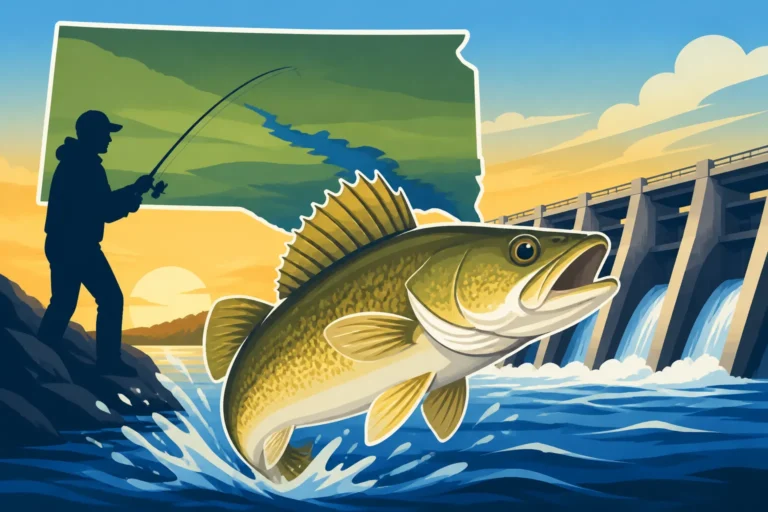
The immediate area directly below the dam is often a magnet for fish, thanks to the immense current, aeration, and abundant food source. The sheer power of the water coming through the spillways and powerhouse turbines can be intimidating, but it's also where the action often heats up. Walleye, smallmouth, and catfish will stage in the eddies, current seams, and scour holes directly adjacent to or just downstream from the discharge points. They're looking for an easier life, where they can expend minimal energy while still having access to a constant food supply.
Access to this particular section can vary depending on water levels and dam operations. There are typically designated public access points, including boat ramps and some limited shore fishing areas. However, always exercise extreme caution due to the powerful currents and potential for sudden changes in water discharge. For boaters, staying a safe distance from the dam structure is paramount, and understanding the no-wake or restricted zones is crucial. Shore anglers might find rocky banks or concrete structures that provide vantage points, but again, safety should be your top priority. Using heavy jigs or powerful crankbaits that can hold their depth in strong currents is essential here, as lighter tackle will simply be swept away. Many experienced anglers prefer to vertical jig or use heavy bottom bouncing rigs to present their bait effectively in this turbulent zone.
Downstream to West Bend Recreation Area
As you move further downstream from the immediate dam structure, the river begins to widen and the current, while still significant, becomes a bit more spread out and predictable. This stretch, extending several miles down to the popular West Bend Recreation Area, offers a variety of fantastic fishing opportunities, both from boat and shore. This is where the river really starts to show its true Missouri River character.
You’ll find a mix of deeper channels, submerged humps, wing dams (though less prevalent in this tailwater than some other sections of the Missouri), and significant current breaks created by bends in the river or larger pieces of structure. West Bend Recreation Area itself is a fantastic hub for anglers, offering excellent boat ramps, campgrounds, and accessible shore fishing areas. It's a popular spot for both local and out-of-state anglers. Around West Bend, you can target walleye by trolling crankbaits along main channel contours, especially near drop-offs or humps. Smallmouth bass will be found along the riprap banks and rocky points, where casting jerkbaits or tube jigs can be incredibly effective. Catfish often inhabit the deepest holes and slack water areas, making them a prime target for those deploying cut bait on the bottom. Remember that the river dynamics here mean that what might be a productive spot one day, could be less so the next, depending on the current and recent dam releases.
Hidden Gems and Local Insights
While the well-known spots are productive, some of the most rewarding fishing experiences come from discovering lesser-known "hidden gems" or simply understanding the subtle nuances of the river that only local insights can provide. This often means paying close attention to current seams, subtle depth changes, and less obvious structure. Sometimes, a spot that looks unremarkable from the surface can hold a treasure trove of fish just below.
One of the best ways to uncover these secrets is by studying detailed contour maps, both digital (like on your fish finder or via apps like Navionics) and physical. Look for sharp drop-offs, underwater points, humps that top out in deeper water, and any features that break the main current flow. These are natural congregating areas for fish seeking refuge and food. Another invaluable source of information is local bait shops or fishing forums. Often, the folks working at these shops are avid anglers themselves and can provide up-to-the-minute reports on what’s biting, where, and on what bait. Don't be afraid to strike up a friendly conversation! When it comes to planning your trip and even finding local guides who know these secret spots, platforms like FishingBooker can be incredibly useful for connecting with experienced captains who literally make their living knowing these waters inside and out. They can put you on fish faster than you might imagine. Remember, sometimes a "hidden gem" is simply a common area fished in an uncommon way, or at a specific time when angler pressure is low.
Essential Techniques for Big Bend Tailwater Success
Fishing the strong currents of the Missouri River below Big Bend Dam requires a specific set of techniques. What works in a calm lake won't necessarily cut it here. Adapting your presentation to the powerful flow is paramount for getting your bait in front of the fish and enticing a strike. Our comprehensive guide on South Dakota Missouri River Fishing Techniques offers even more strategies to consider.
Mastering Jigging and Live Bait Rigs
Jigging is arguably one of the most effective techniques in the Big Bend tailwaters, especially for walleye and smallmouth bass, because it allows for precise bait presentation in strong current. The key is to use jigs heavy enough to reach the bottom and stay there, even if just momentarily, before the current sweeps them away. This often means 3/8 oz to 3/4 oz jigs, or even heavier depending on current speed and depth.
Vertical jigging directly beneath your boat is a deadly tactic. Position your boat upstream of a suspected fish-holding area, drift slowly, and drop your jig straight down. Maintain constant contact with the bottom, lifting and dropping the jig subtly to imitate a struggling baitfish or insect. Tip your jig with a live minnow, a plastic grub, or a soft plastic paddle tail for added attraction. For specific strategies, explore our article on Jigging Techniques for Missouri River Walleye.
Pitching jigs to current seams or structure from a distance can also be highly productive, especially from shore or when you want to avoid motoring over a sensitive area. Cast upstream and allow the jig to sink and tumble along the bottom as it drifts downstream into the strike zone. The 'snap-jigging' retrieve can trigger aggressive strikes from curious predators.
When it comes to live bait rigs, the common 'three-way rig' or 'bottom bouncer' is a staple. A three-way swivel allows you to attach a heavy sinker to one eye, a leader with a hook (often snelled with a minnow or nightcrawler) to another, and your main line to the third. This keeps your bait near the bottom while minimizing snags. Bottom bouncers serve a similar purpose, letting your bait or spinner rig track along the bottom efficiently without getting tangled in the main line. Always use fresh, lively bait, as scent and movement are critical attractors in murky or fast-moving water.
Effective Trolling and Crankbait Strategies
Trolling is another incredibly effective method for covering water and locating active fish in the Big Bend tailwaters, particularly for walleye. However, trolling in current is different from trolling in a lake. You're often trolling with or against the current, or sometimes perpendicular to it, depending on the desired speed and lure presentation.
Trolling with the current allows you to move faster and cover more ground, but your crankbaits need to have a strong swimming action to remain enticing. Trolling against the current is slower but offers more precise control over lure depth and speed, which can be critical on tough days. You can also troll along contour lines or current seams to target fish holding in specific depths or ambush points.
Choosing the right crankbait is crucial. Opt for models designed for deeper diving, as walleye in tailwaters often hug the bottom. Colors should match the forage (shad, minnows) or stand out in stained water (chartreuse, orange, firetiger). Rapala, Berkley, and Salmo are popular brands that offer a wide range of effective crankbaits. The vibration and flash of a well-presented crankbait can mimic fleeing baitfish, triggering predatory instincts.
For covering wider areas or fishing multiple lines, planer boards are invaluable. These devices carry your lines out to the side of the boat, spreading your spread and allowing you to target different depths or current lanes simultaneously. They also move your lures away from the boat's disturbance, often resulting in more bites. Just be mindful of other boaters and the current when deploying and retrieving planer boards.
Techniques for Other Species Catfish Smallmouth
While walleye often steal the spotlight, don't forget the other fantastic fishing opportunities for species like catfish and smallmouth bass, each requiring their own specialized tactics.
For Catfish, patience and a hearty bait are key. The Big Bend tailwaters are home to substantial Channel and Flathead Catfish. Bottom fishing is the go-to technique. Use a heavy slip sinker rig, allowing the fish to take the bait without feeling immediate resistance. Baits like cut bait (shad, herring), chicken livers, nightcrawlers, or even commercial stink baits are highly effective. Focus your efforts in deep holes, along riprap banks, and in slower-moving eddies where catfish can conserve energy while waiting for food. Night fishing can be particularly productive for the biggest cats, as they become more active under the cover of darkness.
Smallmouth Bass are aggressive fighters that love rocky structure and current. Focus on casting techniques using lures that imitate their natural prey. Casting tube jigs, grubs, or swimbaits near riprap, rocky points, and submerged rock piles can yield explosive strikes. Jerkbaits and crankbaits that mimic minnows are also highly effective when retrieved with a stop-and-go action. Look for them in areas where the current creates a break or a seam around structure, allowing them to ambush prey. For anglers who enjoy a more active fishing style, targeting smallmouth in the tailwaters can be incredibly rewarding. FishingBooker can help you find local guides who specialize in catching these feisty bass, providing an accelerated learning curve to unlock their secrets.
Gear and Tackle Recommendations
The challenging environment of the Missouri River tailwaters below Big Bend Dam demands reliable gear. Don't skimp on quality here; the strong currents, potential for snagging, and robust fish can quickly expose any weaknesses in your setup.
Rods Reels and Line for Tailwater Fishing
When you're dealing with the powerful currents of the Missouri River, your fishing rod, reel, and line become an extension of your intent. You need gear that can withstand the strain, detect subtle bites, and handle strong fish.
For walleye and smallmouth bass jigging, a medium-light to medium-heavy spinning rod in the 6'6" to 7'6" range is generally ideal. Look for a fast action tip, which allows for sensitive bite detection and quick hook sets, while the backbone of the rod provides the power needed to fight fish in current. A good quality, smooth-operating spinning reel in a 2500-3000 series size will balance well with these rods. Brands like Shimano, Daiwa, and Abu Garcia offer excellent options known for their durability.
If you're primarily trolling for walleye, a slightly longer medium-heavy casting rod in the 7' to 8'6" range with a moderate action is often preferred. The moderate action helps absorb the shock of a strike and keeps crankbaits running true. Pair this with a baitcasting reel that has a good line counter, like a Daiwa Sealine or Okuma Cold Water, which helps you consistently reproduce successful presentations. You can find more specific recommendations in our guide on Best Fishing Rods and Reels for Walleye.
For catfish, you'll want to beef things up considerably. A heavy-action baitcasting rod 7' to 9' in length with a powerful reel is essential. Catfish rods are designed to handle heavy weights, powerful runs, and often larger baits. A robust baitcasting reel with a strong drag system is a must to tame these river monsters.
When it comes to fishing line, it’s a critical component. Braided line is a favorite for many tailwater anglers due to its incredible strength-to-diameter ratio, zero stretch for maximum sensitivity, and excellent abrasion resistance. A 10-20 lb test braided line (for walleye/bass) or 30-50 lb test (for catfish) is common. Always use a fluorocarbon leader (8-15 lb test for walleye/bass, 20-40 lb test for catfish) to your lure or hook. Fluorocarbon is nearly invisible underwater and offers good abrasion resistance, which is vital when fishing around rocks and other structure.
Essential Lures Baits and Terminal Tackle
Having the right selection of lures, baits, and terminal tackle is non-negotiable for success in the Big Bend tailwaters. You need options to adapt to changing conditions and fish preferences.
For jigging, an assortment of jigs ranging from 1/4 oz to 3/4 oz is essential. Common colors include chartreuse, white, orange, and natural shad patterns. Tip them with soft plastics like Berkley Gulp! minnows or twister tails, or classic live baits such as shiner minnows or nightcrawlers. Don't forget a selection of spinner rigs (e.g., Lindy Rigs or crawler harnesses) for slow-trolling or drifting live bait, particularly for walleye. Our resource on Best Lures for South Dakota Walleye provides even more detailed suggestions.
For trolling, a variety of crankbaits that dive to different depths (10-25+ feet) are crucial. Again, focus on colors that mimic local forage like shad and perch, but also have some bright "attractor" colors. Brands like Rapala Shad Raps and Flicker Shads, or Berkley Cutter and Dredger baits, are perennial favorites. Make sure you have crankbaits with different actions – some with a tight wobble, others with a wider swing.
Terminal tackle should include a range of hooks (Aberdeen, Octopus, Kahle, treble), sinkers (bell, egg, bullet, bottom bouncers), swivels (barrel, three-way), and leaders (pre-tied fluorocarbon or wire for pike). Always carry extra, as snags are an inevitable part of river fishing. Having good quality line clippers, pliers (for removing hooks), and a net (with a rubberized mesh to protect fish) is also critical.
Boat and Safety Gear Considerations
Fishing the Missouri River in a boat offers unparalleled access to prime locations, but it also comes with significant responsibilities, especially regarding safety and the type of vessel you use.
For the vast waters and strong currents of the Missouri River reservoirs and tailwaters, a V-hull fiberglass or sturdy aluminum boat in the 16-20 foot range is often preferred. These boats are designed to handle choppy water, strong winds, and the occasional wake from other vessels, providing a safer and more comfortable ride. A powerful, reliable outboard motor is essential for navigating against strong currents and covering large distances. Many anglers also equip their boats with a bow-mounted electric trolling motor (Minn Kota or MotorGuide are popular choices) with GPS Spot-Lock features, which is incredibly useful for holding your position precisely over a fishing spot in current without having to constantly anchor.
Anchoring in current requires extra attention. You’ll need a heavy anchor (river anchor or mushroom style) and significantly more anchor rope than you might think, typically 3-5 times the depth of the water you're in, plus extra for the current's pull. Always deploy and retrieve anchors carefully to avoid swinging into other boats or getting tangled.
Safety gear on board is not just recommended, it’s legally required. Our guide on South Dakota Boat Safety Requirements outlines everything you need, but as a quick reminder, this includes U.S. Coast Guard-approved life jackets for every person on board (with readily accessible jackets for children), a throwable flotation device, a fire extinguisher, a sound-producing device (whistle or horn), navigation lights (if operating between sunset and sunrise), and proper registration and numbering. Beyond the legal requirements, a well-stocked first-aid kit, a marine radio or fully charged cell phone, a spare prop, basic tools, and plenty of water are smart additions for any day on the big river.
Navigating Regulations and Environmental Factors
A successful and responsible fishing trip in the Big Bend Dam tailwaters isn't just about knowing where and how to fish; it's also about understanding and respecting the rules and the natural forces at play.
Key Regulations and Licensing
Ignorance of the law is never an excuse, especially when it comes to fishing regulations. South Dakota has specific rules designed to protect fish populations and ensure fair chase. Before you even cast a line, ensure you have the necessary South Dakota Fishing License Guide. This is mandatory for most anglers aged 16 and older, with specific rules for residents and non-residents. You'll also likely need a Habitat Stamp, which contributes to vital wildlife and habitat conservation efforts across the state.
Beyond licensing, it’s critical to be aware of the South Dakota Fishing Regulations Explained. These rules cover everything from daily and possession limits for various species to legal fishing methods, bait restrictions, and length limits. For example, specific South Dakota Walleye Limits are in place on the Missouri River system, which often include slot limits or daily creel limits that can change annually. Always consult the current South Dakota Game, Fish and Parks (GFP) fishing handbook or their website for the most up-to-date information. These rules are not arbitrary; they are scientifically determined to ensure sustainable fishing for generations to come. Failure to comply can result in fines, license revocation, and equipment confiscation – definitely not how you want your fishing trip to end.
Understanding Water Levels and Current
The Missouri River below Big Bend Dam is a dynamic system, heavily influenced by dam operations. Water levels, current speed, and discharge rates can change rapidly, and these factors dramatically impact fishing conditions. What was a prime fishing spot at one water level might be completely unproductive or even inaccessible at another.
The U.S. Army Corps of Engineers (USACE) manages the dam and its releases. Their websites often provide real-time and projected water levels and discharge rates for the various Missouri River dams. Becoming familiar with these resources is like having a crystal ball for planning your fishing trip. High water releases can create stronger currents, pushing fish into more sheltered areas or deeper holes. Conversely, lower flows might make certain areas more accessible or concentrate fish in deeper channels. Anglers often refer to certain water release levels as "prime" for specific species or techniques.
Learning to read the current is an essential skill for tailwater anglers. Look for current seams (where fast water meets slow water), eddies (swirling water behind structure), and areas of slack water. Fish will often position themselves in these zones to ambush prey without expending too much energy. Your presentation needs to match the current; too light, and your lure won't get to the fish; too heavy, and it might not look natural. This constant adaptation to changing flows is part of the challenge and reward of fishing the Big Bend tailwaters.
Weather Seasons and Best Times to Fish
Just like any outdoor pursuit, fishing success is heavily influenced by weather patterns and seasonal changes. The Missouri River tailwaters offer year-round fishing opportunities, but the "best" time often depends on what you're targeting. Our South Dakota Fishing Seasons Explained guide offers a broader overview, but let's dive into specifics for the Big Bend.
Spring (April-May) is often phenomenal, especially for walleye as they move into pre-spawn and spawning patterns. As ice breaks up and water temperatures rise into the 40s and 50s Fahrenheit, fish become incredibly active. This is a prime time for jigging with minnows or slow-trolling crankbaits. The downside? Spring weather can be notoriously unpredictable in South Dakota, swinging from warm and sunny to cold and windy in a single day. Be prepared for anything!
Summer (June-August) fishing can be excellent, though fish often move to deeper, cooler water during the hottest parts of the day. Early mornings and late evenings are prime times, especially for walleye and smallmouth bass. Trolling deeper diving crankbaits, jigging heavy jigs on main channel breaks, or bottom fishing for catfish are popular techniques. Be mindful of recreational boat traffic, which increases significantly in summer.
Fall (September-November) often brings another peak in activity, particularly as walleye gorge themselves in preparation for winter. Water temperatures begin to cool, and fish move shallower again. Trolling crankbaits and jigging can be incredibly effective. The cooler temperatures also mean less angler pressure, making for a more peaceful experience.
Winter (December-March), while often synonymous with ice fishing elsewhere in South Dakota, can still offer open water fishing opportunities in the tailwaters due to dam releases preventing solid ice formation. Anglers targeting walleye and catfish can find success with vertical jigging or dead sticking live bait in deeper holes. This is a test of endurance, but the rewards can be substantial, often in the form of larger, slower-moving fish. Always check local ice conditions if considering areas further from the dam.
South Dakota Tailwater Fishing – Key Species & Techniques
| Fish Species | Primary Habitat in Tailwaters | Best Techniques & Baits | Optimal Season(s) |
|---|---|---|---|
| Walleye | Current seams, scour holes, deep channel edges, structure | Vertical Jigging (minnows/plastics), Bottom Bouncing (minnows/nightcrawlers), Trolling Crankbaits | Spring, Fall, Early Summer, Winter |
| Smallmouth Bass | Rocky points, riprap banks, submerged rock piles, current breaks | Casting Tube Jigs/Grubs/Swimbaits, Jerkbaits, Crankbaits | Spring, Summer, Early Fall |
| Channel Catfish | Deep holes, slower eddies, main channel bottoms, riprap | Bottom Fishing (cut bait, chicken livers, stink baits), Drifting | Summer, Late Spring, Early Fall (Night fishing best) |
| Northern Pike | Slower current eddies, backwater areas, weed edges | Casting Spinnerbaits/Spoons, Large Stickbaits, Live Bait (suckers/minnows) | Spring, Fall, Early Summer |
| Crappie | Calmer eddies, submerged timber, bridge pilings | Jigging (small jigs/plastics), Live Minnows under a bobber | Spring, Early Summer, Fall |
This table serves as a quick reference, but remember, fish are constantly on the move. Adaptability and a willingness to try different approaches are your best friends on the water. When planning your trip, consider checking out FishingBooker to book a local guide. Their expertise can save you hours of searching and get you straight to the action, often with insights into these specific seasonal and weather-dependent patterns.
Disclaimer
The information provided in this guide is for general informational purposes only and is subject to change. Fishing regulations, season dates, and water conditions on the Missouri River can vary. Always consult the latest South Dakota Game, Fish and Parks (GFP) regulations and local advisories before heading out on the water. Ensure you have all necessary licenses and safety equipment. Fishing inherently involves risks; please exercise caution and prioritize your safety.