How to Back a Trailer Down a Boat Ramp
Oh, the boat ramp! It's one of those places that can turn even the most seasoned angler into a nervous wreck, isn't it? The eyes watching, the pressure to get it right, the way that trailer just seems to have a mind of its own when you put the truck in reverse. This guide is all about taking the mystery and the misery out of backing your boat trailer, breaking it down into simple, manageable steps so you can launch and retrieve your vessel with confidence and less stress on those beautiful South Dakota waters.
The Intimidation Factor: Why Backing a Trailer Feels So Hard
Let's be real, backing a boat trailer is one of the most common anxieties among new and even experienced boaters. You pull up to the ramp, and it feels like every pair of eyes is on you. The thought of jackknifing, hitting a post, or holding up a line of eager anglers can send anyone's heart rate soaring. It’s not just in your head; there’s a genuine learning curve, and the physics of it are a little counterintuitive at first.
Understanding the "Reverse Steering" Phenomenon
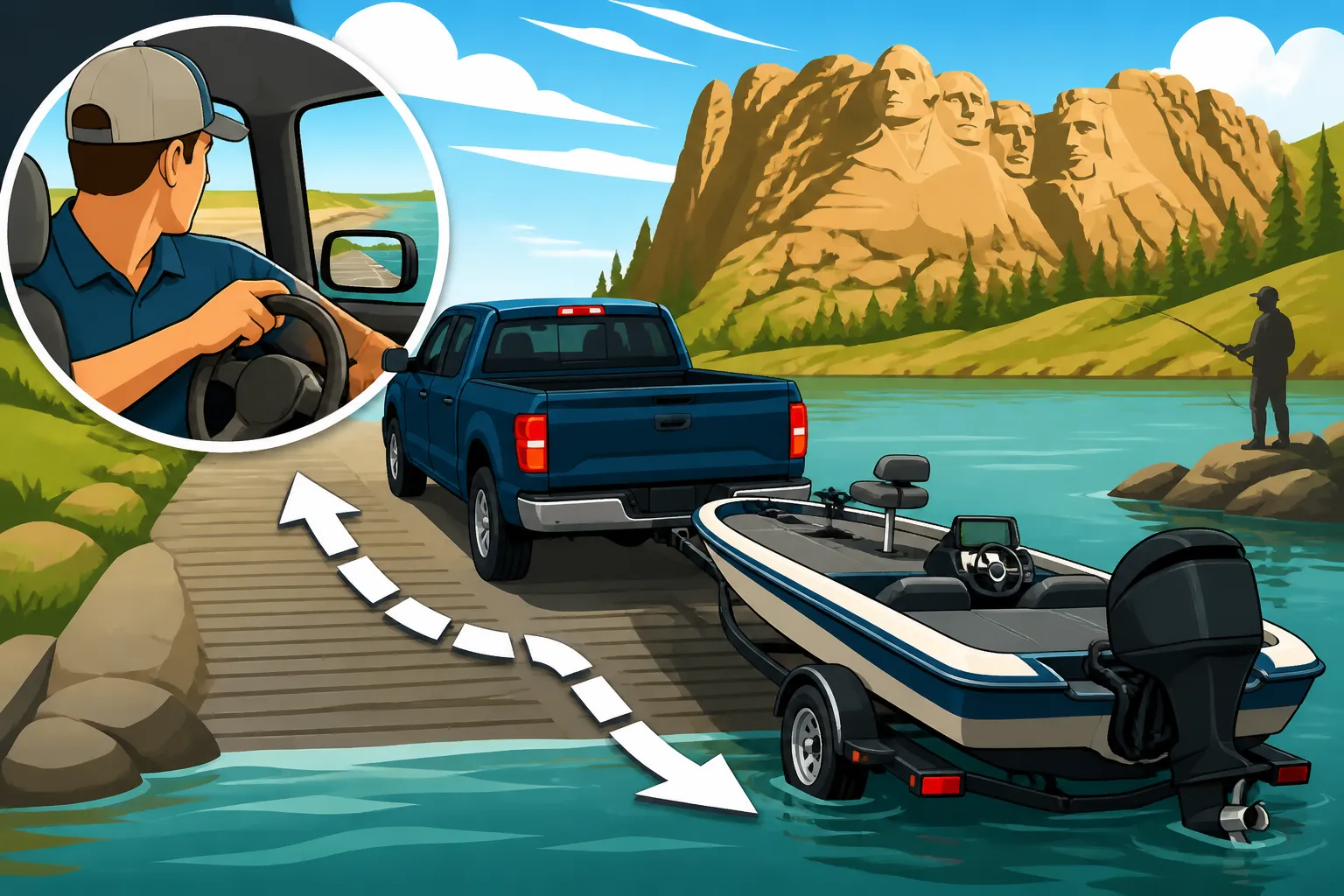
The biggest hurdle for most people is what I like to call the "reverse steering" phenomenon. When you're driving forward, you turn the wheel left to go left, right to go right. Simple, right? But when you're backing up with a trailer, everything flips. If you want the back of your trailer to go left, you actually have to turn your steering wheel to the right. And if you want the trailer to go right, you turn the wheel left. This is the fundamental concept that trips everyone up initially. Your brain is hardwired for forward motion, and reversing with a pivot point behind your vehicle takes some serious reprogramming. It’s not a natural movement, which is why it feels so awkward and often leads to overcorrection. Many folks try to look backward over their shoulder, which can make this reverse steering even more disorienting. Using your mirrors is usually a better strategy for most situations, as it gives you a broader perspective and helps you see the trailer's entire path.
Common Mistakes That Send Anglers Into a Spiral
Beyond the reverse steering, there are a few classic mistakes that contribute to the boat ramp blues. One of the most prevalent is overcorrection. You turn the wheel a little too much, the trailer swings wildly, and then you try to correct it by turning too far the other way, creating a frustrating back-and-forth wobble. Another common one is speed. People often try to back up too quickly, especially when feeling rushed. Slow and steady wins the race when it comes to trailer backing. A quick movement can send your trailer veering off course faster than you can react, turning a minor adjustment into a major recovery operation. And finally, ignoring the environment – wind, currents, or even the slope of the ramp itself can all influence how your trailer behaves. Many new boaters focus solely on the trailer and forget about everything else around them, which can lead to unexpected challenges. Taking a moment to assess the conditions before you even begin is crucial.
Pre-Ramp Preparation: Setting Yourself Up for Success
Before you even think about putting your vehicle in reverse, a little preparation goes a very long way. This isn't just about safety; it's about making the whole process smoother and faster, reducing that ramp anxiety. Think of it as your pre-flight checklist before launching your fishing adventure on Lake Oahe or any other beautiful South Dakota spot.
The Importance of a Pre-Launch Checklist
Trust me on this one: a good pre-launch checklist is your best friend. It saves you from those embarrassing moments where you realize you forgot to unhook a safety chain after you’re already halfway down the ramp. Before you get anywhere near the ramp itself, pull over in a safe staging area. Here's what you should be doing:
- Remove Tie-Down Straps: These are crucial for securing your boat during transport but become a major hazard if forgotten before launching.
- Disconnect Trailer Lights: If your lights are submersible, great. If not, make sure they’re unplugged to avoid shorting them out.
- Remove the Transom Saver: This support bracket protects your outboard motor during travel. It needs to come off before you back into the water.
- Check Drain Plug: Oh, how many stories begin with a forgotten drain plug! Double-check that it's in securely to avoid a sinking feeling (literally!).
- Load All Gear: Get your fishing rods, tackle box, cooler, and South Dakota Fishing Gear Checklist items into the boat now. You don't want to be doing this while blocking the ramp.
- Prepare Dock Lines and Fenders: Have your bow and stern lines ready, and fenders hanging if you're going to dock the boat after launching.
- Confirm Engine Operation: Give your outboard a quick check. Make sure it's trimmed up and ready to start.
- Life Jackets: Ensure everyone has their South Dakota Life Jacket Requirements met and knows where their PFD is.
Taking these few minutes in the parking lot means you can focus entirely on backing once you're at the ramp. It also keeps the ramp clear for other eager anglers.
Adjusting Your Mirrors and Mindset
Your mirrors are your primary tools for backing, especially if you have a larger boat. Take a moment to adjust them before you start. You want to see the entire length of your trailer down both sides. If you have extendable mirrors, use them! If not, a wide-angle clip-on mirror can be a game-changer. You can find these easily on sites like Amazon or at Bass Pro Shops.
Beyond the physical adjustments, mentally prepare yourself. Take a deep breath. Remind yourself that everyone started somewhere. It’s okay to take your time. If you feel flustered, pull forward and try again. No one is going to chastise you for taking an extra minute to get it right, but a botched launch can delay everyone. Visualize the path you want the trailer to take, and focus on small, controlled movements. Remember the specific Best Boat Ramp Etiquette Tips to ensure a smooth experience for everyone.
Step-by-Step Guide to Confident Backing
Alright, you're prepped, you're calm, and you're ready to tackle that ramp. Let's break down the actual process into a few actionable steps. The key here is patience and small movements.
The "Hand at 6 O'Clock" Method
This is probably the most commonly taught and effective technique for beginners, and for good reason. It simplifies that confusing reverse steering.
- Get Straight: Approach the ramp as straight as possible, lining your boat and trailer up directly with the ramp. Stop a few feet from the water's edge.
- Hand on the Bottom of the Wheel: Place your dominant hand at the very bottom of your steering wheel – the "6 o'clock" position.
- Think "Trailer, Not Truck": Now, here's the magic: wherever you move your hand, that's the direction the back of your trailer will go.
- Want the trailer to go left? Move your hand left (which turns the wheel right).
- Want the trailer to go right? Move your hand right (which turns the wheel left).
- This eliminates the mental flip-flop of traditional reverse steering.
- Look in Your Mirrors: As you begin to back slowly, use your side mirrors. If you see more of the trailer on one side, that's the side it's turning towards. Adjust your hand accordingly. Glance over your shoulder occasionally, but primarily rely on those mirrors for your angles.
- Go Slow, Really Slow: This cannot be stressed enough. Creep backward. Your goal isn't speed; it's control. The slower you go, the more time you have to react to the trailer's movement.
Practice this in an empty parking lot first, perhaps even just with your truck and trailer, before adding the boat and the pressure of a public ramp. Even just for 15 minutes, it makes a world of difference in building muscle memory.
Small Corrections Make a Big Difference
The biggest reason for wild trailer swings is oversteering. Instead of making big, sweeping turns of the steering wheel, think tiny adjustments.
- A Little Turn Goes a Long Way: When you turn the wheel, even slightly, give the trailer a moment to respond. It won't react instantly.
- Straighten Early: Once the trailer starts to turn in the direction you want, begin to straighten your steering wheel before it's perfectly aligned. This is often the trickiest part. You want to anticipate, not just react. If you wait too long, you’ll be chasing the trailer's swing.
- Pull Forward to Realign: Don't be afraid or embarrassed to pull forward a few feet to straighten out if you get off track. It's far better to reset than to keep struggling and potentially jackknife your trailer. This is a common and smart tactic that even pros use. A straight pull forward will generally straighten out your trailer behind your tow vehicle, making it easier to start over.
Think of it like riding a bike: constant, subtle adjustments keep you balanced and moving in the right direction. The more you practice, the more intuitive these small corrections become. You'll find yourself making almost imperceptible micro-adjustments that keep everything perfectly aligned.
Dealing with Crosswinds and Currents
South Dakota can throw all sorts of weather at you, and boat ramps are often exposed. Crosswinds and water currents can push your boat and trailer around, adding an extra layer of challenge.
- Wind Factor: If there's a strong crosswind, anticipate that it will push your trailer. You might need to turn slightly into the wind more than usual to compensate, especially if your boat has a lot of surface area for the wind to catch. The wind can be particularly tricky on large, open bodies of water like parts of the Lake Oahe Fishing Guide or the broad expanses of the Missouri River.
- Water Current: For ramps on rivers or below dams (like those often found on the South Dakota Missouri River Fishing Techniques stretch), a current can push your boat off the trailer as it hits the water, making it difficult to keep it straight. Once the boat floats, the current will take over. Have your dock lines ready and someone (if possible and safe) to guide the boat away from the trailer once it's off. When retrieving, use the current to help position the boat onto the trailer, often approaching slightly upstream of the trailer.
- Communicate: If you have a partner, establish clear hand signals. "Left," "right," "stop," "straight back." This is especially helpful if one person is guiding the boat off the trailer or is standing on the dock ready to secure it. This clear communication prevents misunderstandings and makes the whole operation much smoother and safer.
Troubleshooting and Advanced Tips
Even with the best preparation and technique, things can sometimes go awry. Knowing how to recover and continually improve is part of becoming a confident boat hauler.
When Things Go Sideways: Recovering from a Bad Start
We've all been there: you're halfway down the ramp, and your trailer is heading towards the cattails instead of the water. Don't panic!
- The Jackknife: If your trailer starts to jackknife (where it forms a sharp "V" shape with your tow vehicle), stop immediately. Trying to power through it will only make it worse and can damage your trailer or vehicle.
- The best remedy? Pull forward, slowly and straight. As your truck moves forward, the trailer will naturally straighten out behind it. Once it's straight, you can restart the backing process from a better position. Remember, it's okay to pull forward multiple times if needed.
- Misalignment: If you're generally going straight but are drifting too far to one side of the ramp, make a small correction with your "hand at 6 o'clock" method. If the angle becomes too severe to correct easily, again, pull forward to straighten out and realign. It's like pressing the reset button.
- Getting Stuck: If your wheels spin on a slick ramp, stop. Trying to force it can dig you in deeper. Engage four-wheel drive if your vehicle has it. If not, you might need someone to help push the boat off the trailer once it's floating, or consider using different ramps if it's a recurring issue. Checking your vehicle's traction control settings before you hit the ramp can also sometimes help.
Learning to recover gracefully is a key skill. It demonstrates competence and prevents unnecessary stress or damage. Don't be afraid to take a breath and restart.
Practicing Makes Perfect: Finding Your Rhythm
There's no substitute for practice. The more you do it, the more natural it becomes.
- Empty Parking Lot Drills: Find a large, empty parking lot (a big box store like Walmart after hours or an unused fairground works perfectly). Set up some cones or even just use painted lines as guides. Practice backing into imaginary boat slips, making 90-degree turns, and most importantly, backing in a straight line. Do this with just the trailer, then add the boat for the real feel. Even just 15-20 minutes a few times a month can vastly improve your confidence.
- Early Morning Practice: Head to a less-used boat ramp or go early on a weekday morning when traffic is minimal. This allows you to practice in a real-world setting without the pressure of a waiting line. You can even launch and retrieve a few times in a row just to get the feel for it.
- Observe Others: When you're not launching, take a moment to watch other experienced boaters. Pay attention to how they approach the ramp, their steering wheel movements, and how they handle different conditions. You'll pick up tips and tricks from watching the pros. Remember to get all your paperwork in order with your South Dakota Boat Registration Guide and always ensure your registration is up to date through South Dakota Boat Registration Renewal. These are often checked at boat ramps.
| Action | Steering Wheel "6 O'Clock" Hand Position | Trailer Movement (Rear) | When to Use | Key Advice |
|---|---|---|---|---|
| Turn Left | Move hand to the left | Turns Left | Aligning to the left side of ramp | Small, continuous movements; look in right mirror |
| Turn Right | Move hand to the right | Turns Right | Aligning to the right side of ramp | Small, continuous movements; look in left mirror |
| Straight Back | Keep hand centered, make tiny adjustments | Stays Straight | Final approach, once aligned | Use both mirrors; go very slow |
| Correct Jackknife | Pull forward, straighten wheel | Straightens out | Trailer at sharp angle | Reset, don't force it; no shame in pulling forward |
The key to successful boat ramp backing is to understand the physics, practice the techniques, and maintain a calm, methodical approach. Before you know it, you'll be backing your boat down the ramp like a seasoned pro, ready to enjoy a fantastic day of fishing. Knowing your boat and its specific needs, like what kind of Best Boats for South Dakota Reservoir Fishing you have, will also aid in understanding how it handles on the trailer. You might even consider upgrading your setup to include a robust Best Trolling Motors for Walleye Fishing system, which, while not directly related to backing, indicates a well-maintained and thought-out vessel. Don't forget to review How to Register a Boat in South Dakota and South Dakota Boat Safety Equipment Requirements to ensure you're always legal and safe on the water. And once the season is over, knowing Best Way to Winterize a Boat in South Dakota will ensure your boat is ready for next year's adventures.
Disclaimer
This article is for general informational purposes only and does not constitute professional advice. Laws, prices and regulations vary by location and change over time. Consult a qualified professional for guidance on your specific situation.