Best Boat Batteries for Trolling Motors
Oh, the silent struggle of a dead trolling motor battery out on the water! We've all been there, haven't we? You've spent weeks planning that perfect South Dakota fishing trip to Lake Oahe, the weather's beautiful, the walleye are biting, and then suddenly, your trusty trolling motor sputters and dies, leaving you adrift or rowing frantically. It’s incredibly frustrating and can completely ruin a promising day. This comprehensive guide is here to help you navigate the confusing world of boat batteries, ensuring your trolling motor has the reliable power it needs to keep you on the fish all day long, whether you're battling currents on the Missouri River or creeping along a weedline on Lake Kampeska.
Understanding Your Trolling Motor's Power Needs
Before you even start looking at battery types, it's absolutely crucial to understand what your trolling motor requires to operate efficiently. Trolling motors are designed for sustained, lower-power output, unlike your main outboard engine which needs a massive burst of power for starting. This distinction is vital when choosing the right battery.
Matching Battery Voltage to Your Trolling Motor
Trolling motors come in different voltage configurations, typically 12V, 24V, or 36V. Your battery setup must match your motor's voltage requirements precisely. Mismatching can lead to poor performance, damage to your motor, or even safety hazards. A 12V motor is straightforward, requiring a single 12V battery. For a 24V motor, you'll need two 12V batteries wired in series. A 36V motor demands three 12V batteries also wired in series.
It's not just about getting the motor to run; it's about getting it to run optimally. If you have a powerful motor designed for larger boats and longer runs, say for South Dakota Missouri River Fishing Techniques, trying to skimp on your battery setup will leave you severely underpowered and frustrated. Always check your trolling motor’s manual for its specific voltage requirements. Overlooking this simple step is a common pitfall that many anglers, both new and experienced, fall into.
Considering Trolling Motor Thrust and Usage
The amount of thrust your trolling motor provides directly impacts how much power it draws from your batteries. A 55 lb thrust motor on a small jon boat will have vastly different power consumption than a 100 lb thrust motor pushing a larger fiberglass rig on the windy plains of Lake Sharpe. Your fishing style and duration also play a massive role. Are you someone who just uses the trolling motor for minor adjustments while anchored or drifting, or do you rely on it for hours of precise boat positioning while targeting South Dakota walleye in strong currents?
If you spend full days on the water, especially in challenging conditions like strong winds or currents, you'll need significantly more battery capacity. Think about that long stretch of shoreline you want to cover or the sustained fight against a brisk breeze on Lake Oahe Fishing Guide. A smaller capacity battery simply won't cut it, leaving you stranded or manually paddling when the bite is hot. Overestimating your needs slightly is always better than underestimating and running out of juice.
The Two Main Contenders: Lead-Acid vs. Lithium Batteries
When it comes to powering your trolling motor, you're primarily looking at two major categories of batteries: traditional lead-acid and the newer lithium iron phosphate (LiFePO4) batteries. Both have their pros and cons, and the "best" choice really depends on your budget, fishing style, and boat setup.
Deep Cycle Lead-Acid Batteries
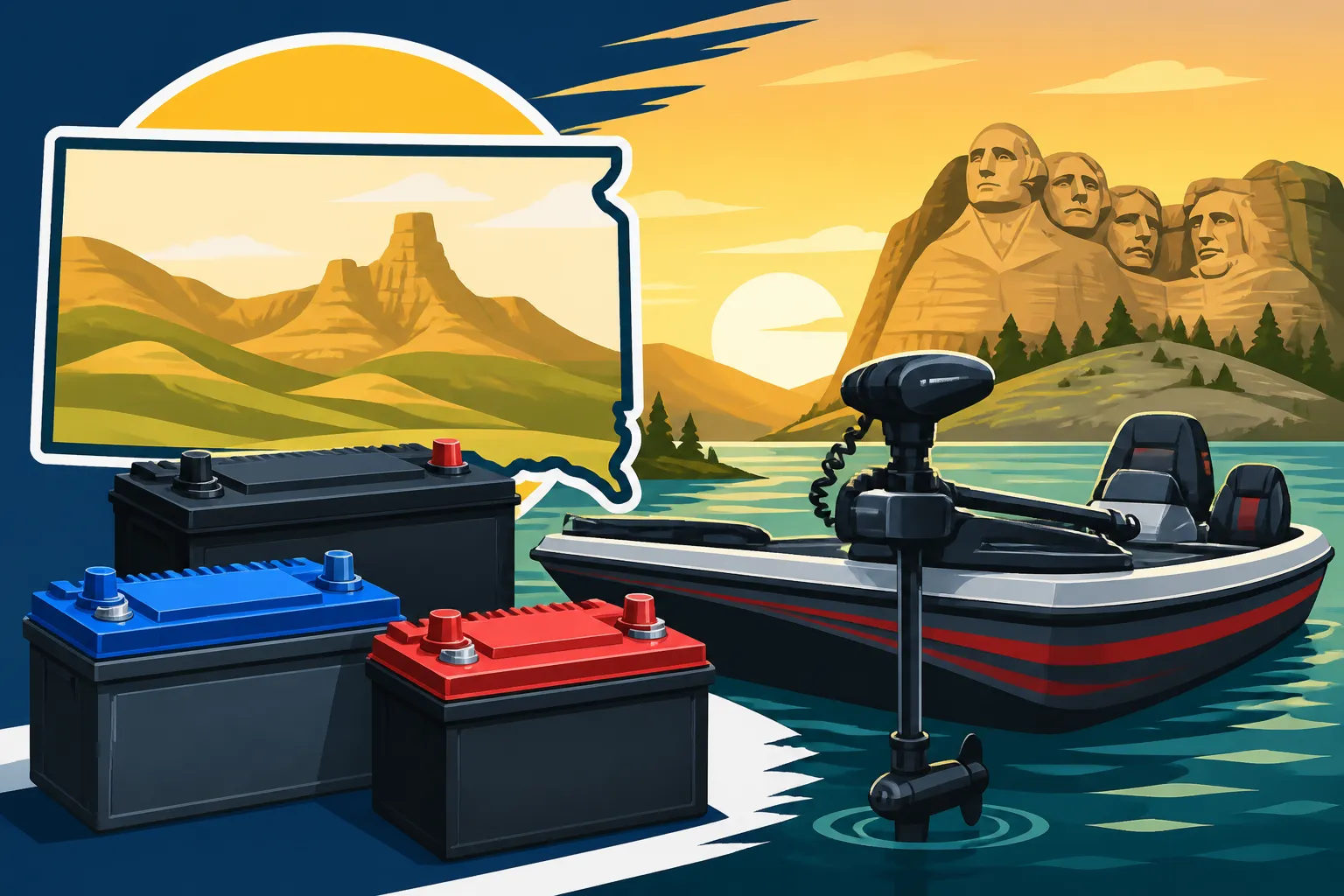
Deep cycle lead-acid batteries are the traditional workhorse for trolling motors. Unlike starting batteries, which deliver a quick burst of high power, deep cycle batteries are designed to discharge a large percentage of their capacity repeatedly over a long period. They come in a few different flavors: flooded (wet cell), Absorbed Glass Mat (AGM), and Gel Cell.
Flooded lead-acid batteries are often the most economical upfront. They require maintenance, meaning you'll need to periodically check and top off the electrolyte levels with distilled water. While more affordable, they are heavy and offer fewer charge cycles than other types. AGM and Gel batteries are sealed, meaning they are maintenance-free and can be mounted in more orientations without risk of spills. They also tend to handle vibrations better and charge slightly faster than flooded batteries, making them a popular choice for many anglers who want a reliable, middle-of-the-road option without breaking the bank. You can often find a good selection of these at retailers like Bass Pro Shops.
Lithium Iron Phosphate (LiFePO4) Batteries
Lithium Iron Phosphate (LiFePO4 or LFP) batteries represent the cutting edge of marine power and are rapidly gaining popularity despite their higher initial cost. These batteries are specifically engineered for deep cycle applications and offer numerous advantages over lead-acid. For starters, they are incredibly lightweight, often less than half the weight of a comparable lead-acid battery, which can significantly improve boat performance and fuel efficiency.
LiFePO4 batteries also deliver consistent power throughout their discharge cycle, meaning your trolling motor won't slow down as the battery drains. They boast a much longer lifespan, often thousands of charge cycles compared to a few hundred for lead-acid, making them a sound long-term investment. They charge faster, are virtually maintenance-free, and perform better in a wider range of temperatures. For serious anglers who spend countless hours on the water, especially on expansive bodies like Lake Oahe Fishing Guide or when competing in tournaments, the benefits of LiFePO4 often outweigh the higher initial investment.
| Feature | Flooded Lead-Acid (Deep Cycle) | AGM Lead-Acid (Deep Cycle) | LiFePO4 Lithium (Deep Cycle) |
|---|---|---|---|
| Initial Cost | Low | Medium | High |
| Weight | Very Heavy | Heavy | Lightweight |
| Lifespan (Cycles) | 100-400 | 400-800 | 2,000-5,000+ |
| Usable Capacity | 50% | 60-80% | 80-100% |
| Maintenance | High (check water levels) | Low (sealed) | None (sealed) |
| Power Output | Decreases with discharge | Fairly consistent | Very consistent |
| Charge Time | Slow | Moderate | Fast |
| Temperature Perf. | Sensitive to cold | Good | Excellent |
| Safety | Gassing, spills possible | Safer, sealed | Very safe, stable chemistry |
Key Factors to Consider When Choosing a Battery
Once you understand the basic battery types, you need to dig into the specifics that will really make a difference on the water. It’s not just about buying "a battery"; it's about getting the right battery for your unique South Dakota fishing adventures.
Amp-Hour (Ah) Rating for Runtime
The Amp-Hour (Ah) rating is arguably the most important specification for a trolling motor battery. It tells you how long the battery can deliver a certain amount of current before it's fully discharged. For example, a 100 Ah battery theoretically could provide 10 amps for 10 hours, or 20 amps for 5 hours. However, with lead-acid batteries, you should never discharge them below 50% capacity if you want to maximize their lifespan. This means a 100 Ah lead-acid battery only provides about 50 Ah of usable power. LiFePO4 batteries, on the other hand, can be safely discharged to 80-100% of their capacity, meaning a 100 Ah lithium battery offers closer to 80-100 Ah of usable power.
Consider your typical fishing day. Are you out for 4 hours, or are you chasing South Dakota walleye from dawn till dusk? If you spend long hours covering water, you'll want a higher Ah rating or consider a multi-battery setup. Remember, running out of power means losing control, especially if you're battling strong winds on a large reservoir like Lake Francis Case. More usable amp-hours mean more time on the water and less worry about your trolling motor giving up on you.
Cold Cranking Amps (CCA) and Reserve Capacity (RC)
While deep cycle batteries are the focus for trolling motors, you might see Cold Cranking Amps (CCA) and Reserve Capacity (RC) ratings on some labels, especially if you're looking at dual-purpose batteries. CCA measures the battery's ability to provide a short, high burst of power to start an engine in cold temperatures. This is crucial for your main outboard but less relevant for a trolling motor.
Reserve Capacity (RC) is more pertinent. It measures how many minutes a fully charged battery can deliver 25 amps at 80°F (27°C) before its voltage drops below a usable level. A higher RC rating generally correlates to better deep cycle performance and longer runtime for your trolling motor. Think of it as a practical measure of sustained power delivery. When comparing deep cycle batteries, pay close attention to the RC alongside the Ah rating, as it gives a good indication of real-world endurance.
Weight and Boat Performance
The weight of your battery system can have a surprising impact on your boat's performance and handling. Lead-acid batteries are notoriously heavy, especially if you need multiple batteries for a 24V or 36V system. Adding 100-200 pounds of lead to the bow of your boat can affect how it sits in the water, how quickly it planes, and its overall fuel efficiency. This can be a significant consideration for smaller boats or those where every pound counts.
If you're upgrading an older boat or are particularly sensitive to weight, say for kayak fishing, the weight savings of LiFePO4 batteries are truly transformative. A 100 Ah lithium battery can weigh 25-30 pounds, while a comparable lead-acid can be 60-70 pounds. Multiply that by two or three batteries, and you're looking at a substantial difference. Lighter batteries mean faster hole shots, better handling, and potentially more gear or anglers you can comfortably carry without sacrificing performance.
Lead-Acid Deep Dive: Flooded, AGM, and Gel Options
Let's really unpack the different types of lead-acid batteries, as they are still very popular and a solid choice for many South Dakota anglers. Each type offers a different balance of cost, performance, and maintenance.
Flooded (Wet Cell) Deep Cycle Batteries
Flooded deep cycle batteries are the most traditional and typically the least expensive option. They contain liquid electrolyte (sulfuric acid and water) that needs to be topped off periodically. You'll recognize them by the removable caps on top, allowing access to the individual cells.
These batteries are tried and true, and if you're on a budget or don't mind a bit of maintenance, they can serve you well. However, they are heavy, can emit hydrogen gas during charging (requiring good ventilation), and are prone to spilling if tipped. Their lifespan is generally shorter than AGM or Gel batteries, especially if not properly maintained. For someone who might only fish a few times a month or has a simpler setup, a flooded deep cycle battery purchased from a local hardware store or even Amazon can be a practical choice. Just make sure to check the water levels regularly, usually every few months or more often in hot weather.
Absorbed Glass Mat (AGM) Deep Cycle Batteries
AGM batteries are a significant step up from flooded batteries in terms of convenience and performance. In an AGM battery, the electrolyte is absorbed into fiberglass mats between the plates, making them sealed and spill-proof. This means you don't have to worry about adding distilled water, and they can be mounted in almost any orientation.
AGM batteries are more robust, resisting vibration and shock better than flooded batteries—a big plus when trailering your boat over rough gravel roads to remote South Dakota Boat and Water Access Rules. They also charge faster and have a lower self-discharge rate, meaning they hold a charge longer when not in use. While more expensive than flooded batteries, their maintenance-free nature and enhanced durability make them a popular choice for anglers looking for reliability without the premium price tag of lithium. You can often find a good range of AGM batteries at marine retailers, including Bass Pro Shops, where you might even get advice on installation.
Gel Cell Deep Cycle Batteries
Gel cell batteries are another sealed, maintenance-free option, similar to AGMs, but they use a gelled electrolyte rather than an absorbed liquid. This gelled consistency offers excellent vibration resistance and makes them completely spill-proof. They are also known for their impressive deep discharge capabilities, often performing well in applications where very deep cycles are expected.
However, Gel batteries have a few drawbacks. They generally have a lower power output compared to AGM or flooded batteries of the same size, and they are very sensitive to overcharging. Improper charging can permanently damage a gel battery. They also tend to be more expensive than AGMs. Because of their specific charging requirements and lower power output, Gel batteries are less commonly used for trolling motors in South Dakota fishing boats than AGMs or the newer LiFePO4 options. If you do consider a gel battery, ensure your charger is specifically designed for gel cell charging profiles.
The Lithium Advantage: Why LiFePO4 is Gaining Popularity
Lithium Iron Phosphate (LiFePO4) batteries are truly a game-changer for many anglers. While the initial sticker shock can be real, the long-term benefits and performance advantages are making them increasingly popular for serious South Dakota fishing enthusiasts.
Lightweight and Compact Design
One of the most immediate and noticeable benefits of LiFePO4 batteries is their incredibly light weight. We're talking about a weight reduction of 50-70% compared to lead-acid batteries of similar usable capacity. Imagine a 36V trolling motor system where you replace three heavy lead-acid batteries with three lightweight lithium units. That's easily 100-150 pounds of weight shaved off your boat! This reduction translates directly into better boat performance: faster acceleration, higher top speeds, improved fuel economy, and better hole shots.
Beyond performance, the lighter weight makes installation and removal much easier, especially if you store your batteries off the boat. For smaller boats, or those pushing the weight limits, this can be a game-changer for overall handling and safety. Less weight in the bow also means your boat sits higher, which can be advantageous in shallow areas or when navigating choppy waters.
Consistent Power Output and Longer Runtime
Another significant advantage of LiFePO4 batteries is their ability to deliver consistent power throughout their discharge cycle. With lead-acid batteries, as the voltage drops, your trolling motor often feels weaker and slower. You'll notice your top speed decreasing or your ability to fight the current diminishing as the day wears on. Lithium batteries, however, maintain a much more stable voltage output until they are nearly depleted.
This consistent power means your trolling motor performs at its peak, whether the battery is at 90% or 20% charge. This reliability is invaluable when you're meticulously working a structure for South Dakota smallmouth bass or trying to hold your boat precisely over a school of walleye. Coupled with their higher usable capacity (80-100% discharge), LiFePO4 batteries often provide significantly longer runtimes than lead-acid batteries of the same nominal Ah rating, giving you more hours on the water without performance degradation.
Exceptional Longevity and Faster Charging
While the upfront cost of LiFePO4 batteries is higher, their longevity often makes them a more economical choice in the long run. These batteries are rated for thousands of charge cycles, typically 2,000 to 5,000+, compared to a few hundred for most lead-acid batteries. This means a single set of lithium batteries could outlast several sets of lead-acid batteries, effectively reducing your long-term battery replacement costs.
Furthermore, LiFePO4 batteries can accept a much higher charge current, allowing them to recharge significantly faster than lead-acid batteries. With the right charger, you can often fully recharge a depleted lithium battery in a few hours, rather than overnight. This is a huge benefit if you're doing back-to-back fishing days or just want to get your boat ready quickly for the next outing. They also have a very low self-discharge rate, meaning they'll hold their charge for months when stored, ready for your next adventure to Bitter Lake Fishing Guide without needing a top-up charge.
Optimizing Your Battery System: Wiring, Charging, and Maintenance
Choosing the right battery is only half the battle. To ensure reliable, long-lasting performance from your trolling motor system, proper wiring, charging, and ongoing maintenance are essential. Skimping on these aspects can negate all the benefits of even the most expensive batteries.
Proper Wiring for Safety and Performance
Correct wiring is paramount for any boat battery system, especially for multi-battery trolling motor setups. For 24V or 36V systems, batteries must be wired in series to achieve the desired voltage. This means connecting the positive terminal of one battery to the negative terminal of the next. It’s crucial to use heavy-gauge marine-grade wire (typically 6 AWG or larger, depending on the length of the run and current draw) to minimize voltage drop and prevent overheating. Always use properly sized fuses or circuit breakers close to the battery's positive terminal to protect against short circuits.
Loose or corroded connections are a leading cause of battery problems. Ensure all terminals are clean, tight, and protected with dielectric grease or marine-grade battery terminal protectors. If you're unsure about wiring, it's always best to consult a professional marine electrician or refer to detailed guides. Incorrect wiring can not only hinder performance but also pose a significant fire hazard.
Smart Charging for Extended Battery Life
Investing in a quality marine-grade battery charger specifically designed for your battery type (lead-acid or LiFePO4) is non-negotiable. Using the wrong charger or an automotive charger can severely damage your batteries and shorten their lifespan. Look for chargers with multi-stage charging profiles that intelligently manage the charging process.
For lead-acid batteries, a smart charger will typically go through bulk, absorption, and float stages to ensure a full charge without overcharging. For LiFePO4 batteries, a dedicated lithium charger is a must; these chargers have specific voltage profiles that optimize charging and protect the battery's internal management system (BMS). Many modern chargers also have a "maintenance" or "trickle" mode to keep batteries topped off during storage. Consider an onboard charger that allows you to charge all your trolling motor batteries simultaneously without having to remove them from the boat. This convenience can be a lifesaver after a long day chasing Chinook Salmon Spawning Run Dates on Lake Oahe.
Maintenance Tips for Longevity in South Dakota Conditions
Even "maintenance-free" batteries benefit from a little attention. For flooded lead-acid batteries, regularly check the electrolyte levels and top up with distilled water as needed. Keep all battery terminals clean and free of corrosion. A wire brush and a solution of baking soda and water can work wonders.
Regardless of battery type, ensure batteries are securely strapped down in your boat to prevent movement and damage, especially when traversing rough water or trailering. Extreme temperatures, both hot and cold, can impact battery performance and lifespan. While LiFePO4 batteries handle cold better than lead-acid, keeping all batteries in a protected environment when not in use, especially during the harsh South Dakota winters, can extend their life. When storing your boat for the off-season, fully charge your batteries and disconnect them or use a trickle charger. For specific guidance on seasonal care, check out resources like How to Winterize a Boat in South Dakota.
Building a Multi-Battery System
For many anglers with larger boats and more powerful trolling motors, a single battery simply isn't enough. Building a multi-battery system is common practice, but it requires careful planning to ensure optimal performance and safety.
24V and 36V Setups for More Power
Most powerful trolling motors (70 lbs thrust and above) operate on 24V or 36V systems. This isn't just about more speed; it's about efficiency and sustained power for larger boats, especially on big lakes with strong winds or currents, like those found along the Missouri River chain such as Lake Sharpe or Lake Francis Case. To achieve these voltages, you connect multiple 12V batteries in series.
For a 24V system, you’ll connect the positive terminal of battery 1 to the negative terminal of battery 2. Your trolling motor then connects to the positive of battery 2 and the negative of battery 1. For a 36V system, you extend this: positive of battery 1 to negative of battery 2, positive of battery 2 to negative of battery 3. The trolling motor then connects to the positive of battery 3 and the negative of battery 1. This configuration combines the voltages of the individual batteries. Always double-check your wiring diagrams and connections before applying power.
Dedicated Trolling Motor Batteries vs. Dual-Purpose
A common question is whether to use dedicated deep cycle batteries for the trolling motor or "dual-purpose" batteries that can both start your main engine and power your accessories. While dual-purpose batteries offer convenience, they are often a compromise. They aren't as good at starting as a dedicated starting battery, nor are they as good at deep cycling as a dedicated deep cycle battery.
For optimal performance and reliability, especially on bigger boats where you're running multiple electronics (fish finders, livewells, radios), it's generally best to have a dedicated starting battery for your main engine and a separate bank of deep cycle batteries for your trolling motor and other accessories. This isolates the power demands, preventing your trolling motor from draining your starting battery and leaving you stranded. When considering a setup, think about what you carry, from your Best Fish Finders for South Dakota Lakes to all your South Dakota Fishing Gear Checklist.
Balancing Batteries and Charging in a Multi-Battery System
In a multi-battery series system, it's vital that all batteries are of the same type, age, and capacity. Mixing different types or capacities can lead to uneven charging and discharging, which significantly shortens the lifespan of the weaker batteries and compromises the entire system's performance. Always replace batteries as a complete set in a series system if one starts to fail.
Charging a multi-battery system also requires a multi-bank charger, where each bank charges an individual battery independently, even if they are wired in series. This ensures each battery receives a proper, balanced charge. Some advanced LiFePO4 batteries have internal battery management systems (BMS) that help balance cells, but a good multi-bank charger is still crucial for series systems. Paying attention to these details will ensure your multi-battery setup delivers the consistent, reliable power you need for successful days targeting South Dakota walleye or South Dakota northern pike.
Disclaimer
This article is for general informational purposes only and does not constitute professional advice. Laws, prices and regulations vary by location and change over time. Consult a qualified professional for guidance on your specific situation.