Where the Catch-and-Release Water Below Pactola Dam Starts
Navigating the specific rules for fishing in South Dakota can sometimes feel like trying to untangle a particularly stubborn fishing knot, especially when you’re dealing with special regulation areas like the tailwaters below Pactola Dam. Many anglers, excited to hit those prime trout waters, find themselves scratching their heads, wondering exactly where the unique catch-and-release rules begin. This guide is designed to cut through that confusion, clearly defining the start of the catch-and-release section and equipping you with all the essential information to enjoy a compliant and rewarding fishing experience.
Understanding the Pactola Dam Fishery
The Black Hills of South Dakota offer some truly stunning fishing, and Pactola Reservoir is a crown jewel. However, the waters below the dam, specifically Rapid Creek, hold a special allure for trout anglers. It's not just any stream; it's a designated wild trout fishery, carefully managed to sustain a healthy population of brown and rainbow trout. This unique management often includes specific regulations that differ from other areas, and knowing these nuances is key to a successful and legal outing.
Why Catch-and-Release is Crucial Here
The primary reason for the catch-and-release designation in this particular stretch of Rapid Creek is to protect and enhance the wild trout population. Unlike some other Black Hills streams that rely heavily on stocking programs, the tailwater below Pactola Dam is managed as a self-sustaining fishery. This means the trout here are born and raised in the creek, making them exceptionally resilient and prized by anglers.
When we practice catch-and-release, we ensure that these fish can continue to grow, spawn, and contribute to the next generation of trout. It's a conservation strategy that directly impacts the quality of fishing for everyone. Without it, the intense fishing pressure these popular waters experience would quickly deplete the wild populations, turning a vibrant fishery into a shadow of its former self. It's a small effort on the angler's part that yields enormous benefits for the ecosystem and the sport itself.
The Unique Appeal of Pactola's Tailwater
What makes the waters below Pactola Dam so special for trout fishing? For starters, the consistent flow and cold water released from the bottom of the reservoir create an ideal habitat for trout year-round. Even when other streams might be low or warm during the peak of summer, this tailwater remains productive. Anglers often find larger, healthier brown trout here, known for their spirited fights and stunning coloration. You might also encounter some robust rainbow trout.
The landscape itself is another huge draw. Nestled within the Black Hills National Forest, the scenery is breathtaking, with towering pines, granite formations, and the soothing sound of rushing water. It’s a place where you can truly immerse yourself in nature while pursuing some of the region's most sought-after fish. Many anglers consider it a bucket-list destination for fly fishing, offering challenging yet highly rewarding experiences. For those planning a trip, booking a local guide through platforms like FishingBooker can provide invaluable insights into the best spots and techniques.
Pinpointing the Catch-and-Release Boundary
The most common point of confusion for anglers heading to Pactola Dam is precisely where the special catch-and-release regulations for Rapid Creek kick in. You don't want to accidentally keep a fish in an area where it's not allowed or use the wrong bait. Getting this right ensures a stress-free day on the water.
The Official Starting Point Explained
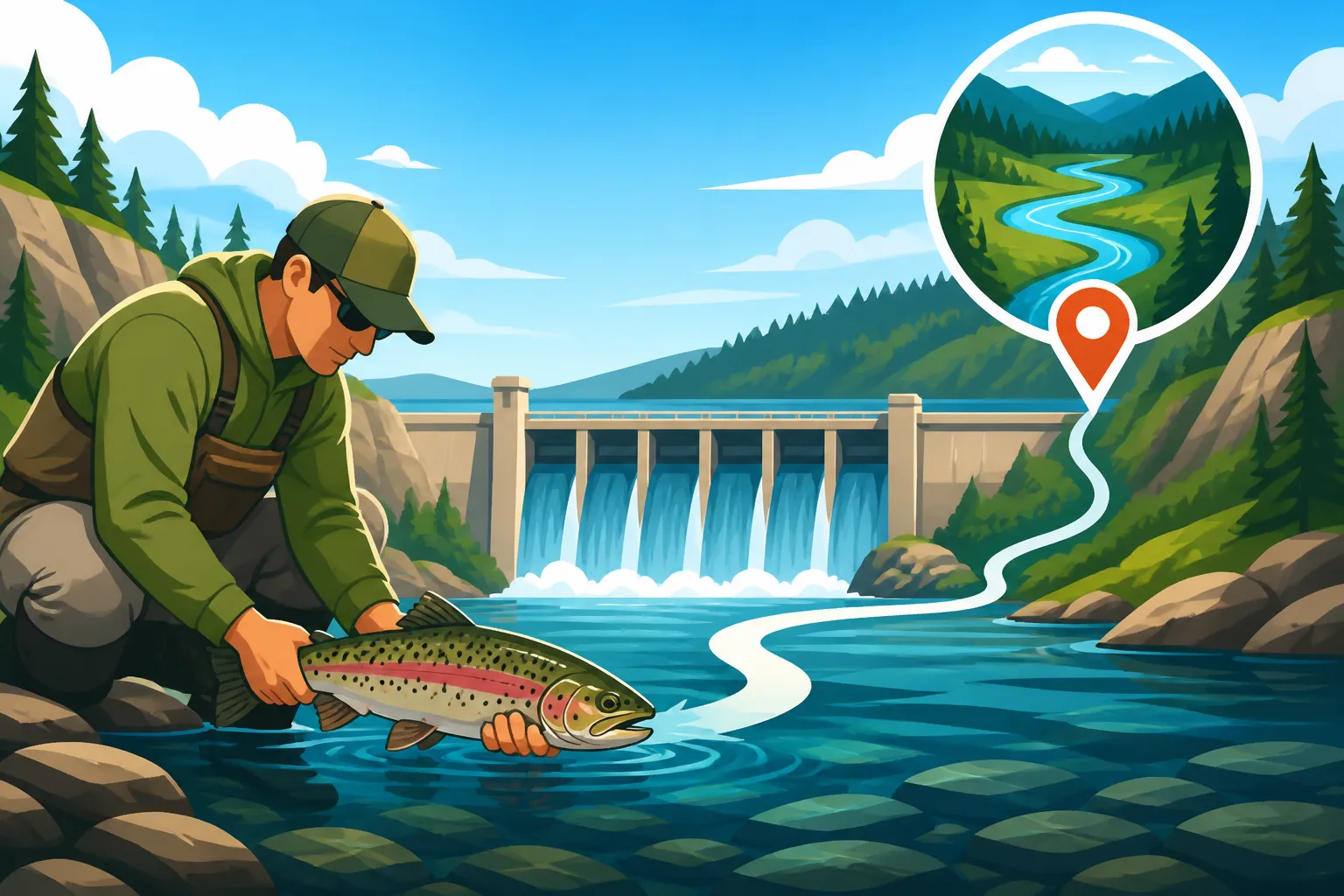
The designated catch-and-release section of Rapid Creek below Pactola Dam officially begins immediately at the base of the dam. This means from the concrete apron of the dam itself, downstream for a significant stretch, all fish caught must be released unharmed. There isn't a buffer zone or a specific bridge you need to pass before the rules change; it's right there from the outflow.
This immediate start is crucial to remember because the water directly below the dam offers excellent fishing opportunities. You'll find anglers casting close to the structure, especially during certain times of the year. Understanding that the special rules apply from the very first cast in these waters is paramount. You can refer to the official South Dakota Fishing Regulations Explained for detailed maps and rules, which are invaluable for clarifying these specific boundaries.
Visual Cues and Signage to Look For
While the regulation technically starts at the dam's base, the South Dakota Game, Fish and Parks (GFP) Department does a good job of providing visual indicators for anglers. As you approach the area, particularly from the downstream access points, you’ll typically see prominent signage. Look for:
- Large, clearly marked signs: These signs explicitly state "Catch and Release Only" or "Special Regulations Area," often accompanied by a description of the rules (e.g., artificial lures only, single barbless hooks).
- Geographic markers: The dam structure itself is the ultimate marker. Any fishing within the immediate vicinity downstream of the dam falls under these rules. As you move further downstream, the C&R section of Rapid Creek continues for several miles, passing through various public access points.
- Other anglers: While not official, observing where other experienced anglers are fishing and how they're handling their catches can give you an informal clue. However, always double-check with official signage and your GFP handbook rather than relying solely on others.
It’s always a good idea to download or carry the latest South Dakota fishing handbook or check the GFP website before your trip. This helps you confirm any recent changes or specific details for unique areas like the Pactola Dam Catch-and-Release Water Rules.
Navigating the Boundary Safely
Navigating the waters below Pactola Dam requires not just adherence to fishing regulations, but also a healthy respect for the natural environment and safety. The terrain can be uneven, and the current can be swift, especially when the dam is releasing water.
Always wear appropriate footwear with good grip, as rocks can be slippery. Be mindful of your footing, and if you’re wading, use a wading staff for stability. The banks can be steep in places, so take your time moving between fishing spots. It's also wise to check the weather forecast, as conditions in the Black Hills can change rapidly. For those venturing into more remote parts of the C&R section, having a way to communicate, like a satellite messenger, is a good idea. Remember, part of being a responsible angler is ensuring your own safety and leaving no trace behind, preserving this beautiful stretch of river for future generations. If you’re unsure about safe access points, consulting guides available on platforms like FishingBooker can sometimes offer insights from local experts.
Regulations and Best Practices for Pactola Catch-and-Release
Fishing the catch-and-release waters below Pactola Dam is an art and a science. It's not just about hooking a fish; it's about doing it responsibly, within the bounds of the law, and with the utmost care for the fish you encounter. Understanding the specific regulations and adopting best practices is essential for a truly rewarding and ethical experience.
Specific Rules for this Section
The catch-and-release section of Rapid Creek below Pactola Dam has very specific rules designed to protect its wild trout. These are not merely suggestions but legal requirements, and violations can result in fines and penalties. Here are the key regulations you absolutely need to know:
- Artificial Lures Only: Live bait, dead bait, organic bait, or any form of scented bait is strictly prohibited. You must use artificial lures, flies, or artificial power baits that are unscented. This reduces the chance of deeply hooking a fish and minimizes the introduction of foreign substances into the ecosystem. The South Dakota Organic Bait Restrictions Near Pactola Dam are very clear on this.
- Single Barbless Hooks: All hooks used must be single-pointed and barbless. If your hooks have barbs, you must pinch them down flat with pliers. This is perhaps the most critical rule for ensuring quick and humane release, minimizing injury to the fish's mouth.
- Zero Retention: As the name implies, absolutely no fish can be kept. Every fish caught, regardless of species or size, must be immediately released back into the water unharmed.
- Fishing Methods: General fishing methods like fly fishing and spin fishing are permitted, provided all tackle adheres to the artificial lure and barbless hook rules. Methods like snagging are, of course, strictly forbidden.
- Fishing License: Don't forget, even for catch-and-release fishing, you need a valid South Dakota Fishing License Guide. This applies to all anglers above the age of 16.
It is crucial to remember these regulations apply only to the designated catch-and-release section. As you move further downstream, beyond the marked C&R boundary, the regulations revert to the general Black Hills stream trout rules, which may allow bait and harvest within certain limits. Always be aware of your location!
Techniques for Successful Catch-and-Release
Practicing proper catch-and-release techniques is just as important as knowing the rules. The goal is to minimize stress and injury to the fish, giving it the best chance of survival after release.
- Land Fish Quickly: Try to bring the fish in as quickly as possible. Prolonged fights exhaust fish, making them less likely to recover.
- Use Barbless Hooks: As mandated, barbless hooks make removal much easier and cause less damage. If you're struggling to remove a hook, cut the line as close to the hook as possible.
- Keep Fish in Water: Whenever possible, keep the fish in the water while unhooking it. A net with a rubberized mesh bottom is ideal for this, as it supports the fish's body and doesn't remove its protective slime coat.
- Wet Your Hands: If you must handle the fish, wet your hands thoroughly first. Dry hands can remove the fish's protective slime, making it vulnerable to disease.
- Gentle Handling: Support the fish horizontally, never vertically by the jaw or gills alone. Avoid squeezing the fish, especially around its internal organs.
- Revive If Necessary: If a fish seems sluggish before release, hold it gently in the current, facing upstream, until it regains its strength and can swim away on its own.
Adopting these practices ensures that the fish you catch today can be caught again another day, contributing to the health and vitality of this special fishery. A great resource for learning more specific tactics for these waters is the South Dakota Fly Fishing Guide, which often covers gentle handling techniques alongside casting tips.
Planning Your Trip to Pactola Tailwaters
A well-planned trip to the Pactola Dam tailwaters will enhance your experience significantly. Beyond just knowing the regulations, consider the logistics to make your outing enjoyable and productive.
Access Points:
The primary access to the tailwaters is directly below the dam, off US-385. There's usually parking available, but it can fill up quickly, especially on weekends. Further downstream, you'll find other public access points along Rapid Creek, many of which are part of the Black Hills National Forest, offering more secluded fishing if you’re willing to hike. Some spots are managed by the City of Rapid City as the creek flows into town, offering easier access. For specific locations, check out a detailed map in the Pactola Reservoir Fishing Access Points guide.
Best Times to Visit:
While the tailwaters are productive year-round due to consistent water temperatures, spring and fall often provide excellent fishing with fewer crowds. Summer can be popular, especially closer to the dam. Winter offers a unique challenge for hardy anglers, with potential for ice formations but still active fish. Early mornings and late evenings are generally prime fishing times, regardless of the season.
Gear Recommendations:
For fly anglers, a 4- or 5-weight rod is typically suitable for the trout found here. Spin anglers will do well with light to ultra-light rods and reels, spooled with 4-6 lb test monofilament or fluorocarbon. Remember, artificial lures and barbless hooks are the law. A variety of small spinners, spoons, and soft plastics (unscented) can be effective. Fly patterns like nymphs (e.g., Pheasant Tail, Hare's Ear), dry flies (e.g., Elk Hair Caddis, Adams), and streamers (e.g., Woolly Bugger) are popular choices. Don't forget your waders and wading boots, a net, and essential items like sunscreen, bug spray, and plenty of water. Booking a guided trip through a service like FishingBooker can get you direct access to local knowledge on the best gear and current hotspots.
Table: Pactola Tailwater Regulations vs. General Black Hills Stream Regulations
| Feature | Pactola Dam Catch-and-Release Section (Rapid Creek below dam) | General Black Hills Stream Trout Regulations (outside C&R) |
|---|---|---|
| Bait Allowed | No (Artificial Lures/Flies Only) | Yes (Natural bait, artificial lures, flies) |
| Hook Type | Single Barbless Hooks Only | Barbs generally allowed, but check specific stream rules |
| Harvest Allowed | No (All fish must be released) | Yes, within daily and possession limits (e.g., 5 total, no more than 1 over 14") |
| Species Targeted | Brown Trout, Rainbow Trout | Brown Trout, Rainbow Trout, Brook Trout |
| Primary Goal | Wild Trout Conservation, Quality Fishing Experience | General Recreation, Harvest Opportunities |
Understanding these differences is paramount. While you're in the C&R section, every trout you land becomes part of a critical conservation effort. This area offers some of the most consistent and exciting trout fishing in the state, a true gem for any angler who appreciates a quality experience over a filled creel.
Disclaimer
Please remember that fishing regulations can change. It is always your responsibility to consult the most current South Dakota Game, Fish and Parks (GFP) fishing handbook or website before heading out. This guide provides general information and should not be considered a substitute for official regulations.