Best Rod and Reel Setup for Walleye Trolling
If you're an angler in South Dakota, you know the thrill of chasing walleye across our vast lakes and rivers. But let's be honest, trying to figure out the "perfect" rod and reel setup for trolling can feel like navigating a maze, especially with all the options out there. Many folks struggle to match the right gear to the specific challenges of South Dakota's diverse waters, often leading to missed bites or lost fish. This guide is designed to cut through that confusion, helping you handpick the ideal rod and reel combination that will significantly boost your success when walleye trolling in our beautiful state.
Understanding Walleye Trolling in South Dakota
Trolling for walleye isn't just a technique; it's a strategy, especially effective on the expansive waters we have here in South Dakota. It allows you to cover vast areas efficiently, presenting your bait to more fish that might be scattered across different depths or structures.
Why Trolling Is Effective for Walleye
Walleye are often nomadic predators, moving frequently to follow baitfish or seeking out comfortable water temperatures. They don't always stack up in easy-to-find schools, particularly in our larger reservoirs like Lake Oahe or Lake Sharpe. This is where trolling shines. By slowly moving your boat and dragging multiple lines, you effectively "hunt" for active fish, covering different depths and presenting various lures until you find what they're hitting. It's about putting your lure in front of more walleye for a longer period.
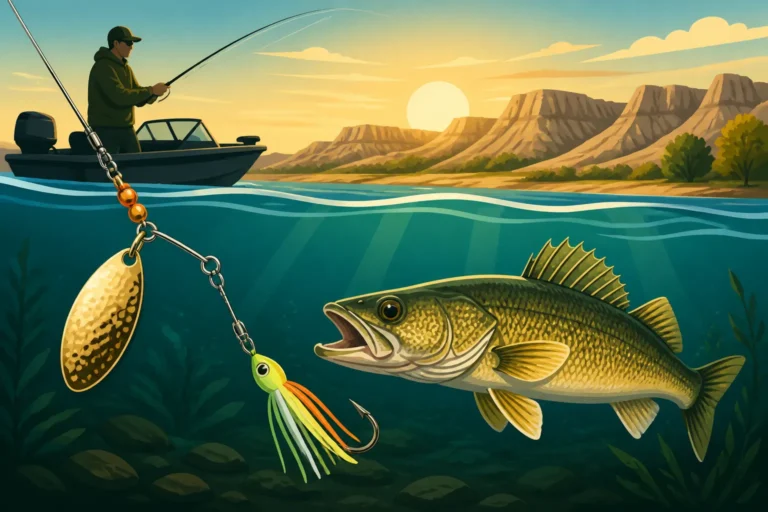
Consider a warm summer afternoon on Lake Francis Case; the walleye might be spread out in the main basin, suspended at 15-20 feet, or hugging a subtle breakline. Trolling allows you to explore these different zones methodically. You can run crankbaits at various depths using different line lengths or employ spinner rigs with bottom bouncers to tick along the contours. This ability to adapt and search is why so many successful anglers swear by trolling, especially when the fish aren't concentrated in one easily accessible spot. It's a fantastic way to locate scattered fish and then work that productive area more thoroughly. For more specific tactics, check out our guide on how to Troll Crankbaits for Walleye.
Key Characteristics of South Dakota Walleye Waters
South Dakota's walleye fisheries are incredibly diverse, from the deep, vast Missouri River reservoirs to the shallower, fertile glacial lakes in the eastern part of the state. These distinct characteristics play a huge role in dictating your optimal trolling setup.
The Missouri River reservoirs – Lake Oahe, Lake Sharpe, Lake Francis Case, and Lewis and Clark Lake – are massive bodies of water, often featuring significant depths, strong currents, and expansive main lake basins with varying bottom structures. Trolling here means dealing with wind, waves, and the need to present baits precisely in a large, often open, environment. You might be targeting walleye suspended in 30 feet of water over an old river channel, or pulling spinner rigs along a rocky point in shallower depths. The sheer size and depth demand gear that can handle long trolling passes and accurately control depth.
In contrast, the glacial lakes like Lake Kampeska or Lake Poinsett tend to be shallower, often with more weed growth and softer bottoms. Here, trolling might involve covering flats, working weed edges, or targeting fish in slightly stained water. While still requiring precise depth control, the environment dictates different lure choices and sometimes a slightly different approach to rod and reel feel. Understanding these nuances is crucial for tailoring your setup. Knowing the specific conditions of a lake like Lake Oahe is vital for successful Trolling for Walleye on Lake Oahe.
Selecting the Best Rod for Walleye Trolling
The rod is your direct connection to the lure and the fish. Choosing the right one is paramount for sensitivity, control, and ultimately, landing those South Dakota walleye.
Rod Length and Action for Different Trolling Methods
When it comes comes to trolling rods, length and action are not one-size-fits-all. They need to align with the specific trolling technique you're employing.
For planer board fishing, where you're using boards to spread your lines out wide from the boat, shorter rods are often preferred. Think 5 to 7 feet in length. The reason? They're easier to manage in the boat, especially when you have multiple lines deployed off boards. When a fish hits, you simply grab the rod, reel in the planer board, and then fight the fish directly. A shorter rod allows for better leverage and less tangled lines with other rods in a busy boat. The action for these rods should generally be a moderate to moderate-fast taper. This allows the rod to absorb the shock of a hard strike and the lunges of a powerful walleye, preventing hooks from tearing out.
If you're pulling baits directly behind the boat without planer boards, or using specialized techniques like lead core or snap weights, longer rods come into play. Rods ranging from 7 to 10+ feet can be incredibly useful. A longer rod provides a wider arc of line out to the side, further separating your lines and minimizing tangles, especially when running multiple lines from the transom. They also offer a softer, more forgiving sweep, which can be beneficial when a fish subtly mouths a bait or when you need to maintain a consistent pull without too much aggressive twitching. For instance, when employing a slow death rig, a longer, more limber rod can impart a subtle, natural action to the bait. The action for these longer rods still leans towards moderate or moderate-fast, ensuring that crucial shock absorption and a gentle presentation.
For spinner rigs with bottom bouncers, a slightly softer tip combined with medium power is ideal. The softer tip allows you to feel the bouncer "tick-tick-ticking" along the bottom without pulling it off constantly. It also provides excellent bite detection, as a walleye often just "leans" on a spinner rig. Yet, the medium power ensures you have enough backbone to set the hook and fight a strong fish in current, a common scenario when fishing the Missouri River.
Regardless of length, the power of your rod should typically be in the medium to medium-heavy range. This provides the backbone necessary to handle the resistance of larger crankbaits or bottom bouncers, and to effectively fight larger walleye without feeling under-gunned.
Rod Materials and Construction
The materials used in your trolling rod directly impact its performance, durability, and how much fatigue you'll experience during a long day on the water.
Graphite rods are known for their sensitivity and lighter weight. If you're looking for a rod that can transmit every bump, tick, and subtle bite up the line, graphite is an excellent choice. This sensitivity is particularly valuable when running spinner rigs or when fish are light biting. The downside, if there is one, is that pure graphite can be more brittle than fiberglass, making them more susceptible to damage from impacts.
Fiberglass rods are traditionally favored for trolling due to their durability and forgiving, parabolic bend. They excel at absorbing the shock of a strong strike and keeping hooks pinned during a fight. While not as sensitive as graphite, their robustness makes them a workhorse for deploying larger baits and enduring the rigors of constant trolling. For many heavy-duty trolling applications, especially with crankbaits, fiberglass remains a top choice.
Composite rods offer a fantastic middle ground, blending the best attributes of both graphite and fiberglass. These rods combine the sensitivity of graphite with the durability and forgiving nature of fiberglass. Many modern trolling rods are made from composites, providing a versatile option that can handle a variety of techniques while offering a balance of feel and strength.
Beyond the blank material, consider the handle type. Cork and EVA foam are the most common. Cork offers a classic feel, is lightweight, and performs well in various temperatures. EVA foam is incredibly durable, easy to clean, and provides excellent grip even when wet. The length of the handle is also important; a longer handle provides better leverage, especially when fighting larger fish or when the rod is seated in a rod holder for extended periods. The quality of the guides, usually stainless steel with ceramic inserts, also matters for smooth line flow and durability, particularly with braided lines.
Choosing the Ideal Reel for Walleye Trolling
A quality reel is just as critical as the rod for successful walleye trolling, offering precision, power, and reliability.
Line Counter Reels for Precision
When it comes to walleye trolling, especially in the vast and deep waters of South Dakota's Missouri River system, a line counter reel is practically non-negotiable for serious anglers. These reels feature a mechanical or digital counter that displays how much line you've let out, allowing for unparalleled precision in depth control and pattern replication.
Imagine you're trolling Lake Sharpe and you get a bite at 75 feet of line out, running a crankbait that dives to 15 feet. With a line counter, you can immediately replicate that exact line length on all your other rods, ensuring every lure is hitting the productive zone. This is absolutely crucial for dialing in a bite and maximizing your efficiency. Without a line counter, you'd be guessing, leading to inconsistencies and fewer fish.
They're not just for depth, either. Line counters help you space your lures properly, preventing tangles when running multiple lines, especially if you're experimenting with different lead lengths for planer boards. For a deeper dive into the importance of accurate line deployment, you might find our article on How to Read Contour Lines on a Lake Map helpful, as depth control often ties into bottom structure. Brands like Okuma and Daiwa offer excellent line counter reels that are popular among walleye anglers, many of which you can find readily available on Amazon.
Gear Ratio and Drag System
Beyond the line counter, the reel's gear ratio and drag system are vital components that directly impact your trolling experience and success.
The gear ratio dictates how many times the spool rotates with one full turn of the handle. For walleye trolling, you generally want a reel with a moderate gear ratio. Something in the 4.1:1 to 5.2:1 range is often ideal. This provides a steady, consistent retrieve speed, which is key for maintaining the proper action of your trolled lures, whether it's a crankbait or a spinner rig. A reel that retrieves too fast might cause you to over-crank, changing the lure's action or pulling it out of the strike zone too quickly. A slower retrieve ensures you can maintain that methodical pace walleye often prefer.
The drag system is where the rubber meets the road when you hook into a big walleye, especially in current. A smooth, consistent, and strong drag system is paramount. When a fish makes a run, you want the drag to release line without hesitation or sticking, which could lead to a broken line or pulled hooks. Look for reels with multi-disk drag systems that offer fine adjustments. A strong drag capacity ensures you have the stopping power needed for larger fish, giving you confidence when fighting a trophy walleye that could be taking long runs. You'll want to ensure it has enough capacity for plenty of line, as long trolling passes and strong fish in the Missouri River can quickly pull a lot of line off your reel. For durable options that stand up to tough fights, many anglers source their gear through online retailers like Amazon.
Matching Rod and Reel for Optimal Performance
Achieving the "best" setup isn't just about having great individual components; it's about how those components work together as a cohesive unit.
Balancing the Setup
A balanced rod and reel setup feels comfortable in your hand, minimizes fatigue over a long day of fishing, and enhances sensitivity. When your rod and reel are balanced, the combination should feel natural, with the pivot point somewhere near where your hand naturally grips the rod. This doesn't mean the rod and reel need to weigh exactly the same, but rather that their weights distribute evenly.
An unbalanced setup, for instance, a heavy reel on a light rod, can feel tip-heavy and awkward, making it harder to detect subtle bites or react quickly when a fish hits. Conversely, a too-light reel on a powerful rod might feel flimsy. While often seated in rod holders during trolling, when it's time to grab the rod and fight a fish, that balance makes a huge difference in control and comfort. It allows you to focus on the fight rather than wrestling with your equipment. This thoughtful combination is what elevates a basic setup to one that truly excels.
Line Choices and Terminal Tackle Considerations
Your choice of fishing line and terminal tackle is the final, crucial link in your trolling setup. Each element plays a distinct role in presentation, sensitivity, and strength.
For mainline, you generally have three primary options for walleye trolling:
- Monofilament: Known for its stretch and shock absorption, mono is forgiving. It can act like a shock absorber, helping to prevent hooks from tearing out, especially when a walleye makes a sudden lunge. It's also relatively inexpensive. However, its stretch means less sensitivity and more line scope in current, making precise depth control a bit harder than with other lines.
- Fluorocarbon: This line offers less stretch than monofilament, providing increased sensitivity and better depth control. Its key advantage, however, is its near invisibility underwater, which can be a huge benefit in clear South Dakota waters where walleye might be line-shy. It's also more abrasion-resistant than mono. The downside can be its cost and a tendency to have more memory if not spooled correctly.
- Braided Line: Braided line has virtually no stretch, offering maximum sensitivity. You can feel every subtle tick of a bottom bouncer or every vibration of a crankbait. Its incredible strength-to-diameter ratio means you can use a lighter pound-test line with a smaller diameter, which can help lures dive deeper and reduce drag in the water. However, braid is highly visible, so it's almost always paired with a fluorocarbon leader (typically 6 to 15 feet long) to provide invisibility near the lure and act as a buffer against abrasion. Many anglers find high-quality braided lines and fluorocarbon leaders on Amazon, often at competitive prices.
When it comes to terminal tackle, attention to detail matters:
- Swivels: Always use a high-quality ball-bearing swivel between your main line and your leader, especially when trolling spinner rigs or crankbaits that can impart twist to the line. This prevents line twist, which weakens your line and can cause tangles.
- Snaps/Snap Swivels: Using a snap (or snap swivel) on your leader allows for quick changes of crankbaits or spinner blades without having to re-tie. Ensure they are strong enough to handle a hard-hitting walleye. The right snap will also allow your lure to exhibit its natural action freely.
- Bottom Bouncers: When fishing spinner rigs, selecting the correct weight of bottom bouncer for the depth and current is critical for maintaining bottom contact. Too light, and it will lift; too heavy, and it will drag.
Remember, the goal is to create a seamless connection from rod tip to lure, ensuring every component is working together to present your bait effectively and land that South Dakota walleye. For a comprehensive overview of general rules and regulations that might also affect your tackle choices, be sure to read our South Dakota Fishing Regulations Explained guide.
Trolling Rod and Reel Setup Comparison
To help you visualize the different setups for common South Dakota walleye trolling scenarios, here’s a quick comparison. This isn't exhaustive, but it should give you a solid starting point for building your arsenal.
| Trolling Method | Rod Length | Rod Action & Power | Reel Type | Mainline Type | Leader (if applicable) | Key Benefit |
|---|---|---|---|---|---|---|
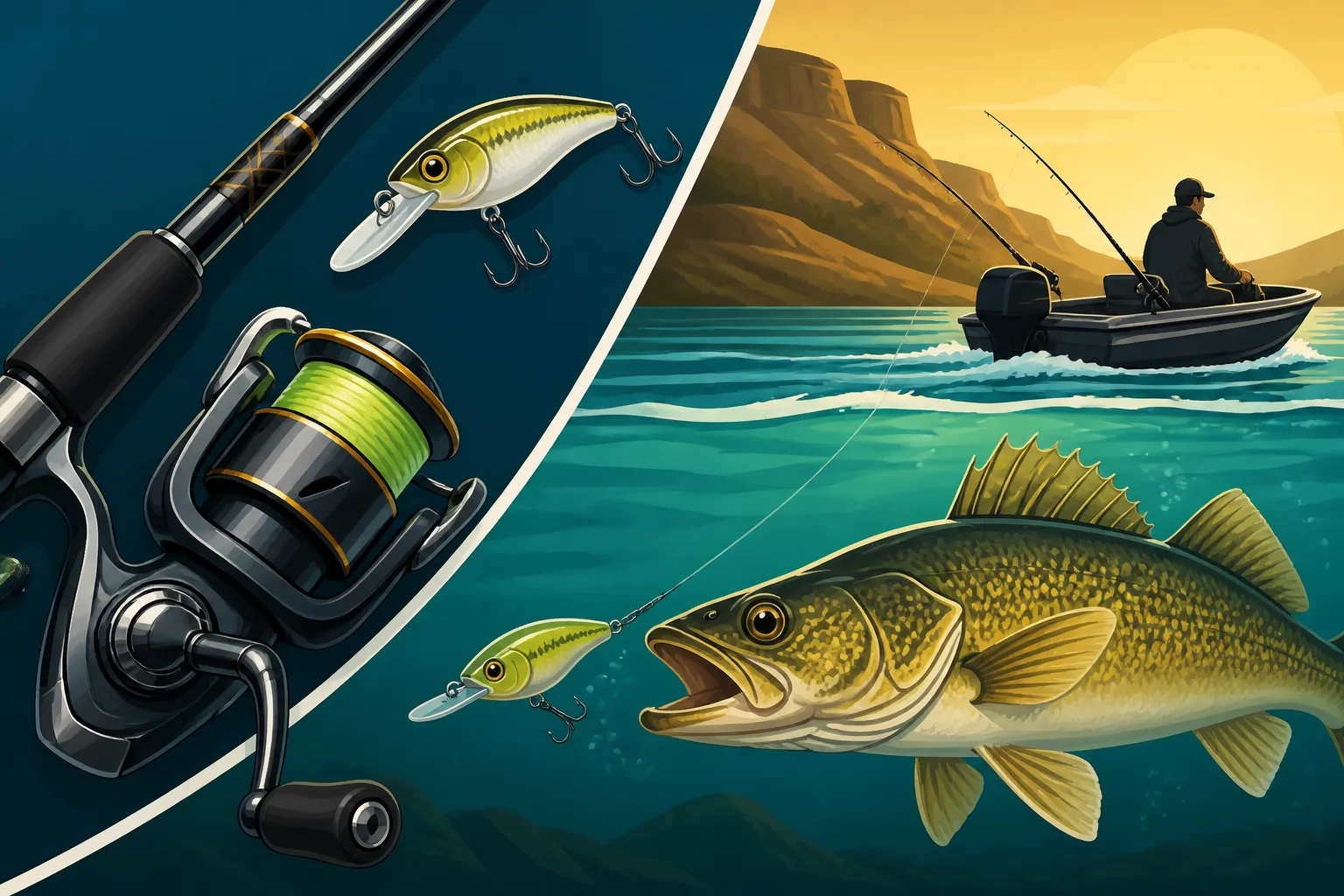
| Crankbaits (Direct) | 7' – 8'6" | Moderate-Fast, Medium | Line Counter (LC) | 10-14 lb Mono/Fluoro | N/A | Great shock absorption, smooth lure action |
| Crankbaits (Planer B.) | 5'6" – 7' | Moderate-Fast, Medium | Line Counter (LC) | 10-20 lb Braid | 6-10 ft 10-15 lb Fluoro | Easy management, wide spread |
| Spinner Rigs (BB) | 6'6" – 7'6" | Moderate, Medium | Line Counter (LC) | 10-15 lb Braid | 3-6 ft 8-12 lb Fluoro | Sensitive bite detection, strong hooksets |
| Lead Core Trolling | 8' – 10' | Moderate, Medium-Heavy | Line Counter (LC) | 18-27 lb Lead Core | 15-25 ft 10-15 lb Fluoro | Deep water access without extra weights |
*BB = Bottom Bouncer, LC = Line Counter
This table provides a generalized guide. Personal preference and specific water conditions in South Dakota will always influence the absolute "best" setup for you. For example, if you're often fishing for walleye in particularly clear waters, you might lean more heavily towards fluorocarbon for both mainline and leaders, or ensure your leaders are especially long and light to fool wary fish. Conversely, in stained or turbid waters, line visibility becomes less of a concern, and the strength and sensitivity of braid might take precedence.
The beauty of walleye fishing in South Dakota is the constant opportunity to learn and refine your techniques and gear. Don't be afraid to experiment a little, talk to other local anglers, and consult resources like our South Dakota Walleye Fishing Guide to continually improve your trolling game.
Disclaimer
This article is for general informational purposes only and does not constitute professional advice. Laws, prices and regulations vary by location and change over time. Consult a qualified professional for guidance on your specific situation.