Best Dry Bag for Kayak Fishing
There’s nothing quite like the freedom of kayak fishing on South Dakota’s beautiful waters, whether you’re paddling the calm backwaters of a glacial lake or tackling the expansive Missouri River reservoirs. But let’s be honest, the constant battle against moisture is a real buzzkill. Whether it’s a rogue wave, splash from a lively walleye, or an unexpected downpour, wet gear can quickly ruin a trip. This guide is all about helping you navigate the options and choose the best dry bag to keep your essentials safe and sound, no matter what Mother Nature or a thrashing fish throws your way.
Why a Dry Bag is Essential for Kayak Anglers in South Dakota
Kayak fishing, by its very nature, means you're operating in a wet environment. Your kayak sits low in the water, splashes are inevitable, and even a calm day can turn breezy and choppy in a blink, especially on large bodies of water like Lake Oahe Fishing Guide or Lake Francis Case Fishing Guide. For those who love the peace and stealth of a kayak, protecting your gear isn't just a good idea; it's absolutely crucial. Without a reliable dry bag, you're constantly risking damage to expensive electronics, comfort items, and critical safety gear.
Protecting Valuables from Unexpected Splashes and Swamps
Imagine you're out on Lake Sharpe, the wind picks up, and suddenly you're taking spray over the bow. Or maybe you hook into a monster northern pike, and as you bring it alongside, it gives a mighty thrash, drenching everything in its vicinity. These are common scenarios for any South Dakota kayak angler. Your phone, car keys, wallet, camera, or even that emergency snack could be ruined in seconds without proper protection. Beyond splashes, there’s always the slight but real risk of capsizing. It happens to the best of us, especially in unfamiliar waters or when battling a strong current on the Missouri River. A good dry bag acts as your last line of defense, keeping everything inside bone-dry even if your kayak ends up submerged.
It’s not just about the big mishaps, either. Even consistent condensation or minor drips over a long day can seep into less-than-waterproof compartments. Think about a cool morning turning into a warm afternoon; gear tucked away can still accumulate moisture. A dry bag seals out this insidious dampness, ensuring your spare jacket, map, or even your fishing license remains legible and intact. This protection gives you the confidence to focus on the fishing, not on constantly checking if your gear is getting wet.
Keeping Essentials Accessible and Secure
Beyond just keeping things dry, a well-designed dry bag also helps keep your essentials organized and easily accessible. Kayaks, by design, have limited storage space, and often what space they do have isn't entirely waterproof. Tossing all your critical items into a single, unprotected hatch is a recipe for disaster and disorganization. Dry bags come in various sizes and shapes, allowing you to compartmentalize your gear. You might have one small dry bag for your phone and keys, a medium one for extra layers and food, and a larger one for tackle or specialty items.
Many dry bags also feature D-rings, loops, or other attachment points, which are invaluable for securing them to your kayak. This means that if you do encounter rough water or have to execute a quick paddle stroke, your bag isn't going to float away. It stays exactly where you need it, lashed down and ready. When you're out on the water, whether it's navigating the winding paths of a glacial lake or the wide-open expanse of Lake Oahe, knowing exactly where your emergency kit, first aid supplies, or even just your lunch is, without having to rummage through a cluttered, wet space, contributes significantly to a more enjoyable and safer fishing experience.
Key Features to Look For in a Kayak Fishing Dry Bag
Choosing the right dry bag involves more than just picking a color. The devil is in the details when it comes to keeping your gear genuinely dry and secure on the water. Paying attention to material, closure type, capacity, and attachment options will make a huge difference in its effectiveness and longevity. It’s worth taking the time to consider these aspects before making a purchase.
Material and Durability
The material of your dry bag dictates its waterproofness, abrasion resistance, and overall lifespan. For kayak fishing, where your bag might rub against hull edges, sit on sandy or rocky shores, or endure constant sun exposure, durability is paramount.
The most common materials you'll encounter are PVC (Polyvinyl Chloride) and TPU (Thermoplastic Polyurethane). PVC bags are generally more rigid, often thicker, and tend to be more budget-friendly. They offer excellent waterproof protection and are widely available from many manufacturers. However, they can be heavier and may become stiff in very cold temperatures, which is a consideration for early spring or late fall fishing in South Dakota. TPU, on the other hand, is a more modern material. It's typically lighter, more flexible, and offers superior abrasion resistance, making it an excellent choice for those who frequently portage their kayaks or fish in areas with abrasive elements. While often more expensive, TPU bags tend to last longer and maintain their flexibility across a wider range of temperatures. Look for denier ratings (e.g., 500D, 840D) when comparing fabrics; a higher number generally indicates thicker, more robust material. You can often find a good selection of both types at outdoor retailers like Bass Pro Shops or through online stores like Amazon, allowing you to compare features and prices.
Closure Systems
The closure system is perhaps the single most important feature for ensuring your dry bag is actually dry. There are two primary types: roll-top and waterproof zippers.
- Roll-Top Closures: These are the classic and most common type. They involve rolling the top edge of the bag down multiple times (typically 3-5 rolls) and then securing the rolled section with a buckle. This creates a highly effective, watertight seal that's simple, reliable, and very durable. Most roll-top bags are submersible for short periods, and their simplicity means fewer points of failure. The main drawback is that accessing items requires unrolling the top, which can be a minor inconvenience if you need frequent access to certain gear. For general storage of sensitive items like a spare Best Rain Jacket for Spring Fishing Trips or your electronics, a roll-top is a superb choice.
- Waterproof Zippers: These are less common, primarily due to cost, but they offer unparalleled convenience. True waterproof zippers, often designated as TIZIP or similar, are incredibly robust and create a seal that is just as effective as a roll-top. The benefit is instant access to your gear without having to unroll anything. This can be fantastic for items you need frequently, such as a camera or specific tackle. However, these zippers require careful maintenance (lubrication) to ensure they continue to seal effectively and can be prone to sand or grit interference if not cared for. When choosing a dry bag with a zipper, always verify it's a true waterproof zipper, not just a water-resistant one, which will only repel splashes.
Here’s a quick comparison of the two main closure types:
| Feature | Roll-Top Closure | Waterproof Zipper Closure |
|---|---|---|
| Waterproofness | Excellent; fully submersible (when properly rolled) | Excellent; fully submersible (true waterproof zip) |
| Durability | Very High; few moving parts to fail | High; zipper requires maintenance |
| Ease of Access | Moderate; requires unrolling and re-rolling | High; quick access to contents |
| Cost | Generally lower | Generally higher |
| Maintenance | Low; occasional cleaning | Moderate; requires lubrication and cleaning |
| Best For | General storage, critical items, long trips | Frequent access items, specialty bags |
Capacity and Size
Dry bags come in a vast range of sizes, from small 2-liter pouches perfect for a phone and wallet, up to massive 100-liter duffels for extended expeditions. Choosing the right capacity depends entirely on what you plan to carry and the length of your trips.
- Small (2-10 liters): Ideal for personal items like keys, phone, wallet, and a small camera. Often used to keep these critical items within arm's reach. You might consider having a few of these for different categories of small gear.
- Medium (15-30 liters): Great for a day trip. These can hold extra layers, a packed lunch, a first-aid kit, and perhaps a small South Dakota Fishing Gear Checklist of tackle. This size is versatile and fits well into most kayak hatches or can be strapped to the deck.
- Large (40-60 liters): Suitable for longer day trips or even overnight stays, especially if you're bringing extra clothing, a compact sleeping bag, or a significant amount of specialized gear. Many anglers use these for larger tackle boxes or multiple changes of clothing.
- Extra Large (70+ liters): Typically for multi-day excursions or when you need to store bulky items like a tent or multiple fishing rods broken down. These are often dry duffels or large dry backpacks.
When considering capacity, think about not only what you'll pack but also where it will go in your kayak. Does it fit in a specific hatch? Can it be lashed securely to the deck without impeding your paddling or fishing? It's often more practical to have two or three smaller dry bags (e.g., a 10L for electronics, a 20L for clothing, and a small 5L for snacks) than one massive, unwieldy one, as this allows for better organization and easier access to specific items without exposing everything to the elements.
Attachment Points and Portability
How you secure your dry bag to your kayak, and how easy it is to carry, are important practical considerations. Look for features that make integration with your kayak seamless.
- D-Rings and Lashing Points: These are crucial. A good dry bag will have several sturdy D-rings or webbing loops sewn into the seams. These allow you to use bungee cords, carabiners, or small ropes to securely attach the bag to your kayak's deck, seat, or interior cargo area. Without these, your bag is just free-floating, a serious hazard if you tip or hit rough water. For those who frequently fish large, windy waters like Lake Oahe, ensuring your gear is tied down is a non-negotiable safety measure.
- Shoulder Straps and Handles: If you're planning on doing any portaging – carrying your kayak and gear over land from one body of water to another, common when exploring some of the smaller Black Hills streams or glacial lakes – then a dry bag with comfortable shoulder straps or robust grab handles is invaluable. Some dry bags are designed specifically as dry backpacks, making them much easier to carry long distances. Even for simply getting your gear from your vehicle to the water's edge, a good handle can prevent drops and make the process smoother.
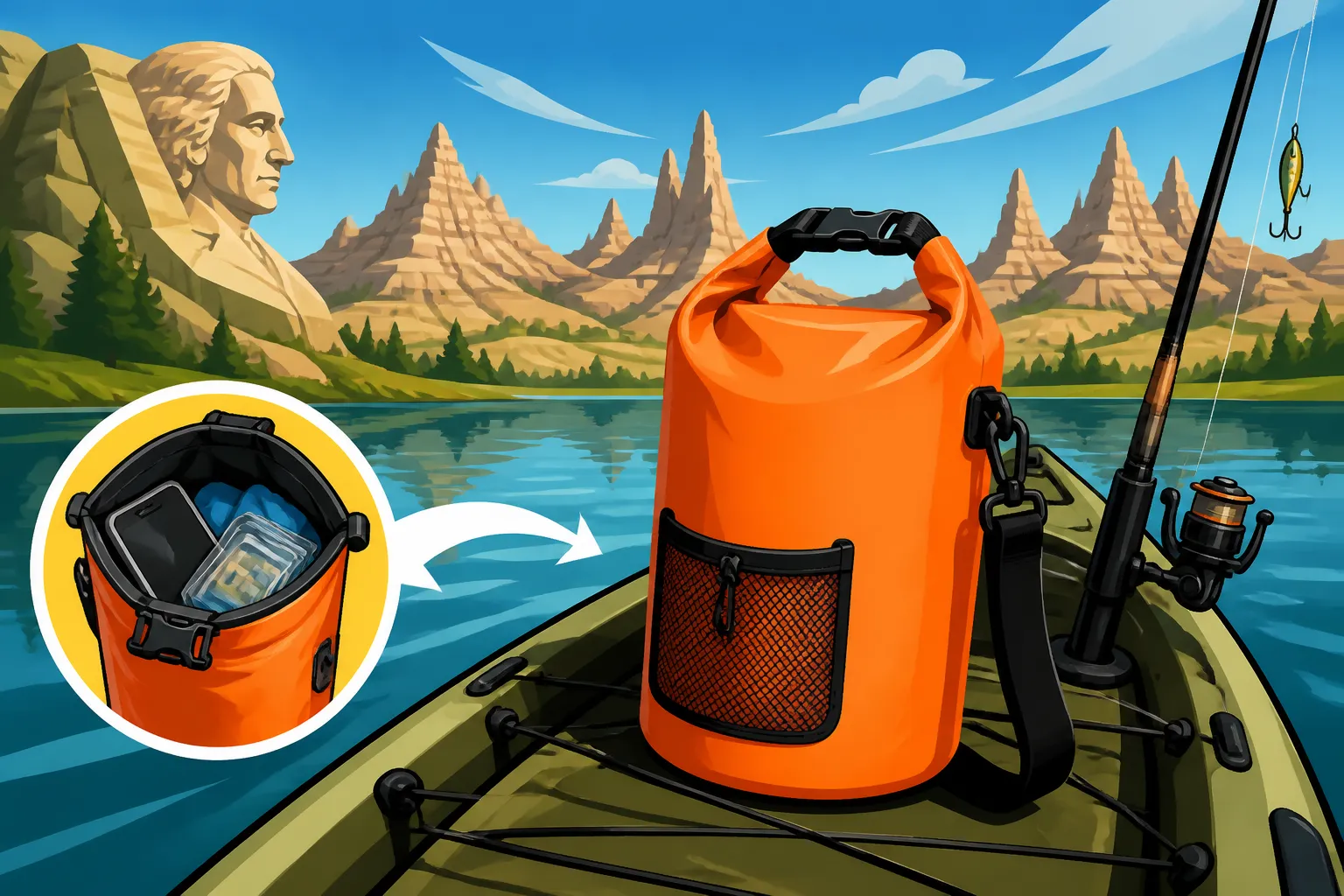
- External Pockets and Bungees: While the main compartment of a dry bag is designed to be watertight, some models offer water-resistant external pockets or bungee cord systems on the exterior. These can be useful for stashing items you need immediate, frequent access to but that aren't critical if they get a little damp (e.g., a water bottle, a small pair of pliers, or a trash bag). Always assume external pockets are not fully waterproof unless explicitly stated and zipper types are confirmed.
Different Types of Dry Bags for Kayak Fishing
The world of dry bags is more diverse than just a simple sack. Depending on your specific needs, the type of fishing you do, and the gear you carry, different styles offer distinct advantages. Understanding these variations will help you choose the best tools for your South Dakota fishing adventures.
Traditional Roll-Top Dry Sacks
The classic roll-top dry sack is the workhorse of waterproof storage. These are simple, cylindrical bags with a reinforced strip at the opening that you roll down multiple times before buckling the ends together. Their popularity stems from their simplicity, reliability, and relatively low cost.
You'll find these in nearly every size imaginable, from small 2-liter models ideal for keeping your How to Find Your South Dakota Fishing License Number and car keys dry, to 60-liter behemoths that can swallow all your camping gear for an overnight trip. Most are made from durable PVC or lighter TPU, offering excellent protection against splashes, rain, and even temporary submersion. Their straightforward design means there are fewer points of failure compared to more complex bags, making them highly dependable. They are fantastic for stowing in kayak hatches, securing to the deck, or even just tossing in the bottom of your canoe. While accessing items inside requires unrolling, for gear you don't need constantly (like spare clothes, a first-aid kit, or emergency food), they are an unbeatable choice. Many anglers purchase several different sizes to organize various categories of gear within their kayak, making efficient use of limited space.
Dry Backpacks
For kayak anglers who often combine paddling with hiking, or simply prefer a hands-free way to transport their gear, dry backpacks are a game-changer. These bags integrate the waterproof technology of a dry sack with the ergonomic design of a backpack, complete with shoulder straps, and sometimes even hip belts and chest straps.
Dry backpacks typically feature a roll-top closure for the main compartment, ensuring its contents remain completely dry. The external straps distribute weight comfortably, making them ideal for portaging around rapids on the James River, traversing hiking trails to access remote Black Hills trout streams, or simply carrying your gear from your vehicle to a less-accessible launch point. Some models even include external mesh pockets for wet items you want to keep separate or non-waterproof items you need quick access to, along with hydration sleeves. They are particularly useful for those who venture into areas where boat launches aren't always convenient, allowing you to carry your fishing rods, tackle, and Best Coolers for Keeping Fish Fresh comfortably over land. When you're not using it as a backpack, it functions perfectly well as a large, secure dry bag within your kayak.
Dry Duffels and Specialty Bags
Sometimes, a standard dry sack or backpack just isn't quite right for the specific gear you're bringing. That's where dry duffels and specialty bags come in. These are designed to accommodate larger, bulkier items or offer specialized organization.
Dry duffels often feature a wide-mouth opening, making it easy to load and unload oversized gear, like a sleeping bag, tent, or a large, soft-sided tackle bag. Many utilize robust waterproof zippers or a hybrid roll-top/zipper system to maintain their watertight seal. They are excellent for organizing a significant amount of gear for longer trips, such as multi-day camping and fishing expeditions along the Missouri River. You'll find options with internal dividers or compression straps to keep everything tidy. Then there are truly specialty bags, like waterproof tackle bags designed to hold specific fishing boxes and tools, or dry bags made for specific electronics like a large fish finder battery. These are often more rigid and padded, providing both waterproof protection and impact resistance. They are less about portability and more about maximizing protected storage capacity and organization within your kayak or on a larger fishing vessel.
Choosing the Right Dry Bag for Your South Dakota Kayak Fishing Adventure
Selecting the perfect dry bag isn't a one-size-fits-all decision, especially given the diverse fishing environments South Dakota offers. From the vast, sometimes turbulent waters of the Missouri River reservoirs to the intimate, winding Black Hills trout streams, your choice should reflect the specific conditions and your personal fishing style. Thinking through these considerations will help you make a smart investment.
Considerations for Missouri River Reservoirs (Lake Oahe, Sharpe)
Fishing the Missouri River reservoirs like Lake Oahe, Lake Sharpe, or Lake Francis Case from a kayak presents unique challenges. These are massive bodies of water, often prone to strong winds, significant wave action, and even sudden changes in weather. South Dakota Missouri River Fishing Guide highlights the grandeur and the potential volatility of these waters. For these environments, your dry bag needs to be exceptionally durable and reliably waterproof.
- Robustness is Key: Look for bags made from thick PVC or durable TPU with a high denier rating. The constant rubbing against the kayak's hull, exposure to sun and wind, and potential for splashes mean your bag will take a beating. Cheap, thin bags simply won't last here.
- Secure Attachment: Ensure the dry bag has multiple, strong D-rings or attachment points. The last thing you want is for your dry bag to be washed overboard by a rogue wave or flung out during a fish fight. Use bungee cords or cam straps to secure it firmly to your kayak's deck lines or cargo areas.
- Capacity for the Day: You'll likely be out for extended periods, so a medium (20-30L) dry bag for extra layers, a substantial lunch, and essential safety items is a good starting point. Consider a smaller, easily accessible 5-10L bag for your phone, keys, and perhaps your GPS unit. For these larger waters, many anglers find Best Fish Finders for South Dakota Lakes invaluable, and a dry bag helps protect the battery pack and any spare transducer components.
- Accessibility vs. Security: While a roll-top offers maximum security, if you frequently need access to certain items, consider a quality dry backpack or duffel with a true waterproof zipper for those specific items, while still keeping your most critical gear (like a spare Is a Life Jacket Required for Kayak Fishing in South Dakota?) in a roll-top.
Black Hills Stream and Smaller Lake Kayaking
The Black Hills offer a completely different kayaking experience, with smaller, often calmer lakes like Sheridan Lake or Pactola Reservoir, and numerous winding trout streams. Kayak fishing here often involves shorter paddles, more portaging, and tighter spaces. This calls for different dry bag attributes.
- Portability First: If you're accessing remote streams, you'll likely be carrying your kayak and gear over land. A dry backpack is an excellent choice here, allowing you to keep your hands free for your paddle or fishing rod. Even for smaller lakes, being able to comfortably carry your gear from the parking lot to the water is a huge plus.
- Abrasion Resistance: While the water might be calmer, rocky banks and fallen timber are common on streams. A bag made of flexible, abrasion-resistant TPU will hold up better against snags and scrapes.
- Smaller Capacity is Often Fine: You might not need as much gear for a shorter trip on a small lake or stream. A 10-20L dry bag for essentials like a camera, some snacks, and a specific South Dakota Fly Fishing Guide tackle box should suffice. Focus on being nimble and efficient.
- Quick Access: For stream fishing, where you might be moving frequently and want to grab a specific fly or a small lure, a dry bag with easily accessible pockets (even water-resistant ones for non-critical items) or a quick-release attachment system can be beneficial.
What to Pack in Your Dry Bag
No matter where you're fishing in South Dakota, some items are universally critical to keep dry and safe. Preparing your dry bag thoughtfully ensures you have everything you need, protected from the elements.
- Electronics: Your phone, car keys (especially key fobs), GPS device, camera, and any spare batteries. These are often the most expensive and vulnerable items.
- Emergency & Safety Gear: First-aid kit, fire starter, emergency blanket, and a whistle. While your PFD is always on, a waterproof bag for these additional items is crucial.
- Identification & Documents: Your South Dakota Fishing License Guide, any tribal land fishing permits, and a physical ID. Keep these in a very small, dedicated dry pouch.
- Clothing: An extra layer of clothing (non-cotton, like fleece or wool) is vital for South Dakota's unpredictable weather. A dry hat and gloves can also be a lifesaver if conditions change.
- Food & Water: While water bottles are often fine exposed, any snacks, sandwiches, or specialty drinks will be much more enjoyable if they haven't been soaked.
- Maps & Navigation: Even if you have a GPS, a laminated paper map of the area is a smart backup, kept dry in your bag.
- Wallet & Cash: For obvious reasons, keeping your money and cards dry is a priority.
Remember to only pack what you truly need to keep dry. Overstuffing a dry bag can compromise its seal, and bringing unnecessary items just adds weight and bulk. A well-organized dry bag, tailored to your specific South Dakota fishing trip, is an investment in both your gear's longevity and your overall enjoyment on the water.
Disclaimer
This article is for general informational purposes only and does not constitute professional advice. Laws, prices and regulations vary by location and change over time. Consult a qualified professional for guidance on your specific situation.