Best Cooler Size for a Day of Fishing
Oh, the age-old dilemma of the cooler! You know the drill: you head out for a day of fantastic South Dakota fishing, and either your cooler is overflowing with glorious walleye by noon, or it’s a giant, mostly empty ice chest rattling around in your boat or truck. Picking the right size cooler for a day trip can feel like a guessing game, but it's crucial for keeping your precious catch fresh and making your outing enjoyable. This guide is here to help you navigate the options so you can choose the perfect cooler for your next South Dakota angling adventure.
Understanding Your Day Trip Needs in South Dakota
Before you even start looking at cooler models, it's essential to honestly assess what your typical fishing day looks like here in South Dakota. Are you a solo angler casting for panfish, or are you bringing the whole family to reel in some serious walleye? Your answers will dramatically influence the ideal cooler size.
The 'What Are You Catching?' Factor
Think about the species you're most likely to target on a day trip. South Dakota offers such incredible diversity, from the feisty smallmouth bass in Lake Francis Case to the abundant yellow perch in our glacial lakes, not to mention our legendary walleye. These fish vary widely in size and bulk, directly impacting how much cooler space they’ll demand.
For instance, if you're heading out for a productive morning targeting crappie or perch on Lake Kampeska, a stringer full of these smaller panfish takes up significantly less room than, say, a couple of trophy walleye from Lake Oahe. A full limit of Crappie and Panfish Possession Limits might fit comfortably in a modest cooler, whereas even two or three sizable walleye can quickly fill a 40-quart container, especially once you add ice. The shape of the fish matters too; a long, slender northern pike will pack differently than a chunky walleye. Always keep in mind the South Dakota Fish Limits and Size Restrictions for your target species, as this will help you estimate your potential catch volume.
How Many Anglers, How Many Fish?
Are you a lone wolf on the water, or do you typically have a fishing buddy or two along for the ride? The number of people in your party can drastically change your cooler requirements. A solo angler might only need space for their personal limit and a few drinks, but a successful day with multiple anglers, each hoping to fill their limit, can quickly overwhelm a smaller cooler.
Imagine a scenario: you and two friends are spending a glorious day on Lake Sharpe, and everyone hits their South Dakota Walleye Limits. That's a lot of fish! Trying to cram three limits of decent-sized walleye into a 45-quart cooler, along with all the ice needed to keep them pristine, is a recipe for warm fish and frustration. Many experienced anglers fishing in groups opt for larger coolers, or even multiple coolers – one dedicated solely to fish, and another for personal food and drinks. This helps avoid cross-contamination and ensures everything stays perfectly chilled.
Beyond Fish: Food, Drinks, and Ice
It's easy to forget that your cooler isn't just a fish locker. It's also the lifeline for your hydration and sustenance throughout the day. Snacks, sandwiches, and most importantly, ice will claim a significant portion of your cooler's internal volume. Ignoring these necessities often leads to having a cooler that's technically big enough for your fish, but not big enough for everything else you need to stay comfortable and fed.
On a hot South Dakota summer day, especially on the wide-open waters of the Missouri River reservoirs, ice is your best friend. You'll want a generous amount to properly layer your catch and keep it cold. This is crucial for maintaining the quality and flavor of your fish. If you plan a full day, you might also have multiple water bottles, sodas, and lunch items for yourself and your companions. A good rule of thumb is to assume that at least a third, if not half, of your cooler's capacity will be taken up by ice, food, and drinks before any fish even enter the picture. Don't underestimate the space ice takes up – a 20-pound bag of ice is surprisingly bulky!
Sizing Up Your Options: Cooler Capacity Explained
Once you have a clearer picture of your needs, it's time to dive into the technicalities of cooler sizes. The way manufacturers label coolers can sometimes be confusing, but understanding the basics will help you make an informed decision.
Quarts vs. Cans: Deciphering Cooler Labels
Cooler capacities are most commonly expressed in quarts or by the number of standard 12-ounce cans they can hold. While "cans" might seem like a straightforward measure, it doesn't always translate directly or practically to fish-holding volume. Fish are irregularly shaped, and they don't stack like soda cans.
A 45-quart cooler, for instance, might boast holding 60 cans. This sounds like a lot, but imagine trying to fit 60 imaginary "fish cans" into it. It simply doesn't work that way. Generally, if a cooler claims to hold X number of cans, you can assume its practical fish capacity will be significantly less, perhaps half or even a third, depending on the size and shape of the fish. For most anglers, looking at the quart capacity is a more reliable indicator of usable space, as it gives a truer sense of the cooler's internal volume. A good starting point for reference is knowing that a gallon is equivalent to four quarts.
Common Cooler Sizes for Day Trips
Let's break down some common cooler sizes and what they typically mean for a South Dakota fishing day trip:
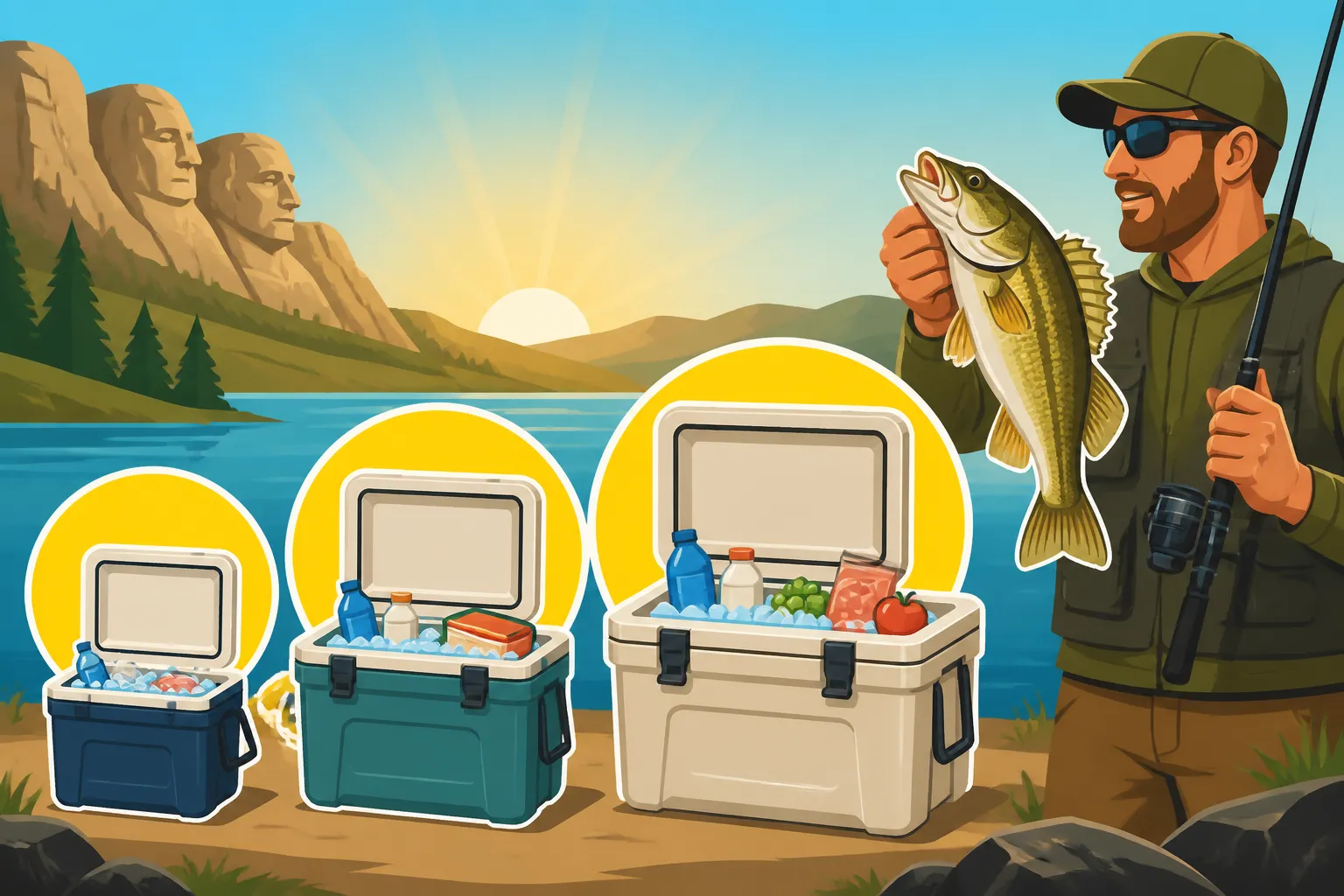
- 20-30 Quart Coolers: These are often considered "personal" coolers. They're great for a solo angler targeting panfish or a short, casual trip where you only expect to keep a few fish. You might fit a limit of crappie or perch, plus a few drinks and some ice. They are highly portable and easy to manage from South Dakota Shore Fishing Spots or smaller kayaks.
- 40-60 Quart Coolers: This range is often the sweet spot for many South Dakota anglers. A 45-quart cooler, for example, is generally adequate for 2-3 anglers to comfortably store a limit of walleye (especially if they're average size), along with a good amount of ice and some personal refreshments. This size strikes a good balance between capacity and portability for most boat fishing scenarios on the Missouri River or our larger glacial lakes. This is frequently a go-to for many who follow a South Dakota Walleye Fishing Guide.
- 70-100+ Quart Coolers: When you're planning a full day with a larger group, targeting bigger species like South Dakota Northern Pike Limits, or hoping for a banner day with multiple limits of walleye, a larger cooler in this range becomes essential. These provide ample space for a substantial catch, plenty of ice, and provisions for everyone. Keep in mind, however, that these larger coolers are significantly heavier and bulkier, especially when full.
When you're browsing online or in stores like Bass Pro Shops, pay attention to the internal dimensions if they're listed, not just the overall quart size, as the insulation thickness can vary greatly and impact actual usable space.
The Ice-to-Fish Ratio: Maximizing Coldness
This is where the rubber meets the road for keeping your catch fresh. Simply tossing fish into a cooler with a few ice cubes won't cut it, especially on a warm day. The ideal scenario is to create a "slushy" environment that rapidly chills your fish and maintains a consistently low temperature. This means you need a healthy ice-to-fish ratio.
A good rule of thumb is to have at least a 1:1 ratio of ice to fish by weight, or even more. This isn't just about keeping things cool; it's about chilling the fish quickly to prevent bacterial growth and preserve the quality of the meat. Think of it as building layers: start with a solid layer of ice on the bottom of your cooler, then add a layer of fish, then more ice, and so on. This ensures that every part of the fish is in contact with the cold. Block ice melts slower than cubed ice, so a combination can be ideal. For longer trips or particularly hot days, you might even consider freezing water in plastic jugs; they provide long-lasting cold and give you potable water once melted. This meticulous care is what separates a truly great meal from a mediocre one, ensuring those South Dakota Walleye Limits make it to your dinner plate in prime condition.
Practical Considerations for Your South Dakota Fishing Cooler
Choosing a cooler isn't just about raw capacity; it's also about how it fits into your overall fishing experience. There are several practical factors that can make or break your day on the water.
Insulation Quality and Ice Retention
Not all coolers are created equal, and this is especially true when it comes to insulation. There's a significant difference in ice retention between a basic, budget-friendly cooler and a high-performance, rotomolded cooler. While the latter might come with a higher price tag and be noticeably heavier, its ability to keep ice for several days can be a game-changer, particularly on those long, hot summer days on sprawling waters like Lake Oahe or Lake Sharpe.
A high-quality cooler with thick, pressure-injected insulation and a good gasket seal will keep your ice frozen much longer, sometimes for days, even in direct sun. This means your fish stay colder, fresher, and you don't have to worry about running out for more ice mid-trip. For casual outings or cooler weather, a standard cooler might suffice. However, if you're serious about your catch and frequently fish in demanding conditions, investing in a premium cooler from a brand like YETI or RTIC (which you can often find at outdoor retailers or through online vendors like Amazon) can be well worth it. It’s an investment in the quality of your harvest.
Portability and Vehicle Space
A cooler is only useful if you can easily get it to and from your fishing spot. A massive cooler might seem ideal for capacity, but if it doesn't fit in your vehicle, or if it's too heavy to move when full, it becomes a liability. Consider your primary mode of transport. Are you trailering a large boat, or is your fishing done from the bank, a kayak, or a smaller utility boat?
For those fishing smaller Black Hills streams for South Dakota Trout Limits in the Black Hills, or exploring quiet ponds from a South Dakota Kayak Fishing Gear Guide perspective, a lighter, more compact cooler (perhaps a soft-sided option) might be far more practical. If you're using a large fishing boat, a big, heavy cooler might be perfectly fine, as it's typically loaded once and stays put. Always measure your vehicle's cargo space or your boat's deck area to ensure your chosen cooler will fit comfortably without impeding movement or safety. Remember, a full 75-quart cooler can easily weigh over 100 pounds, requiring two people to lift it.
Dual-Purpose Coolers: Fish and Fun
Many anglers grapple with whether to use one cooler for everything or dedicate separate coolers for fish and personal items. While a single, large cooler can technically hold both, there are definite advantages to separating your provisions from your catch.
If you’re planning a full day and bringing a good amount of food and drinks, a smaller, separate cooler for these items keeps them easily accessible and prevents them from getting mixed up with fish slime or scales. This also means your sandwiches won't inadvertently pick up that "eau de walleye" scent. Conversely, having a cooler solely for your catch ensures you can fill it with as much ice as needed for optimal preservation, without worrying about soaking your lunch. This is particularly relevant if you're handling fish for the table, as cleanliness is paramount. For many, a medium-sized cooler (40-60 quart) for fish and a small personal cooler (15-25 quart) for drinks and snacks strikes a perfect balance.
Real-World Scenarios and Recommendations
Let's put all this theory into practice with some typical South Dakota fishing scenarios to help you visualize the best cooler size for your next outing.
Solo Angler on a Panfish Mission
You're heading to a local lake for a few hours, maybe targeting some bluegill or crappie. You anticipate keeping a dozen or two panfish for a small fry, plus you'll want a couple of waters and a snack.
For this scenario, a 20 to 30-quart cooler is often ideal. It's lightweight, easy to carry from your vehicle to the shore, or to tuck into a small johnboat or kayak. It will comfortably hold a good limit of panfish, plenty of ice to keep them chilled, and your personal refreshments. You can easily find great options in this size range at your local Bass Pro Shops or even online through retailers like Amazon, offering a balance of portability and sufficient space for a personal catch.
Walleye Wagon for Two to Three Anglers
This is a classic South Dakota outing! You and a couple of buddies are hitting one of the Missouri River reservoirs or a popular glacial lake, dedicated to chasing walleye for most of the day. You're hoping everyone can bring home their limit.
A 45 to 65-quart cooler is typically the sweet spot here. A 60-quart cooler, for instance, provides ample room for three anglers' walleye limits, especially if you're catching average-sized fish, plus enough ice to properly layer them for optimal freshness. This size also leaves a bit of room for a few extra drinks or a shared lunch. While heavier when full, it's still manageable for two people to lift into a boat or pickup truck, making it a versatile choice for a dedicated walleye trip. If you anticipate particularly large fish or exceptional limits, leaning towards the larger end of this range (65-70 quart) is a smart move.
Family Fishing Day or Trophy Hunter
You've got the kids and grandparents out for a full family fishing day, or perhaps you're specifically targeting some of the larger species like a trophy northern pike or a monster catfish on the Missouri River. You're expecting a significant haul, or just need to ensure ample space for everyone's potential catch and provisions.
For these situations, a 70 to 100+ quart cooler is likely necessary. This might seem like overkill, but for multiple limits from several anglers, or for keeping one or two genuinely large fish (like a big South Dakota Northern Pike Limits specimen), you'll appreciate the extra volume. These larger coolers excel at keeping copious amounts of ice for extended periods, which is vital when you're maximizing your catch and ensuring everything stays in peak condition. For trophy hunters, a longer cooler might also be necessary to accommodate the full length of a large fish without bending it. Remember, these will be heavy when loaded, so plan accordingly for transport.
Cooler Size Comparison for a Day Trip
Here's a quick overview to help you visualize what cooler size might be best for your typical South Dakota fishing day:
| Cooler Size (Quarts) | Typical Cans (Approx.) | Ideal For | Common Fish Species | Notes |
|---|---|---|---|---|
| 20-30 | 15-25 | Solo angler, few hours | Panfish, a couple of small walleye | Highly portable, good for shore or kayak fishing. Limited space for ice/drinks. |
| 40-50 | 30-45 | 1-2 anglers, full day | Walleye (1-2 limits), smallmouth bass | Good balance of capacity & portability. Enough room for ice & provisions. |
| 60-75 | 50-70 | 2-3 anglers, full day | Walleye (2-3 limits), northern pike, larger fish | Excellent for group trips or when targeting larger species. Heavier when full. |
| 90-100+ | 75-100+ | Large groups, trophy fishing | Multiple limits, large pike, catfish | Maximum capacity for big hauls. Less portable, requires more vehicle space. |
Ultimately, the best cooler size for a day of fishing in South Dakota is the one that comfortably holds your anticipated catch, your necessary ice, and your personal provisions, while still being manageable to transport. Think through your typical fishing habits, consider the biggest fish you might realistically keep, and always err on the side of slightly larger rather than too small. A little extra space for ice is always a good thing!
Disclaimer
This article is for general informational purposes only and does not constitute professional advice. Laws, prices and regulations vary by location and change over time. Consult a qualified professional for guidance on your specific situation.