Best Life Jackets for Kids Fishing in South Dakota
There's nothing quite like sharing the joy of fishing with a child, watching their eyes light up when they feel that first tug on the line. But for us parents and guardians, those serene moments on the water often come with a quiet undercurrent of worry: "Are they truly safe out there?" Navigating the vast world of life jackets for kids, especially when you're planning a fishing trip in South Dakota's beautiful, but sometimes unpredictable, waters, can feel overwhelming. This comprehensive guide is designed to cut through the confusion, helping you understand the crucial role of life jackets and how to choose the best one to keep your little anglers secure and comfortable while reeling in memories.
Why Life Jackets are Non-Negotiable for Young Anglers
When you're out on the water, whether it's the vast expanse of Lake Oahe or a quiet Black Hills stream, safety has to be your absolute top priority. This isn't just about following rules; it's about protecting the most precious cargo you have: your children. A life jacket isn't just a piece of gear; it's a lifeline, a peace-of-mind provider, and an essential companion for every kid who steps foot onto a boat or near unfamiliar water.
Understanding the Risks on South Dakota Waters
South Dakota's fishing environments are incredibly diverse and stunning, but each one carries its own unique set of risks, especially for children. Picture the powerful currents of the Missouri River below one of its massive dams, or the surprising depth changes you can encounter on a large reservoir like Lake Sharpe. Even seemingly calm glacial lakes in the eastern part of the state can turn choppy quickly with an unexpected wind shift. Shallow streams in the Black Hills, while beautiful, can have slippery rocks or deeper pockets hidden from view. A child, especially one excited by the prospect of a fish, can lose their balance, slip, or simply misjudge a step. The cold water temperatures, even in summer, can quickly incapacitate someone if they fall in, and the strong currents in rivers can sweep them away faster than an adult can react. Having a properly fitted life jacket means that if the unthinkable happens, your child will stay afloat, giving you precious time to respond and reducing the immediate dangers of submersion and hypothermia. It's not about being overprotective; it's about being realistically prepared for any situation that the water can throw at you.
The Law and Your Responsibility
Beyond personal safety, there are legal obligations to consider when children are on boats or near water. In South Dakota, the law is very clear about life jacket requirements, especially for minors. You, as the boat operator or accompanying adult, are responsible for ensuring these laws are met. Generally, all children below a certain age are required to wear a U.S. Coast Guard-approved Personal Flotation Device (PFD) whenever a boat is underway. This isn't a suggestion; it's a mandate. Failing to comply can result in fines and, more importantly, puts your child at severe risk. Even if your child is technically old enough to not be required to wear one by law, it's always the safest practice to have them wear a PFD anyway, particularly if they aren't strong swimmers or are new to boating. Think of it this way: while the law sets a minimum standard, your responsibility as a guardian far exceeds that minimum. You're setting an example for safe boating and fishing practices that your child will carry with them for life. For detailed information on specific age requirements and scenarios, you'll want to review the official South Dakota Life Jacket Requirements and the broader South Dakota Boat Safety Requirements.
Types of Life Jackets: What's Best for Kids Fishing
Navigating the different types of life jackets, or Personal Flotation Devices (PFDs), can feel like learning a new language. There are various categories, each designed for different activities and levels of buoyancy. Understanding these types is crucial to selecting the safest and most appropriate option for your young angler, especially given the varied fishing conditions you might encounter across South Dakota.
Type I, II, III, and V PFDs Explained
The U.S. Coast Guard classifies PFDs into different types based on their design and the protection they offer. While all are designed to keep someone afloat, their performance in different water conditions varies significantly.
- Type I PFDs (Off-Shore Life Jackets): These offer the most buoyancy and are designed for rough, open, or remote waters where rescue might be delayed. They're typically bulky, making them less practical for active fishing, but they are designed to turn an unconscious person face-up in the water. For kids, this bulkiness can hinder casting and movement, so they aren't usually the first choice for a fishing trip unless you're truly in extreme conditions.
- Type II PFDs (Near-Shore Buoyancy Vests): These are less bulky than Type I, designed for calm, inland waters or where a quick rescue is likely. They will turn some unconscious wearers face-up, but not all. Many traditional "horse-collar" style PFDs fall into this category. They offer a good balance of safety for general boating, but can still be somewhat restrictive for active fishing.
- Type III PFDs (Flotation Aids): This is often the most popular choice for recreational activities, including fishing, and is commonly recommended for children. Type III PFDs are designed for continuous wear and offer maximum comfort and freedom of movement, making them ideal for casting, reeling, and moving around a boat. They will keep a conscious person upright in the water, but generally will not turn an unconscious person face-up. This means the wearer needs to be able to help themselves somewhat, but for active children under supervision, the comfort and mobility outweigh this concern. They are suitable for inland waters where rescue is prompt.
- Type V PFDs (Special Use Devices): These are designed for specific activities and must be worn to be considered a legal PFD. Examples include work vests, kayak vests with extra pockets, or even some inflatable PFDs. For kids, you might find Type V PFDs that are integrated into fishing vests, offering both flotation and functionality. The key is that they are approved for a specific activity, and their use is contingent on wearing them for that activity.
When choosing for kids, Type III is a common and excellent starting point due to its balance of safety and comfort, allowing for an enjoyable fishing experience.
Inflatable vs. Foam Life Jackets for Kids
When it comes to the construction of kids' life jackets, you'll primarily encounter two types: foam-filled and inflatable. Each has its pros and cons, and the best choice often depends on the child's age, swimming ability, and the specific fishing activity.
-
Foam-Filled Life Jackets: These are the traditional, always-buoyant PFDs. They are filled with closed-cell foam that provides inherent flotation.
- Pros: They provide instant buoyancy the moment your child enters the water, require no action from the wearer, are generally very durable, and are often more affordable. They are consistently reliable and don't need maintenance like CO2 cartridges. Many children's PFDs, especially for younger kids, come with features like headrests and crotch straps for added safety, which are typically found in foam designs.
- Cons: They can be bulkier and warmer to wear, which might discourage continuous wear, especially on hot South Dakota summer days. The bulk can also restrict movement, making casting or baiting a hook a bit more cumbersome for a small child.
- Best For: Younger children, non-swimmers, or any child whose parents prefer constant, no-fail buoyancy. They are ideal for general boat use, shore fishing, and situations where the child might be less attentive to keeping themselves afloat.
-
Inflatable Life Jackets: These PFDs contain a bladder that inflates either automatically upon water immersion or manually by pulling a cord.
- Pros: They are significantly less bulky and much cooler to wear than foam PFDs, offering superior comfort and freedom of movement. This can be a huge advantage for older kids who find traditional PFDs restrictive, encouraging them to wear the jacket for longer periods.
- Cons: Inflatable PFDs are generally not recommended for children under a certain weight (usually around 80 pounds) or under a certain age, or for non-swimmers, because they require the wearer to be conscious and capable of self-rescue (either by pulling the cord or by the PFD's automatic mechanism activating properly). They also require regular maintenance, including checking the CO2 cartridge and ensuring the inflation mechanism is in good working order. They are typically more expensive.
- Best For: Older, stronger swimmers who meet the weight and age requirements, and who are responsible enough to understand how to operate the PFD if needed. They are excellent for specific fishing activities where mobility is paramount, like casting from a kayak or stand-up paddleboard on calm waters.
For most children fishing in South Dakota, especially those under 80 pounds or those who are not strong swimmers, a foam-filled Type III PFD is almost always the safest and most practical choice. It offers consistent, reliable flotation without requiring any action from the child, ensuring immediate safety should they unexpectedly go overboard.
| PFD Type | Buoyancy | Best Use Case for Kids | Pros | Cons |
|---|---|---|---|---|
| Type I (Off-Shore) | Highest | Extreme, remote waters (rare for kids fishing) | Turns unconscious face-up, high flotation | Very bulky, restrictive for fishing |
| Type II (Near-Shore) | Medium | Calm, inland waters, quick rescue likely | Good flotation, turns some unconscious face-up | Can be bulky, less comfortable for active wear |
| Type III (Flotation Aid) | Medium | General recreational, fishing, constant wear | Comfortable, good mobility, encourages wear | Doesn't guarantee turning unconscious face-up |
| Type V (Special Use) | Varies | Specific activities (e.g., fishing vest w/ PFD) | Designed for activity, may be less bulky | Must be worn for specific activity, often requires wearer action (inflatable) |
Choosing the Right Fit: Size, Weight, and Comfort
Even the best-designed life jacket won't do its job if it doesn't fit correctly. This is arguably the most critical factor when selecting a PFD for a child. A life jacket that is too big can ride up around their ears, actually pushing them down in the water or slipping off entirely. One that is too small will be uncomfortably tight and may not provide enough buoyancy. It's a bit like buying shoes – getting the right size is paramount for both safety and enjoyment.
Weight and Chest Size: The Golden Rules
Forget about age or even the size of their regular clothing. When it comes to life jackets, the two most important measurements are your child's weight and chest size. PFDs for children are explicitly rated by weight ranges, such as "Infant (under 30 lbs)," "Child (30-50 lbs)," or "Youth (50-90 lbs)." This isn't just a guideline; it's a critical safety parameter. The amount of buoyant material in the PFD is directly calibrated to the weight it needs to support. A jacket designed for a 30-pound child will not adequately float a 60-pound child, and vice-versa.
Once you have the correct weight range, the next step is checking the chest size. While the weight rating ensures adequate flotation, the chest size ensures a snug fit. Have your child try on the PFD, ensuring all straps and zippers are fastened. The jacket should fit snugly, but not restrict breathing or movement. You should not be able to pull the shoulder straps up past their ears. If you can, the jacket is too big, even if the weight range seems correct. This "ears test" is a fundamental way to check for a proper fit. Remember, children grow fast, so you'll need to re-check the fit annually, or even more frequently, as they sprout. Don't fall into the trap of buying a jacket "to grow into"; a life jacket must fit now to be safe.
Testing the Fit: A Hands-On Approach
Once you think you have the right size based on weight and chest, it's essential to perform a real-world fit test. This is best done in a controlled environment, ideally with water, but a simple lift test can give you a good initial assessment.
First, have your child put on the life jacket and fasten all zippers, buckles, and straps. Cinch everything down snugly, but not so tight that it pinches or restricts movement. Then, stand behind your child and grasp the shoulders of the life jacket. Gently lift upwards. If the jacket slides up over their chin or ears, it's too large and will not keep their head above water effectively if they fall in. If it stays put, resting comfortably around their shoulders and chest without riding up, then you're likely on the right track.
The ultimate test, if possible, is to have them try it in shallow water, like a swimming pool or a calm, controlled section of a lake. See how the jacket performs. Does it keep their head comfortably above the water? Can they move their arms and legs without too much restriction? Do they feel secure? Observe how they float naturally. This practical test can reveal any issues with comfort or buoyancy that might not be apparent on dry land. After all, the goal is for them to wear it continuously and comfortably while fishing.
Comfort and Mobility: Essential for Happy Anglers
A life jacket's primary purpose is safety, but for a child, comfort and mobility are almost equally important. A bulky, itchy, or ill-fitting PFD is one they'll constantly complain about, try to remove, or simply refuse to wear, rendering it useless. For active kids who want to cast, reel, and move around, unrestricted motion is key to an enjoyable fishing experience.
Look for PFDs made from soft, flexible materials that don't chafe or irritate the skin, especially around the neck and armholes. Designs with larger armholes allow for greater range of motion, which is crucial for casting. Jackets with adjustable straps at the shoulders, sides, and waist offer a customized fit that can be fine-tuned for comfort. Some newer designs feature segmented foam panels that conform better to a child's body, reducing bulk. Breathable fabrics can also make a big difference, preventing overheating on warm days.
Think about the specific fishing your child will be doing. Will they be sitting mostly in a boat, or will they be actively casting from a dock or shoreline? The more active they are, the more important mobility becomes. A comfortable jacket is one that they won't even notice they're wearing, allowing them to focus on the fish, not the discomfort. Encouraging them to wear it consistently starts with finding a jacket that truly fits well and feels good.
Features to Look For in a Kid's Fishing Life Jacket
Beyond the basic type and fit, certain features can significantly enhance a child's safety and comfort, especially when they're focused on fishing. Modern life jackets for kids have come a long way, incorporating smart designs that address common concerns for parents and young anglers alike.
High-Visibility Colors and Reflective Strips
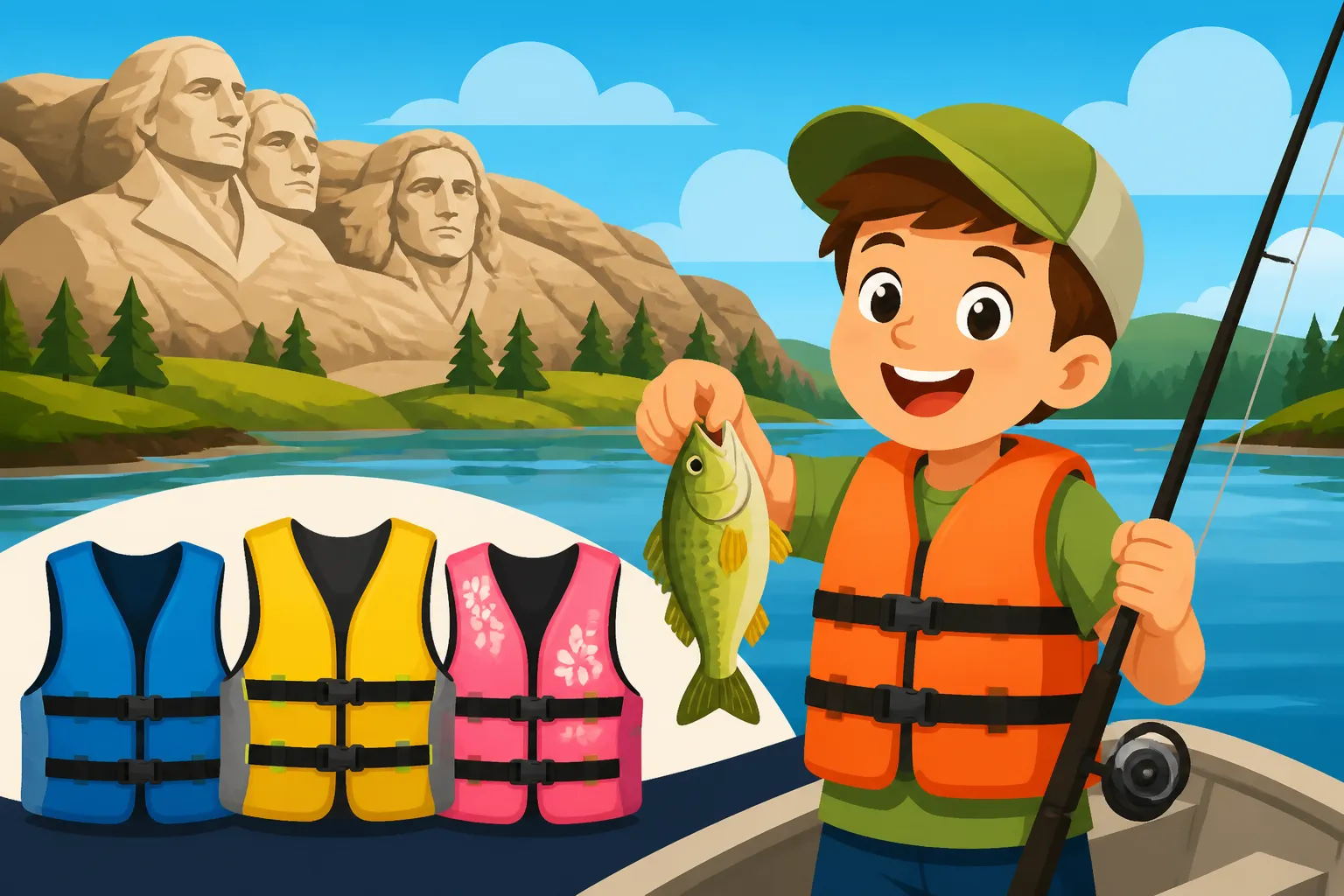
When a child falls overboard, especially in choppy water, low light conditions, or if they drift away from the boat, every second counts. High-visibility colors like bright orange, neon yellow, or vibrant green can make a monumental difference in how quickly they are spotted. These colors stand out sharply against water, shoreline, and boat backgrounds. Imagine trying to find a child in a dark blue or black jacket against the deep blues of Lake Oahe at dusk – it would be incredibly difficult.
Reflective strips, often sewn onto the shoulders, chest, or back of the life jacket, are another critical safety feature. These strips catch and reflect light, making your child visible to searchlights, boat headlights, or even flashlights in low-light conditions, fog, or at night. If your fishing plans include early morning starts, late evening finishes, or any time with reduced visibility, these features are non-negotiable. They effectively turn your child into a beacon, increasing their chances of a rapid rescue.
Head Support, Grab Handles, and Crotch Straps
These three features are absolute game-changers, particularly for infants, toddlers, and young children who may not have strong neck control or swimming abilities.
- Head Support (Flotation Collar): Many infant and child PFDs come equipped with a large, padded collar that provides extra flotation and support around the head and neck. This is designed to keep the child's head tilted back and above the water, even if they are unconscious or too young to hold their head up reliably. For very young children, this feature is critical for preventing facial submersion.
- Grab Handle: A sturdy grab handle, typically located on the top of the head support or the back of the jacket, is incredibly useful. If your child goes into the water, this handle provides an easy and secure point for you or another adult to quickly grab and pull them back into the boat or onto shore. Trying to grab a wet, struggling child without a proper handle can be difficult and even dangerous for both parties.
- Crotch Straps (Leg Straps): These straps run between a child's legs and attach to the front or back of the PFD. Their purpose is simple yet vital: they prevent the life jacket from riding up over the child's head. As discussed earlier, a jacket that rides up is not only uncomfortable but can actively impede buoyancy and put the child's head underwater. Crotch straps ensure the jacket stays put, providing constant, reliable flotation around their core. While sometimes a source of minor complaint for kids, their safety benefit far outweighs any small discomfort. For younger children, insist on a PFD with crotch straps.
Pockets and Accessory Attachments for Young Anglers
While safety is paramount, remember that you're out there fishing, and making the experience enjoyable for your child means catering to their interests too. Some kids' fishing life jackets go beyond basic flotation to include features that specifically appeal to young anglers and make their time on the water more practical.
Look for life jackets that incorporate small pockets. These can be incredibly handy for stashing a few essential items like a small box of bait, a couple of extra hooks, a lip balm, or even a waterproof snack. Having their own "gear" can make a child feel more invested in the fishing process and less likely to want to take off their jacket. Some jackets might even have D-rings or other loops where a small whistle, a pair of pliers, or a mini tackle box can be clipped, keeping essentials close at hand and preventing them from getting lost. While these are certainly secondary to safety features, they contribute to the overall experience and comfort, making the child more willing to wear the life jacket for the duration of the trip. After all, a PFD that's worn is the only one that can save a life.
Where to Buy and How to Care for Your Kid's Life Jacket
Finding the right life jacket is just the beginning. Knowing where to purchase a quality PFD and how to properly maintain it ensures that it remains effective and lasts for many fishing seasons to come. Investing in good gear and caring for it thoughtfully pays dividends in safety and longevity.
Retailers and Online Options
When it comes to purchasing a kid's life jacket, you have a few excellent avenues, each with its own benefits. Major outdoor retailers are often a fantastic first stop. Stores like Bass Pro Shops or Cabela's usually have a wide selection of U.S. Coast Guard-approved PFDs in various sizes and types. The huge advantage here is that you can bring your child in to try on jackets in person. This hands-on approach allows you to conduct the "ears test" and assess comfort and mobility firsthand, often with the assistance of knowledgeable staff who can help with proper fitting. Being able to see and feel the materials and check the adjustability makes a big difference.
Online marketplaces like Amazon also offer an immense selection, often with competitive pricing and the convenience of home delivery. When shopping online, however, it's crucial to be extra diligent. Carefully read product descriptions, paying close attention to weight ratings, chest sizes, and U.S. Coast Guard approval. Look for detailed photos and, most importantly, pore over customer reviews. Reviews from other parents can offer invaluable insights into how a particular jacket fits children of various sizes, its comfort level, and overall durability. Just remember, if you buy online, be prepared to return it if the fit isn't absolutely perfect. Never compromise on fit for the sake of convenience or a slightly lower price. Reputable brands that specialize in marine safety gear are always a good bet, whether buying in person or online.
Proper Storage and Maintenance for Longevity
A life jacket is an investment in safety, and like any critical piece of gear, it needs proper care to function optimally year after year. Neglecting your PFDs can lead to degradation of materials, loss of buoyancy, or even failure of straps and buckles, rendering them unsafe.
After Each Use:
- Rinse: Always rinse life jackets thoroughly with fresh water after each outing, especially if they've been in saltwater (though most South Dakota fishing is freshwater, it's a good habit). This removes dirt, fish slime, sunscreen residue, and any other contaminants.
- Inspect: Take a moment to inspect the jacket for any signs of wear and tear. Check for tears in the fabric, frayed straps, cracked buckles, or loose stitching. If you find significant damage, it's time to replace the jacket.
- Dry Completely: Hang life jackets in a well-ventilated area, out of direct sunlight, to dry completely. Storing a damp life jacket can lead to mildew, which not only smells bad but can also degrade the fabric and foam over time.
Storage:
- Cool, Dry Place: Store PFDs in a cool, dry place away from direct sunlight, extreme temperatures, and harsh chemicals. Heat and UV rays are particularly damaging to the foam and fabric.
- Avoid Compression: Do not store life jackets under heavy objects or in tight, compressed spaces. Constantly compressing the foam can reduce its buoyancy over time. Hang them or lay them flat.
- No Chemicals: Keep bug sprays, gasoline, oils, and other chemicals away from your PFDs, as these can severely damage the materials.
Regular inspection and proper care mean your child's life jacket will be ready and reliable every time you hit the water, ensuring many safe and successful fishing adventures for years to come. Remember, a well-maintained life jacket is a happy, safe life jacket. For even more comprehensive information on fishing gear and boat maintenance, you might find valuable insights in the South Dakota Fishing Gear Checklist and How to Winterize a Boat in South Dakota.
South Dakota Specific Rules and Recommendations
While the core principles of life jacket safety are universal, understanding the specific regulations and environmental factors in South Dakota can help you make even more informed choices for your family's fishing trips. The South Dakota Game, Fish and Parks (GFP) department provides excellent resources that every angler should be familiar with.
Age and Activity-Specific Requirements
In South Dakota, there are clear mandates regarding who must wear a life jacket and when. Generally, federal and state regulations require that any child under 7 years of age must wear a U.S. Coast Guard-approved PFD at all times while on any vessel that is underway. This applies to all types of boats, from large fishing vessels on the Missouri River to small canoes or kayaks on a tranquil lake. As the responsible adult, you are legally obligated to ensure this rule is followed. Failing to do so can result in a citation and, more importantly, puts your child at unnecessary risk.
Even for children older than 7, while not always legally required to wear a life jacket, there must be an appropriately sized, U.S. Coast Guard-approved PFD readily available for every person on board the vessel. "Readily available" means it's not stowed away in a locked compartment under a pile of gear. It should be easily accessible within arm's reach.
However, many seasoned anglers and boaters strongly recommend that all children, regardless of age or swimming ability, wear a life jacket whenever they are on a boat, dock, or near unfamiliar water. Children are unpredictable, and an accidental fall can happen in an instant. This recommendation becomes even more critical if you're fishing from smaller craft like kayaks or canoes, where stability can be less forgiving. For detailed, up-to-date information, always consult the South Dakota GFP Fishing Handbook Guide or the official South Dakota boating regulations.
Additional Safety Considerations for South Dakota Fishing
Beyond the basic requirements, several other factors unique to South Dakota's diverse fishing landscape warrant extra consideration when planning a trip with kids.
- Missouri River System: The vast Missouri River reservoirs (Oahe, Sharpe, Francis Case, Lewis and Clark) are incredible fishing destinations, but they are also massive bodies of water that can become rough very quickly. High winds can whip up waves that easily swamp smaller boats, and strong currents, especially near dams, can be hazardous. For these waters, opting for a PFD with enhanced head support and high visibility, even for older kids, is a wise choice. Understanding South Dakota Boat and Water Access Rules is also vital here, as is choosing the Best Boats for South Dakota Reservoir Fishing for safety and comfort.
- Black Hills Streams: While seemingly calmer, mountain streams can have swift currents, slippery rocks, and surprisingly cold water, even in summer. If your kids are wading, they should be wearing a life jacket, especially if they are not strong swimmers. The cold water can quickly lead to hypothermia if a child falls in.
- Ice Fishing: When it comes to ice fishing, a different set of safety concerns emerges. While a traditional life jacket won't offer much thermal protection, it is absolutely crucial for preventing immediate submersion if someone falls through the ice. Specialized ice fishing flotation suits offer both warmth and buoyancy, which can be an excellent investment for kids who frequently join ice fishing trips. Always check ice thickness and never venture out alone.
- Kayak and Canoe Fishing: The popularity of South Dakota Kayak Fishing Gear Guide has grown immensely. For kids in kayaks or canoes, where tipping is a more common occurrence, a Type III PFD offering excellent mobility is essential. Ensure the jacket doesn't impede their paddling motion, but always keeps them afloat if they go overboard.
Always be mindful of water temperatures, weather forecasts, and the specific conditions of the body of water you're visiting. Educate your children about water safety, emphasizing why they need to wear their life jacket. Leading by example is also powerful; consider wearing one yourself, especially if you're in a smaller boat or in conditions where an adult might struggle. The goal is to instill a culture of safety so that wearing a life jacket becomes as natural as putting on their fishing hat.
Disclaimer
This article is for general informational purposes only and does not constitute professional advice. Laws, prices and regulations vary by location and change over time. Consult a qualified professional for guidance on your specific situation.