Best Waders for Black Hills Stream Fishing
There's nothing quite like the crisp air and clear, cold waters of the Black Hills streams, but for many anglers, the thought of plunging into those icy currents can send a shiver down the spine before you even cast a line. Finding the right waders is absolutely critical for comfort and safety, transforming a potentially miserable experience into a truly enjoyable day on the water. This guide will walk you through everything you need to know to choose the best waders that will keep you dry, warm, and ready to tackle the unique challenges of fishing the Black Hills.
Understanding the Unique Demands of Black Hills Streams
Fishing in the Black Hills isn't just about the stunning scenery; it's about navigating some truly distinctive environmental factors that demand specific qualities from your gear, especially your waders. Ignoring these nuances can quickly lead to discomfort, or worse, a prematurely ended fishing trip.
Water Temperature and Flow
The streams of the Black Hills, particularly those famous for their trout, are often spring-fed. This means the water stays remarkably cold year-round, even on the warmest summer days. You might step into a stream in July thinking it'll be refreshing, only to find yourself shivering within minutes if your waders don't provide adequate insulation. This constant cold demands a thoughtful approach to material choice and layering. While air temperatures can fluctuate wildly, the water temperature remains stubbornly low, often in the 40s or 50s (Fahrenheit), which is cold enough to cause hypothermia if you get soaked.
Beyond temperature, the flow rates can vary significantly. Some sections might be slow, meandering glides, while others could be swift, rocky runs that require stable footing. Powerful currents can put stress on wader seams and material, testing their durability. You need waders that can withstand this dynamic environment, offering both thermal protection and structural integrity against the forces of moving water. This isn't just about staying dry; it's about staying safe and comfortable, allowing you to focus on the fish, not your freezing toes or the precarious grip of your boots.
Terrain and Vegetation Challenges
When you're wading through a Black Hills stream, you're not strolling on a groomed path. The stream beds are typically a mosaic of slippery, algae-covered rocks, loose gravel, and sometimes sharp, submerged branches. The banks, too, present their own set of obstacles, often overgrown with thorny bushes, abrasive granite, or dense underbrush. These elements are constantly trying to snag, tear, or abrade your waders. A small puncture from a rogue branch or a scrape against a sharp rock can quickly turn a dry day into a cold, wet ordeal.
This rugged terrain means durability isn't a luxury; it's a necessity. Thin, flimsy waders designed for calm, sandy bottoms simply won't cut it here. You need materials that can resist punctures and abrasions, with reinforced areas in common wear spots like the knees and seat. Furthermore, the treacherous footing means that your entire wading system – waders and boots combined – must offer exceptional grip to prevent slips and falls, which can lead to injury or at least a very unwelcome dunking.
Types of Waders: Finding Your Perfect Match
Just like choosing the right fly, selecting the appropriate waders depends heavily on the conditions you expect to encounter. The Black Hills present a diverse range of scenarios, from hot summer days to frigid fall mornings, making understanding wader types paramount.
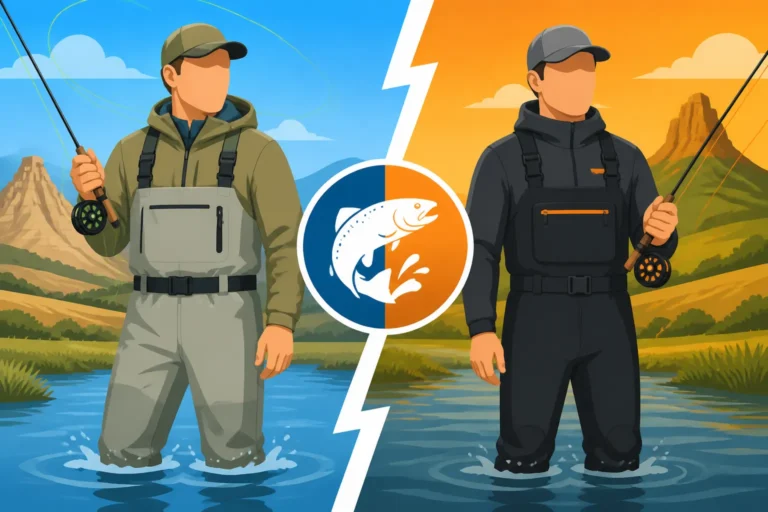
Breathable Waders: The Angler's Go-To
Breathable waders are by far the most popular choice for modern anglers, and for good reason. Made from advanced synthetic fabrics like Gore-Tex or proprietary materials from brands like Simms or Orvis, these waders are designed to let perspiration escape while preventing water from getting in. This "breathability" is a game-changer, especially during warmer months or when you're hiking a considerable distance to reach a secluded stream. Nobody wants to feel like they're stewing in their own sweat, even if they're staying dry from the outside.
For Black Hills fishing, breathable waders offer incredible versatility. You can comfortably wear them on a warm summer day with minimal layering underneath, or bundle up with fleece pants and thermal base layers when the air turns frosty in the fall or early spring. They typically come in different "layers" – 3-layer for lighter, more packable options, and 5-layer for increased durability and warmth in high-wear areas. When you're constantly on the move, scrambling over banks, or hiking to reach the next riffle, the reduced bulk and superior comfort of breathable waders are invaluable. They allow for a greater range of motion and prevent that clammy feeling that can quickly ruin a day outdoors. For a comprehensive look at what to pack, check out our South Dakota Fishing Gear Checklist.
Neoprene Waders: For the Cold-Blooded Angler
When the mercury truly plummets, or if you plan on spending significant time in the water during late fall, winter, or early spring, neoprene waders become a serious contender. Think of neoprene as the material wet suits are made from – it provides excellent insulation by trapping a thin layer of water against your skin (though good waders keep the water out, the principle of insulation remains). This makes them incredibly warm, often negating the need for bulky layers underneath, depending on the thickness. They typically come in 3mm or 5mm thicknesses, with 5mm being the warmest and heaviest.
While neoprene offers superior warmth for those icy Black Hills mornings, it does come with trade-offs. They are significantly bulkier and less flexible than their breathable counterparts, which can make long hikes or steep climbs more challenging. They also don't breathe, meaning that on warmer days or during strenuous activity, you'll quickly build up sweat inside, leading to that uncomfortable clammy feeling once more. However, for dedicated cold-weather enthusiasts or those who anticipate standing in frigid currents for extended periods, the insulating power of neoprene can be the difference between a successful, comfortable outing and an early retreat due to the cold.
Hybrid and Specialized Waders
The market isn't strictly black and white when it comes to wader types. Many manufacturers offer hybrid options that attempt to combine the best features of both breathable and neoprene waders. This might involve breathable fabric on the upper body for comfort and reduced bulk, with tougher, often thicker, or even neoprene-reinforced sections on the legs for increased durability and warmth where it's needed most. Some waders also feature specific reinforcements on the knees and seat, areas that take a lot of abuse when kneeling to release a fish or sitting on a rocky bank.
Specialized waders might also include specific pocket configurations for fly boxes and tools, or integrated belt systems designed for carrying extra gear. While not as common for general Black Hills stream fishing, these options can be appealing to anglers with very specific needs or preferences. For instance, if you find yourself constantly battling thorny rose bushes along stream banks, a wader with extra-durable lower leg reinforcement might be worth the investment. Always consider your specific fishing habits and the particular stretches of stream you frequent when evaluating these more tailored designs.
Key Features to Look for in Black Hills Waders
Once you've decided on the general type of wader (breathable vs. neoprene), it's time to dive into the nitty-gritty details that differentiate a good pair from a truly great pair, especially for the demanding environment of the Black Hills.
Material Durability and Construction
The rugged nature of Black Hills streams means that durability is paramount. You'll be scraping against rocks, pushing through dense brush, and potentially kneeling on abrasive surfaces. Look for waders constructed from high-denier fabrics, particularly in the lower legs, knees, and seat. Denier refers to the thickness of the fibers – higher denier means tougher fabric. Many premium breathable waders will boast 5-layer construction in these high-wear areas, offering significantly more resistance to punctures and abrasions than standard 3-layer designs.
Beyond the fabric itself, the construction of the seams is critical. Waders are essentially a collection of fabric panels stitched or welded together, and these seams are often the first point of failure. Look for waders that feature double-taped, welded, or sonic-welded seams. These methods create a much stronger and more waterproof seal than simple stitching, drastically reducing the chances of leaks. While an occasional leak is almost inevitable over the lifespan of any wader, investing in a well-constructed pair from the outset will save you a lot of headaches and cold legs down the line. A quick browse through online retailers like Amazon or a visit to a specialty shop like Bass Pro Shops can show you the different quality levels in seam construction.
Bootfoot vs. Stockingfoot Waders
This is a fundamental choice that impacts your comfort, mobility, and the overall cost of your wading system.
-
Bootfoot Waders: These waders have the boots permanently attached to the wader itself. The main advantage here is convenience – you simply step into them, pull them up, and you're ready to go. There's no need to buy separate boots, and you eliminate the potential for gravel to get into your wading boots, as well as the hassle of mud building up between wader and boot. They are often a good choice for casual anglers or those who prioritize speed and ease of use. However, the fit of the integrated boot might not be as precise as a separate wading boot, potentially leading to less ankle support and discomfort on long hikes. The boot is also often less robust than dedicated wading boots.
-
Stockingfoot Waders: These waders end in neoprene "socks" and require you to purchase separate wading boots. This system offers several significant advantages for Black Hills stream fishing. Firstly, it allows for a custom fit. You can choose wading boots that perfectly match your foot size and provide superior ankle support, which is absolutely crucial when navigating slippery, uneven stream beds. The ability to select boots with specific sole types (felt, rubber, studded) tailored to the Black Hills' rocky terrain is also a huge benefit. While it's a larger upfront investment, the enhanced comfort, support, and durability of a dedicated boot and stockingfoot wader combo often make it the preferred choice for serious stream anglers. Many anglers consider a good pair of separate wading boots an essential part of their South Dakota Fly Fishing Gear Guide setup.
Functional Design Elements
Beyond the core materials and construction, a wader's functional design can greatly enhance your fishing experience. These thoughtful features might seem minor, but they can make a big difference when you're spending hours on the water.
- Pockets: Integrated pockets can be incredibly useful for storing fly boxes, tippet spools, leaders, and other small essentials, keeping them easily accessible without needing to fumble through a vest or pack. Some waders offer waterproof pockets for electronics, which is a fantastic feature for protecting your phone or keys.
- Hand-Warmer Pockets: These are a true luxury on cold days. Lined with fleece, they provide a quick refuge for chilly hands, which is especially appreciated in the often-cold waters of the Black Hills.
- Adjustable Suspenders: Comfortable, easily adjustable suspenders ensure the waders sit properly on your shoulders without digging in or slipping down. Look for designs that allow for quick adjustments, and perhaps even convert to waist-high waders for warmer conditions or shallower wading.
- Wading Belt: A wading belt is not just for comfort; it's a critical safety feature. Cinched tightly, it prevents water from rushing into your waders if you stumble and go deeper than expected, making it much easier to regain your footing and preventing a dangerous "water anchor" effect. Most waders come with a belt, but ensure it's robust and easy to adjust.
- Gravel Guards: These integrated cuffs fit over your wading boots, preventing sand, gravel, and other debris from getting inside your boots and causing discomfort or blisters. They are an absolute must-have feature for any serious stream angler.
These design elements, when combined with durable materials and proper construction, elevate a pair of waders from basic waterproof pants to a truly functional piece of angling equipment.
Sizing, Fit, and Comfort: More Than Just a Number
You can buy the most expensive, feature-rich waders on the market, but if they don't fit correctly, you'll be miserable. A proper fit is arguably the most critical aspect of wader selection, impacting everything from your mobility to your warmth and overall enjoyment.
Understanding Wader Sizing Charts
Wader sizing is notoriously tricky because it's not like buying regular pants or a jacket. Manufacturers use specific measurements that typically include chest circumference, inseam length, and shoe size (for stockingfoot waders, this refers to the neoprene sock size, not your street shoe size). It's incredibly important to consult the specific brand's sizing chart, as there can be significant variations between manufacturers. Don't just assume your pant size translates directly to wader size.
When you're looking at a sizing chart, pay close attention to the "max girth" or chest measurement. You need enough room to layer comfortably underneath without feeling restricted. For inseam, you want enough length so that when you kneel or climb, the waders don't pull tightly across your crotch or shoulders. When trying on stockingfoot waders, ensure the neoprene bootie isn't too tight or too loose; too tight will restrict circulation, too loose will bunch up and cause blisters inside your wading boots. If possible, try them on while wearing the layers you anticipate using. If you're considering a big purchase, a store like Bass Pro Shops can be invaluable for trying on different sizes and brands.
Layering for Optimal Performance
Even with the warmest neoprene waders, and especially with breathable waders, layering is key to comfort and warmth in the variable conditions of the Black Hills.
- Base Layer: Start with a moisture-wicking base layer against your skin. This could be synthetic (polyester, polypropylene) or merino wool. Cotton is a definite no-go as it retains moisture and will make you cold once wet. A good base layer will draw sweat away from your body, keeping you dry and preventing chills.
- Mid-Layer: Over your base layer, add a fleece pant or another insulating layer. The thickness of this layer will depend entirely on the water and air temperature. For very cold conditions, you might even double up on mid-layers. The beauty of breathable waders is their versatility – you can add or subtract layers to perfectly match the conditions.
- Top Layers: Don't forget your upper body! While your waders protect your legs, your core and arms still need insulation. Again, choose moisture-wicking materials and layer as needed.
The goal of layering is to create an adaptable system. By regulating your body temperature effectively, you can stay comfortable whether you're hiking to the stream, standing stationary in the water, or battling a fish. Effective layering prevents overheating when active and provides crucial warmth when you're still.
The Importance of Wading Boots
We touched on this when discussing stockingfoot waders, but the importance of good wading boots cannot be overstated for Black Hills stream fishing. Your boots are your connection to the streambed, and their performance directly impacts your safety and stability.
The Black Hills streams are famous for their rocky, often slick bottoms. You need boots that provide exceptional traction. Here's a breakdown of sole types:
- Felt Soles: Historically popular for their grip on slimy rocks, felt soles can be fantastic in slick, algae-covered conditions. However, they can perform poorly on mud, snow, and dry land, and many states have restrictions or bans on felt due to concerns about transporting invasive species.
- Rubber Soles: Modern rubber wading soles have come a long way. They offer good all-around traction and are much more versatile on various terrains. Look for proprietary rubber compounds designed for wet grip.
- Studded Soles (Rubber or Felt with Studs): For the ultimate grip on treacherous Black Hills rocks, studded rubber or felt soles are often the best choice. These metal studs dig into the streambed, providing unparalleled traction and greatly reducing your risk of slipping. However, studs can damage boat floors or soft surfaces on shore.
Regardless of sole type, ensure your wading boots are comfortable, provide excellent ankle support, and are sized to accommodate your wader booties and any thick socks you might wear. Trying them on with your waders is essential. A great pair of wading boots can literally save your day, preventing falls and allowing you to confidently navigate challenging stretches of water. To dive deeper into this topic, check out Best Wading Boots for Rocky Streams.
Maintenance and Longevity: Protecting Your Investment
Waders are an investment, and like any good piece of gear, they require proper care to ensure they last for many seasons. Neglecting them can lead to premature wear, annoying leaks, and having to replace them sooner than you'd like.
Cleaning and Drying Your Waders
After every trip, especially if you've been in muddy or silty water, it's important to properly clean your waders. Start by rinsing them thoroughly with cool, fresh water, both inside and out. Pay special attention to the neoprene booties and any gravel guards, removing all sand and debris. You can use a mild, non-detergent soap if they're particularly dirty, but avoid harsh chemicals or bleach, which can damage the waterproof membrane and seam tapes.
Once rinsed, the most crucial step is proper drying. Hang your waders upside down from the suspenders in a well-ventilated area, away from direct sunlight or heat sources. This allows the water to drain out of the feet. After they've drip-dried for a while, turn them right-side out and hang them normally to ensure the interior dries completely. Never store waders damp or wet, as this is a surefire way to encourage mildew growth, which not only smells terrible but also degrades the fabric and seam tape over time. Full and complete drying can sometimes take a couple of days, so be patient.
Repairing Leaks and Tears
Leaks are almost an inevitable part of a wader's life, especially with breathable models used in rugged environments like the Black Hills. The good news is that most small leaks and tears are easily repairable. It's always a good idea to carry a small field repair kit with you, which typically includes Aquaseal or a similar waterproof sealant and some fabric patches.
To find a leak, turn the waders inside out and spray the suspect area with rubbing alcohol. The alcohol will darken the fabric slightly as it evaporates through any pinholes. For larger tears, you might need to fill the waders with water (being careful not to overfill or stress seams) and look for drips on the outside. Once found, clean the area thoroughly, apply a thin layer of sealant, and for larger tears, cover with a fabric patch (often included in repair kits or available separately, sometimes found on Amazon). Allow ample time for the repair to cure completely before using your waders again. Proper patching can significantly extend the life of your waders, saving you from having to buy a new pair too soon.
Proper Storage Tips
How you store your waders between trips and during the off-season can greatly influence their longevity. After ensuring they are completely clean and dry, hang your waders in a cool, dry place, away from direct sunlight or extreme temperatures. Hanging them prevents creasing and compression of the fabric and seam tape, which can weaken these areas over time. Many anglers use wide-shoulder hangers to support the waders properly without stretching the suspenders.
Avoid folding your waders tightly or cramming them into a small bag for extended periods. This can create permanent creases that stress the waterproof membrane and compromise its integrity. If you absolutely must fold them, do so loosely and store them in a breathable bag. Proper storage, along with regular cleaning and prompt repairs, will ensure your waders remain a reliable part of your South Dakota Fishing License Guide setup for many seasons to come, ready for your next adventure in the Black Hills.
Wader Comparison for Black Hills Stream Fishing
To help summarize your decision-making process, here's a quick comparison of the two main wader types for fishing our beautiful Black Hills streams:
| Feature | Breathable Waders | Neoprene Waders |
|---|---|---|
| Primary Benefit | Comfort, versatility, prevents sweating | Superior warmth, insulation in very cold water |
| Best Conditions | Mild to warm weather, long hikes, active fishing | Very cold water, stationary fishing, winter conditions |
| Insulation | Requires layering for warmth | Provides inherent warmth, less need for layers |
| Mobility | Lightweight, flexible, excellent range of motion | Bulkier, heavier, can restrict movement |
| Durability | Good (especially 5-layer), prone to punctures if thin | Very durable, puncture-resistant (thick neoprene) |
| Sweat Management | Wicks moisture, prevents clamminess | Traps sweat, can feel clammy in warmer temps/high activity |
| Ideal For | Most Black Hills trout fishing, active wading | Late fall/winter, ice fishing (if wading), very cold springs |
| Layering Needs | Essential for warmth | Minimal to none, depending on thickness and temp |
| Cost | Generally higher for quality breathable fabrics | Often more budget-friendly for comparable warmth |
Disclaimer
This article is for general informational purposes only and does not constitute professional advice. Laws, prices and regulations vary by location and change over time. Consult a qualified professional for guidance on your specific situation.