South Dakota Fishing License Reciprocity Agreements
It can be incredibly frustrating when you're planning a fishing trip, especially if you're venturing near a state border, and you're left wondering if your hard-earned fishing license is actually valid across the invisible line in the water. Nobody wants to be caught without the proper paperwork or, worse, pay for two licenses when only one is needed. This guide will cut through the confusion and thoroughly explain South Dakota's fishing license reciprocity agreements, ensuring you know exactly where you stand before you ever cast your line.
Understanding Fishing License Reciprocity
The idea of fishing license reciprocity is a real blessing for anglers who live near state lines or frequently travel to fish shared waterways. It’s designed to simplify the licensing process and make it easier for you to enjoy the great outdoors without needing a separate license for every single body of water that happens to straddle a border. However, it's not always a straightforward concept, and the details can vary wildly from state to state and even from one stretch of water to another.
What Reciprocity Actually Means for Anglers
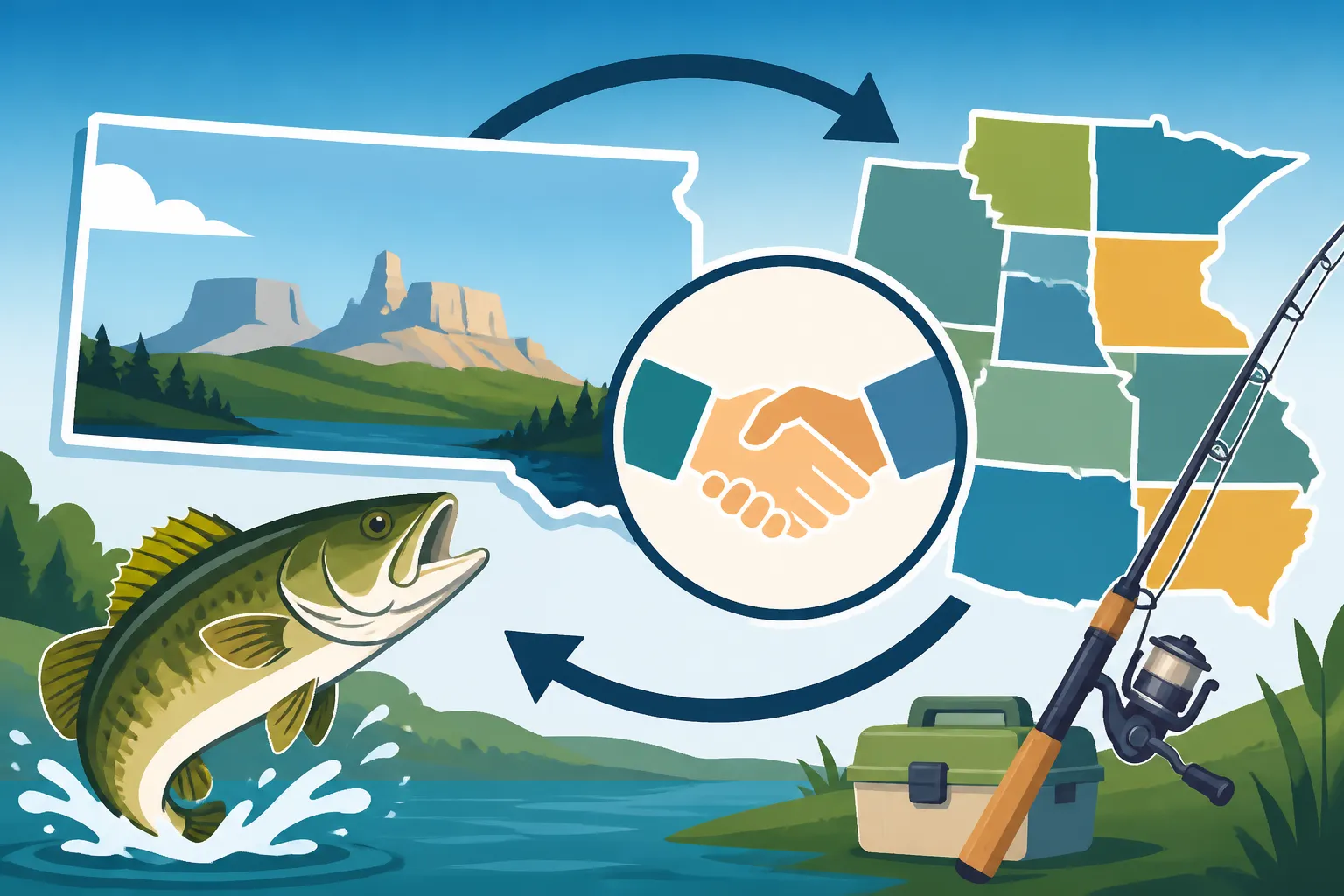
At its core, fishing license reciprocity means that under specific, pre-arranged agreements between two states, a fishing license purchased from one of those states is recognized as valid in certain waters of the other state. Imagine you're standing on the bank of a river, and the opposite bank is a different state. Without reciprocity, you’d need two licenses to fish both sides or even sometimes the middle of that river. With it, your single license covers you. This eliminates a huge headache and often saves you money, which is always a bonus when you're trying to enjoy a relaxing day on the water. It’s particularly beneficial in places like the vast Missouri River system, which forms a significant part of South Dakota’s border.
However, a common misconception is that reciprocity means your South Dakota license is magically valid throughout an entire neighboring state, or vice-versa. That's rarely the case. These agreements are almost exclusively limited to border waters – specific rivers, lakes, or reservoirs that physically separate two states. They also usually come with their own set of nuances regarding where exactly on that water your license is valid, and sometimes even for what species. You still need to understand the fundamental South Dakota Fishing License Guide and any specific state regulations like the South Dakota Fishing Regulations Explained for the waters you intend to fish.
Why South Dakota Has Specific Rules
South Dakota’s unique geography, especially its long border along the Missouri River, makes reciprocity agreements particularly relevant. The state shares significant portions of this waterway with Nebraska, and to a lesser extent, touches borders with Minnesota, Iowa, North Dakota, Montana, and Wyoming. These agreements are not just about convenience; they're vital for conservation and effective management of shared fish populations. Without them, enforcing fishing limits and seasons could become a bureaucratic nightmare.
The South Dakota Game, Fish and Parks (GFP) works closely with its counterparts in neighboring states to establish these agreements. Factors influencing these rules include:
- Shared Fisheries: When a large body of water, like the Missouri River, hosts a continuous fish population that moves freely between state jurisdictions, it makes sense for both states to have coordinated regulations and licensing.
- Access and Logistics: Imagine launching your boat from a South Dakota ramp only to drift into Nebraska waters while trolling for walleye. Reciprocity prevents such simple acts from becoming legal violations.
- Conservation Efforts: Harmonized rules help ensure that both states are working towards sustainable management of shared resources, preventing overfishing or conflicting regulations that could harm fish populations.
- Economic Impact: Simplified licensing can also encourage tourism and make fishing more accessible, benefiting local economies on both sides of the border.
These specific rules are often detailed within the annual South Dakota GFP Fishing Handbook Guide, which is an invaluable resource for any angler, especially those planning to fish near state lines.
South Dakota's Specific Reciprocity Agreements
While the concept of reciprocity is broad, South Dakota’s actual agreements are quite specific and largely centered around the Missouri River. This legendary river is not just a geographical boundary; it's a vibrant fishery that attracts anglers from across the region.
Missouri River Border Waters with Nebraska
This is where South Dakota's most significant reciprocity agreement comes into play. If you're planning to fish the Missouri River along the border between South Dakota and Nebraska, you're in luck! Both states generally recognize each other's fishing licenses for the main stem of the river and associated impoundments that form their shared boundary. This means if you have a valid South Dakota Annual Fishing License, you can legally fish in the Nebraska portion of these specific border waters, and vice-versa for Nebraska license holders fishing in South Dakota waters.
Specifically, this agreement covers the boundary waters of the Missouri River from the confluence of the Big Sioux River (near Sioux City, Iowa) upstream to the point where the South Dakota-Nebraska border leaves the Missouri River. This includes major reservoirs like Lewis and Clark Lake and Lake Francis Case.
Let's be clear about what this means in practice:
- Your Valid License: If you possess a current, valid South Dakota fishing license, you are permitted to fish the shared waters of the Missouri River along the South Dakota-Nebraska border.
- Nebraska Anglers: Similarly, if you hold a valid Nebraska fishing license, you can fish the South Dakota portions of these same boundary waters.
- No Double Dipping: You don't need to purchase both a South Dakota Nonresident Fishing License Rules and a Nebraska nonresident license to fish these specific areas. One valid license from either state is sufficient for the shared waterway.
- Beyond the Boundary: This reciprocity does not extend to inland waters of either state. If you decide to venture away from the main channel of the Missouri River into a tributary or lake entirely within South Dakota, you'll need a South Dakota license. The same applies if you fish Nebraska's inland waters with a South Dakota license – you'd need a Nebraska license for those. This is a critical distinction that many anglers overlook, potentially leading to violations.
This agreement significantly simplifies fishing for those who frequent the lower Missouri River reservoirs, making it easier to chase walleye, catfish, and other species without constant worry about invisible state lines. For example, if you're fishing near Gavins Point Dam, your South Dakota license is usually valid across the entire navigable waterway within the agreed-upon boundary.
Other Potential Border Water Scenarios
While the South Dakota-Nebraska Missouri River agreement is robust, it's important to understand that South Dakota generally does not have similar broad, statewide reciprocity agreements with its other neighboring states like Minnesota, Iowa, or North Dakota, for general fishing licenses.
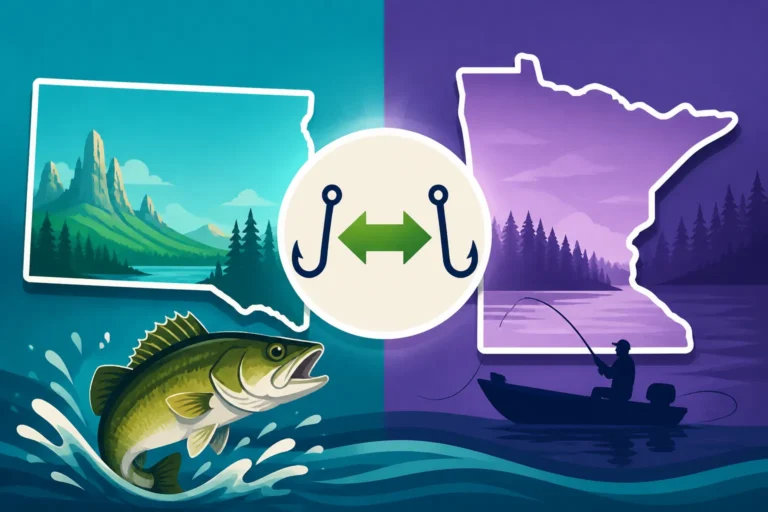
- South Dakota vs Minnesota Fishing License Reciprocity: There is no general reciprocity agreement that allows a Minnesota license to be used throughout South Dakota, or a South Dakota license to be used in Minnesota. If you're fishing a lake that happens to be right on the border, like Lake Traverse (which lies partly in South Dakota and partly in Minnesota), you will need a license from the specific state whose waters you are fishing. There might be very specific, limited exceptions for very small, obscure border waters, but for the vast majority of shared boundaries, separate licenses are required.
- South Dakota vs North Dakota Fishing License Cost: Similarly, there is no general reciprocity agreement with North Dakota. If you're fishing the Missouri River where it flows through North Dakota, you'll need a North Dakota license. If you're in South Dakota waters, you'll need a South Dakota license. The same applies to smaller border lakes and rivers.
- Iowa and Wyoming/Montana: No broad reciprocity agreements exist with Iowa, Wyoming, or Montana for fishing licenses. If you're fishing in their waters, you need their license.
This means that for the most part, if you are an Out-of-State Angler License Requirements, you will need to purchase a South Dakota fishing license to fish in any waters solely within South Dakota, regardless of what license you hold from another state, unless it's specifically on the shared Missouri River border with Nebraska.
Navigating Reciprocity for Out-of-State Anglers
Understanding reciprocity can feel like navigating a legal labyrinth, but with a bit of foresight and the right information, it becomes much simpler. The goal is always to be informed and compliant, ensuring your fishing trip remains enjoyable and penalty-free.
Key Considerations Before You Cast Your Line
Before you even think about putting your boat in the water or setting up your tackle box, there are a few crucial things to consider when dealing with reciprocity:
- Always Check Current Regulations: Reciprocity agreements, like all fishing regulations, can change. What was valid last year might have been updated this year. Always refer to the most recent official sources. Don't rely on old advice or forum posts. A quick check of the South Dakota Game, Fish and Parks website or their annual fishing handbook is always a good idea.
- Understand the Specific Boundaries: These agreements are almost always limited to the main channel or defined boundary waters. They usually don't extend into bays, sloughs, or tributaries that lie entirely within one state, even if they're very close to the main body of water. Ignorance of these boundaries is not a defense if you're caught fishing illegally.
- License Type Matters: Ensure your license is the correct type. For example, a South Dakota One-Day Fishing License might have different applicability than an annual one, though for border water reciprocity, generally, any valid resident or nonresident license from the participating states will suffice.
- Boat Registration: Even with fishing license reciprocity, separate rules apply to boat registration. South Dakota Boat and Water Access Rules dictate that your boat must be registered in one state. If you primarily use your boat in South Dakota waters, it should be registered there, regardless of where your fishing license is from. However, most states have provisions for out-of-state registered boats to operate for a certain period before local registration is required.
- Species-Specific Rules: While your license might be valid, the fishing rules for specific species might still differ slightly between states, even on shared waters. For example, walleye limits on Lake Francis Case might have slight nuances depending on which side of the river you're on, even if your license is valid on both. Always abide by the most restrictive rule if you're unsure.
Ultimately, the question, "Can You Use an Out-of-State License on the Missouri River in South Dakota?" is generally "yes," but only within the explicitly defined boundary waters and always with the caveat to verify current regulations.
Where to Get Up-to-Date Information
To avoid any confusion or potential fines, having reliable sources for current information is paramount. Don't guess; get the facts straight from the authority.
Here are the best places to ensure you have the most current information regarding South Dakota fishing license reciprocity:
- South Dakota Game, Fish and Parks (GFP): This is your primary and most authoritative source. Their official website (gfp.sd.gov) provides a wealth of information, including digital versions of their annual fishing handbooks. These handbooks detail all regulations, including specific reciprocity agreements. They are updated annually, so make sure you're looking at the current year's version. You can also often find a section on South Dakota Fishing License Exemptions, though reciprocity isn't quite an exemption, it serves a similar purpose of clarifying when a state license isn't needed from that state.
- Neighboring State Agencies: If you're a Nebraska angler looking to fish SD waters, check the Nebraska Game and Parks Commission website for their take on the reciprocity agreement, as well as their own regulations. Cross-referencing can sometimes clarify details.
- Local Bait and Tackle Shops: These local businesses often have the most practical, real-world knowledge of what's happening on the water, including recent regulation changes or common misunderstandings. They typically carry copies of the latest South Dakota Fishing Regulations Explained and can be a great resource for quick questions.
- Direct Contact with GFP: If you have a very specific or unusual scenario, don't hesitate to call the South Dakota GFP office directly. Their staff can provide definitive answers to your questions, ensuring you're fully compliant. It’s always better to ask beforehand than to deal with a citation later.
The table below provides a quick overview of key reciprocity points for South Dakota. Remember, always verify the details with official sources before fishing.
| Neighboring State | Waterway | South Dakota License Valid in Neighboring State Water? | Neighboring State License Valid in SD Water? | Notes |
|---|---|---|---|---|
| Nebraska | Missouri River (Boundary Waters) | Yes | Yes | Applies to the main stem of the Missouri River and associated impoundments forming the SD-NE border. |
| North Dakota | All Waters | No | No | No general reciprocity. Separate licenses required. |
| Minnesota | All Waters | No | No | No general reciprocity. Separate licenses required. |
| Iowa | All Waters | No | No | No general reciprocity. Separate licenses required. |
| Wyoming | All Waters | No | No | No general reciprocity. Separate licenses required. |
| Montana | All Waters | No | No | No general reciprocity. Separate licenses required. |
This table clearly outlines the existing reciprocal agreements. While the primary benefit lies with Nebraska, understanding the lack of agreements with other states is just as important for careful planning. Always make sure to check the specific South Dakota Fishing License Costs and apply for the correct license if you plan to fish outside of the defined reciprocity zones.
Disclaimer
Please note that fishing regulations, including reciprocity agreements, can change. The information provided in this guide is for general informational purposes only and should not be considered legal advice. Always consult the official South Dakota Game, Fish and Parks regulations and, if necessary, the regulations of any neighboring states, before planning your fishing trip to ensure compliance with the most current laws and rules.