Do You Need a License to Fish on Private Land in South Dakota?
It’s a common scenario: you’re visiting a friend or family member in South Dakota, they have a beautiful pond or a creek running through their property, and the question inevitably pops up – "Do I need a fishing license to cast a line here?" The waters, both literally and figuratively, can feel a bit murky on this one, leaving many anglers scratching their heads. This guide will cut through the confusion, clearly outlining when you need a license to fish on private land in South Dakota and, perhaps more importantly, when you don’t.
The General Rule for Fishing on Private Property in South Dakota
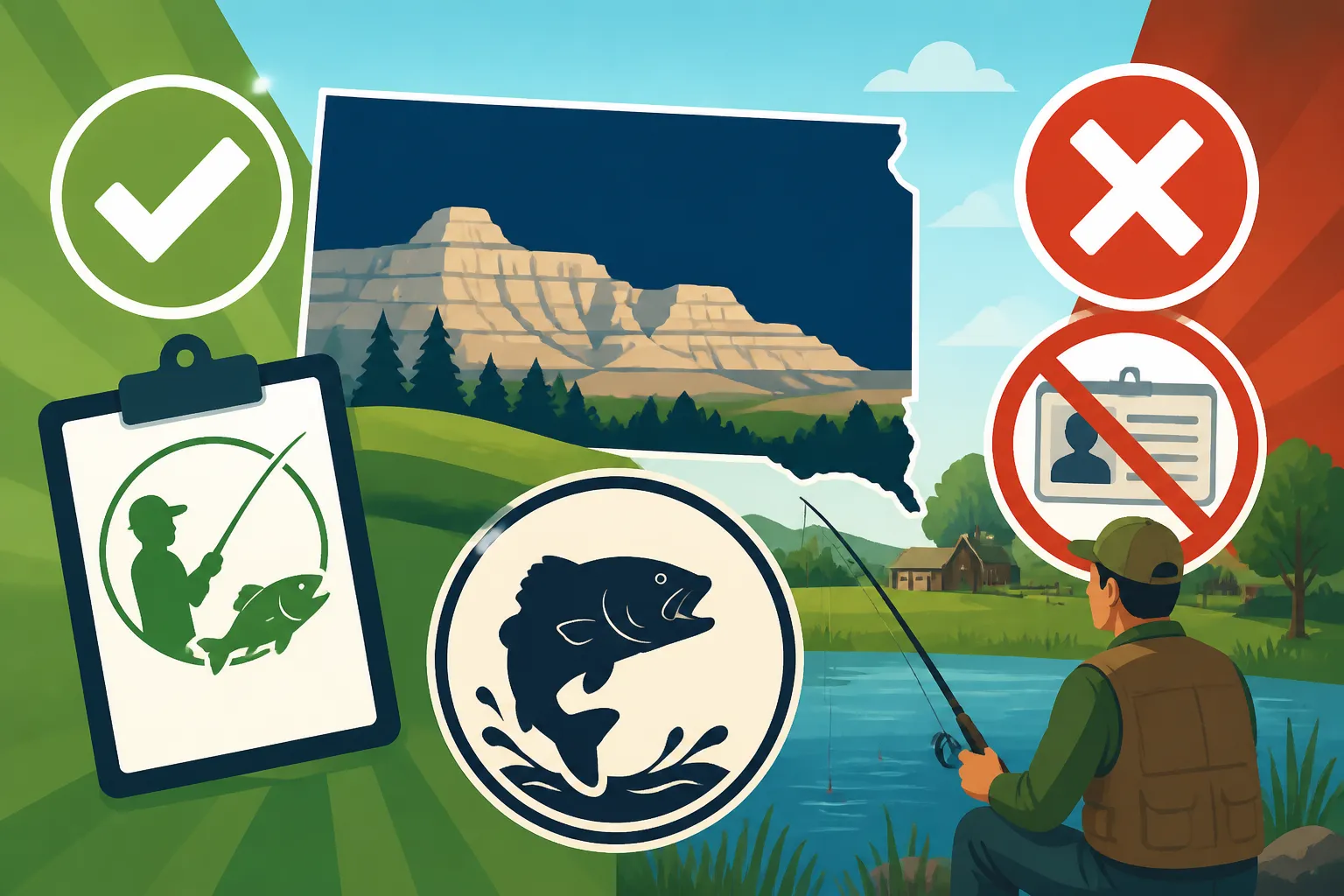
The answer to whether you need a South Dakota fishing license to fish on private land isn't a simple yes or no. It hinges entirely on the nature of the water you're fishing and its connection to larger public waterways. This distinction is absolutely critical to avoid an unwelcome conversation with a Game, Fish and Parks (GFP) conservation officer.
When a State License is Absolutely Required
Let's get this straight right off the bat: if the water body on private land is connected to or is part of a public waterway, you will need a fishing license. This is where many people get tripped up. Imagine a beautiful, winding creek that flows through your buddy's ranch, eventually emptying into the James River or one of the major Missouri River reservoirs. Even though you're standing on private property, that creek is considered a public water, and therefore, state fishing regulations, including the requirement for a license, apply.
Think of rivers, streams, and larger lakes that naturally cross or border private property. These are generally considered public waters due to their navigability or historical use. For example, if a portion of the Big Sioux River runs through someone's farm, anyone fishing in that river, even from the bank on the private property (with the landowner's permission, of course!), must possess a valid South Dakota fishing license. This rule ensures that the state can manage fish populations across interconnected ecosystems, regardless of who owns the adjacent land. It's not about property ownership, but about water ownership and public trust.
When a License is Typically Not Needed
Now for the good news: there are specific situations where you truly do not need a state fishing license to fish on private land. The key here is isolation. If the water body is entirely contained within private property, with no inlet or outlet connecting it to public waters, it's generally considered private water. This usually applies to farm ponds, dugouts, or small, man-made lakes that are completely self-contained.
For instance, if your uncle dug a pond years ago on his property, fed only by groundwater or rain, and it has no connection to any river or stream that flows off his land, then fishing in that pond does not require a state license. This is because the fish in such a pond are considered the property of the landowner, and the state's interest in managing public fish populations isn't directly involved. However, the landowner still has to grant you permission to be there. Without that explicit permission, even if you don't need a license, you'd be trespassing. Always make sure you understand the nuances of South Dakota Fishing License Exemptions before you assume you're in the clear.
What Defines "Private Land" and "Public Water" in South Dakota?
Understanding the legal definitions in South Dakota is key to determining your license requirements. It's not always as intuitive as you might think, and what seems like "private water" might actually fall under public domain.
Differentiating Between Waters Wholly on Private Land vs. Publicly Accessible Waters
The South Dakota Game, Fish and Parks (GFP) operates under specific legal frameworks to define public and private waters. Generally, all navigable waters are considered public, regardless of who owns the land underneath or around them. Navigable waters are typically those that are or were capable of being used for public commerce. This definition casts a wide net, including the massive Missouri River reservoirs like Lake Oahe, Lake Sharpe, Lake Francis Case, and Lewis and Clark Lake, but also many smaller rivers and streams across the state. Even if the banks are privately owned, the water itself is public.
For water to be truly "wholly on private land" and therefore exempt from state license requirements, it must be entirely isolated from these public systems. This means no streams feeding into it from outside the property, and no outflows connecting it to other water bodies. Think of a rain-fed pond or a spring-fed dugout that remains completely within the boundaries of a single private parcel, with no connection to the larger hydrological network. The state's interest is in managing fish resources that are accessible to and impact the broader public, not isolated, landowner-managed fish populations. If you're ever in doubt, the South Dakota GFP Fishing Handbook Guide is an invaluable resource that can help clarify these distinctions.
The Importance of Access and Permission
Even when you are absolutely certain that you're fishing in public water—like the Missouri River or a large glacial lake—if the only way to access that water is by crossing private land, you still need the landowner's explicit permission. A fishing license grants you the right to fish in public waters according to state regulations, but it does not grant you the right to trespass on private property to reach those waters.
This is a point of frequent friction between anglers and landowners. Always seek permission before setting foot on private land, even if your goal is just to reach the public water beyond. A friendly conversation, a knock on the door, or a phone call can go a long way. Many landowners are happy to grant access to respectful anglers, especially if you offer to share your catch or help with maintenance. Disregarding "No Trespassing" signs or assuming access can lead to legal trouble, regardless of whether you have your South Dakota fishing license in hand. Respect for private property is paramount for maintaining good angler-landowner relations throughout the state.
Specific Scenarios and Important Considerations
The general rules lay a good foundation, but South Dakota has a few unique situations and considerations that further refine whether you need a license when fishing on private land.
Fishing on Tribal Lands and Other Special Jurisdictions
South Dakota is home to several Native American reservations, and fishing on these tribal lands operates under a different set of rules. Generally, a state fishing license is not valid on tribal lands, and anglers will need to purchase a specific tribal fishing permit from the respective tribal game, fish, and park agencies. These permits are crucial for supporting tribal fish management and conservation efforts. For example, if you're planning to fish on the Cheyenne River Sioux Reservation, you'll need to acquire a permit directly from their offices, separate from any state license you might hold.
It's absolutely vital to research the specific requirements for the tribal land you intend to visit. Each tribe may have its own regulations regarding seasons, limits, and permitted fishing methods, in addition to the permit requirement. These permits are usually available at tribal offices, local convenience stores within the reservation boundaries, or sometimes even online. Make sure you understand the nuances of South Dakota Tribal Land Fishing Permits before you go.
Similarly, while less common for "private land" questions, fishing within federal lands like National Forests or Grasslands (such as the Black Hills National Forest or Buffalo Gap National Grassland) typically falls under state regulations, meaning a South Dakota fishing license is required, often in conjunction with any necessary federal permits or passes for access. However, access to these areas is generally public.
When Inviting Friends to Fish on Your Private Pond
Let's say you're the proud owner of a truly private, self-contained pond on your property – the kind where no state license is required for you to fish. What happens when you invite friends or family over for a fishing weekend? In most cases, if the water body is genuinely private and isolated from public waters, your guests, including adults and even those who typically need to know Do Kids Need a Fishing License in South Dakota?, will also not need a state fishing license to fish in your pond.
This is because the property owner's rights extend to granting permission for others to engage in activities on their private water. Since the fish are essentially considered private property, the state's licensing authority doesn't typically apply to your guests in this specific scenario. However, this hinges entirely on that crucial definition of "private water." If your "private pond" is actually a slough connected to a public stream during high water, then your guests would absolutely need a state license, just as you would. Clear communication with your guests and a solid understanding of your water body's status are key.
The Role of the Habitat Stamp
When you purchase a South Dakota fishing license, whether it's an Annual Fishing License or a shorter-term option like a South Dakota One-Day Fishing License or South Dakota Three-Day Fishing License, you'll often encounter the requirement for a Habitat Stamp. This stamp is an additional fee that goes directly towards funding vital wildlife habitat improvements across the state.
So, do you need a Habitat Stamp if you're fishing on private land? The answer aligns with the license requirement. If the water you're fishing on private land requires a state fishing license (because it's public water flowing through private property), then yes, you will also need a Habitat Stamp. The Habitat Stamp is essentially a companion to your fishing license. If you are fishing in a truly isolated, private pond where no state fishing license is required, then you also would not need a Habitat Stamp. It’s always best to check the specifics of South Dakota Habitat Stamp Requirements if you're unsure, but generally, the need for a stamp follows the need for a license.
Ensuring You're Compliant and Respectful
Navigating fishing regulations can sometimes feel like a maze, especially when private land is involved. The best approach is always to err on the side of caution and prioritize respect for both the law and landowners.
How to Confirm Water Status and License Requirements
The most reliable way to determine if a specific water body on or adjacent to private land requires a fishing license is to contact the South Dakota Game, Fish and Parks (GFP). Their local offices or customer service line can provide definitive answers based on the specific location and water body in question. They have detailed maps and legal interpretations to clarify any ambiguities. You can find their contact information on the GFP website, or through resources like the South Dakota GFP Contact Information for License Questions.
Another valuable tool is using online mapping services or plat maps available through county offices. These can help you visualize property lines and see if a stream or lake is connected to other public waters. While these tools are helpful for preliminary research, they don't replace direct consultation with the GFP or, more importantly, the landowner. When in doubt, assume a license is needed and that permission is required. It's much better to be over-prepared than to face penalties for South Dakota Fishing Without a License Penalties, which can include fines and loss of fishing privileges. Remember, licenses are easily obtained, even a South Dakota Online Fishing License Purchase can be done in minutes.
The Ethical Angler's Approach to Private Land
Being an ethical angler means more than just following the rules; it means being a good steward of the land and a respectful guest. If you are fortunate enough to gain permission to fish on private property, treat that privilege with the utmost respect.
Here are a few pointers for being a responsible angler on private land:
- Always Ask First: Never assume access. A quick, polite request can open doors (and gates) that an assumption might slam shut.
- Clarify Boundaries: Ask the landowner to show you exactly where you can and cannot go. Respect any restricted areas.
- Leave No Trace: Pack out everything you pack in. This includes all trash, discarded fishing line, and bait containers. Don't leave anything behind, not even a single hook.
- Close Gates: If you open a gate to access a fishing spot, always close it behind you. Livestock can wander off, and it's a simple courtesy.
- Be Mindful of Wildlife and Livestock: Give animals a wide berth. Don't disturb grazing animals or nesting birds.
- Report Concerns: If you notice anything amiss (like damaged fences, suspicious activity, or signs of pollution), politely inform the landowner.
- Share the Bounty: If you keep fish, consider offering some to the landowner as a token of thanks.
- Offer to Help: Sometimes, offering to help with a small chore around the property can be a great way to show appreciation and build rapport.
Maintaining a good relationship with landowners is essential for preserving access to fishing opportunities in South Dakota. Many of our best fishing spots are only accessible because of the generosity of private landowners. By being a respectful and responsible angler, you help ensure that these opportunities continue for everyone.
South Dakota Private Land Fishing Scenarios
To help you quickly determine your licensing needs, here's a table summarizing common private land fishing scenarios in South Dakota:
| Scenario | Water Body Type | South Dakota Fishing License Required? | Landowner Permission Required? | Notes |
|---|---|---|---|---|
| Fishing in a friend's farm pond | Wholly contained within private land, no public connection | No | Yes | Water is considered private; landowner manages fish. Still, you need permission to be on the property. |
| Fishing in a stream flowing through private property | Connected to public river/lake system | Yes | Yes | Water is public; state regulations apply. Permission needed to access the stream from private land. |
| Fishing on a private lake with public access points | Public water, partially bordered by private land | Yes | No (if using public access) | License required for public water. If accessing via private land, permission is needed. |
| Fishing on tribal reservation land | Special jurisdiction | No (state license) | Yes (tribal permit) | State license not valid. Must purchase specific tribal fishing permit and follow tribal regulations. |
| Fishing a dugout on private land fed by rain/groundwater only | Wholly contained within private land | No | Yes | Similar to farm pond. Water and fish are landowner's private property. |
| Fishing from shore on private land adjacent to a large public reservoir | Public water (e.g., Lake Oahe, Lake Sharpe) | Yes | Yes | The water is public, but accessing it from private shore requires permission. License is always needed for public waters. |
Disclaimer
Please note that fishing regulations can change, and interpretations may vary. This guide provides general information based on current South Dakota Game, Fish and Parks regulations. It is always the angler's responsibility to verify the most up-to-date rules and obtain all necessary licenses and permits before fishing. Contact the South Dakota GFP directly for the most accurate and current information.