Which Boats Need a Validation Sticker in South Dakota?
There’s nothing quite like the feeling of hitting the open water in South Dakota, whether you’re chasing walleye on Lake Oahe or exploring the quiet coves of the Black Hills reservoirs. But before you launch your pride and joy, that little validation sticker on your boat might spark a moment of panic: "Do I really need one, or am I good to go?" It's a common point of confusion, and frankly, the rules can feel a bit murky sometimes. This guide is here to clear up exactly which boats in South Dakota require that all-important validation sticker, saving you from an unexpected chat with a game warden and helping you spend more time fishing and less time worrying about regulations.
Understanding South Dakota's Boat Registration Basics
Getting out on the water in South Dakota is a fantastic experience, but it comes with a few responsibilities, and boat registration is one of the most fundamental. It’s not just red tape; it’s about ensuring all vessels can be identified for safety, law enforcement, and for funding the very resources that make our lakes and rivers so enjoyable.
What is a Validation Sticker and Why Do You Need One?
Imagine a small, often colorful sticker, typically placed near your boat's registration numbers. That's your validation sticker. Think of it as proof that your boat's registration is current and valid for the current operating year in South Dakota. It's essentially a visual check for law enforcement, confirming at a glance that your vessel is legally allowed to be on state waters. Without it, even if you’ve paid all your fees, you could face fines because the boat isn't properly marked as compliant. The fees collected from boat registrations directly contribute to water safety programs, public access development, and general maintenance of South Dakota's waterways, so it's a small but mighty part of keeping our aquatic playgrounds pristine. For a full rundown on getting your boat officially on the books, you'll want to check out our comprehensive South Dakota Boat Registration Guide.
General Rules for Motorized Vessels
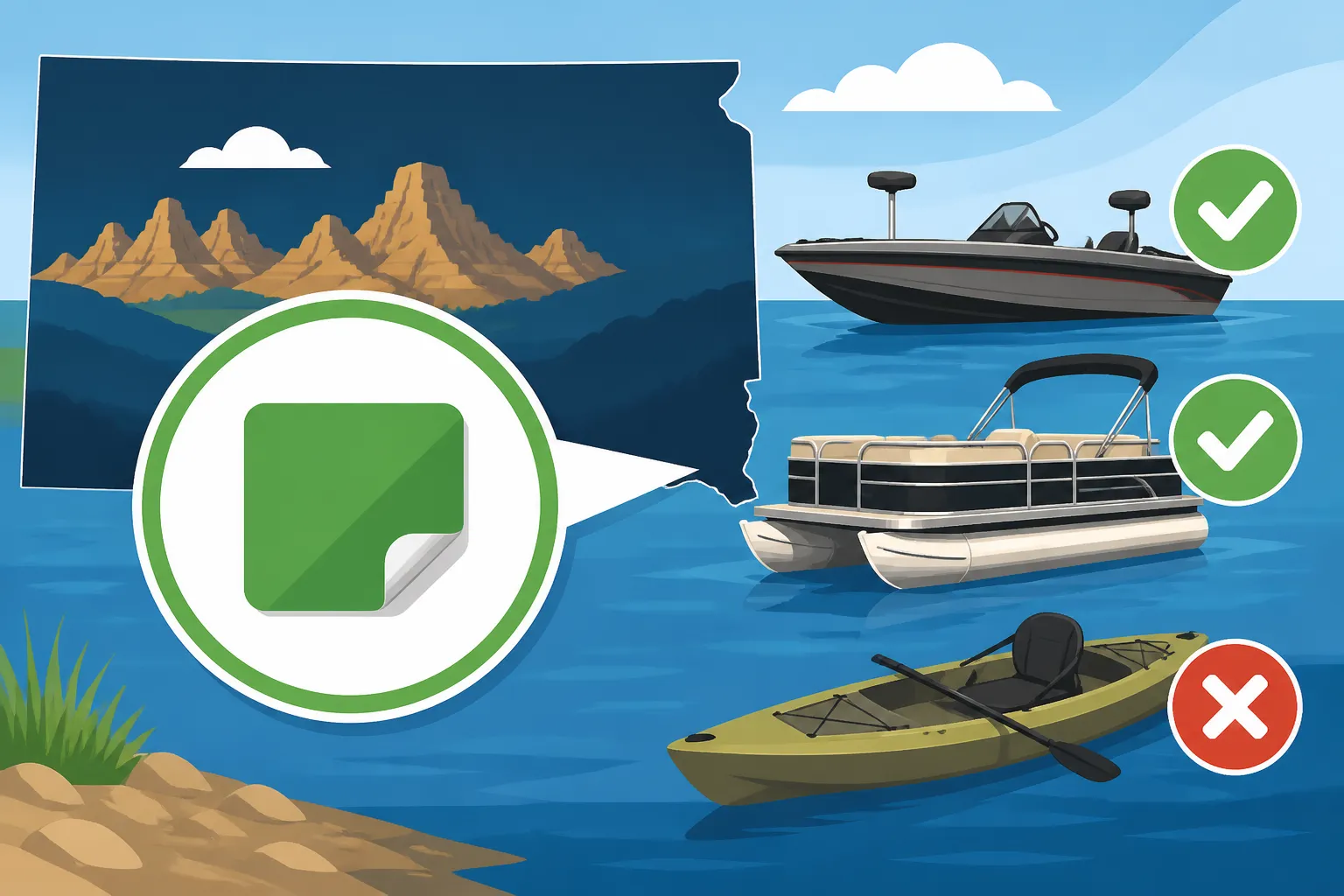
When it comes to boats with motors, the rule of thumb in South Dakota is pretty straightforward: if it has an engine, it needs to be registered, and that means it needs a validation sticker. This applies regardless of the type of motor – electric trolling motors, small outboards, powerful inboards – if it moves your boat through mechanical propulsion, you're in the registration club. This covers everything from your heavy-duty walleye boat designed for the Missouri River to that small jon boat you use to sneak into shallow backwaters.
This requirement also extends to sailboats. While they primarily use wind power, if a sailboat has an auxiliary motor, even a tiny one for docking or emergencies, it falls under the motorized vessel category and needs to be registered and display a validation sticker. This ensures consistency and makes it easier for officials to monitor all powered craft on the water.
The Role of the South Dakota Department of Game, Fish and Parks GFP
The South Dakota Department of Game, Fish and Parks (GFP) is the primary authority overseeing boat registration and safety in the state. They're the ones who set the rules, administer the registration process, and enforce compliance on the water. When you register your boat, whether online or in person, you're dealing directly with or through the GFP's regulations. They also publish helpful resources, like the annual boating handbook, which details all the requirements, including which boats need a validation sticker.
Their goal isn't just enforcement; it's also about education and safety. They want you to have a great time on the water, and part of that means ensuring everyone understands and follows the rules to prevent accidents and protect our natural resources. If you ever have a question that isn't covered in a guide like this, reaching out to the GFP directly is always the best course of action. They're a fantastic resource for everything from South Dakota Boat Safety Requirements to questions about local fishing regulations.
Specific Types of Boats and Their Sticker Requirements
Navigating the nuances of boat registration can feel like deciphering a secret code, especially when you're trying to figure out if your specific vessel needs that little sticker. Let's break it down by boat type, making it easier to understand exactly where your craft fits into South Dakota's regulations.
Non-Motorized Vessels: When a Sticker Isn't Needed
Here’s where a lot of the confusion often lies! In South Dakota, many smaller, non-motorized vessels are exempt from registration and, consequently, do not need a validation sticker. This is great news for those who prefer human power for their adventures.
Generally, you do not need to register or display a validation sticker for:
- Canoes and Kayaks: If your canoe or kayak is solely propelled by paddle, oars, or sail and has no motor of any kind, you are typically exempt. This includes both traditional sit-in kayaks and sit-on-top models.
- Paddleboards (SUPs): Stand-up paddleboards are also considered non-motorized and generally do not require registration or a validation sticker.
- Rowboats and Dinghies: Small boats propelled by oars or sculls, without any motor, are typically exempt.
- Small Inflatables: If your inflatable craft is solely powered by human effort (paddles, oars) and does not have a motor attached, it also falls under this exemption.
- Sailboards/Windsurfers: These are designed for wind propulsion and usually don't have auxiliary motors, making them exempt.
It's important to remember the key qualifier here: no motor. Even a tiny electric trolling motor attached to your kayak for a little extra push will change its classification from exempt to requiring registration and a sticker. So, if you're thinking of adding a motor to your non-motorized vessel, be sure to check the specific guidelines for South Dakota Non-Motorized Boat Registration Rules before you hit the water. It’s also wise to carry a form of identification and be prepared to explain your vessel’s propulsion if questioned by authorities, especially if you’re fishing or paddling near areas where motorized vessels are common.
Exceptions and Special Cases
As with any set of rules, there are always a few exceptions and special scenarios to consider.
- Documented Vessels: Larger vessels, typically commercial or certain recreational boats over a specific length, can be "documented" with the U.S. Coast Guard instead of state registration. If your vessel is federally documented, it is exempt from state registration and therefore doesn't need a South Dakota validation sticker. Instead, it will display its official documentation number. This isn't common for the average fishing boat but is worth noting for larger pleasure crafts.
- Out-of-State Boats: If you're visiting South Dakota with your boat, and it's properly registered and stickered in your home state, you typically don't need to register it in South Dakota for temporary use. However, there are usually limits on how long your out-of-state registration is valid before South Dakota requires you to register it in the state. Make sure to check the specific rules regarding How Long Out-of-State Boats Can Fish South Dakota Before Registering to ensure you're compliant, especially if you plan an extended stay.
- Youth Fishing Boats: While kids usually have different rules for fishing licenses, the boat registration rules apply to the vessel itself, not necessarily the operator's age. If a motorized boat is operated by a minor, it still needs to be registered and display its validation sticker.
- Manufacturers and Dealers: Boats held for sale by manufacturers or dealers usually have special demonstration or dealer permits/plates that exempt them from individual boat registration validation stickers, as long as they are being used for legitimate business purposes.
Understanding these exceptions can save you a headache. If you're unsure, always err on the side of caution and consult the GFP’s official guidelines.
Boats That Always Need a Sticker
To reiterate, the golden rule in South Dakota is pretty simple: if it has a motor, it needs a validation sticker. This encompasses a vast majority of recreational boats on our lakes and rivers.
This includes, but is not limited to:
- Fishing Boats: From the smallest aluminum jon boat with a five-horsepower kicker to the largest fiberglass walleye rigs with 250-horsepower outboards, if it's motorized, it's registered.
- Pontoon Boats: Popular for family outings and cruising, pontoons universally require registration and validation stickers.
- Runabouts and Ski Boats: Any boat designed for speed, towing, or general recreation with an engine.
- Personal Watercraft (PWCs): Jet Skis, WaveRunners, Sea-Doos, and similar vessels are considered motorized boats and must be registered and display validation stickers.
- Sailboats with Auxiliary Motors: As mentioned before, if your sailboat has even a small electric or gas motor for emergency or auxiliary propulsion, it must be registered.
It’s crucial to understand that even if you rarely use the motor on your sailboat or canoe, its mere presence means it must be registered. The moment that motor is on the transom or in the motor well, your vessel shifts into the "motorized" category. Always make sure your current stickers are clearly visible and un-obstructed for easy identification.
The Process of Obtaining and Displaying Your Validation Sticker
Once you’ve confirmed that your boat needs a validation sticker, the next step is to actually get it and make sure it’s displayed correctly. It's not a complicated process, but there are a few key details to keep in mind.
Where to Register Your Boat and Get Your Sticker
The good news is that South Dakota has made it pretty convenient to register your boat and receive your validation sticker. You have a few options:
- Online: For many, the easiest way to handle registration and renewals is through the South Dakota GFP website. You can typically complete the process from the comfort of your home, and your stickers will be mailed to you. This is a huge time-saver and lets you get back to planning your next fishing trip without delay. For those who are comfortable with online transactions, this is usually the quickest way to get things done.
- GFP Offices: You can visit one of the South Dakota GFP regional offices in person. This is a good option if you have questions, need immediate assistance, or prefer face-to-face interaction. The staff there are incredibly helpful and can guide you through the entire process.
- County Treasurer Offices: Many county treasurer offices across South Dakota are authorized to process boat registrations. This can be a convenient local option, especially if a GFP office isn't nearby. It’s always a good idea to call ahead to confirm their hours and if they handle boat registrations specifically, as services can sometimes vary.
- Authorized Vendors: In some areas, certain sporting goods stores or marinas might be authorized agents for boat registration. These are less common but can be helpful if you’re already shopping for gear or at your local marina.
No matter which method you choose, make sure you have all the necessary documentation, such as proof of ownership, bill of sale, and any previous registration information. This will help ensure a smooth and efficient process.
Proper Placement of Your Validation Sticker
This is where a lot of boaters sometimes get it wrong, leading to potential issues with law enforcement. The validation stickers aren't just for decoration; they have a specific placement requirement to ensure clear visibility.
According to South Dakota regulations, the annual validation stickers must be:
- Affixed to the bow of the vessel: This means on the front half of the boat.
- On each side of the vessel: You need one sticker on the port (left) side and one on the starboard (right) side.
- Within six inches toward the stern (back) of the registration numbers: Your boat's larger, permanent registration numbers (e.g., SD-1234-AB) must be displayed first, and the validation sticker goes just behind them.
- Clearly visible: They should not be obstructed by lines, fenders, or other gear. They also need to be applied to a clean, flat surface so they don't peel off or get damaged easily.
Imagine a game warden doing a quick scan as they pass by – they need to see those numbers and stickers without straining. Incorrect placement might not get you a ticket, but it could definitely lead to an officer pulling you over to verify your registration, which is a hassle nobody wants. You can find many marine decal application kits on Amazon that help ensure your stickers are applied smoothly and securely, preventing bubbling or premature peeling.
Renewal and Keeping Your Stickers Current
Boat registrations and their corresponding validation stickers are not a one-and-done deal. They expire and need to be renewed regularly. In South Dakota, boat registrations are valid for three years.
It’s easy to forget when your registration is due, especially if you don’t boat year-round. However, letting your registration lapse and operating with an expired sticker can lead to fines. Many boaters find it helpful to make a note in their calendar or set a reminder on their phone. The GFP usually sends out renewal notices, but it’s ultimately your responsibility to ensure your registration is current.
When you renew, you’ll receive new validation stickers. Make sure to remove the old, expired stickers before applying the new ones. Having multiple years of stickers can create confusion and make it harder for officials to verify current compliance. Keeping your registration current means you're always ready for that spur-of-the-moment trip to Lake Sharpe or a planned fishing expedition on Lake Francis Case, avoiding any last-minute scramble or legal troubles.
Common Misconceptions and Troubleshooting
Even with all the information out there, certain questions and misunderstandings about boat validation stickers pop up time and time again. Let’s tackle some of these common concerns head-on.
"I Only Paddle, So I'm Exempt, Right?"
This is perhaps the most frequent point of confusion. Many folks assume that because they're on a kayak or canoe, they're automatically in the clear. And for the most part, you are exempt if your vessel is solely human-powered. The catch, as we touched on earlier, comes when you introduce any form of mechanical propulsion.
Think about it: you love your kayak and enjoy the exercise of paddling. But then you buy a small electric trolling motor to make those long paddles back across Lake Kampeska a bit easier, or to hold your position against the current while fishing. The moment that motor is installed, or even just carried on board with the intention of being used for propulsion, your kayak is no longer a "non-motorized" vessel in the eyes of the law. It instantly shifts into the category of a motorized boat, requiring registration and those validation stickers. It's a small change that has big implications for your legal compliance. It’s not just about what you do with the motor, but its presence on the vessel.
What About Out-of-State Boats?
Visiting anglers and boaters often wonder about bringing their registered boats into South Dakota. As a general rule, if your boat is properly registered and stickered in your home state, you can typically use it in South Dakota for a temporary period. This reciprocity is common among states to facilitate tourism and recreational travel.
However, "temporary" has limits. If you move to South Dakota or plan to use your boat in the state for an extended period, you will eventually be required to register it in South Dakota. For instance, if you're an avid angler who loves to chase South Dakota walleye every year, and you decide to stay for the entire summer, you'll need to look into South Dakota registration after a certain timeframe. The exact duration can vary, so it's always best to consult the GFP rules on Out-of-State Angler License Requirements or directly contact them if you're planning a long stay. Don't assume your home state's registration grants indefinite access; there's usually a grace period before local registration is required.
Dealing with Lost or Damaged Stickers
Life happens. Stickers can peel off due to weather, get scratched, or simply fade over time. If your validation sticker becomes unreadable, lost, or damaged, you need to replace it. Operating with an illegible or missing sticker is the same as not having one at all – it can lead to trouble.
You can usually request replacement stickers through the South Dakota GFP online portal or by visiting a GFP office or county treasurer. There might be a small fee associated with replacement stickers, but it's a minimal cost compared to potential fines. Once you receive your replacements, make sure to apply them correctly, perhaps using a sticker application tool or cleaner from Amazon to ensure they adhere well and last longer. Prompt replacement ensures you remain compliant and avoids any interruptions to your fishing or boating plans.
Here's a quick summary table to help you determine if your boat needs a validation sticker in South Dakota:
| Boat Type | Motorized? | Registration Required? | Validation Sticker Required? | Common Examples |
|---|---|---|---|---|
| Powerboats (including PWCs) | Yes | Yes | Yes | Bass boats, pontoon boats, jet skis, runabouts |
| Sailboats with Auxiliary Motor | Yes | Yes | Yes | Sailboat with a small electric or gas kicker |
| Kayaks, Canoes (human-powered) | No | No | No | Standard canoes, sit-on-top kayaks, touring kayaks |
| Kayaks, Canoes (with any motor) | Yes | Yes | Yes | Kayak with a transom-mounted electric trolling motor |
| Stand-Up Paddleboards (SUPs) | No | No | No | All SUPs |
| Rowboats, Dinghies (human-powered) | No | No | No | Small wooden or fiberglass boats with oars |
| Federally Documented Vessels | N/A | No (State Reg.) | No (State Sticker) | Larger yachts, some commercial fishing boats |
| Out-of-State Registered Boats | Yes (Home) | No (Temp. Use) | No (SD Sticker) | Any boat visiting SD from another state (for a limited time) |
Final Thoughts on Sticker Compliance
It might seem like a small detail, but knowing which boats need a validation sticker in South Dakota is a crucial part of being a responsible and law-abiding boater. The goal of these regulations isn't to make your life harder, but to ensure safety, fund conservation efforts, and allow proper identification of vessels on our precious waterways. Taking the few minutes to understand and comply with these requirements saves you potential fines, stress, and ensures you can enjoy every moment out on the water, whether you're targeting big walleye on Lake Oahe or enjoying a peaceful paddle on a quiet glacial lake. So, double-check your vessel, confirm your sticker status, and get ready to enjoy the incredible fishing and boating opportunities South Dakota has to offer!
Disclaimer
The information provided in this guide is for general informational purposes only and does not constitute legal advice. While we strive to provide accurate and up-to-date information, boating regulations are subject to change. Always consult the official South Dakota Department of Game, Fish and Parks (GFP) website or contact them directly for the most current and specific regulations pertaining to your vessel and situation.